
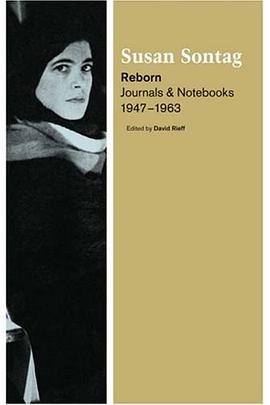

具体描述
"I intend to do everything...to have one way of evaluating experience—does it cause me pleasure or pain, and I shall be very cautious about rejecting the painful—I shall anticipate pleasure everywhere and find it too, for it is everywhere! I shall involve myself wholly...everything matters!"
So wrote Susan Sontag in May 1949 at the age of sixteen. This, the first of three volumes of her journals and notebooks, presents a constantly and utterly surprising record of a great mind in incubation. It begins with journal entries and early attempts at fiction from her years as a university and graduate student, and ends in 1964, when she was becoming a participant in and observer of the artistic and intellectual life of New York City.
Reborn is a kaleidoscopic self-portrait of one of America’s greatest writers and intellectuals, teeming with Sontag’s voracious curiosity and appetite for life. We watch the young Sontag’s complex self-awareness, share in her encounters with the writers who informed her thinking, and engage with the profound challenge of writing itself—all filtered through the inimitable detail of everyday circumstance.
Editorial Reviews
From Publishers Weekly
Starred Review. The first of three planned volumes of Sontag's private journals, this book is extraordinary for all the reasons we would expect from Sontags writing—extreme seriousness, stunning authority, intolerance toward mediocrity; Sontags vulnerability throughout will also utterly surprise the late critic and novelists fans and detractors. At 15, when these journals began, Sontag (1933–2004) already displayed her ferocious intellect and hunger for experience and culture, though what is most remarkable here is watching Sontag grow into one of the century's leading minds. In these carefully selected excerpts (many passages are only a few lines), Sontag details her developing thoughts, her voluminous reading and daily movie-going, her life as a teenage college student at Berkeley discovering her sexuality (bisexuality as the expression of fullness of an individual), and meeting and marrying her professor Philip Rieff, with whom, at the age of 18, she had David, her only child. Most powerful are the entries corresponding to her years in England and Europe, when, apart from Philip and their son, the marriage broke down and Sontag entered intense lesbian relationships that would compel her to rethink her notions of sex, love (physical beauty is enormously, almost morbidly, important to me) and daughter- and motherhood, and all before the age of 30. Watching Sontag become herself is nothing short of cathartic. (Dec.)
Copyright © Reed Business Information, a division of Reed Elsevier Inc. All rights reserved.
From Booklist
Rieff sensitively portrayed revered critic and novelist Sontag during her last days in Swimming in a Sea of Death (2008) and now continues to navigate the great sea of her legacy as editor of her journals. He didn’t want to open his mother’s private life to public eyes, but because her papers are available to scholars, he does so preemptively, granting readers access to the innermost thoughts of a genuine prodigy. In 1948, at age 15, Sontag asks, “And what is it to be young in years and suddenly awakened to the anguish, the urgency of life?” After starting college at 16, she fills her journals with passionate analysis of books, her intellectual ambitions, her struggle to accept her homosexuality, and the ecstasy and torment of her first lesbian relationship. Then, suddenly, this ardent seeker becomes a wife and mother. She loves her son, but marriage does not suit her, and her battle to reclaim her true self is one of several dramatic rebirths punctuating this electrifying record of Sontag striving to become Sontag. Two more volumes are planned. --Donna Seaman
Review
“What ultimately matters about Sontag . . . is what she has defended: the life of the mind, and the necessity for reading and writing as ‘a way of being fully human.’” —Hilary Mantel, Los Angeles Times Book Review
作者简介
Susan Sontag immediately became a major figure of our culture with the publication in 1966 of the pathbreaking collection of essays Against Interpretation. She went on to write four novels, a collection of stories, several plays, and seven works of nonfiction, among them On Photography (1977) and Illness as Metaphor (1978). Her many international honors included the Jerusalem Prize (2000) and the Friedenspreis (Peace Prize) of the German Book Trade (2003). She died in New York City on December 28, 2004.
目录信息
读后感
1957年12月底,苏珊•桑塔格在日记中这样写道:“日记是用来表现我个性的工具。它代表我是一个在情感和精神上都是独立自主的人。因此(唉),它根本不是单纯记录我的每天的真实生活,而是——有许多则日记正是如此——提供了与我实际生活不同的其他可能性。”其时桑塔格24岁...
评分重生,苏珊·桑塔格日记与随笔 源于对网络信息的安全性,我决定想些日记,我自己想要表达的情感,思想,生活等等 第二次,看这本书了,第一次是图书馆偶遇看的。 重新看了一遍,脑中总是在回想差距,她从小就开始看书了,可能差距在她身边的资源比较多,我自己家里的书,真的好...
评分我们为什么要读作家的日记呢?大概是通过作品了解到的作家是不完整的,就算我们知道作品中的人物有作家自我精神的投射,但是作品虚构的本质,还让我们对隐匿在作品背后的人一无所知。作品并不是作家最好的代言,作品的隐秘性与虚构性,容易让引发作家癫狂与意淫的一面,他可以...
评分 评分我们为什么要读作家的日记呢?大概是通过作品了解到的作家是不完整的,就算我们知道作品中的人物有作家自我精神的投射,但是作品虚构的本质,还让我们对隐匿在作品背后的人一无所知。作品并不是作家最好的代言,作品的隐秘性与虚构性,容易让引发作家癫狂与意淫的一面,他可以...
用户评价
老实说,这本书的背景设定是我最先吸引我的地方,它构建的世界观的严谨性和自洽性,简直令人惊叹。作者显然投入了大量心血进行资料搜集和逻辑推演,无论是其独特的政治体制、科技发展路径,还是文化习俗的演变,都做到了逻辑自洽,没有出现任何明显的硬伤或让人出戏的设定漏洞。这种沉浸式的世界构建,让整个故事的根基无比扎实,即便是最离奇的情节,一旦置于这个规则明确的框架内,也变得可以理解和接受。更厉害的是,作者并没有把这些设定作为炫耀的工具,而是将它们自然而然地融入到角色的日常行为和冲突之中,使得“世界观”成为了推动情节发展的内生动力,而不是外加的装饰品。在阅读过程中,我仿佛不是在看一个虚构的故事,而是在研究一份详尽的平行历史档案。对于科幻或奇幻类作品的爱好者来说,这种深度的世界观设计是判断一部作品能否达到“史诗级”的重要标准,而这本书,无疑是达到了。它成功地拓宽了我的想象边界,让我对“可能性”有了全新的认识。
评分这本书给我最大的冲击力,在于它对人性复杂性的深度挖掘,简直就像一把锋利的手术刀,精准地剖开了隐藏在光鲜外表之下的欲望、恐惧与挣扎。作者似乎毫不留情地撕开了社会道德的面纱,展示了在极端压力或诱惑下,即便是最坚守原则的人也会产生的动摇。这种毫不妥协的现实主义笔触,使得阅读过程充满了挑战性,因为它迫使我不得不停下来,反思自己对于“善”与“恶”的简单化认知。与市场上充斥着“非黑即白”设定的作品不同,这里的每个人物都行走在灰色地带,他们的动机并非单一的忠诚或背叛,而是由一连串复杂的情感纠葛和环境因素交织而成。特别是关于权力结构和底层挣扎的描绘,其力度和穿透力,远超我预期的文学作品范畴,更像是一部深刻的社会观察报告。我尤其赞赏作者在处理高潮部分的克制,它没有选择最直接、最煽情的爆发点,而是通过一种近乎冷峻的叙事腔调,让情绪在读者心中慢慢酝酿、沉淀,最终形成一种更具持久回味的震撼力。读完之后,我感觉自己对现实世界中某些隐秘的运作机制有了更深一层的理解,这本书无疑是能引发深度思考的佳作。
评分我得承认,起初我以为这会是一本情节驱动型的作品,但读下去才发现,它的魅力更多地源自于作者那令人赞叹的语言艺术。这本书的文字本身就是一种享受,用词考究,句式多变,时而如行云流水般流畅舒展,时而又像精确切割的钻石般犀利冷峻。作者对于意象的运用达到了出神入化的地步,很多场景的描写,仅仅是寥寥数语,便能构建出一个充满象征意味的画面,让人不得不停下来,反复咀嚼其中的深层含义。这完全不是那种追求快速信息传递的白描手法,而是更倾向于一种诗意化的表达,充满了韵律感和音乐性。我特别喜欢它在叙事视角上的灵活切换,时而宏大叙事,展现时代洪流的不可抗拒,时而又聚焦于个体最私密的一角,展现微小选择所蕴含的巨大能量。这种在“大”与“小”、“喧嚣”与“寂静”之间的自由游走,使得文本结构显得非常饱满和立体。对于那些热爱文字本身,追求阅读美感的读者来说,这本书绝对是不能错过的盛宴,它证明了好的故事可以与顶级的文学表达完美地结合在一起。
评分天哪,我刚刚合上那本让我完全沉浸其中的小说,说实话,那种感觉就像刚刚从一场酣畅淋漓的梦中醒来,怅然若失。这本书的叙事节奏简直是教科书级别的典范,作者对情节的把控如同一个技艺精湛的魔术师,总能在你不经意间抛出一个精心设计的悬念,让你不得不熬夜去追寻真相。它并非那种靠着爆炸性场面堆砌起来的爽文,而是通过细腻入微的人物内心刻画,层层递进地构建了一个庞大而又真实可信的世界观。我尤其欣赏作者对于环境描写的功力,那些文字仿佛拥有魔力,能瞬间将我带入故事发生地的光影、气味乃至空气的湿度,那种身临其境的代入感,是我近几年阅读体验中极为罕见的。主角的成长线处理得尤为巧妙,没有那种突兀的“开挂”式升级,每一步的蜕变都伴随着真实的挣扎、痛苦和抉择,让人在为他欢呼的同时,也能深刻体会到他所付出的代价。这本书的配角群像也塑造得极为成功,每一个角色无论戏份多少,都拥有自己独特的逻辑和魅力,绝不是推动主线剧情的工具人,这让整个故事的厚度大大增加。读完之后,我感觉自己像完成了一次精神上的远足,脑海中不断回放着那些令人深思的对话和场景,久久不能平息。
评分如果用一个词来形容这本书给我的整体感受,那一定是“回味悠长”。它不是那种读完就扔掉的快餐读物,而是一坛需要时间去品味的陈酿。阅读过程中,我体验到了情绪的过山车:从最初的好奇、到中期的焦虑和不解,再到后期的释然与震撼,情绪曲线跌宕起伏,张弛有度。作者对于节奏的掌控达到了炉火纯青的地步,有些章节读起来让人喘不过气,恨不得一口气读完;而另一些关键性的转折点,作者却会刻意放慢速度,用大段的内心独白或环境渲染来加深冲击力,这种强弱对比的手法,使得阅读体验充满了层次感。最难能可贵的是,它在提供了一个完整故事的同时,也留下了足够的“空白”供读者自行填补和思考。它没有给出所有问题的标准答案,而是把最终的道德判断和情感落点交还给了读者自己。这种开放式的结局处理,反而让故事的生命力得以延续,直到现在,我还在思考某些角色的最终动机,这本书的后劲实在太大了。
评分“To write is to exist, to be one's self.”(De Gourmont)
评分不是很懂为何会有这么高的分数。。。。以及,是儿子缺钱了才挖老妈的日记出来挣生活费的吧。。。。怎么说呢,全篇过多的情感纠葛碎碎念,只有在偶尔穿插的对于自我认知的思考讨论中能看出sontag的真正功底,而面对生活面对感情,她竟和邻家大妈无甚差别
评分To observe and try my self. To further indulgences by distancing. To be whole.
评分就說人只能夠死一次 不然桑應該會被他兒子給氣死吧
评分写作,性,同性恋,犹太人,哲学,家庭,母亲 成为一个有智慧的作家,看很多书、电影、剧都是必要条件
相关图书






本站所有内容均为互联网搜索引擎提供的公开搜索信息,本站不存储任何数据与内容,任何内容与数据均与本站无关,如有需要请联系相关搜索引擎包括但不限于百度,google,bing,sogou 等
© 2026 book.quotespace.org All Rights Reserved. 小美书屋 版权所有