
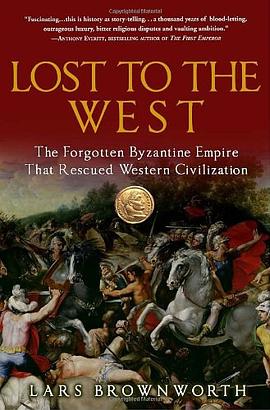

具体描述
In AD 476 the Roman Empire fell–or rather, its western half did. Its eastern half, which would come to be known as the Byzantine Empire, would endure and often flourish for another eleven centuries. Though its capital would move to Constantinople, its citizens referred to themselves as Roman for the entire duration of the empire’s existence. Indeed, so did its neighbors, allies, and enemies: When the Turkish Sultan Mehmet II conquered Constantinople in 1453, he took the title Caesar of Rome, placing himself in a direct line that led back to Augustus.
For far too many otherwise historically savvy people today, the story of the Byzantine civilization is something of a void. Yet for more than a millennium, Byzantium reigned as the glittering seat of Christian civilization. When Europe fell into the Dark Ages, Byzantium held fast against Muslim expansion, keeping Christianity alive. When literacy all but vanished in the West, Byzantium made primary education available to both sexes. Students debated the merits of Plato and Aristotle and commonly committed the entirety of Homer’s Iliad to memory. Streams of wealth flowed into Constantinople, making possible unprecedented wonders of art and architecture, from fabulous jeweled mosaics and other iconography to the great church known as the Hagia Sophia that was a vision of heaven on earth. The dome of the Great Palace stood nearly two hundred feet high and stretched over four acres, and the city’s population was more than twenty times that of London’s.
From Constantine, who founded his eponymous city in the year 330, to Constantine XI, who valiantly fought the empire’s final battle more than a thousand years later, the emperors who ruled Byzantium enacted a saga of political intrigue and conquest as astonishing as anything in recorded history. Lost to the West is replete with stories of assassination, mass mutilation and execution, sexual scheming, ruthless grasping for power, and clashing armies that soaked battlefields with the blood of slain warriors numbering in the tens of thousands.
Still, it was Byzantium that preserved for us today the great gifts of the classical world. Of the 55,000 ancient Greek texts in existence today, some 40,000 were transmitted to us by Byzantine scribes. And it was the Byzantine Empire that shielded Western Europe from invasion until it was ready to take its own place at the center of the world stage. Filled with unforgettable stories of emperors, generals, and religious patriarchs, as well as fascinating glimpses into the life of the ordinary citizen, Lost to the West reveals how much we owe to this empire that was the equal of any in its achievements, appetites, and enduring legacy.
作者简介
Lars Brownworth created the genre-defining "12 Byzantine Rulers" podcast, which prompted the New York Times to liken him to some of history's great popularizers. Recently, he authored "Lost to the West: The Forgotten Byzantine Empire That Rescued Western Civilization". He speaks at various conferences and is currently working on a new podcast that brings to life the reign of the Normans.
Lars Brownworth
http://larsbrownworth.com/
Finding History Blog:
http://larsbrownworth.com/blog/
Podcasts:
http://12byzantinerulers.com/
http://normancenturies.com/
目录信息
读后感
近日有一首很火的歌,歌词中有一句是“我想要带你去浪漫的土耳其。”但我想说土耳其一点也不浪漫。 当十字军打着教皇的旗号,实际为了一己私利涌向耶路撒冷,将血腥和眼泪也一同带到了朝圣之路,而且他们还在半路洗劫了同胞的千年之城--君士坦丁堡;当塞尔柱土耳其人如风暴般席...
评分 评分 评分用户评价
这本书最让我震撼的是其对人性复杂性的剖析,毫不留情却又饱含同情。角色们都不是脸谱化的好人或坏人,他们都在特定的环境压力下做出了符合自身局限的选择。作者没有简单地对他们的行为进行评判,而是将我们置于他们的处境,让我们去感受那种进退两难的困境。我尤其关注了其中一位次要角色的命运轨迹,他看似微不足道的决定,却在后续的篇章中引发了连锁反应,这一点处理得极其真实且令人心寒。这种对“灰色地带”的深入挖掘,使得整个故事充满了现实的质感,避免了理想化叙事的空洞。读完后,我忍不住反思自己在相似情境下会如何抉择,这种强烈的代入感和思想冲击,是许多同类题材作品难以企及的高度。
评分从语言风格上讲,这本书的文笔是极其洗练且富有音乐性的。那些句子读起来有一种独特的韵律感,即便是最平淡的描述,也透露着一种古典的美学。作者似乎对每一个词的选择都经过了深思熟虑,没有一个冗余的字眼,每一处停顿和转折都恰到好处地服务于整体的氛围营造。我发现自己有好几次不得不停下来,仅仅是为了回味某一段措辞精妙的排比,或者某个绝妙的比喻,它们精准地捕捉到了那种难以言喻的情绪。这种对语言形式的极致追求,使得阅读过程成为一种享受,即便情节发展得缓慢,也不会感到枯燥,反而有一种沉浸其中的愉悦。这绝对是一部值得细细品味,甚至可以作为范本学习写作技巧的佳作。
评分这本书带来的后劲实在太大了,以至于我合上书页后,仍然在很长一段时间内沉浸在那种特有的忧郁美感中无法自拔。它探讨的主题是宏大的,关于记忆的不可靠性、身份的流动性,以及历史是如何以一种无形的力量塑造着个体命运的。但所有的探讨都包裹在极其私密和个人化的叙事之中,这使得那些哲学思辨变得可触摸、可感知。它没有提供简单的答案或圆满的结局,而是将那些未解的谜团、悬而未决的情感,留给了读者自己去消化和面对。这种开放式的处理方式,恰恰是其魅力所在,它邀请读者成为故事的一部分,继续在自己的内心深处完成这场尚未结束的探索,远超了我对一部小说的预期。
评分我得说,这本书的叙事结构相当巧妙,它没有采用传统的线性叙事,而是像一幅多层次的挂毯,各个时间线和视角错综复杂地交织在一起。起初,这种跳跃感会让人略感不适,需要集中精力去梳理其中的脉络,但一旦适应了作者的叙事节奏,就会发现这种处理方式极大地增强了故事的深度和神秘感。每一个片段都像是一块拼图,散落在不同的角落,直到最后才惊觉它们是如何完美契合,揭示出一个宏大而令人唏嘘的全貌。尤其是那些看似不经意的对话和物件描写,事后看来,都成为了推动情节发展的关键线索。这种精心的布局,体现了作者非凡的掌控力,让读者在“解谜”的过程中获得了巨大的满足感。它更像是一部需要反复咀嚼的文学作品,而非快消式的娱乐读物,非常适合喜欢深度思考的读者。
评分这本书的氛围感简直绝了,从翻开第一页起,我就被深深地吸入了那个特定的时空。作者的笔触细腻而富有张力,描绘的场景栩栩如生,仿佛我能闻到空气中弥漫的尘土和旧物特有的气味。故事的节奏把握得非常到位,既有娓娓道来的舒缓,也有关键时刻的迅疾爆发,让人在阅读的过程中始终保持着一种微妙的紧张感。特别欣赏作者在处理人物内心挣扎时的那种不动声色的深刻,那种看似平静的叙述背后,蕴含着巨大的情感暗流,需要读者用心去体会和解读。整本书读下来,留给我的不是一个简单情节的记忆,而是一种长久的、挥之不去的意境,仿佛经历了一场漫长而意义非凡的旅程。那种对逝去时光的缅怀与对未知未来的探寻交织在一起,形成了一种独特的阅读体验,让人在合上书本后,依然久久地沉浸其中,回味无穷。
评分详尽的,对东罗马帝国(拜占庭王国)国王更替直到灭亡的记叙。
评分详尽的,对东罗马帝国(拜占庭王国)国王更替直到灭亡的记叙。
评分详尽的,对东罗马帝国(拜占庭王国)国王更替直到灭亡的记叙。
评分类似于高中读物
评分详尽的,对东罗马帝国(拜占庭王国)国王更替直到灭亡的记叙。
相关图书





本站所有内容均为互联网搜索引擎提供的公开搜索信息,本站不存储任何数据与内容,任何内容与数据均与本站无关,如有需要请联系相关搜索引擎包括但不限于百度,google,bing,sogou 等
© 2026 book.quotespace.org All Rights Reserved. 小美书屋 版权所有