
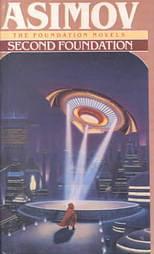

具体描述
Second Foundation is the third novel published of the Foundation series by Isaac Asimov, and the fifth in the in-universe chronology. It was first published in 1953 by Gnome Press.
Second Foundation saw multiple publications. The stories comprising this volume were originally published in Astounding Magazine (with different titles) between 1948 and 1950. Two other books of short stories were published shortly before, and decades later, Asimov wrote two further sequel novels and two prequels. Later writers have added authorized tales to the series. The Foundation series is often regarded as one of Isaac Asimov's best works, along with his Robot series.
The term also describes the organization by that name which is the focus of the book. The organization's existence (and nothing more) had been revealed in Foundation, searched for in Foundation and Empire, and makes brief appearances in this novel. It would not be described in detail until Foundation's Edge.
作者简介
Isaac Asimov was an American author and professor of biochemistry at Boston University, best known for his works of science fiction and for his popular science books. Asimov was one of the most prolific writers of all time, having written or edited more than 500 books and an estimated 90,000 letters and postcards. His books have been published in nine out of ten major categories of the Dewey Decimal Classification.
Asimov is widely considered a master of hard science fiction and, along with Robert A. Heinlein and Arthur C. Clarke, he was considered one of the "Big Three" science fiction writers during his lifetime. Asimov's most famous work is the Foundation Series; his other major series are the Galactic Empire series and the Robot series. The Galactic Empire novels are explicitly set in earlier history of the same fictional universe as the Foundation Series. Later, beginning with Foundation's Edge, he linked this distant future to the Robot and Spacer stories, creating a unified "future history" for his stories much like those pioneered by Robert A. Heinlein and previously produced by Cordwainer Smith and Poul Anderson. He wrote hundreds of short stories, including the social science fiction "Nightfall", which in 1964 was voted by the Science Fiction Writers of America the best short science fiction story of all time. Asimov wrote the Lucky Starr series of juvenile science-fiction novels using the pen name Paul French.
The prolific Asimov also wrote mysteries and fantasy, as well as much nonfiction. Most of his popular science books explain scientific concepts in a historical way, going as far back as possible to a time when the science in question was at its simplest stage. He often provides nationalities, birth dates, and death dates for the scientists he mentions, as well as etymologies and pronunciation guides for technical terms. Examples include Guide to Science, the three volume set Understanding Physics, Asimov's Chronology of Science and Discovery, as well as works on astronomy, mathematics, the Bible, William Shakespeare's writing and chemistry.
Asimov was a long-time member and vice president of Mensa International, albeit reluctantly; he described some members of that organization as "brain-proud and aggressive about their IQs". He took more joy in being president of the American Humanist Association. The asteroid 5020 Asimov, a crater on the planet Mars, a Brooklyn, New York elementary school, and a literary award are named in his honor.
目录信息
读后感
评分
评分
评分
评分
用户评价
这本书的魅力在于其氛围的营造,那是一种弥漫着理性光辉的忧郁感。它没有传统意义上的反派,或者说,最大的“反派”就是时间的不可逆转性和知识的局限性。角色之间的关系处理得非常微妙,充满了基于共同目标和不同策略之间的张力,那种“既合作又警惕”的状态,展现了高度智慧生物在面对共同危机时的真实写照。我非常欣赏作者对“传承”这一概念的处理,它不仅仅是知识的传递,更是一种心智模式和道德责任的无形之链。读到关键转折时,那种历史仿佛在手中被轻轻翻过的庄重感,令人屏息。这本书更像是一份来自未来的、经过深思熟虑的备忘录,它警示着我们,那些最宏伟的计划,往往需要最不起眼、最默默无闻的守护者去默默支撑。它提供的不是答案,而是关于如何提出正确问题的深刻洞察。
评分这本书最让我震撼的地方在于它对“预见性”和“自由意志”之间张力的极致挖掘。它探讨了一个令人不安的问题:如果未来可以被精确计算和规划,那么人类的选择还剩下多少真正的价值?那些致力于维护“大局”的精英们,他们所做的牺牲和努力,是否最终只是导向一个被预设好的终点?作者巧妙地设置了多重信息屏障和认知偏差,使得读者和书中的角色一样,始终处于一种信息不对称的状态,对真相的追寻充满了艰辛和不确定性。这种叙事手法极大地增强了阅读的沉浸感和悬疑感。书中对于机构内部运作的描述,那种层层叠叠的官僚主义、无形的规则和暗流涌动的权力斗争,处理得极其写实,即便是发生在遥远的未来,也让人感到无比的亲切和真实。它不是在炫耀奇观,而是在精妙地解剖一个复杂的社会系统是如何自我维持和自我毁灭的,这种对系统复杂性的迷恋,简直让人欲罢不能。
评分这本书的语言风格极其典雅,充满了那种古典文学特有的韵味,但又巧妙地融入了尖锐的现代思辨。我尤其被它对“秩序与混乱”之间辩证关系的阐述所吸引。作者似乎并不满足于描绘一个简单的善恶对立,而是将视角拉得极远,去审视那些构建文明的基石是如何在时间的长河中被侵蚀和重塑的。那些关于社会结构、权力运作的论述,虽然披着科幻的外衣,但其内核却指向了对现实世界中政治哲学最深刻的拷问。阅读过程中,我常常需要放慢速度,不是因为情节晦涩,而是因为某些段落的措辞和句法结构,需要细细品味才能体会到其中蕴含的张力和多重含义。它成功地营造了一种宏大叙事下的史诗感,角色的命运不再是他们自己能完全掌控的,而是被卷入到一个更为庞大、几乎是不可抗拒的历史洪流之中,这种无力感,被作者用一种近乎悲悯的笔触描绘了出来,让人在敬佩之余,也感到一丝寒意。
评分这本书的叙事方式简直是教科书级别的,那种抽丝剥茧的节奏感,让人仿佛置身于一个精密的钟表内部,每一个齿轮的转动都关乎到宏大的未来图景。作者对于人物内心世界的刻画入木三分,特别是主角在面对那种超越个体的、几乎是宿命般的抉择时所展现出的挣扎与克制,读来令人心神俱颤。那种深沉的孤独感和肩负的重任,通过细腻的心理描写,让读者得以真切体会到。我特别欣赏它在探讨“智慧的局限性”这一母题时的那种冷静和克制,没有流于简单的说教或煽情,而是通过一系列复杂的、充满灰色地带的事件来自然地揭示主题。情节的铺陈极其考究,每一个看似不经意的对话或场景,事后回想起来都会发现它埋下了未来关键转折的伏笔。这种结构上的严谨性,让我在阅读过程中不断地进行推测和反刍,仿佛自己也在参与到那场跨越时空的博弈之中。读完之后,那种意犹未尽的感觉非常强烈,它不像读完一部普通小说那样,而更像是完成了一次深刻的哲学思辨之旅,久久不能平息。
评分坦白说,这本书的阅读体验是具有挑战性的,它要求读者具备一定的耐心和对复杂概念的接受度。它不提供廉价的娱乐,而是提供深刻的思考。不同于那些节奏飞快的动作场面,这里的冲突往往发生在知识分子之间隐秘的智力交锋和对理论模型的构建与瓦解上。作者构建的世界观极其自洽,每一个设定,无论多么宏大或抽象,都有其内部的逻辑支撑。我尤其喜欢那种知识分子之间的对话,他们用一种近乎数学般的精确性来辩论,每一句话都像一把手术刀,精准地切入问题的核心。这种对智力游戏的偏爱,使得整本书的基调显得冷静而超脱。它迫使我跳出日常琐碎的思维定势,去思考更深层的结构性问题,比如文明的存续周期,以及隐藏在所有社会表象之下的决定性力量究竟是什么。这本书更像是一部思想的史诗,而非仅仅是一个故事。
评分阿西莫夫真是谋篇布局的高手,不到最后一刻不给出真正的答案,真是吊足的读者的胃口。文本逻辑出奇的完整,连诗意比喻都是解读答案的关键之一。第二帝国这神一样的组织,就这么抽身世外,成为传奇,大隐于宇宙。
评分阿西莫夫真是谋篇布局的高手,不到最后一刻不给出真正的答案,真是吊足的读者的胃口。文本逻辑出奇的完整,连诗意比喻都是解读答案的关键之一。第二帝国这神一样的组织,就这么抽身世外,成为传奇,大隐于宇宙。
评分阿西莫夫真是谋篇布局的高手,不到最后一刻不给出真正的答案,真是吊足的读者的胃口。文本逻辑出奇的完整,连诗意比喻都是解读答案的关键之一。第二帝国这神一样的组织,就这么抽身世外,成为传奇,大隐于宇宙。
评分阿西莫夫真是谋篇布局的高手,不到最后一刻不给出真正的答案,真是吊足的读者的胃口。文本逻辑出奇的完整,连诗意比喻都是解读答案的关键之一。第二帝国这神一样的组织,就这么抽身世外,成为传奇,大隐于宇宙。
评分阿西莫夫真是谋篇布局的高手,不到最后一刻不给出真正的答案,真是吊足的读者的胃口。文本逻辑出奇的完整,连诗意比喻都是解读答案的关键之一。第二帝国这神一样的组织,就这么抽身世外,成为传奇,大隐于宇宙。
相关图书





本站所有内容均为互联网搜索引擎提供的公开搜索信息,本站不存储任何数据与内容,任何内容与数据均与本站无关,如有需要请联系相关搜索引擎包括但不限于百度,google,bing,sogou 等
© 2026 book.quotespace.org All Rights Reserved. 小美书屋 版权所有