
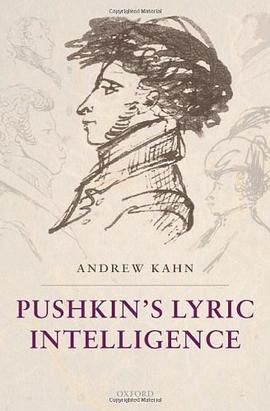

具体描述
Alexander Pushkin (1799-1837) is Russia's greatest poet, a 'founding father' of modern Russian literature, and a major figure in world literature. His poetry and prose changed the course of Russian culture, and his works inspired operas by Musorgsky and Tchaikovsky (as well as Peter Shaffer's Amadeus). Ceaselessly experimental, he is the author of the greatest body of lyric poetry in the language; a remarkable novelist in verse, and a pioneer of Russian prose fiction; an innovator in psychological and historical drama; and an amateur historian of serious purpose. Like Byron, whose writing and personality were an inspiration to him, Pushkin had a sensational life, the stuff of Romantic legend. His writing treats all the most important themes that great literature can addresss-the nature of identity, love and betrayal, independence and creativity, nature, the meaning of life, death and the afterlife-in an elegant style and highly personal voice. Lyric intelligence refers to Pushkin's capacity to transform philosophical and aesthetic ideas into poetry.Arguing that Pushkin's poetry has often been misunderstood as transparently simple, this first major study of this substantial body of work traces the interrelation between his writing and the influences of English and European literature and cultural movements on his understanding of the creative process and the aims of art. Andrew Kahn approaches Pushkin's poetic texts through the history of ideas, and argues that in his poetry the clashes that matter are not about stylistic innovation and genre, as has often been suggested. Instead the poems are shown to articulate a range of positions on key topics of the period, including the meaning of originality, the imagination, the status of the poet, the role of commercial success, the definition of genius, represenation of nature, the definition of the hero, and the immortality of the soul. Drawing on an extensive knowledge of Pushkin's library and his intellectual context, Pushkin's Lyric Intelligence addresses how theories of inspiration informed Pushkin's thinking about classicism and Romanticism in the 1820s and 1830s.The story of the unfolding of the imagination as a vital poetic power and concept for Pushkin is a consistent theme of the entire book. It is this movement towards a fuller apprehension and application of the imagination as the key poetic power that guided Pushkin's transitions through different phases of his creative development. The book looks at the intersection of Pushkin's knowledge of important ideas and artistic trends with poems about the creative imagination, psychology, sex and the body, heroism and the ethical life, and death.
作者简介
目录信息
读后感
评分
评分
评分
评分
用户评价
相关图书










本站所有内容均为互联网搜索引擎提供的公开搜索信息,本站不存储任何数据与内容,任何内容与数据均与本站无关,如有需要请联系相关搜索引擎包括但不限于百度,google,bing,sogou 等
© 2026 book.quotespace.org All Rights Reserved. 小美书屋 版权所有