
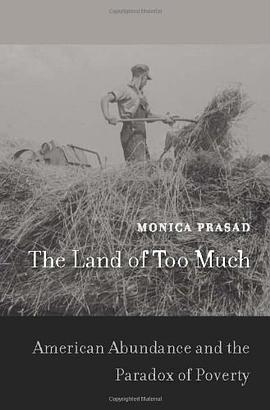
The Land of Too Much pdf epub mobi txt 电子书 下载 2026
- 政治学
- 美国
- 比较政治
- 政治经济学
- 社会学
- 美国政治
- 历史
- 政治社会学
- 中国经济
- 全球化
- 社会变迁
- 消费主义
- 中产阶级
- 城市化
- 文化批判
- 制度分析
- 发展悖论
- 未来展望

具体描述
The Land of Too Much presents a simple but powerful hypothesis that addresses three questions: Why does the United States have more poverty than any other developed country? Why did it experience an attack on state intervention starting in the 1980s, known today as the neoliberal revolution? And why did it recently suffer the greatest economic meltdown in seventy-five years? Although the United States is often considered a liberal, laissez-faire state, Monica Prasad marshals convincing evidence to the contrary. Indeed, she argues that a strong tradition of government intervention undermined the development of a European-style welfare state. The demand-side theory of comparative political economy she develops here explains how and why this happened. Her argument begins in the late nineteenth century, when America's explosive economic growth overwhelmed world markets, causing price declines everywhere. While European countries adopted protectionist policies in response, in the United States lower prices spurred an agrarian movement that rearranged the political landscape. The federal government instituted progressive taxation and a series of strict financial regulations that ironically resulted in more freely available credit. As European countries developed growth models focused on investment and exports, the United States developed a growth model based on consumption. These large-scale interventions led to economic growth that met citizen needs through private credit rather than through social welfare policies. Among the outcomes have been higher poverty, a backlash against taxation and regulation, and a housing bubble fueled by "mortgage Keynesianism." This book will launch a thousand debates.
作者简介
Monica Prasad is Associate Professor of Sociology and Faculty Fellow in the Institute for Policy Research at Northwestern University.
目录信息
Preface
Part I. Explaining American State Intervention
1. The Farmers’ Tour
2. Comparing Capitalisms
3. A Demand-Side Theory of Comparative Political Economy
Part II. The Agrarian Regulation of Taxation
4. The Non-History of National Sales Tax
5. The Land of Too Much
6. Progressive Taxation and the Welfare State
Part III. The Agrarian Regulation of Finance
7. American Adversarial Regulation
8. The Democratization of Credit
9. The Credit/Welfare State Trade-Off
Part IV. Conclusion
10. American Mortgage Keynesianism: Summary and Policy Implications
Notes
References
Acknowledgments
Index
* Figures:
2.1 Pre-tax and transfer inequality and post-tax and transfer inequality
3.1 Index of industrial production, 1870–1912
3.2 Index of agricultural output, 1869–1950
3.3 Index of manufacturing output, 1869–1941
3.4 Total GDP, 1820–1924
3.5 Wholesale commodity price index, 1848–1943
3.6 U.S. mortgage interest rates, 1869–1885
3.7 Index of agricultural output, 1889–1929
3.8 “How to see our wheat”
7.1 Restrictiveness of banking regulation before 1999
8.1 Index of activity in the building industry, 1925–1929 and 1932
10.1 Argument of the book
** Tables:
1.1 The United States compared to other industrialized countries
3.1 GDP per capita
4.1 Regional voting on sales tax in Congress, November 3 and 4, 1921, Republicans only
4.2 Regional preferences for sales tax in Congress, 1932
8.1 Regional voting on McFadden Act in House of Representatives, February 4, 1926
9.1 The demand for credit, 1980–2005
9.2 The effect of deregulation on credit for different levels of social spending
· · · · · · (收起)
读后感
有为政府的理念在中国始终是盛行的,近年来尤为昌盛。政府官员抱持这一理念自不待言。在新自由主义退潮和新发展主义兴起的背景下,这一理念在学界的拥趸也日益增多。将中国经济奇迹归功于“两手抓”,即市场“看不见的手”与政府“看得见的手”的联合作用,成为中国模式论(无...
评分英文原版的第一段: Doctors began to notice the first cases of the strange disease in 1959. Thousands of babies with stunted limbs and other severe birth defects were being born all over Germany, Britain, Sweden, Australia, dozens of countries. Many died fr...
评分英文原版的第一段: Doctors began to notice the first cases of the strange disease in 1959. Thousands of babies with stunted limbs and other severe birth defects were being born all over Germany, Britain, Sweden, Australia, dozens of countries. Many died fr...
评分马云说:“现今中国的贫富差距是非常大的。”他也在很多的讲演中阐述“穷人思维”与“富人思维”之间区别的观点。中国的第一富豪自然秉承了西方经济学理念与思考方式——钱生钱,资本化的理财与长期获利等。《过剩之地》是关于美国贫富悖论的学术著作,但在其中不难发现中国在...
评分有为政府的理念在中国始终是盛行的,近年来尤为昌盛。政府官员抱持这一理念自不待言。在新自由主义退潮和新发展主义兴起的背景下,这一理念在学界的拥趸也日益增多。将中国经济奇迹归功于“两手抓”,即市场“看不见的手”与政府“看得见的手”的联合作用,成为中国模式论(无...
用户评价
读完《The Land of Too Much》的篇名,我的脑海中立即被一股难以言喻的氛围所笼罩。它不像那种直白的,告诉你故事大概的标题,而是带着一种诗意和隐喻,勾勒出一个充满未知与想象空间的场景。我立刻联想到一些经典作品,它们的名字同样富有象征意义,能让读者在阅读之前就对作品的内核产生强烈的猜测和好奇。 “Too Much”这个词组,在不同的语境下,可以衍生出截然不同的含义。它可以是物质上的丰裕,可以是对某种情感的极致体验,也可以是一种压倒性的、令人窒息的存在。我很好奇,在这个“Too Much”之地,作者究竟将“太多”具象化为何物。是堆积如山的财富?是永不停歇的狂欢?还是,是某种更加抽象,但却更加令人不安的力量? 我反复琢磨着这个名字,试图从中解读出更多信息。也许,这个“Land”并非一个物理上的地理区域,而是一个精神上的国度,一个由人们内心的欲望与情绪所构建的领域。在那里,一切都被放大,一切都被推向极致。这种可能性,让我感到既兴奋又略带一丝恐惧。一个被极端情绪所统治的世界,会是怎样的景象? 我想象着,作者可能会用极其细腻的笔触,来描绘这个“Too Much”之地的细节。或许,每一个物件都带有超乎寻常的光泽,每一次对话都充满了过于浓烈的情感,甚至每一次呼吸,都带着某种令人晕眩的香气。这种极致的感官体验,如果处理得当,将极大地增强读者的代入感,让他们仿佛身临其境,亲身感受到“太多”所带来的冲击。 我期待作者能够在这本书中探讨“满足”与“欲望”之间的辩证关系。当一切都唾手可得,“太多”似乎就失去了它原有的吸引力。相反,那种“太多”所带来的惯性,可能会将人们拖入一个无底的深渊,让他们永远无法找到真正的满足。我渴望在书中看到角色们在这个“Land”中的挣扎与选择,他们是否会迷失其中,还是能够找到一条回归现实的道路? 作为一名热衷于文学作品中社会批判的读者,我预感《The Land of Too Much》可能隐藏着对当下社会某种现象的深刻反思。在现代社会,我们常常被各种信息、消费和欲望所包围,何尝不是生活在一个“Too Much”的时代?这本书或许能提供一个独特的视角,让我们审视自身所处的环境,以及这种“太多”对我们生活的影响。 我脑海中浮现出许多可能的情节。也许,主角会是一个在这个“Land”中迷失方向的旅行者,他带着最初的希望而来,却发现这里的一切都超出了他的想象。也许,他会遇到一些在这个“Land”中生活了很久的人,他们的眼神中可能充满了麻木,也可能闪烁着对某种真相的探寻。我期待看到这些角色的互动,以及他们在这个极端环境中的命运。 我对作者在语言风格上的驾驭能力充满了期待。想要描绘一个“Too Much”的世界,需要极高的文学功底。我猜想,作者可能会运用大量的修辞手法,例如夸张、比拟、甚至是反讽,来营造出那种极致而又充满张力的氛围。同时,我也希望作者能在浓墨重彩的描绘中,不失对人物内心世界的细腻刻画。 “Land of Too Much”这个名字,本身就带着一种宿命感,仿佛是那些沉溺于过度之中,无法自拔的人们的归宿。我好奇,作者会如何处理这种宿命。是让读者看到一种无可挽回的悲剧,还是会留下一些希望的火种,让人们相信改变的可能性?这种结局上的不确定性,反而让我更加渴望去阅读这本书。 在我看来,一个好的书名,就像一扇通往未知世界的大门。《The Land of Too Much》无疑就是这样一扇门,它向我展示了一个充满诱惑和挑战的领域。我迫不及待地想知道,门后究竟隐藏着怎样的故事,它会给我带来怎样的震撼,又会留下怎样的思考。
评分The title, "The Land of Too Much," immediately conjures a potent sense of hyperbole and an overwhelming saturation. It’s a name that suggests an extreme environment, a place where the very concept of moderation is absent, and where abundance, in whatever form it takes, is the defining characteristic, and potentially, the defining flaw. My mind races with possibilities: a land where desires are instantly met, leading to a profound sense of ennui, or perhaps a realm where emotions are amplified to an unbearable intensity, making even simple interactions fraught with peril. I can almost feel the texture of this land already. Perhaps it is a place where colours are so vibrant they vibrate, where sounds are so layered they create a constant hum, and where tastes are so intense they shock the palate. The author, I suspect, will employ a language that is equally unrestrained, using a vocabulary that overflows with descriptive power, mirroring the very condition of the land. This isn't a title that suggests subtlety; it promises a full-throttle immersion into a world that defies moderation. What kind of lives would be lived in such an environment? My mind drifts to characters who are either utterly consumed by their surroundings, their desires amplified to monstrous proportions, or those who are profoundly weary, their spirits crushed by the relentless, unearned satisfaction. I anticipate individuals whose internal struggles are deeply intertwined with the external reality of this "too much," creating compelling narratives of adaptation, resistance, or perhaps, inevitable surrender. The inherent paradox of "too much" is what truly captivates me. How does one find meaning or genuine happiness when there is no struggle, no longing, no appreciation for what is scarce? This title implies a profound philosophical inquiry into the nature of human desire and fulfillment. I’m eager to see how the author will dissect the idea that an abundance of everything might, in fact, lead to a poverty of spirit, a void that can never truly be filled. It's highly probable that this "Land of Too Much" serves as a powerful metaphor. It could represent the excesses of consumer culture, the relentless pursuit of more in our modern world, or even the overwhelming nature of emotions when they are not properly processed. The title beckons me to look beyond the literal and to engage with the underlying commentary on human society and individual psychology. There's a certain tragic potential inherent in the title. A place of "too much" could easily become a gilded cage, a place of superficial pleasure that ultimately leads to profound suffering. I anticipate a story that isn't afraid to explore the darker side of excess, the disillusionment that can follow the satiation of every desire. It’s this exploration of the melancholic undertones that truly intrigues me. The very concept of a "land" suggests a complete ecosystem, a world with its own rules and consequences. This title implies that the author has constructed an entire universe governed by the principle of "too much." I’m fascinated by the internal logic of this world, how its inhabitants navigate its unique challenges, and what lessons, if any, can be gleaned from their experiences. I expect the writing to be bold and unreserved, much like the land it describes. The author, I believe, will use language as an instrument of overwhelming sensation, pulling the reader into the very heart of this saturated existence. This is not a title for a reader seeking gentle escapism; it promises a challenging and potentially disorienting, yet ultimately rewarding, literary journey. "The Land of Too Much" is a title that whispers of grand scale and profound implications. It’s a promise of a world that is both alluring and unsettling, a place that will undoubtedly leave a lasting impression. I am drawn to the idea of exploring such an extreme environment, to witness its wonders and its potential horrors, and to ponder the elusive nature of true contentment.
评分这本书的名字,《The Land of Too Much》,光听起来就充满了某种奇特的诱惑力,仿佛是一个被无限放大、色彩斑斓的世界,又或者是一个潜藏着某种过度或失衡的危机之地。作为一名平日里就喜欢在书海中探索未知领域的读者,我总是会被那些名字中带着“某某之地”或者“某某王国”的作品所吸引。它们往往预示着一个完整的、自成一体的叙事宇宙,能够将读者带入一个全新的认知维度,体验不同于现实的规则与情感。 《The Land of Too Much》这个名字,在我脑海中勾勒出了无数的可能性。它可能是一个物质极度丰富,每个人都拥有数不清的财富与享受的乌托邦,但也可能因此滋生出无聊、空虚,甚至是对生存意义的迷失。想象一下,当一切触手可及,不再需要努力和奋斗,生活是否还会保有原有的激情与意义?反过来,它也可以是一个充斥着极端情绪、过度追求、或者失控欲望的负面之地。在那里,快乐或许会变得刺耳,悲伤可能吞噬一切,每一种情感都被放大到极致,压得人喘不过气。 我尤其好奇的是,作者将如何处理“太多”这个概念。是将其具象化为具体的物体、数量,还是将其抽象化为一种普遍存在的氛围?如果是一个实体王国,那么这里的“太多”又体现在哪些方面?是太多的阳光,太多的食物,太多的音乐,还是太多的……悲剧?又或者,它根本就不是一个地理上的“地方”,而是一个心理上的“境界”?是那些被欲望驱动,永远不知满足的人们心中构建的幻象,亦或是社会集体无意识的投射? 我设想着,作者可能运用了非常丰富的意象和象征手法来构建这个“太多”之地。也许,笔触会非常浓烈,色彩会饱和到令人目眩,声音会嘈杂到震耳欲聋,气味会浓郁到让人晕眩。又或者,作者会用一种极其冷静、克制的笔调,来描绘这个“太多”的景象,形成一种强烈的反差,让读者在平静的叙述中感受到潜在的危机和不安。这种叙事上的张力,往往是吸引我深入阅读的关键。 我期待作者能够深入探讨“拥有”与“失去”的关系。当一个人或一个社会拥有了“太多”,是否意味着他们也更容易失去那些真正重要的东西?例如,在过度富足之地,人们是否会失去对平凡生活的感恩之心,对人际情感的珍视,甚至是对生命本身的敬畏?《The Land of Too Much》这个名字,似乎就蕴含着这种深刻的哲学思考,它不仅仅是一个故事的背景,更是一个引发读者反思的契机。 我相信,作者在创作《The Land of Too Much》时,必定有过一番深思熟虑。这个名字本身就充满了张力,它既可以被解读为极致的享受,也可以被视为一种令人窒息的负担。我猜想,故事的走向可能并非一成不变的线性发展,而是充满了转折和意想不到的事件。也许,主角会在这个“太多”之地经历一场蜕变,从沉溺于物质的享乐,到领悟到精神的贫瘠;又或者,他们会试图逃离这个被过度填满的世界,寻找一片真正属于自己的宁静之地。 我脑海中浮现出各种各样的场景。或许是堆积如山的珍宝,耀眼夺目,却无法填补内心的空虚;或许是永不停歇的宴会,觥筹交错,却掩盖不住彼此的疏离;又或许是人们脸上永远挂着的、过于灿烂的笑容,背后却藏着无法言说的苦涩。这些画面感十足的想象,都让我更加期待作者如何将文字转化为如此具象、又如此抽象的体验。 《The Land of Too Much》这个名字,对于一个追求深度阅读的读者来说,无疑是一个巨大的诱惑。它预示着一个复杂的主题,一个可能充满讽刺意味的故事,以及一个能够引发强烈共鸣的情感内核。我渴望跟随作者的笔触,一同走进这个可能光怪陆离,也可能发人深省的“太多”之地,去探索那些被无限放大后的人性,去感受那些被极端情绪所裹挟的命运,并从中获得属于自己的感悟与启示。 我有一种预感,这本书的语言风格可能会非常独特。或许是华丽辞藻的堆砌,以营造出“太多”的繁复感;又或许是简洁明快的叙述,在看似平淡的文字中,暗藏着巨大的信息量和情感张力。我非常好奇作者会选择哪种方式来呈现这个“太多”的世界,又会通过怎样的叙事技巧,让读者深刻体会到“太多”所带来的困境与哲思。 “太多”这个词,本身就带着一种矛盾的意味。它可以是富足,也可以是匮乏;可以是快乐,也可以是痛苦。我猜测,《The Land of Too Much》的核心,或许就在于对这种矛盾的深刻揭示。它可能不仅仅是在描绘一个地方,更是在审视一种状态,一种普遍存在于人类社会和个体心灵中的,对于“更多”的永恒渴望,以及这种渴望所带来的,意想不到的后果。
评分The title, "The Land of Too Much," immediately evokes a powerful sense of hyperbole and an overwhelming saturation. It’s a name that suggests an extreme environment, a place where the very concept of moderation is absent, and where abundance, in whatever form it takes, is the defining characteristic, and potentially, the defining flaw. My mind races with possibilities: a land where desires are instantly met, leading to a profound sense of ennui, or perhaps a realm where emotions are amplified to an unbearable intensity, making even simple interactions fraught with peril. I can almost feel the texture of this land already. Perhaps it is a place where colours are so vibrant they vibrate, where sounds are so layered they create a constant hum, and where tastes are so intense they shock the palate. The author, I suspect, will employ a language that is equally unrestrained, using a vocabulary that overflows with descriptive power, mirroring the very condition of the land. This isn't a title that suggests subtlety; it promises a full-throttle immersion into a world that defies moderation. What kind of lives would be lived in such an environment? My mind drifts to characters who are either utterly consumed by their surroundings, their desires amplified to monstrous proportions, or those who are profoundly weary, their spirits crushed by the relentless, unearned satisfaction. I anticipate individuals whose internal struggles are deeply intertwined with the external reality of this "too much," creating compelling narratives of adaptation, resistance, or perhaps, inevitable surrender. The inherent paradox of "too much" is what truly captivates me. How does one find meaning or genuine happiness when there is no struggle, no longing, no appreciation for what is scarce? This title implies a profound philosophical inquiry into the nature of human desire and fulfillment. I’m eager to see how the author will dissect the idea that an abundance of everything might, in fact, lead to a poverty of spirit, a void that can never truly be filled. It's highly probable that this "Land of Too Much" serves as a powerful metaphor. It could represent the excesses of consumer culture, the relentless pursuit of more in our modern world, or even the overwhelming nature of emotions when they are not properly processed. The title beckons me to look beyond the literal and to engage with the underlying commentary on human society and individual psychology. There's a certain tragic potential inherent in the title. A place of "too much" could easily become a gilded cage, a place of superficial pleasure that ultimately leads to profound suffering. I anticipate a story that isn't afraid to explore the darker side of excess, the disillusionment that can follow the satiation of every desire. It’s this exploration of the melancholic undertones that truly intrigues me. The very concept of a "land" suggests a complete ecosystem, a world with its own rules and consequences. This title implies that the author has constructed an entire universe governed by the principle of "too much." I’m fascinated by the internal logic of this world, how its inhabitants navigate its unique challenges, and what lessons, if any, can be gleaned from their experiences. I expect the writing to be bold and unreserved, much like the land it describes. The author, I believe, will use language as an instrument of overwhelming sensation, pulling the reader into the very heart of this saturated existence. This is not a title for a reader seeking gentle escapism; it promises a challenging and potentially disorienting, yet ultimately rewarding, literary journey. "The Land of Too Much" is a title that whispers of grand scale and profound implications. It’s a promise of a world that is both alluring and unsettling, a place that will undoubtedly leave a lasting impression. I am drawn to the idea of exploring such an extreme environment, to witness its wonders and its potential horrors, and to ponder the elusive nature of true contentment.
评分The title, "The Land of Too Much," immediately conjures a potent sense of hyperbole and an overwhelming sensory experience. It’s a name that doesn't just denote a setting; it defines an entire condition, a state of existence where the usual human experiences of scarcity and longing are rendered obsolete. My mind floods with images of places where every sense is perpetually stimulated, perhaps to the point of being numbed, where excess is not an occasional indulgence but the very fabric of reality. I can already anticipate the author’s approach to language. To capture a "Land of Too Much" would likely require an equally unrestrained, perhaps even baroque, prose style. Imagine sentences that bloom with an abundance of adjectives, descriptions that are so layered and rich they become almost tangible, creating a feeling of being submerged in the narrative. This title suggests a book that is unafraid to be decadent, to luxuriate in its own extravagance and immerse the reader in a world that is as overwhelming as it is fascinating. The inhabitants of such a place are also a subject of immense curiosity. Would they be figures of profound apathy, their desires dulled by the constant, effortless fulfillment of every whim? Or would they be driven to ever-more extreme acts in a desperate search for novelty, for a challenge, for something that can truly break through the pervasive monotony of unending plenty? I expect characters whose internal landscapes are profoundly shaped by their external reality, individuals wrestling with the paradox of having everything yet potentially feeling like they have nothing. At its core, the title "The Land of Too Much" seems to promise a deep exploration of human desire and satisfaction. What happens to the human spirit when the fundamental drive of scarcity is removed? Does life become more meaningful, or does it descend into a hollow existence where purpose is lost? I anticipate a narrative that dissects these philosophical questions, using the extreme setting to illuminate the often-elusive nature of genuine contentment. This "Land of Too Much" feels like a potent and timely metaphor. It could easily represent our own increasingly consumerist and information-saturated world, a society that constantly urges us to acquire more, to experience more, to be more. The title suggests that the book might offer a critical, perhaps even cautionary, perspective on these modern trends, prompting reflection on the true cost of our relentless pursuit of "more." There's an undeniable dramatic irony inherent in the concept of "too much." A land that appears to be a paradise of endless bounty could very well be a gilded cage, a place of superficial pleasure that ultimately leads to profound emptiness. I’m eager to see how the author will build this tension, how the initial allure of the land will gradually give way to the stark realities of its inherent flaws and the potential despair it breeds. The title also implies a carefully constructed world, a "land" with its own unique rules and characteristics. I'm fascinated to discover the internal logic of this place, how its inhabitants navigate its specific challenges, and what consequences arise from a society built on the principle of unending excess. It suggests a narrative that is not just a collection of events, but a fully realized, self-contained universe. I anticipate that the writing style will be as uninhibited as the setting it describes. The author, I believe, will wield language with a deliberate intensity, creating an immersive experience that mirrors the overwhelming nature of the "Land of Too Much." This isn't a title that promises quiet contemplation; it suggests a powerful, potentially disorienting, but ultimately deeply rewarding literary exploration. "The Land of Too Much" is a title that speaks of grand ambition and profound thematic depth. It’s a promise of a journey into the extraordinary, a world that challenges our assumptions and forces us to confront uncomfortable truths about ourselves and our society. I am compelled by the prospect of entering such a unique and thought-provoking realm.
评分The title, "The Land of Too Much," immediately paints a picture of an extreme environment, a place where the very concept of moderation is absent. It’s a name that suggests an overwhelming saturation, a world where an abundance of something – be it material wealth, emotions, or experiences – has become the defining characteristic, and perhaps, the defining flaw. My mind immediately begins to construct possibilities: a land where desires are instantly met, leading to a profound sense of ennui, or perhaps a realm where emotions are amplified to an unbearable intensity, making even simple interactions fraught with peril. I imagine the author will employ a narrative style that is as unrestrained as the land it depicts. The prose, I suspect, will be rich, perhaps even opulent, with descriptions that are layered and evocative, mirroring the overwhelming nature of the setting. It’s a title that promises an immersive experience, a plunge into a world so vividly rendered that the reader can almost feel the weight of its excess. This isn’t a story that whispers; it roars, inviting the reader to experience its intensity firsthand. The inhabitants of such a place are equally fascinating to contemplate. Would they be figures of ultimate contentment, their lives devoid of struggle and therefore, perhaps, devoid of true meaning? Or would they be driven to extraordinary lengths in a desperate search for novelty, for a challenge, for something that can pierce the veil of unending satisfaction? I anticipate characters whose inner lives are deeply scarred or shaped by their environment, individuals grappling with the paradox of having everything yet feeling a profound sense of emptiness. At its heart, "The Land of Too Much" seems poised to explore the complex relationship between desire and fulfillment. What happens when the fundamental human drive for more is constantly and effortlessly satisfied? Does this lead to genuine happiness, or does it, conversely, lead to a state of profound dissatisfaction, a longing for a lack that can never be experienced? I expect a narrative that delves into these philosophical quandaries, using the extreme setting as a lens to examine the human condition. This concept of a "Land of Too Much" feels like a potent and perhaps even prescient metaphor. It could serve as a commentary on our increasingly consumerist and information-saturated world, a society that often encourages us to acquire more, to experience more, to simply *be* more, without necessarily asking if "more" equates to "better." The title suggests that the book might offer a critical, and possibly cautionary, perspective on these societal trends. There’s a built-in dramatic irony in the very idea of "too much." A place that appears to be a utopia, overflowing with every conceivable good, could very well be a subtle dystopia, a gilded cage where superficial pleasure masks a deeper, more pervasive despair. I’m eager to see how the author will build this tension, how the initial allure of abundance will gradually reveal its darker, more insidious undercurrents. The title implies a complete, self-contained world, a "land" with its own unique characteristics and rules. I am particularly intrigued by the internal logic of this setting. How do its inhabitants navigate a reality where moderation is a foreign concept? What are the consequences of living in a place where excess is the norm? This suggests a narrative that is not merely anecdotal but deeply rooted in the world it creates. I anticipate that the writing will be as bold and uninhibited as the land it describes. The author, I believe, will use language as a tool of overwhelming sensation, pulling the reader into the very heart of this saturated existence. This is not a title that promises a gentle diversion; it signals a powerful, potentially disorienting, yet ultimately deeply rewarding literary immersion. "The Land of Too Much" is a title that resonates with grand ambition and the promise of significant thematic exploration. It’s an invitation to step into an extraordinary realm, one that challenges our assumptions and offers a unique perspective on the nature of desire, contentment, and the often-elusive balance of life. I am ready to be transported to this captivating, and perhaps even unsettling, land.
评分The very sound of "The Land of Too Much" arrests my attention, conjuring immediate, vivid imagery. It’s a title that doesn't just suggest a setting; it asserts a condition, a state of being. My mind immediately conjures a world overflowing, perhaps even drowning, in its own offerings. Is it a literal place, a kingdom or continent where the very air is thick with excess, or is it a metaphorical landscape, a psychological state that many can find themselves in? This ambiguity is precisely what draws me in. I’m trying to picture the sensory overload this title implies. Imagine a place where colors are so vibrant they ache, where flavors are so intense they overwhelm, where sounds are a ceaseless cacophony of pleasure or perhaps a maddening drone. The very concept of "too much" suggests a deviation from natural balance, a distortion that could manifest in myriad ways. I envision the author using incredibly rich, perhaps even baroque, descriptive language to paint this picture, each sentence a brushstroke layering on more detail, more intensity, until the reader feels as saturated as the land itself. What kind of characters would inhabit such a place? Are they dulled by their endless bounty, their desires blunted by the constant fulfillment? Or are they driven to more extreme forms of seeking, desperate to find something, anything, that can offer a genuine challenge or a fleeting sense of novelty? I anticipate characters whose inner lives are profoundly shaped by their environment, perhaps exhibiting a peculiar kind of ennui, or conversely, an unquenchable, almost pathological, thirst for more, even when "more" is already an insurmountable mountain. The inherent paradox of "too much" is what truly fascinates me. How does one achieve happiness, or even mere contentment, when there are no boundaries, no sense of earned reward, no appreciation for scarcity? This title suggests a deep exploration of the human condition, touching upon themes of desire, satisfaction, and the potential emptiness that can arise from an abundance of everything. I expect a narrative that probes the very essence of what it means to be human when the fundamental drive for survival and acquisition is rendered obsolete. I’m particularly curious about the narrative structure this title might inspire. Will it be a sweeping epic, detailing the rise and fall of this land of excess? Or will it be a more intimate character study, focusing on individuals attempting to carve out meaning within such an overwhelming environment? The possibilities are vast, and the title acts as a tantalizing invitation to discover which path the author has chosen. I imagine a story that isn't afraid to be bold, to push boundaries, and to confront uncomfortable truths about human nature. The very idea of a "land" implies a cohesive world, with its own rules and inhabitants. This title suggests a universe unto itself, where the concept of "too much" is not an anomaly but the fundamental law. I’m eager to see how these rules manifest, how they shape the lives of the characters, and what consequences arise from living in a place where moderation is a forgotten concept. It’s the potential for a unique, self-contained narrative that truly excites me. I suspect the author will employ a masterful use of symbolism. The "too much" could represent anything from material wealth and consumerism to unchecked ambition and emotional indulgence. The land itself might be a metaphor for societal trends or the collective unconscious. This layered approach, where the literal narrative serves as a vehicle for deeper philosophical inquiry, is something I greatly appreciate in literature. There's a certain tragic potential inherent in the title. A place of "too much" could easily become a gilded cage, a place of superficial pleasure that ultimately leads to profound suffering. I anticipate a story that isn't afraid to explore the darker side of excess, the disillusionment that can follow the satiation of every desire. It’s this exploration of the melancholic undertones that truly intrigues me. The title "The Land of Too Much" feels like a promise of an experience that is both grand and unsettling. It’s a place that dares you to enter, to confront the implications of unrestrained abundance. I am ready to be transported to this extraordinary setting, to witness its wonders and its potential horrors, and to emerge with a changed perspective on the nature of human desire and the often-elusive pursuit of contentment.
评分The mere title, "The Land of Too Much," immediately sparks a cascade of sensory details and abstract concepts in my mind. It’s a name that doesn't just name a place; it defines its very essence, suggesting an overwhelming abundance that borders on the extreme, perhaps even the dysfunctional. My imagination conjures images of a world where limitations are foreign, where every desire is met with an almost suffocating ease, and where the very air might be thick with the scent of overindulgence. I can almost feel the texture of this land already. Perhaps it is a place where colours are so saturated they vibrate, where sounds are so layered they create a constant hum, and where tastes are so intense they shock the palate. The author, I suspect, will employ a language that is equally unrestrained, using a vocabulary that overflows with descriptive power, mirroring the very condition of the land. This isn't a title that suggests subtlety; it promises a full-throttle immersion into a world that defies moderation. What kind of lives would be lived in such an environment? My mind drifts to characters who are either utterly consumed by their surroundings, their desires amplified to monstrous proportions, or those who are profoundly weary, their spirits crushed by the relentless, unearned satisfaction. I anticipate individuals whose internal struggles are deeply intertwined with the external reality of this "too much," creating compelling narratives of adaptation, resistance, or perhaps, inevitable surrender. The inherent paradox of "too much" is what truly captivates me. How does one find meaning or genuine happiness when there is no struggle, no longing, no appreciation for what is scarce? This title implies a profound philosophical inquiry into the nature of human desire and fulfillment. I’m eager to see how the author will dissect the idea that an abundance of everything might, in fact, lead to a poverty of spirit, a void that can never truly be filled. It's highly probable that this "Land of Too Much" serves as a powerful metaphor. It could represent the excesses of consumer culture, the relentless pursuit of more in our modern world, or even the overwhelming nature of emotions when they are not properly processed. The title beckons me to look beyond the literal and to engage with the underlying commentary on human society and individual psychology. I envision a narrative that is not afraid to confront the darker implications of such an existence. A place of perpetual ease could very well be a gilded cage, offering superficial pleasure while ultimately stifling growth and genuine connection. The title itself hints at a potential for tragedy, a warning that unchecked abundance can lead to a peculiar form of suffering, one born not of lack, but of overwhelming presence. The very concept of a "land" suggests a complete ecosystem, a world with its own rules and consequences. This title implies that the author has constructed an entire universe governed by the principle of "too much." I’m fascinated by the internal logic of this world, how its inhabitants navigate its unique challenges, and what lessons, if any, can be gleaned from their experiences. I expect the writing to be bold and unreserved, much like the land it describes. The author, I believe, will use language as an instrument of overwhelming sensation, pulling the reader into the very heart of this saturated existence. This is not a title for a reader seeking gentle escapism; it promises a challenging and potentially disorienting, yet ultimately rewarding, literary journey. "The Land of Too Much" is a title that whispers of grand scale and profound implications. It’s a promise of a world that is both alluring and unsettling, a place that will undoubtedly leave a lasting impression. I am drawn to the idea of exploring such an extreme environment, to witness its wonders and its potential horrors, and to ponder the elusive nature of true contentment.
评分The name, "The Land of Too Much," immediately conjures a sense of hyperbole and an almost overwhelming saturation. It’s a title that hints at a world where the very fabric of existence is amplified, where ordinary concepts are stretched to their breaking point. My mind races with possibilities: is this a land of opulent feasts that never end, of skies perpetually ablaze with an unnatural light, or perhaps of emotions that rage with an intensity that borders on the unmanageable? This title speaks to an extreme, and it's this very extremity that hooks my reader's curiosity. I can visualize the author painstakingly crafting this world, perhaps using language so dense and vivid that it mirrors the very concept of "too much." Imagine sentences that spill over with adjectives, descriptions that are layered so thickly that the reader can almost feel the oppressive weight of this abundance. It suggests a narrative that isn't afraid to be extravagant, to revel in the richness of its own creation, and to plunge the reader headfirst into a sensory experience of unparalleled scale. What kind of inhabitants would thrive, or perhaps merely survive, in such a landscape? My imagination paints them as figures of extreme behavior, either dulled into apathy by the sheer constant gratification, or driven to frantic pursuits in a desperate attempt to find something that is truly new, something that can cut through the pervasive sense of *sameness* that "too much" might breed. I’m intrigued by the potential for characters who are both products of and rebels against their environment, individuals grappling with the paradox of having everything yet potentially feeling like they have nothing. The very essence of this title, for me, lies in its exploration of balance, or rather, the profound imbalance it represents. What happens when the concept of scarcity, a fundamental driver of so much of human endeavor, is removed? Does life become more meaningful, or does it devolve into a form of existential ennui? I anticipate a story that delves deeply into the philosophical implications of such a world, questioning the true nature of happiness and fulfillment when the struggle for it is eradicated. I envision this "Land of Too Much" as a potent metaphor for many aspects of contemporary life. Are we, in our own way, not already living in a land of too much information, too much consumption, too much expectation? This title suggests that the book might offer a critical lens through which to view our own reality, prompting reflection on the consequences of unchecked desire and the potential pitfalls of a society that constantly strives for more. The potential for dramatic irony in such a setting is immense. A land that appears to be a paradise, overflowing with every conceivable good, could secretly be a profound prison. I’m eager to see how the author will build this tension, how the initial allure of abundance will gradually give way to the stark realities of its downsides. The title itself seems to whisper a warning, a suggestion that what appears to be a blessing might, in fact, be a curse. My expectation is that the narrative will be rich in symbolic representation. The "too much" could be a stand-in for any number of societal ills or individual obsessions. The author might be using this fantastical setting to comment on deeper, more pressing issues, offering a unique and memorable way to explore complex themes. This multi-layered storytelling approach is something I always seek out. The sheer audacity of the title, "The Land of Too Much," suggests a story that is unafraid to be bold and unconventional. It promises an escape from the mundane, a journey into a realm that defies ordinary logic and expectation. I am drawn to books that challenge my perceptions and offer new ways of seeing the world, and this title strongly indicates that this book will do just that. I can already feel the impact this story might have. It has the potential to be a truly immersive experience, a world so vividly rendered that it lingers long after the last page is turned. The title acts as a beacon, guiding me towards a narrative that promises to be both grand in its scope and profound in its insights, leaving me with much to ponder about the nature of plenty and the elusive quest for true contentment.
评分The title, "The Land of Too Much," immediately sparked my imagination, conjuring images of a place saturated with an overwhelming abundance, perhaps to a point of excess or even dysfunction. As someone who relishes narratives that explore abstract concepts through tangible settings, this title promised a deep dive into the ramifications of excess, whether material, emotional, or societal. It hints at a world where the usual limitations of scarcity are absent, replaced by a different set of challenges that arise from an overabundance. I began to envision the potential landscapes this title might evoke. Is it a land where every wish is instantly granted, leading to a pervasive sense of boredom and a lack of purpose? Or is it a place where emotions are amplified to an unbearable degree, making even joy feel exhausting and sorrow all-consuming? The duality inherent in "too much" – the potential for utopia and dystopia to coexist – is what makes this title so compelling. It suggests a complexity that goes beyond a simple depiction of wealth or luxury. My mind immediately started to race with possible plotlines. Perhaps the story would follow an individual who stumbles upon this land, initially captivated by its apparent splendor, only to slowly uncover the hidden costs of such boundless excess. Or perhaps the narrative would focus on the inhabitants of this land, detailing their daily lives, their struggles with contentment, and their attempts to navigate a world where the very concept of limitation has been eradicated. I anticipate a story that dissects the human psyche under conditions of extreme plenty. I’m particularly curious about how the author will handle the sensory details of this "Land of Too Much." Will it be a riot of colors, sounds, and tastes, so overwhelming that it becomes disorienting? Or will the author employ a more subtle, perhaps even minimalist, approach, allowing the inherent concept of "too much" to speak for itself, creating a chilling effect through what is implied rather than explicitly described? The choice of descriptive language will be crucial in shaping the reader's perception of this unique setting. The title also suggests a potential for profound philosophical exploration. What does it truly mean to have "too much"? Does it lead to true happiness, or does it create a void that can never be filled? I anticipate the author will delve into questions of desire, satisfaction, and the very nature of human contentment. This book, I suspect, will not just be a story, but a thought experiment, inviting readers to question their own relationship with abundance and excess. I can already feel the weight of the narrative that might unfold. Perhaps the story will be a cautionary tale, highlighting the dangers of unchecked desire and the potential for even the most benevolent of circumstances to turn sour when taken to an extreme. Or, it might be a more nuanced exploration, acknowledging that while excess can be problematic, it can also lead to unexpected discoveries and a deeper understanding of what truly matters. The phrase "Land of Too Much" carries an inherent sense of irony. It suggests a place that, on the surface, seems desirable, but upon closer inspection, reveals its inherent flaws. I envision a narrative filled with subtle critiques of societal values, perhaps questioning our own culture's obsession with acquisition and growth. The title acts as a signpost, directing us towards a story that will likely be both entertaining and thought-provoking. I’m eager to see how the author balances the fantastical elements of this "Land" with relatable human experiences. Even in a world of excess, the characters' emotions, their relationships, and their internal struggles should resonate with the reader. The success of the book will lie in its ability to make the extraordinary feel somehow familiar, to find the human element amidst the overwhelming abundance. The title itself promises a rich tapestry of narrative possibilities. It could be a journey of self-discovery, a quest for meaning in a world devoid of struggle, or even a descent into madness brought on by the sheer weight of unending plenty. The ambiguity of "too much" is what makes this title so captivating, leaving the reader to ponder the various interpretations and the potential outcomes. Ultimately, "The Land of Too Much" beckons to me as a reader seeking an experience that is both intellectually stimulating and emotionally resonant. It promises a world unlike any other, a place where the familiar concepts of need and desire are twisted and amplified, offering a unique lens through which to examine the human condition. I am ready to be immersed in this extraordinary setting and to explore the profound questions it is sure to raise.
评分非常喜欢。核心问题是解释为什么战后美国没有建立欧洲式的福利国家。从财税和金融两个角度切入,分别解释战后累进税制、破产制度、银行监管、信贷制度分别是如何成形的。揭示19世纪末美国农业大发展以及中西部农业利益集团在其中扮演的重要作用。也涉及金融化、金融危机等问题。字数限制,难以展开。
评分在龙哥的带领下第一次尝试的外文专著,也只能说是“读过”了,关于书的内容,诸位可参见《清华社会学评论》中有关这本书的书评
评分非常喜欢。核心问题是解释为什么战后美国没有建立欧洲式的福利国家。从财税和金融两个角度切入,分别解释战后累进税制、破产制度、银行监管、信贷制度分别是如何成形的。揭示19世纪末美国农业大发展以及中西部农业利益集团在其中扮演的重要作用。也涉及金融化、金融危机等问题。字数限制,难以展开。
评分延续上一本的观点,转而研究了对抗性经济体制是如何产生的。强调农业生产过剩问题在特定政治体制中的展开以及随之而来的有限的路径依赖。方法上而言,从传统史学叙事、比较历史研究到时间序列分析都用上了……但是生产过剩、国际贸易体系的变化并没有被很好的处理。只讨论了政府收入的结构,没有讨论政府支出的结构。
评分在龙哥的带领下第一次尝试的外文专著,也只能说是“读过”了,关于书的内容,诸位可参见《清华社会学评论》中有关这本书的书评
相关图书




本站所有内容均为互联网搜索引擎提供的公开搜索信息,本站不存储任何数据与内容,任何内容与数据均与本站无关,如有需要请联系相关搜索引擎包括但不限于百度,google,bing,sogou 等
© 2026 book.quotespace.org All Rights Reserved. 小美书屋 版权所有