

具体描述
Book Description
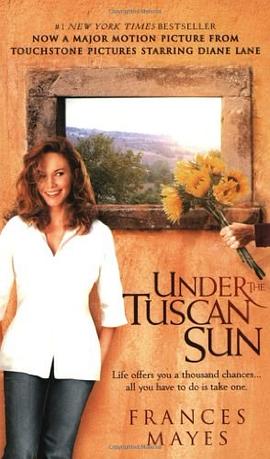
Frances Mayes - widely published poet, gourmet cook and travel writer - opens the door on a wondrous new world when she buys and restores an abandoned villa in the spectacular Tuscan countryside. She finds faded frescoes beneath the whitewash in the dining room, a vineyard under wildly overgrown brambles - and even a wayward scorpion under her pillow. And from her traditional kitchen and simple garden she creates dozens of delicious seasonal recipes, all included in this book.
In the vibrant local markets and neighbouring hill towns, the author explores the nuances of the Italian landscape, history and cuisine. Each adventure yields delightful surprises - the perfect panettone, an unforgettable wine, or painted Etruscan tombs. Doing for Tuscany what Peter Mayle did for Provence, Mayes writes about the tastes and pleasures of a foreign country with gusto and passion. A celebration of the extraordinary quality of life in Tuscany, Under the Tuscan Sun is a feast for all the senses.
Amazon.com
In this memoir of her buying, renovating and living in an abandoned villa in Tuscany, Frances Mayes reveals the sensual pleasure she found living in rural Italy and the generous spirit she brought with her. She revels in the sunlight and the colour, the long view of her valley, the warm homey architecture, the languor of the slow paced days, the vigor of working her garden and the intimacy of her dealings with the locals. Cooking, gardening, tiling and painting are never chores, but skills to be learned, arts to be practiced and above all to be enjoyed. At the same time Mayes brings a literary and intellectual mind to bear on the experience, adding depth to this account of her enticing rural idyll.
From Publishers Weekly
Mayes's favorite guide to Northern Italy allots seven pages to the town of Cortona, where she owns a house. But here she finds considerably more to say about it than that, all of it so enchanting that an armchair traveler will find it hard to resist jumping out of the chair and following in her footsteps. The recently divorced author is euphoric about the old house in the Tuscan hills that she and her new lover renovated and now live in during summer vacations and on holidays. A poet, food-and-travel writer, Italophile and chair of the creative writing department at San Francisco State University, Mayes is a fine wordsmith and an exemplary companion whose delight in a brick floor she has just waxed is as contagious as her pleasure in the landscape, architecture and life of the village. Not the least of the charms of her book are the recipes for delicious meals she has made. Above all, her observations about being at home in two very different cultures are sharp and wise.
From Booklist
It takes a determined effort to read this account of restoring and enjoying a Tuscan farmhouse without experiencing a violent attack of adolescent jealousy. Why her and not me, you'll be screaming as writer and professor Mayes describes languorous lunches on the patio, local wine flowing freely and olive pits casually pitched toward the nearby stone wall. Yes, there were problems--wells running dry, workers vanishing--but the image Mayes creates of her house, the Italian countryside, and her summers there with fellow professor Ed and sundry visitors is nothing short of idyllic: a real-life version of the film Stealing Beauty, but without the funny-looking sculpture scarring the landscape. Mayes' delightful recipes, evocative descriptions of the nearby village of Cortona, and thoughtful musings on the Italian spirit only add to the pleasure. This is armchair travel at its most enticing. Can we really blame ourselves for wanting to strap Mayes down in some ratty armchair while we go live in her farmhouse
Bill Ott
From Library Journal
In a carefully written story, poet Mayes (Ex Voto, Lost Roads, 1995), who chairs the creative writing department at San Francisco State University, recounts the purchase and renovation of an abandoned Tuscan villa. She begins with the 1990 search with her companion, Ed, for a summer home to take the place of the rented farmhouses of past years. They finally decide on Bramasole ("Yearning for the Sun"), a villa with 17 rooms and a garden that has been standing empty for 30 years. There is the ordeal of getting money transferred via the tangled Italian banking system, as well as bringing together the owner, builders, and government officials to get the necessary work done. The daunting process requires several years. Meanwhile, Mayes finds Italian country life a healthy antidote to hectic San Francisco, enjoying, for example, the fruits of her own garden, friends in the village, and the first olive harvest. This is an unusual memoir of one woman's challenge to herself and its successful transformation into a satisfying opportunity to improve the quality of her life.
William R. Smith, Johns Hopkins Univ. Lib., Baltimore
From AudioFile
Let the Tuscan sun warm you. Listeners can savor the delights of the countryside, fresh food, flowers and Italian village life through Frances Mayes's memoir of restoring a stone villa in Tuscany and her exploration of the surrounding countryside. For listeners who prefer to hear authors reading their own works, poet, teacher and food critic Mayes reads this abridgment version. While clear and engaging, her voice reflects her Georgia upbringing and caused this reviewer some consternation as she described an endearing Italian scene with a Southern accent. Mayes's intent is to guide readers as one would a guest, showing them all the delights of the place she finds so magical. One additional plus, a small booklet includes actual recipes from some of the memorable meals. Despite her accent, listeners will find themselves immersed in her vivid perceptions. R.F.W.
About Author
Frances Mayes
FRANCES MAYES is the author of the international bestsellers UNDER THE TUSCAN SUN and BELLA TUSCANY. (UNDER THE TUSCAN SUN will also be a Disney movie - filming begins in 2002.) She has published five books of poetry and writes for various publications, including National Geographic Traveler and the New York Times. Formerly Professor of Creative Writing at San Francisco State University, the author now devotes herself to writing. She and her husband continue to divide their time between California and Cortona, Italy.
Book Dimension :
length: (cm)17 width:(cm)10.6
作者简介
目录信息
读后感
评分
评分
评分
评分
用户评价
这本书,我真是一口气读完的,简直停不下来。它讲述了一个关于心灵栖息地的故事,主角在经历了一系列人生变故后,决定抛开过去的一切,前往一个完全陌生的国度,意大利托斯卡纳。读者仿佛能随着她的脚步,一起感受到那种从迷茫到重生的转变。作者的文字功力极佳,对当地风土人情的描绘细致入微,无论是阳光下金黄色的橄榄树,还是古老石头房子的纹理,都跃然纸上。你几乎能闻到空气中弥漫的泥土和迷迭香的味道。更让我触动的是主角在面对巨大变化时表现出的勇气和韧性。她不是那种戏剧化的大起大落,而是非常真实地展现了一个现代女性如何在异乡重建自我价值的过程。比如她如何笨拙地学习当地的语言,如何与形形色色的邻居建立联系,如何亲手将一个破败的农舍打造成充满生命力的家。这本书的节奏把握得非常好,既有对田园生活的诗意描绘,又不乏对人性和情感的深刻探讨。它提醒我们,生活的美好往往藏在那些我们最不经意间愿意付出的努力里。读完后,我立刻产生了收拾行囊,去某个充满阳光的小镇住上一段时间的冲动,那种被治愈的感觉是任何心灵鸡汤都无法比拟的。
评分老实说,我对旅行文学向来持保留态度,总觉得很多作品为了营造意境而过度美化生活。但这一本完全颠覆了我的看法。它的叙事方式极其独特,几乎像是一篇篇精美的散文与生活札记的集合。与其说它是一个完整的故事线,不如说它是一系列充满感官体验的碎片组合。比如,作者花费了大量篇幅去描述一次与当地面包师的无声交流,通过眼神和手势,传递出人与人之间最原始的信任与连接,这种细腻的观察力令人赞叹。更妙的是,她毫不避讳地展示了重建生活中的艰辛——不是那种戏剧性的灾难,而是日复一日的琐碎和文化隔阂带来的挫败感。正因如此,当她最终在托斯卡纳的暮色中找到内心的平静与安宁时,那种喜悦是经过千锤百炼、来之不易的,显得格外真实可信。这本书的魅力在于它的“不完美美学”,它展示了生活的美不是一蹴而就的,而是由无数次失败、尝试和最终的和解交织而成。对于那些正在人生的十字路口感到困惑的人来说,这本书提供了一种更具操作性的慰藉:放下期待,专注于眼前的“此刻”,即便这个此刻充满尘土和汗水。
评分我注意到,这本书的文风在不同章节之间存在微妙的变化,这反映了主角心境的起伏。在描绘初到意大利时的迷茫和焦虑时,句子会显得略微破碎和密集;而当她开始适应并沉浸在当地的季节更迭中时,文字变得开阔、舒缓,充满了对自然光线的精确捕捉。她对食物和烹饪的描写达到了近乎冥想的境界,仿佛通过对食材的切割、揉捏和火候的控制,她正在重新掌握对生活的控制权。这些细节的描绘极其真实,没有被过度浪漫化,反而突显了生活的“物质性”——重建生活总是需要从最基本的砖瓦、泥土和柴米油盐开始。这本书没有宏大的叙事,它关注的是微观的、日常的胜利。比如,成功烤制出一块完美的佛卡夏,或是终于弄明白了一份意大利文的合同条款。这些看似微不足道的成就,在主角的笔下,却拥有了史诗般的重量。它最终给人的感觉是:改变不需要一个惊天动地的契机,它只需要你每天早上醒来,决定去好好对待眼前的那一寸阳光,并为你自己创造一个值得居住的空间。
评分这本书的魅力,很大程度上归功于它对“家”这个概念的重新定义。它不是关于找到一个新地址,而是关于如何在你内心深处为自己建造一个避风港。主角的购房经历本身就充满了意大利式的混乱与魅力,从最初的冲动决定,到后来不得不与充满个性的建筑工人和中介斗智斗勇,这些情节读起来轻松又带点黑色幽默。我尤其喜欢其中关于“园艺”的部分。她如何从一片荒芜的土地开始,学习辨认不同的土壤,如何耐心地等待第一颗西红柿成熟。这种与土地的连接,似乎成为了她疗愈自身创伤的关键媒介。书中穿插了一些关于当地历史和建筑风格的知识,但绝不生硬,而是自然地融入到主角的日常生活体验中,让你在阅读故事的同时,也能接收到一些文化养分。它巧妙地避开了旅游指南的肤浅,深入挖掘了居住的深度。它告诉我们,真正的“融入”不是学会说几句当地的问候语,而是去参与到当地的生命节奏中去,去理解那些代代相传的生活哲学。读完后,我发现自己对“慢下来”有了更深层次的理解,它不是效率低下,而是一种有意识地选择高质量的互动和体验。
评分这本书的结构设计非常巧妙,它像一首多声部的复调音乐。表面上是主角在意大利的新生活,但时不时会插入一些她过去生活的回忆片段,这些回忆并不是为了刻意渲染悲伤,而是作为一种对比和参照,凸显出她当下选择的意义。作者对情感的处理非常克制,没有过多的自我怜悯,更多的是一种成熟的接纳。特别是关于友谊的描写,那些在异乡偶然结识的、背景各异的朋友们,他们提供的支持是微妙而坚定的。有那个总是能递上一杯好酒的邻居,有那个不厌其烦教她烹饪的当地老妇人。这些关系是建立在共同的脆弱和相互的尊重之上的,远比血缘关系更具选择性与主动性。这本书对于中年危机或人生转向期的人群来说,简直是一剂良药。它没有提供一个简单的“如果你这样做,你就会快乐”的公式,而是展示了一个复杂、充满挑战但最终充满希望的真实过程。它鼓励读者去拥抱生活中的不确定性,并将其视为成长的契机,而不是必须躲避的威胁。
评分爱不仅仅代表爱情,它还有更多的含义,失去了爱情,不等于失去了一切,只要我们保留着那颗爱人的心,总有一天,爱还会降临在我们身边。
评分美食 心情
评分美食 心情
评分跟电影完全是两个东西,可以把它当厨艺、园艺和装修书来看。不过,可以自己种菜摘果子,住在好几百年的房子里,还是令人羡慕啊
评分英文版也用kindle读一读。
相关图书








本站所有内容均为互联网搜索引擎提供的公开搜索信息,本站不存储任何数据与内容,任何内容与数据均与本站无关,如有需要请联系相关搜索引擎包括但不限于百度,google,bing,sogou 等
© 2026 book.quotespace.org All Rights Reserved. 小美书屋 版权所有