
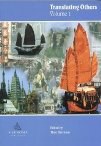
Translating Others (Volume 1) pdf epub mobi txt 电子书 下载 2026
- 翻译研究
- 他者
- 1
- Translation Studies
- Intercultural Communication
- Literary Translation
- Translation Theory
- Postcolonialism
- Globalization
- Cultural Studies
- Linguistics
- Humanities
- Social Sciences

具体描述
Both in the sheer breadth and in the detail of their coverage the essays in these two volumes challenge hegemonic thinking on the subject of translation. Engaging throughout with issues of representation in a postmodern and postcolonial world, Translating Others investigates the complex processes of projection, recognition, displacement and 'othering' effected not only by translation practices but also by translation studies as developed in the West. At the same time, the volumes document the increasing awareness the the world is peopled by others who also translate, often in ways radically different from and hitherto largely ignored by the modes of translating conceptualized in Western discourses.
The languages covered in individual contributions include Arabic, Bengali, Chinese, Hindi, Irish, Italian, Japanese, Latin, Rajasthani, Somali, Swahili, Tamil, Tibetan and Turkish as well as the Europhone literatures of Africa, the tongues of medieval Europe, and some major languages of Egypt's five thousand year history. Neighbouring disciplines invoked include anthropology, semiotics, museum and folklore studies, librarianship and the history of writing systems.
作者简介
Contributors to Volume 1: Doris Bachmann-Medick, Cosima Bruno, Ovidi Carbonell, Martha Cheung, G. Gopinathan, Eva Hung, Alexandra Lianeri, Carol Maier, Christi Ann Marrill, Paolo Rambelli, Myriam Salama-Carr, Ubaldo Stecconi and Maria Tymoczko.
目录信息
SECTION 1 GROUNDING THEORY
Reconceptualizing Western Translation Theory: Integrating Non-Western Thought about Translation, Maria Tymoczko, pp 13-32
In Eurocentric tradition most statements about translation that date before the demise of positivism are relatively useless for current theorizing,because most encode the dominant perspectives of Western imperialism or respond to particular Western historical circumstances. Some of the limitations of Eurocentric thinking about translation are patently obvious. Most statements have been formulated with reference to sacred texts, for example, including religious scripture and canonical literary works. Similarly, Eurocentric theorizing has been marked by its concentration on the written word and by the vocabulary in many languages that links it with the notion of conveying sacred relics intact from place to place. Translation studies must strive for more flexible perspectives, and the thinking of non-Western peoples is essential in achieving broader and more applicable theories about translation. This contribution explores the implications of several non-Western concepts of translation, as well as marginal Western ones that fall outside the dominant domain of Western theory. In addition the concept of translation is related to three adjacent concepts about intercultural interface, namely, transmission, representation and transculturation. These three concepts relate to particular, though not always separable, aspects of translation: communication of content, exhibition of content and performance. One way to enlarge thinking about translation is to move beyond Eurocentric tradition, opening translation studies to other cultures' views of transmission, representation and transculturation.
Meanings of Translation in Cultural Anthropology, Doris Bachmann-Medick, pp 33-42
Translation between cultures can be considered a central practice and aim of cultural anthropology. But are the meanings of cultural translation confined to 'cultural understanding'? A hermeneutic position seems to imply a commitment to a traditional 'single-sited' anthropology and does not correspond to the challenges of globalization. A 'multi-sited,' transnational anthropology is developing an alternative type of translation. Following a brief account of the different meanings of translation in the history of cultural anthropology, my essay locates the emergence of a postcolonial challenge to this new anthropological translation concept in an epistemological break: the crisis of representation and the questioning of a unilateral Western translation authority. Translation of and between cultures is no longer the central concept, but culture itself is now being conceptualized as a process of translation. As a result, translation can be defined as a dynamic term of cultural encounter, as a negotiation of differences as well as a difficult process of transformation. In this respect, the novels of Salman Rushdie are eye-openers for a new metaphor of migration as translation, which renders translation into a medium of displacement and hybrid self-translation. The category of translation for anthropology thus offers not only an important alternative to dichotomous concepts like 'the clash of civilizations', but it is also a seismographic indicator for a changing anthropology under the conditions of a globalization of cultures.
Misquoted Others: Locating Newness and Authority in Cultural Translation, Ovidi Carbonell Cortés, pp. 43-63
We may wonder to what degree it is legitimate to convey the sense of newness and/or cultural distance that is always experienced in the act of reaching out to a foreign text. To what extent is newness necessary? When does newness become exoticism? Current debates on translation and the representation of foreign cultures, translation ethics, postcolonial translation and the reception of the translated text cannot avoid the issue of exoticism, yet difference remains a thorny issue that is easily oversimplified. There are two opposing trends in contemporary translation regarding difference. One, mostly theoretical, aims to highlight difference and go beyond the devouring, allegedly ethnocentric attitude that naturalizes or domesticates the foreign text. At the other end, texts from so-called 'exotic' cultures, such as specimens from Arabic literature, are translated in such a way that exoticizing practices and expectations are consciously avoided or counteracted. Both attitudes can be highly controversial once they go beyond university debates and enter the jungle of real-world readership. Beyond the dichotomy of estrangement versus familiarity, the investigation of the intricacies of cultural representation requires an eclectic approach. Self and Other are just the surface of many mechanisms at work in the act of reading a text - all texts, and not only those that are foreign and exotic, although I shall focus on these as they are particularly illustrative. Using interdisciplinary tools, especially cognitive, semiotic and critical linguistics, this essay explores the intertextual qualities of difference and how they help create identity and authority in texts and its receptors.
SECTION 2 MAPPING CONCEPTS
Translation and the Language(s) of Historiography: Understanding Ancient Greek and Chinese Ideas of History, Alexandra Lianeri, pp. 67-86
How have modern concepts of history mediated our understanding of the ancient Greek and Chinese ideas of the historical? What is the role of translation in defining the vocabulary through which we approach ancient traditions? This essay develops a comparative study of English translations of the Greek term historia and the Chinese terms Shiji and Taishi to examine the problems involved in approaching ancient concepts through the historicist dilemma between identity and difference. It explores how these translations were fundamentally shaped by a Eurocentric discourse that legitimised the paradigmatic status of the Greek tradition and excluded Chinese concepts from the dominant vocabulary of modern historiography. Subsequently it investigates how Eurocentric historiography was sustained by metaphors of translation and categories of translatability deployed by Western philosophy to designate a historiographic metalanguage founded on the opposition between tradition and otherness. In conclusion, it reflects on how translation can also act to interrogate this metalanguage by pointing to disjunctions within the European heritage and forming a trans-cultural and trans-temporal historiography modelled upon the borderline language of translation.
From 'Theory' to 'Discourse' : The Making of a Translation Anthology, Martha Cheung, pp. 87-101
How translatable across cultures are concepts? How do translated concepts interact with the receiving culture's repertoire of concepts and influence its prevailing mode of thinking? How do translated concepts, specifically concepts of categories of knowledge such as 'science', 'philosophy' or 'religion', produce an impact on the receiving culture's already existent body of knowledge? This paper explores the above questions with reference to an anthology the author is compiling. It is an anthology, in English translation, of texts on Chinese thinking about translation. The initial title was An Anthology of Chinese Translation Theories: from Ancient Times to the Revolution of 1911; this was changed to An Anthology of Chinese Thought on Translation before the present title, An Anthology of Chinese Discourse on Translation. By analyzing, in a self-reflective manner, the decisions involved in the movement from 'theory' to 'thought' to 'discourse', I hope to throw some light on the epistemological impact produced by translated concepts in the receiving culture. The impact is analyzed in terms of the disciplining of knowledge that could be effected by translated concepts - disciplining in the sense of organizing, ordering, hierarchizing, including/excluding, centering/decentering, aligning and re-aligning material deemed to constitute knowledge in the receiving culture, for the purpose of mono-cultural cross-cultural, or intercultural study. As the use of translated concepts (e.g. 'science', 'philosophy', 'religion') to name bodies of knowledge in ancient China is a common, though not uncontroversial practice, the issue of the disciplining of knowledge dealt with in this paper should have relevance, not only to translation scholars, but also for Sinologists and Chinese scholars the world over.
In Our Own Time, On Our Own Terms: 'Translation' in India, Harish Trivedi, pp. 102-119
Despite the presence of many languages, there was in India no 'translation' in the Western sense throughout the first three thousand years of its literary history, until the colonial impact in the nineteenth century. This was for the good reason that literary production in India was seen as a collaborative and collective activity with little value placed on either individuality or originality. Of the terms now current in the modern Indian languages for translation, notably anuvad, rupantar, tarjuma, molipeyarttall and vivartanam, some derive from Sanskrit where they were used in a substantially different sense. Several Indian languages have more than one term for translation, used fairly interchangeably, with all their various connotations serving to reflect the Indian view of translation, unlike in English where the word 'translation' seems to have no synonym. Finally (and self-reflexively), is a discussion such as this one of the history of 'translation' in India and of Indian terms for 'translation' really a useful and valid extension of the scope of translation studies, or merely an outsourced sound-bite for the resource-hungry West?
Translation into Arabic in the 'Classical Age': When the Pandora's Box of Transmission Opens , Myriam Salama-Carr, pp. 120-131
The essay reports on a research project concerned with the translation movement of ninth and tenth-century Baghdad. Starting from the hypothesis that some form of translator training could be identified in that context, tentative parallels were drawn between the organization of translation work in medieval Baghdad and in the researcher's own environment, the Paris School of Interpreters and Translators (ESIT). These issues explored included text exegesis, target readership and functional and target-oriented translation, and reference was made to the wider context of the French tradition. The study of medieval Arabic historigraphies, and more crucially that of the translators' liminary writings and paratexts, raised other issues pertaining to the metalanguage of translation and to the complexity of the translation discourse, which belied widely accepted interpretations of the translation movement, as regards both the factors that promoted it and the responses to it.
Gained in Translation: Tibetan Science between Dharamsala and Lhasa, Audrey Prost, pp. 132-144
The essay focuses on the contemporary practice of traditional Tibetan medicine and biomedical care in the exile communities of Himachal Pradesh, India. Drawing on fieldwork conducted in the area, as well as on related Tibetan literature, I wish to undertake a broader analysis of the interpretation of scientific work and concepts in the Buddhist Tibetan exile community. Placing specific emphasis on the problem of the translation of scientific concepts in medical practice, I wish to look at ways in which exile Tibetans have translated and incorporated Western scientific concepts into their practice of medicine, and how they are generally used in everyday life. I also look at competing scientific translations between the Chinese Tibetan Autonomous Region and the exile communities of India, showing how the evolution of medical practice in both contexts is informed by the political situation. I argue that Tibetan translations and re-interpretations of Western scientific concepts, under the guise of following set conventions, actually depart in culturally significant ways from their intended signifiers, notably in recasting them within a Buddhist framework. In doing so, they provide us with valuable information, revealing cultural interpretations linked to key religious and political influences in the community.
'And the Translator Is - ': Translators in Chinese History, Eva Hung, pp. 145-160
This essay first lists the definitions of the terms 'translate' and 'translator' given in major Chinese dictionaries from the second century to the present. It then considers cases drawn from various periods of Chinese history and examines the exact nature of the work in which the persons credited as translators were engaged. This will reveal a major discrepancy between the usual definition for the word 'translator' and the actual accreditation of translation work to individuals, a discrepancy which has been highlighted in the latest studies from Chinese translation circles. To conclude, it briefly examines why this situation has arisen and what it signifies.
SECTION 3 REFLEXIVE PRAXIS
The Translator as Theorôs: Thoughts on Cogitation, Figuration and Current Creative Writing, Carol Maier, pp. 163-180
Spurred by Leila Aboulela's novel The Translator, I have been studying other fiction in which the experiences of translators and writer-translators are explored. By probing the often unsettling effect of translation on translators, fiction writers might offer a contribution to translation theory that has been overlooked in translation studies. In addition, I wonder if that contribution may not exemplify Gideon Toury's understanding of translation theory as the study of potential or of 'what translation can or might do'. Andrea Wilson Nightingale's 'On Wandering and Wondering' seems to confirm this in her discussion of the theorist as originally one who travels, observes and contemplates, glimpses possibilities and learns about other people and their customs, but also risks becoming estranged, rejected, ridiculed. In addition to being the traveller, a theorist or theorôs, whether Platonic or Aristotelian, is an ambassador, witness or reporter but not a pontificator of universals, norms, rules or arguments. Nor does the theorist mandate a particular practice. Rather, theory is associated with contemplation and wonder, is a precondition of practice. I pursue the connection I sense between theôria, as discussed by Nightingale and others, and several fictional representations of translators as theorists. I test or contrast those representations with nonfictional discussions by translators of their work. I find increasingly that it is fiction and, at times, autobiography, rather than translation theory per se that probes the wondering as well as the wandering of translation. In order to focus on the specific translation tradition of a particular language or ethnic group and compare it with others, I believe it would be helpful to have a fuller understanding of translation theory as a contemplative and possibly transformative activity that will give rise to a wide range of practices. My reading of fiction and of translators' autobiographies leads me to suggest that, in the work of translators and creative writers, translation theorists will find insights into the relation between theory and practice that embrace both the methods translators use in their attempt to convey the unsettling knowledge to which translation gives rise and also the nature of that knowledge itself.
Pseudotranslations, Authorship and Novelists in Eighteenth-Century Italy, Paolo Rambelli, pp. 181-210
Pseudotranslations are usually ascribed a range of different functions, such as: to bypass censorship, to endow a new work with the authority of an alleged source, to stimulate readers into interpretative cooperation by passing original authors off as second-degree writers, and to introduce innovation into the literary system. In fact, the practice of pseudotranslation appeals not only to the standard relationship between source and target texts, but also that between the respective literary systems as such. For example, it enables the writers of the target system to act as the authors they pretend to translate, appropriating their techniques as well as their social profile. This was particularly evident in eighteenth-century Italy, when novelists had extensive recourse to pseudotranslations in order to be credited with the same degree of authority and, above all, authorship as their English and French models. The tactic proved effective at a time when the Italian literary system was felt to lack a novel tradition and was still dominated by the compositional principles of imitatio and aemulatio.
To Be or Not to Be a Gutter Flea: Writing from Beyond the Edge, Christi Ann Merrill, pp. 211-218
How to describe what makes a translated text come to life? The answer depends on what you consider life to be. Take the story 'Matha' ('The Limit') written in Rajasthani by Vijay Dan Detha: the wealthy protagonist worries about what will happen to him in his next birth, after he crosses the matha between one life and another. He wants to be reborn a wealthy seth, but the brahmins have warned him that instead he is to become a gutter flea. He is sent into paroxysms of agony imagining what life would be as such a lowly form. And the translator, too, struggles to move back and forth across a different, but analogous, matha. For the very concept of life conveyed in the Rajasthani and Hindi versions of the story suggests a form that is multiple, temporary, not exactly arbitrary and yet emphatically physical: the word 'joon' in Rajasthani, like 'yoni' in Hindi, can be translated into English variously as womb, origin, form, life, manifestation, birth, reincarnation, source. The story forces the translator to find a broader way of conceptualizing life in the English language. The story also asks the reader to rethink the hierarchical values that are placed on their being one version of the protagonist over another, and challenges the translator to render a (singular) life in the plural. To do so effectively she must imagine not just the protagonist being in two places at once, but the story itself that she writes. For the (singular) text she creates in English can best come to life if it is understood as yet another joon of the story that had a joon in Hindi, and before that, a joon in Rajasthani. This essay explores the implications of reading a translated text as multiply original by theorizing the practice of rendering 'Matha' in English.
English-Chinese, Chinese-Chinese: On Reading Literature through Translation, Cosima Bruno, pp. 219-235
In this essay I offer a theoretical assessment of the process of translating and propose a formula to represent this process. I also sketch a method to study literature through translation, with the aim of challenging dichotomous views on translation and elaborating a working hypothesis consonant with the mutual articulation and cross-production that I regard as inherent in translation. I argue that translation provides a heuristic means to study literature, to the extent that it re-activates possibilities resident in the source text, thus enhancing aspects of the literary text which enrich the act of reading. In discussing this approach to literature, I shall draw attention to the case of translating contemporary Chinese poetry, with reference to the recent debate on the subject and examples taken from the work of the contemporary Chinese poet Yang Lian.
Translation, Transcreation and Culture: Theories of Translation in Indian Languages, G. Gopinathan, pp. 236-246
In the ancient period in India, no specific theory of translation was recorded, since creative writing and translation were never considered as two separate processes. Many modern translators however have recorded their experiences and reflections. The development of theoretical literature as part of translator training, as well as further studies in translation introduced in academic institutions after the 1970s, have also contributed to a change in attitude. The present essay, while proposing the model of 'transcreation' and exploring Sri Aurobindo's psycho-spiritual theory of translation, locates a disjuncture between Indian and Western approaches.
Translation, Transcreation, Travesty: Two Models of Translation in Bengali Literature, Sukanta Chaudhuri, pp. 247-256
This essay focuses on two models or ideals of translation: the 'creative', whereby the translator assumes an independent identity and projects an independently valid work, and the 'mediatory', where translators see themselves as providing an entry to the original work for readers who do not know the source language. Perhaps no translation conforms entirely to one norm or the other, but locates itself somewhere along a spectrum between these notional opposites. I look at the interaction - or rather, the absence of interaction - of these two models in the context of Indian, particularly Bengali literature. Modern Bengali literature has extensively employed the mode of creative absorption of texts from other languages, along a trajectory ranging from direct translation to adaptation to 'imitation' to memorial traces to general inspiration. At the same time, the Bengali reading community demands an exceptionally high fidelity to the original in formal translations out of its own literature, above all as regards the works of Rabindranath Tagore. I look at the coexistence of these two diverging modes of rendering, and try to identify their root cause in certain features of colonial and postcolonial cultural relations.
· · · · · · (收起)
读后感
评分
评分
评分
评分
用户评价
这本书的名字,“Translating Others (Volume 1)”,点燃了我内心深处的好奇心。我常常在阅读外国文学作品时,思考着翻译的过程。是什么让一部作品能够跨越语言的障碍,触动不同文化背景下的读者?这本书是否会深入探讨翻译中的“不可译”问题?那些在原文中看似无懈可击的表达,在翻译成另一种语言时,是否会变得词不达意,甚至失去原有的韵味?我期待这本书能够提供一些具有启发性的视角,让我理解翻译家在面对这些挑战时所采取的策略。他们是否会大胆地进行文化挪用,或者小心翼翼地寻找最接近的对应词汇?我希望这本书能让我对翻译工作产生更深的理解和感激。它是否会涉及到翻译过程中常见的误区和陷阱?
评分“Translating Others (Volume 1)”这个书名,立刻让我联想到的是一种艺术化的再创造。我一直认为,翻译不仅仅是技术,更是一种艺术。它需要译者具备深厚的语言功底,更需要对源语言文化和目标语言文化都有着深刻的理解和洞察。我非常好奇,这本书会从哪些具体的文学作品或者文本来阐释“翻译他者”的艺术?它是否会分析一些经典的翻译案例,展示翻译家是如何通过精巧的语言转换,将原作的情感和思想传递给目标语读者?我期待它能让我看到,翻译家是如何在文字的游戏中,既忠实于原作,又赋予其新的生命力的。这本书是否会探讨翻译中的一些伦理问题,比如版权、原创性等等?
评分“Translating Others (Volume 1)”这个书名,本身就充满了探索的意味。我一直对那些能够用另一种语言,将一个民族的文化、历史和情感巧妙地展现出来的翻译家们充满了好奇。我非常希望这本书能够深入地探讨,在翻译的过程中,译者如何去理解和把握“他者”的文化背景?那些隐藏在文字背后的文化内涵、历史渊源,译者又是如何通过翻译将其传达给目标语读者?我期待这本书能够为我打开一扇窗,让我看到翻译不仅仅是文字的转换,更是一种跨文化的解读和再创造。它是否会涉及翻译中的一些哲学思考,比如关于理解、关于意义的本质?
评分“Translating Others (Volume 1)”这个书名,让我立刻感到一种强烈的吸引力。我一直认为,翻译是一种将“陌生的”变成“熟悉的”过程,它让我们可以触碰到那些原本遥远的世界。我好奇这本书会如何深入地探讨“翻译”这个行为本身。它是否会从语言学的角度,分析不同语言的结构和语法差异,以及这些差异如何为翻译带来挑战?我期待这本书能够提供一些关于翻译策略的详细介绍,比如直译、意译、意译加注等等,并展示这些策略在不同语境下的适用性。这本书是否会包含一些关于翻译史的介绍,让我了解翻译在人类文明发展中所扮演的角色?
评分“Translating Others (Volume 1)”这个书名,仿佛在邀请我进行一场思维的冒险,去探索语言的边界以及人类情感的共通性。我一直相信,翻译是一种强大的工具,它能够打破隔阂,增进理解,甚至引发共鸣。我好奇的是,这本书会从哪个角度来切入“翻译他者”这个宏大的主题?它是否会聚焦于特定类型的文本,比如文学、哲学,还是更广泛的涵盖?我特别希望它能够深入探讨在翻译过程中,译者如何处理那些具有强烈个人风格的语言表达。一个作家的独特语调、节奏和情感张力,如何才能在另一种语言中得以重生?这是否涉及翻译家自身对艺术的理解和诠释?我期待这本书能提供一些关于如何评估翻译质量的标准,让我能够更客观地看待不同译本的优劣。
评分我对“Translating Others (Volume 1)”的期待,很大程度上源于我对“他者”这个概念的敏感。在现代社会,我们越来越频繁地接触来自不同文化、不同背景的人,而语言,往往是理解和被理解的第一道门槛。这本书的名字,让我联想到那些跨越语言鸿沟,试图理解和呈现“他人”的努力。翻译,在我看来,不仅仅是将一种语言转换成另一种语言,更是一种移情,一种将自己的视角投射到他人的世界,并尝试以对方能够接受的方式表达出来的过程。我非常好奇,这本书是否会探讨在翻译过程中,翻译家自身的主观性会如何影响最终的译文?是否存在绝对客观的翻译?抑或是,每一个译本都蕴含着翻译家对原文作者、原文文化乃至目标语读者的独特理解?我期待这本书能提供一些引人深思的见解,让我更深刻地理解“翻译”背后的人文关怀和知识分子的责任。它是否会涉及一些具体的翻译案例,通过分析来展示翻译的复杂性和艺术性?
评分“Translating Others (Volume 1)”这个书名,让我想象到的是一种细致入微的解剖,是对另一种文化肌理的深入探寻。我一直认为,优秀的翻译作品,是能够让读者忘记自己正在阅读翻译而沉浸在故事本身中的。这其中蕴含了多少智慧和技巧?这本书是否会详细解析翻译家是如何处理那些难以跨越的文化障碍?例如,某些只有特定文化背景下才能理解的习语、典故,或者甚至是情感表达方式,翻译家是如何找到恰当的替代方案,让目标语读者也能感同身受?我设想,这本书可能会像一个高明的医生,为我们剖析语言的每一个细微之处,让我们看到翻译的“手术刀”是如何精确地切入,又不伤及原文的生命力。我希望它能为我揭示那些隐藏在译文背后的翻译思路,让我对翻译这个行业产生更深的敬意。它会否讨论一些关于忠实与变通的经典辩论?
评分当我看到“Translating Others (Volume 1)”时,我脑海中立刻浮现出无数个画面:一位翻译家在灯下伏案,眉头紧锁,与文字进行着一场无声的较量;一个读者在异国他乡,通过一本翻译小说,找到了心灵的慰藉;一个学生在课堂上,因为一篇翻译作品而打开了新世界的大门。这本书,在我看来,承载着连接不同个体、不同文明的使命。我非常好奇,这本书是否会从理论和实践两个层面来探讨翻译?它会不会引用一些翻译学的经典理论,并结合具体的翻译实践案例进行阐释?我尤其期待它能告诉我,翻译家是如何在保持原文的“异质性”与让目标语读者易于接受之间找到平衡点的。毕竟,完全的同化可能会失去原作的魅力,而过分的“异质”又可能让读者望而却步。我希望这本书能给我一些关于如何欣赏翻译作品的指导。
评分当我第一次看到“Translating Others (Volume 1)”这个书名时,我脑海中立即涌现出无数个关于跨文化交流的场景。我一直认为,翻译是连接不同文化、不同民族的桥梁。这本书的名字,让我对接下来的内容充满了期待,它是否会深入探讨翻译过程中,译者如何去理解和呈现“他者”的内心世界?我尤其好奇,在翻译文学作品时,译者如何捕捉到作者独特的“声音”和“风格”,并将之原汁原味地传递给目标语读者?这其中是否包含了一种情感上的共鸣和理解?我期待这本书能够揭示翻译背后的那些不为人知的努力和智慧,让我对翻译工作产生全新的认识。它是否会讨论不同语言在思维方式上的差异,以及这些差异如何影响翻译?
评分这本书如同一扇通往陌生文化心脏的窗户,我迫不及待地想透过它一窥究竟。封面上“Translating Others (Volume 1)”的字样本身就充满了吸引力,仿佛预示着一次跨越语言、跨越时空的深刻交流。我一直对那些将不同文化背景下的人物情感、思想和经历以另一种语言得以呈现的艺术家们感到好奇和敬佩。他们不仅仅是在转换词汇,更是在传递一种文化基因,一种情感共鸣。想象一下,一个来自千里之外的故事,经过翻译家的匠心打磨,最终触动了我的心弦,这种神奇的联结感让我着迷。这本书是否能深入探讨翻译过程中那些微妙的权衡和抉择?翻译家是如何在保留原作精髓的同时,让目标语读者也能感受到原汁原味的韵味?我期待这本书能够揭示翻译的艺术与科学,让我看到那些隐藏在字里行间的光辉。它会不会挑战我对“翻译”这个词的既有认知,让我看到它更深层的哲学意义?我希望它能让我思考,我们通过语言究竟在传递什么,又在失去什么。
评分 评分 评分 评分 评分相关图书









本站所有内容均为互联网搜索引擎提供的公开搜索信息,本站不存储任何数据与内容,任何内容与数据均与本站无关,如有需要请联系相关搜索引擎包括但不限于百度,google,bing,sogou 等
© 2026 book.quotespace.org All Rights Reserved. 小美书屋 版权所有