

具体描述
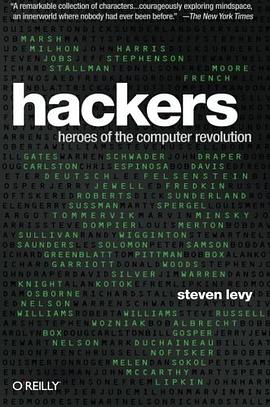
This 25th anniversary edition of Steven Levy's classic book traces the exploits of the computer revolution's original hackers -- those brilliant and eccentric nerds from the late 1950s through the early '80s who took risks, bent the rules, and pushed the world in a radical new direction. With updated material from noteworthy hackers such as Bill Gates, Mark Zukerberg, Richard Stallman, and Steve Wozniak, Hackers is a fascinating story that begins in early computer research labs and leads to the first home computers. Levy profiles the imaginative brainiacs who found clever and unorthodox solutions to computer engineering problems. They had a shared sense of values, known as "the hacker ethic," that still thrives today. Hackers captures a seminal period in recent history when underground activities blazed a trail for today's digital world, from MIT students finagling access to clunky computer-card machines to the DIY culture that spawned the Altair and the Apple II.
Amazon.com Exclusive: The Rant Heard Round the World
By Steven Levy
Author Steven Levy When I began researching Hacker s--so many years ago that it’s scary--I thought I’d largely be chronicling the foibles of a sociologically weird cohort who escaped normal human interaction by retreating to the sterile confines of computers labs. Instead, I discovered a fascinating, funny cohort who wound up transforming human interaction, spreading a culture that affects our views about everything from politics to entertainment to business. The stories of those amazing people and what they did is the backbone of Hackers: Heroes of the Computer Revolution .
But when I revisited the book recently to prepare the 25th Anniversary Edition of my first book, it was clear that I had luckily stumbled on the origin of a computer (and Internet) related controversy that still permeates the digital discussion. Throughout the book I write about something I called The Hacker Ethic, my interpretation of several principles implicitly shared by true hackers, no matter whether they were among the early pioneers from MIT’s Tech Model Railroad Club (the Mesopotamia of hacker culture), the hardware hackers of Silicon Valley’s Homebrew Computer Club (who invented the PC industry), or the slick kid programmers of commercial game software. One of those principles was “Information Should Be Free.” This wasn’t a justification of stealing, but an expression of the yearning to know more so one could hack more. The programs that early MIT hackers wrote for big computers were stored on paper tapes. The hackers would keep the tapes in a drawer by the computer so anyone could run the program, change it, and then cut a new tape for the next person to improve. The idea of ownership was alien.
This idea came under stress with the advent of personal computers. The Homebrew Club was made of fanatic engineers, along with a few social activists who were thrilled at the democratic possibilities of PCs. The first home computer they could get their hands on was 1975’s Altair, which came in a kit that required a fairly hairy assembly process. (Its inventor was Ed Roberts, an underappreciated pioneer who died earlier this year.) No software came with it. So it was a big deal when 19-year-old Harvard undergrad Bill Gates and his partner Paul Allen wrote a BASIC computer language for it. The Homebrew people were delighted with Altair BASIC, but unhappy that Gates and Allen charged real money for it. Some Homebrew people felt that their need for it outweighed their ability to pay. And after one of them got hold of a “borrowed” tape with the program, he showed up at a meeting with a box of copies (because it is so easy to make perfect copies in the digital age), and proceeded to distribute them to anyone who wanted one, gratis.
This didn’t sit well with Bill Gates, who wrote what was to become a famous “Letter to Hobbyists,” basically accusing them of stealing his property. It was the computer-age equivalent to Luther posting the Ninety-Five Theses on the Castle Church. Gate’s complaints would reverberate well into the Internet age, and variations on the controversy persist. Years later, when another undergrad named Shawn Fanning wrote a program called Napster that kicked off massive piracy of song files over the Internet, we saw a bloodier replay of the flap. Today, issues of cost, copying and control still rage--note Viacom’s continuing lawsuit against YouTube and Google. And in my own business—journalism--availability of free news is threatening more traditional, expensive new-gathering. Related issues that also spring from controversies in Hackers are debates over the “walled gardens” of Facebook and Apple’s iPad.
I ended the original Hackers with a portrait of Richard Stallman, an MIT hacker dedicated to the principle of free software. I recently revisited him while gathering new material for the 25th Anniversary Edition of Hackers , he was more hard core than ever. He even eschewed the Open Source movement for being insufficiently noncommercial.
When I spoke to Gates for the update, I asked him about his 1976 letter and the subsequent intellectual property wars. “Don’t call it war,” he said. “Thank God we have an incentive system. Striking the right balance of how this should work, you know, there's going to be tons of exploration.” Then he applied the controversy to my own situation as a journalism. “Things are in a crazy way for music and movies and books,” he said. “Maybe magazine writers will still get paid 20 years from now. Who knows? Maybe you'll have to cut hair during the day and just write articles at night.”
So Amazon.com readers, it’s up to you. Those who have not read Hackers, , have fun and be amazed at the tales of those who changed the world and had a hell of time doing it. Those who have previously read and loved Hackers , replace your beat-up copies, or the ones you loaned out and never got back, with this beautiful 25th Anniversary Edition from O’Reilly with new material about my subsequent visits with Gates, Stallman, and younger hacker figures like Mark Zuckerberg of Facebook. If you don’t I may have to buy a scissors--and the next bad haircut could be yours! Read Bill Gates' letter to hobbyists
作者简介
Steven Levy这部经典力作的25周年版从20世纪50年代早期跨越到80年代后期,追述了计算机革命中初期黑客的丰功伟绩,他们都是最聪明和最富有个性的精英。他们勇于承担风险,勇于挑战规则,并把世界推向了一个全新的发展方向。本书更新了一些著名黑客的最新资料,包括比尔·盖茨、马克·扎克伯格、理查德·斯托曼和史蒂夫·沃兹尼亚克,并讲述了从早期计算机研究实验室到最初的家用计算机期间一些妙趣横生的故事。
在Levy的笔下,他们都是聪明而勤奋的人,他们极富想象力,他们另辟蹊径,发现了计算机工程问题的巧妙解决方案。他们都有一个共同的价值观,那就是至今仍然长盛不衰的“黑客道德”。本书描述了近代历史上的一个萌芽时期,描述了黑客用默默无闻的行动为当今的数字世界照亮了一条道路,描述了那些打破陈规“非法”访问穿孔卡片计算机的MIT的学生,也描述了缔造出Altair和Apple II电脑这些伟大产品的DIY文化。
目录信息
读后感
两天前读完了《黑客》,可是到现在我都无法平静我的心情。整本书都很平淡,如果你不想成为一名黑客,你可能一页都读不下去,但是对于一名渴望成为黑客的人,这本书,每一页,每句话都充满了激情和斗志。 我记得小学一年级的时候老师让我们谈自己的梦想,我说我要当科学家,那...
评分《黑客:计算机革命的英雄》不是一本新书,创作于上世纪80年代。 这本书我断断续续花了几个月才看完。大量的传奇黑客人物穿插其中,说实话容量略大,到头来也没记住几个名字,不过这不是重点。全书将对整个计算机发展史有深刻影响的黑客文化分三个阶段的娓娓道来,让我重新审...
评分激动的成分没那么多,我看了感触没那么多 它们刷油漆,或者为模型制作真实的景物。这个小组的成员就像是一伙雕塑家 程序的最佳版本应该对所有人开放,每个人都可以自由地钻研代码并进行完善,而不是每个人编写同一个程序的自己的版本。如此一来,这个世界将充满功能完善的程序...
评分今年暑假,无意中完成了一条推理链。然后,如同感召一般,这本书伴随着这条道路摆在了我面前。 矛盾源自有限,而人对信息与资源遵从了不同的分配关系,对于资源而言,人与之的关系是“占据”,所以资源是有限的;而对于信息而言,人可以“共享”。由这个意义上而言,信息,具...
评分这本书并不是很有吸引力,因为每翻过几页,就恨不得撇开书,抡起胳膊大干一场。 它说的是一帮天才,却不是Carmack那样的天才,他们是可以望及项背,甚至可以幻想那就是自己的升级升级版的天才。与其说这记录的是一段段传奇,不如说是为黑客文化传经布道。 这黑客文化的精神核心...
用户评价
这本书的语言非常有力量,读起来有一种振聋发聩的感觉。作者的文字不仅仅是在传递信息,更是在传递一种态度,一种对未知的好奇,一种对真相的追求。他敢于挑战权威,敢于突破常规,这种精神非常鼓舞人心。而且,这本书的结构也非常巧妙,看似松散的章节,实则环环相扣,共同构建了一个完整而有力的论点。我尤其喜欢它在结尾处留下的思考空间,并没有给出一个明确的答案,而是鼓励读者自己去探索和发现。这种开放性的结局,反而更能激发读者的主动性,让这本书的价值得到持续的延伸。我感觉自己读完这本书,不仅仅是知识的获取,更是一种精神上的洗礼。它让我意识到,我们所处的世界远比我们想象的要复杂和精彩,也让我更加期待去探索和理解更多未知。
评分我必须说,这本书在逻辑构建方面做得相当出色,条理清晰,层层递进,完全不会让人感到混乱。作者似乎对主题有着非常透彻的理解,每一个观点都经过了严密的论证,然后巧妙地融入到整体的叙述中。即使是涉及一些可能让新手感到困惑的概念,他也能用非常浅显易懂的方式去解释,并且循序渐进地引导读者去理解更深层次的含义。我最欣赏的是它没有回避那些比较具有争议性的话题,而是以一种客观、理性的态度去分析,并且提供了多种不同的视角,让我能够更全面地看待问题。这本书就像一个优秀的向导,带领我在一个复杂的世界里穿行,每一步都走得稳稳当当,让我感到非常有安全感。而且,书中穿插的案例和故事,更是让原本可能有些抽象的理论变得鲜活起来,读起来一点都不觉得枯燥,反而让人跃跃欲试,想要去亲身体验和验证。
评分这本书给我的震撼感是巨大的,它彻底颠覆了我之前的一些固有认知,让我重新审视了很多我习以为常的事情。作者的洞察力非常敏锐,他能够看到别人看不到的联系,发现那些隐藏在表象之下的本质。这种深刻的见解,不仅仅体现在对宏大议题的分析上,也体现在对个体经历的解读中。阅读过程中,我时常会产生“原来是这样!”的恍然大悟,那种感觉非常奇妙。它不是那种告诉你“是什么”的书,而是教会你“怎么去思考”的书。它鼓励你去质疑,去探索,去建立自己的判断体系。这本书的价值,可能不仅仅在于它传递了多少信息,更在于它激发了多少思考。我感觉自己在这本书的引导下,思维方式有了很大的提升,看待问题的角度也变得更加多元和深刻。它像一面镜子,照出了我思维的盲区,也点亮了我思考的火花。
评分这本书真的让我感觉像是打开了一个全新的视角,原本以为会是那种枯燥的技术手册,没想到它以一种非常流畅且富有故事性的方式展开。作者的叙事功力简直是一绝,即使是涉及一些比较复杂的概念,也能被他描绘得生动形象,仿佛眼前就有画面在流动。我尤其欣赏他处理细节的方式,每一个小小的观察,每一个看似微不足道的事件,在他笔下都能被赋予深刻的含义,然后串联起来,形成一幅宏大的图景。阅读的过程中,我经常会停下来,反复咀嚼那些精彩的句子,思考作者想要传达的更深层的东西。它不是那种读完就忘的书,而是会真正地在你的脑海里留下烙印,让你在日后的生活中,也会不自觉地联系到书中的内容,产生新的感悟。而且,这本书的语言风格非常有辨识度,不是那种程式化的表达,而是带着作者独特的思考和情感,读起来既有知识的干货,又有文学的美感,是一种非常难得的阅读体验。
评分哇,这本书拿到手沉甸甸的,感觉就很有分量!书的封面设计非常有质感,低调但又暗藏玄机,黑白为主色调,搭配一些简洁的线条和图示,给人一种神秘而又专业的既视感,仿佛打开书页就能窥探到未知的世界。我特别喜欢它那种内敛的设计,不像市面上很多书那样浮夸,这种沉静的气质反而更能吸引我深入其中。拿到书的那一刻,就迫不及待地翻开,纸张的触感也相当不错,不是那种廉价的滑腻感,而是略带磨砂质感,摸起来很舒服,长时间阅读也不会觉得疲劳。封底的简介更是让我眼前一亮,它用一种非常引人入胜的方式概括了这本书的主题,而且文字的运用非常有艺术感,不落俗套,一下子就勾起了我的好奇心,让人迫切想知道书里到底讲了些什么。我平时就对一些比较“硬核”的领域很感兴趣,尤其是那些能够挑战思维、拓展认知的领域,所以这本书给我的第一印象非常好,充满了期待。我甚至已经开始想象,翻开扉页,字里行间会是如何的精彩,又会带给我怎样的启迪。
评分25周年 现在的hacker都早已不是蓝海战略的对象啦 为什么呢 因为bigbang 已经第几季了啦 你看看
评分全书分四个部分:MIT黑客 / 硬件黑客 / 游戏黑客 / 最后的黑客。最喜欢第一部分。作者略微有神化黑客的倾向,很多让人激动的故事。不过记不住那么多人名。
评分早期的计算机文化,曾经的革命现在看来多少有些平淡。
评分加了點東西,和老版有微妙的不同。
评分读完,CS也是一门很好的学问,值得深入研究
相关图书





本站所有内容均为互联网搜索引擎提供的公开搜索信息,本站不存储任何数据与内容,任何内容与数据均与本站无关,如有需要请联系相关搜索引擎包括但不限于百度,google,bing,sogou 等
© 2026 book.quotespace.org All Rights Reserved. 小美书屋 版权所有