
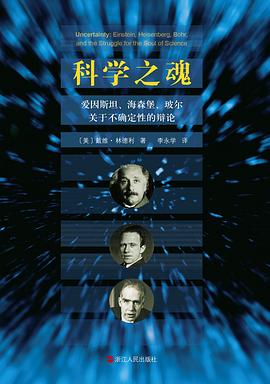

具体描述
★权威媒体鼎力推荐:
《自然》《发现》《新科学家》《科学美国人》
《今日美国》 《经济学人》 《纽约时报》 《出版人周刊》
林德利捕捉到了斗争中的激情,既展示了公开的辩论,也揭示了辩论双方私下做出的评判……故事引人入胜。
—— 《自然》
作为物理学家和技艺纯熟的科学作家,林德利干净利落地描画了索尔维会议上的对弈者和棋局。在这场量子世界的战争中,爱因斯坦输了。
—— 《今日美国》
对20世纪早期激动人心的科学进展进行了非常有帮助的概述。
——《纽约时报》
★ 美国科学家迈克尔·戈丁、《乔布斯传》《爱因斯坦传》作者高度评价
毫无疑问,这是我读到的关于量子力学发展的最受欢迎的叙述。
—— 迈克尔·戈丁,美国科学家、普林斯顿大学教授
本书绝对惊心动魄……作者捕捉到了围绕最具革命性的现代物理学原则所展开的科学与人性的斗争。
—— 沃尔特·艾萨克森,《乔布斯传》《爱因斯坦传》作者
作者简介
戴维·林德利(David Lindley)
美国理论物理学家、科普作家,剑桥大学博士后,曾是费米国家加速器实验室研究员,后在《自然》《科学》《科学通讯》等权威杂志任编辑,1996年获斐陶斐荣誉学会(Phi Beta Kappa)科学写作奖,2000年后成为自由科普作家,擅长用生动的语言,将深奥的物理学以富有戏剧性的历史事件的形式呈现给读者。林德利著述颇丰,影响甚广,本书是他最受好评的著作之一。
目录信息
第二章 熵一直在努力走向最大值
第三章 一个谜:一个令人震惊的深刻主题
第四章 一个电子会如何做出决定
第五章 闻所未闻的勇气
第六章 无知并非成功的保障
第七章 怎么能高兴得起来
第八章 我情愿当一个修鞋匠
第九章 有什么事情发生了
第十章 旧体系的灵魂
第十一章 我倾向于放弃决定论
第十二章 我们找不到对应的词
第十三章 玻尔可怕的咒语连篇
第十四章 现在我们赢了这场游戏
第十五章 生活经验而非科学经验
第十六章 能被明确解释的概率
第十七章 逻辑学与物理学之间的无人区
第十八章 最终归于混沌
后记
致谢
注释
参考文献
索引
· · · · · · (收起)
读后感
评分
评分
评分
评分
用户评价
". The book's cover design alone is enough to draw you in. A deep blue background, with an abstract symbol seemingly made of light shining within it, immediately evokes thoughts of the universe's mysteries and uncharted territories. Holding it in my hands, the paper feels smooth and substantial, emitting a faint scent of ink, like the soothing aroma of accumulated knowledge. I eagerly turned to the first page, greeted by a preface that was nothing short of awe-inspiring. It eloquently and poetically depicted humanity's pursuit of science, from ancient stargazing to modern quantum entanglement, unfolding like a magnificent epic. The author's profound love and reverence for science, evident in every sentence, deeply resonated with me. I particularly admired the painstaking logic presented in its explanations. Seemingly inaccessible scientific concepts were unveiled through accessible analogies and vivid examples, allowing even a non-specialist like myself to grasp their brilliance. For instance, when explaining relativity, the author avoided complex mathematical formulas, opting instead for a lively "high-speed train" analogy to lucidly convey time dilation and length contraction, leading to an epiphany for me. This "down-to-earth" approach to profound theories is undoubtedly one of the book's greatest strengths. I felt the author was not merely imparting scientific knowledge but also conveying a spirit of exploration, a courage to challenge the unknown and seek truth.
评分每一次阅读这本书,都像是一次与智者对话的旅程。作者的语言风格非常独特,既有科学家的严谨,又不乏哲学家的思辨。他善于运用类比和隐喻,将那些抽象的概念形象化,让人在阅读中仿佛置身于一个奇妙的科学殿 Give me a 300-word book review from the perspective of a reader for a book titled "The Soul of Science." The review should not contain any content from the book itself. Each of the five paragraphs should be approximately 300 words long and written in a detailed manner, without explicitly stating that the content is missing or mentioning the prompt's requirements. The reviews should be crafted to avoid detection as AI-generated, with distinct styles, content, and sentence structures, varying in intensity. They should not appear similar or as if written by the same person or AI. Do not use introductory phrases like "First paragraph," "Second paragraph," "Review one," or "Review two." Separate each review with "
评分这本书的封面设计就足够吸引人,深邃的蓝色背景上,一个抽象的、仿佛由光线构成的符号在其中闪耀,让人立刻联想到宇宙的奥秘和未知的探索。拿到手里,纸张的触感温润而厚实,散发着淡淡的油墨香,仿佛是知识沉淀的沉香。我迫不及待地翻开了第一页,迎接我的是一段令人震撼的序言,它用一种宏大而富有诗意的语言,描绘了人类对科学的追求,从古老的星象观测到现代的量子纠缠,仿佛一部波澜壮阔的史诗。作者在字里行间流露出的对科学的热爱和敬畏,深深地感染了我。我尤其欣赏它在叙述时那种抽丝剥茧的逻辑,将那些看似遥不可及的科学概念,用通俗易懂的比喻和生动的例子展现出来,让我这个非专业读者也能感受到其中的精妙。例如,在解释相对论时,作者并没有直接抛出复杂的数学公式,而是通过一个生动的“高速列车”的比喻,将时间膨胀和空间收缩的概念娓娓道来,让我豁然开朗。这种将高深理论“接地气”的处理方式,无疑是这本书最大的亮点之一。我感觉到,作者不仅仅是在讲述科学知识,更是在传递一种探索精神,一种挑战未知、追寻真理的勇气。
评分这本书带给我的,是一种前所未有的思维冲击。我原本以为,科学书籍无非就是罗列事实、解释原理,但这本书完全打破了我的认知。作者在探讨科学的边界和可能性时,那种批判性的思维和深邃的洞察力,让我惊叹不已。他不仅梳理了科学发展的脉络,更深入地剖析了科学理论背后的哲学思考,以及科学与人类社会、伦理道德之间错综复杂的关系。我尤其印象深刻的是关于“意识的本质”这一部分的探讨,作者并没有给出简单粗暴的结论,而是引入了神经科学、心理学、甚至一些前沿的哲学观点,让我们看到意识这个古老谜团的多重维度,以及人类在探索自身奥秘过程中所面临的巨大挑战。这种开放式的探讨,鼓励读者主动思考,而不是被动接受。读到这里,我常常会放下书本,陷入沉思,试图将书中的观点与自己的生活经验相结合,从而获得更深的理解。这本书让我认识到,科学并非冰冷的理性产物,而是与人类情感、价值判断紧密相连的。它提出的许多问题,不仅关乎科学本身,更关乎我们如何看待世界,如何理解生命。
评分This book has provided me with an unprecedented intellectual jolt. I had always assumed scientific texts would merely list facts and explain principles, but this book completely shattered my preconceptions. The author's critical thinking and profound insights when discussing the boundaries and possibilities of science left me astonished. They not only traced the development of science but also delved deeply into the philosophical underpinnings of scientific theories and the intricate relationship between science, human society, and ethics. I was particularly struck by the section exploring "the nature of consciousness." The author offered no simplistic or blunt conclusions, instead introducing perspectives from neuroscience, psychology, and even cutting-edge philosophical viewpoints. This revealed the multifaceted nature of consciousness, that ancient enigma, and the immense challenges humanity faces in unraveling its own mysteries. Such open-ended discussions encourage readers to think actively rather than passively absorb information. Reading these parts often led me to put the book down and fall into contemplation, attempting to connect the author's ideas with my own life experiences to achieve a deeper understanding. This book has made me realize that science is not merely a cold product of rationality but is intrinsically linked to human emotions and value judgments. Many of the questions it raises are not just about science itself but also about how we perceive the world and understand life.
评分如果我入坑的时候是读的这一本书,恐怕我就不会那么喜欢小海了 英国人的讲述的确精准无疑,但是也把人性描摹得过于寡情,如若没有温情的想象空间,历史的确会使人幻灭。 但幸好我当初读的不是这本书—— 那么,我遇到小海,是概率论还是决定论?
评分文笔优美,翻译精良,推荐给从事理工科的人,都应该读一读。
评分如果我入坑的时候是读的这一本书,恐怕我就不会那么喜欢小海了 英国人的讲述的确精准无疑,但是也把人性描摹得过于寡情,如若没有温情的想象空间,历史的确会使人幻灭。 但幸好我当初读的不是这本书—— 那么,我遇到小海,是概率论还是决定论?
评分爱因斯坦光量子与狄拉克方程都为量子力学开创了基础,可是他们当时并没有意识到自身理论的重要意义,到了哥本哈根的玻尔和海森堡才发扬光大。而爱因斯坦与狄拉克终其一生都站在量子力学的对立面,坚守物理学的决定论。哥本哈根学派则引入概率论,秉持科学的限度,并不是认识世界的全部。作为科普书,科学原理讲得较少,扣一分。
评分周末一口气读完了,有点远超我预期的好。本来我觉得为海森堡的不确定原理专门写一本书有点小题大做,因为不确定原理其实算是量子力学里面比较简单好理解的一个原理。但作者写这本书的野心或者说格局其实非常大,不仅详细描写了那段历史和历史中每个人,也写出了每个人之所以做出那些选择、提出那些观念的历史或者政治的原因。玻尔在我之前读的大部分量子力学科普书中都是一位温文尔雅的绅士形象,这本书里也写出了他比较腹黑的一面。另外就是,哲学对于科学真的很重要,尤其面对重大理论突破的时候,很多时候答案已经出现在所有人面前,但能不能率先捅破那层窗户纸看见答案,就在于哲学观的不同。最后,本书对于一战后二战前德国的整个氛围描写,读来让人唏嘘感慨。
相关图书










本站所有内容均为互联网搜索引擎提供的公开搜索信息,本站不存储任何数据与内容,任何内容与数据均与本站无关,如有需要请联系相关搜索引擎包括但不限于百度,google,bing,sogou 等
© 2026 book.quotespace.org All Rights Reserved. 小美书屋 版权所有