具体描述
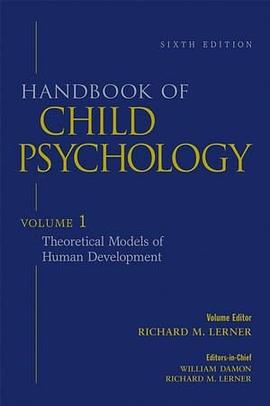
Part of the authoritative four–volume reference that spans the entire field of child development and has set the standard against which all other scholarly references are compared. Updated and revised to reflect the new developments in the field, the Handbook of Child Psychology, Sixth Edition contains new chapters on such topics as spirituality, social understanding, and non–verbal communication. Volume 1: Theoretical Models of Human Development , edited by Richard M. Lerner, Tufts University, explores a variety of theoretical approaches, including life–span/life–course theories, socio–culture theories, structural theories, object–relations theories, and diversity and development theories. New chapters cover phenomenology and ecological systems theory, positive youth development, and religious and spiritual development.
Handbook of Human Development: Navigating the Lifespan This comprehensive volume delves into the intricate tapestry of human growth and transformation, charting the journey from the nascent stages of infancy through the wisdom of old age. It offers a detailed exploration of the biological, cognitive, social, and emotional shifts that define our existence, providing a nuanced understanding of the developmental milestones and challenges encountered at each juncture. I. Foundations of Human Development: The initial sections lay the groundwork by examining the fundamental principles that underpin human development. We explore the interplay of genetics and environment, discussing how inherited predispositions interact with life experiences to shape our trajectory. Nature versus nurture is not presented as a dichotomy, but rather as a dynamic and continuous dialogue. Research on epigenetics sheds light on how environmental factors can influence gene expression, demonstrating the profound interconnectedness of our inner biology and outer world. We also consider the impact of early life experiences, including prenatal influences and the crucial attachment relationships formed in infancy, establishing their foundational role in shaping future well-being. Theories of developmental psychology are presented in their historical context, from the psychosexual stages of Freud to the psychosocial stages of Erikson, offering different lenses through which to understand the evolving self. Piaget's stages of cognitive development are meticulously detailed, illustrating the progression of thinking from sensorimotor intelligence to abstract operational thought. II. Infancy and Early Childhood: This section immerses the reader in the astonishing period of rapid growth and discovery that characterizes infancy and early childhood. Physical development is charted, from the acquisition of motor skills like grasping and crawling to the emergence of language. The burgeoning cognitive abilities are examined, including object permanence, symbolic play, and the beginnings of theory of mind. Social and emotional development are given significant attention, exploring the formation of secure attachments, the development of self-awareness, and the early expression of emotions like joy, anger, and fear. The role of play is highlighted as a critical vehicle for learning, social interaction, and emotional regulation. Parenting styles and their impact on child development are discussed, along with the burgeoning field of early childhood education and its importance in fostering optimal development. The impact of culture on these early experiences is also considered, acknowledging the diversity of child-rearing practices across the globe. III. Middle Childhood and Adolescence: As children move into middle childhood, their cognitive abilities expand, allowing for more logical thought and the development of problem-solving skills. We explore the emergence of concrete operational thinking, enabling children to understand concepts like conservation and classification. Socially, friendships become more complex, and peer relationships gain increasing importance. The development of self-esteem and identity begins to take shape. Adolescence marks a period of profound transformation, both physically and psychologically. The onset of puberty brings about significant biological changes, while cognitive development progresses towards abstract thinking and hypothetical reasoning. This is a critical period for identity formation, as adolescents grapple with questions of who they are and where they fit in the world. Peer influence intensifies, and the exploration of independence becomes a central theme. We examine the challenges of adolescence, including risk-taking behaviors, the development of romantic relationships, and the evolving parent-child dynamic. The increasing influence of media and technology on adolescent development is also a key area of focus. IV. Emerging Adulthood and Early Adulthood: Emerging adulthood, a relatively new concept in developmental psychology, is explored as a distinct transitional phase characterized by exploration and experimentation in areas such as career, relationships, and personal identity. This period often involves further education, temporary jobs, and a re-evaluation of previously held beliefs. Early adulthood is often a time of establishing independence, forming intimate relationships, and beginning a career. The establishment of careers, marriage and family formation, and the pursuit of personal goals are central themes. We discuss the development of intimacy and commitment, the challenges of balancing work and personal life, and the development of generativity – the desire to contribute to the next generation. The impact of societal expectations and cultural norms on these developmental tasks is also considered. V. Middle Adulthood and Late Adulthood: Middle adulthood is a period of established careers, raising families, and often caring for aging parents. The concept of generativity is explored in depth, as individuals seek to contribute to society and leave a legacy. We examine the physical and cognitive changes that occur during this phase, including potential declines in sensory abilities and processing speed, as well as the development of expertise and wisdom. Midlife transitions and potential crises are discussed, alongside the continued evolution of relationships and personal identity. Late adulthood brings about further physical and cognitive changes, but also offers opportunities for continued growth, engagement, and reflection. We explore the processes of aging, including the biological mechanisms of senescence. Cognitive functioning in later life is examined, with attention to both potential declines and areas of preserved or even enhanced ability, such as crystallized intelligence and practical problem-solving. Social and emotional well-being in older age are explored, including the importance of social support networks, coping with loss and bereavement, and the pursuit of life satisfaction. Theories of successful aging and the concept of ego integrity are discussed, offering a framework for understanding a positive transition into the final stages of life. VI. Contemporary Issues and Future Directions: The final sections address contemporary issues and future directions in the study of human development. This includes the impact of technology, globalization, and cultural diversity on developmental trajectories. We explore the growing understanding of neuroplasticity and its implications for learning and adaptation throughout the lifespan. The importance of resilience in the face of adversity is highlighted, examining the factors that enable individuals to thrive despite challenges. Emerging research in areas such as positive psychology and the study of well-being at all ages provides insights into fostering a fulfilling and meaningful life from beginning to end. The volume concludes by emphasizing the dynamic and lifelong nature of human development, encouraging a continued appreciation for the complexities and wonders of the human journey.