
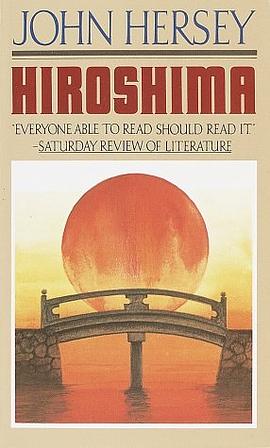

具体描述
Book Description
On August 6, 1945, Hiroshima was destroyed by the first atom bomb ever dropped on a city. This book, John Hersey's journalistic masterpiece, tells what happened on that day. Told through the memories of survivors, this timeless, powerful and compassionate document has become a classic "that stirs the conscience of humanity" (The New York Times).
Almost four decades after the original publication of this celebrated book, John Hersey went back to Hiroshima in search of the people whose stories he had told. His account of what he discovered about them is now the eloquent and moving final chapter of Hiroshima.
Amazon.com
When the atomic bomb was dropped on Hiroshima, few could have anticipated its potential for devastation. Pulitzer prize-winning author John Hersey recorded the stories of Hiroshima residents shortly after the explosion and, in 1946, Hiroshima was published, giving the world first-hand accounts from people who had survived it. The words of Miss Sasaki, Dr. Fujii, Mrs. Nakamara, Father Kleinsorg, Dr. Sasaki, and the Reverend Tanimoto gave a face to the statistics that saturated the media and solicited an overwhelming public response. Whether you believe the bomb made the difference in the war or that it should never have been dropped, "Hiroshima" is a must read for all of us who live in the shadow of armed conflict.
From Boston Sunday Herald August 1995
"This is an important audio because it captures one of the most shattering events of our century, just as it explains the mind-sets of the people it most affected...Hiroshima is worth listening to just for the weird story of a survivor who wound up on the TV program, 'This is Your Life,' with one of the crew members of the Enola Gay."
From Library Journal
On the basis of a return visit 40 years after the dropping of the bomb, Hersey has written a final chapter'' to one of the most important books to come out of World War II. The new chapter follows a reprint of the original text on the dropping of the first atomic bomb, and is written in the same spare, objective style. In it, Hersey brings up to date the lives of six survivors he covered so brilliantly in 1946. Once again he evokes the humdrum and the surreal elements in the aftermath of the bomb, and with eloquent simplicity he includes statements of other nations' nuclear tests. Compelling, unforgettable, and more timely than ever, this is absolutely essential for collections from junior high on. Robert H. Donahugh, Youngstown and Mahoning Cty. P.L., Ohio
From AudioFile
The fates of six victims are portrayed vividly in Hersey's classic account of the first atomic bomb. This edition contains a final chapter, written 40 years later, in which Hersey follows up on these six "Hibakusha," or "explosion-affected persons." Edward Asner speaks for many characters, yet his voice is that of the Hiroshima citizen caught up in day-to-day survival. He conveys the fear, confusion, pain and resignation of individuals dealing with a cataclysmic force. With subtle, understated delivery, Asner powerfully evokes the time, place and plight of these people. J.H.L.
About Author
Edward Asner, best known as a star on TV's Lou Grant Show, The Mary Tyler Moore Show, and Rich Man, Poor Man, brings a compelling journalistic style to this important work.
Book Dimension :
length: (cm)17.1 width:(cm)10.7
作者简介
约翰•赫西(John Hersey),中文名韩约翰,1914年生于天津,十岁时随父母返回美国,先后在耶鲁大学、剑桥大学完成学业。1937年夏天,他在暑假期间为诺贝尔文学奖获得者刘易斯•辛克莱尔担任秘书,同年秋到《时代》杂志工作,两年后被派往《时代》的重庆分部。整个二战期间,他往返于欧亚大陆,为《时代》、《生活》、《纽约客》撰稿。
约翰•赫西是最早践行“新新闻”写作手法的记者(尽管他后来对这种手法不无批评),对美国的新闻报道产生了很大的影响。他的主要作品有《广岛》、《阿达诺之钟》(A Bell for Adano,1945年获普利策奖)等。1965年起,约翰•赫西任教于耶鲁大学,长期讲授写作课程。1993年逝世。
目录信息
读后感
《广岛》:那颗我们都知道但又不知道的原子弹 文/盒饭君 1945年8月6日,美国在广岛投掷了名为“小男孩”的新式炸弹——原子弹。 这句话我们一直当做常识来认知。仔细想想,频繁的民族争端屡屡被提及,二战(日本侵华战争)被多次搬上银幕,但我们对“原子弹”的认识好像仅仅停...
评分谷本清还差五万美金,其中的一万他准备在他的巡回演讲中筹集,剩下的四万只能靠美国本地著名节目《这是你的人生》来帮助筹得。 谷本清来到了节目录制地,节目现场的灯光让谷本清难以睁开眼睛,主持人拉尔夫身后的时间牌在倒计时,连同摄像机一起,所有的时间和焦...
评分珍惜今天,珍惜现在,谁知道明天和意外,哪一个先来。 ——日·野坂昭《萤火虫之墓》 广岛,一个人类战争史中具有里程碑意义的城市,1945年8月6日,这座具有三百多年历史,对于日本具有重要战略意义的城市毁于一旦,一颗长三米、直径七十一厘米、重约三吨的“新型炸弹”——代...
评分很早以前,我知道广岛和长崎原子弹爆炸,但也仅仅是知道而已。随着自己接触的东西增多,渐渐地多了解了一些关于二战和原子弹的信息,可是也不全面。直到看了广岛。对二战的受害国家来说,两个原子弹加快了日本投降的脚步,降低了盟军的牺牲人数。对广岛人来说,这颗原子弹在他...
评分用户评价
与其说这是一部小说,不如说它是一部充满文学野心的“编年史”或“证词集”。作者的视角极其多变,时而是高高在上的观察者,时而又化身为那些被历史洪流裹挟的渺小个体。这种视角上的不断切换,形成了一种疏离感和亲密感的交替拉扯,让人无法完全放松地投入任何一个角色。我特别欣赏作者处理“沉默”的方式。在某些段落中,文字的留白比实际出现的文字本身更具份量。那些没有被写出来的、因为极度创伤而无法言说的部分,反而通过作者刻意的回避和重复的、象征性的意象得到了加强。这是一种高级的叙事技巧,它承认了语言的局限性,即在某些极致的经验面前,所有词汇都显得苍白无力。这本书似乎在不断地问自己:我该如何描述这种“无法描述之物”?而它的答案就是不断地自我解构,用新的、更扭曲的结构来近似那个核心的虚无。
评分我必须承认,这本书的阅读体验是极具挑战性的,它更像是一场智力上的搏击,而非轻松的消遣。作者似乎对传统的小说叙事技巧不屑一顾,采用了一种近乎学术论文的疏离感来处理极其个人化、私密的创伤记忆。语言的密度极高,充满了大量晦涩的比喻和哲学思辨,初读时常常需要反复咀嚼才能领悟其深层含义。我发现自己不得不频繁地停下来,查阅一些背景资料,才能真正跟上作者的思路,理解那些看似无关紧要的细节如何指向更宏大的主题——比如关于时间线的不可逆性,或是人类自我认知的瓦解。这本书的节奏是极其缓慢的,每一个场景的展开都如同慢动作镜头,将细节无限放大,直到它们变得令人窒息。对于那些寻求情节驱动型故事的读者来说,这可能是一次挫败的经历。但对于我而言,这种严苛的要求反而成了一种吸引力,它要求读者拿出百分之百的专注力,去解码作者精心编织的、由象征和隐喻构筑的迷宫。它不是一本“读完”的书,而是一本需要“研习”的作品。
评分这本书的文字带着一种冷峻的诗意,仿佛作者是在用最精炼的笔触描摹一场巨大的、无声的灾难。我读起来的时候,感觉自己仿佛站在一个时间静止的废墟之上,空气中弥漫着一种看不见的、沉重的灰烬。它没有过分渲染血腥或具体的恐怖,而是专注于刻画那种深入骨髓的“空无”——幸存者脸上的麻木,城市轮廓的扭曲,以及那种突如其来的、彻底改变了世界观的瞬间。叙事结构是碎片化的,像散落在地上的记忆的残骸,需要读者自己去拼凑。这种手法极其高明,它迫使我必须参与到这场记忆的重构中,而不是被动地接受一个既定的故事线。特别是对光影和声音的描摹,那种灼热的白光之后紧接着的死寂,以及后续偶尔传来的、被扭曲的微弱声响,都让人不寒而栗。这本书不只是在记录历史事件,它更像是在探索人类在面对超越理解的毁灭性力量时,心灵最深处的抵抗与崩溃。读完之后,那种震撼久久不能散去,它提醒着我们,某些历史的重量是需要用沉默来承载的。
评分这本书最让我感到震撼的,是它对于“日常性”被暴力中断的描绘,那种对比是如此的尖锐和残酷。作者没有将笔墨集中在宏大的战场描绘上,而是聚焦于几个普通人在灾难发生前几分钟,甚至几秒钟内的琐碎思绪和动作。比如,一个孩子正在为他的玩具车上油,一个老人在思考晚餐该吃些什么,这些平淡无奇的瞬间,突然被一道强光和巨响彻底抹去。这种对“未完成”的记录,比任何对死亡的直接描述都更具杀伤力。它让我们直观地感受到,生命的脆弱性不在于它会如何终结,而在于它随时可能被剥夺掉“继续下去”的可能性。我感觉自己像一个闯入者,窥视着那些本应被时间温柔覆盖的、极其私密的、即将消逝的瞬间。书中的某些章节甚至没有对话,只有纯粹的感官记录——皮肤感受到的热浪,耳膜传来的嗡鸣,以及视野中颜色饱和度的突然变化。这种高度感官化的写作手法,让“不在场”的读者也仿佛被卷入了那场热浪之中。
评分这本书的后半部分,开始展现出一种近乎神谕般的、预言式的口吻。不再是单纯的对事件的回溯,而是对事件发生之后的世界观重塑的探讨。它探讨了幸存者背负的道德重担,那种“为什么偏偏是我留下来”的永恒追问。作者巧妙地运用了大量的神话原型和宗教意象,将这场现代技术带来的灾难,提升到了一个关乎人类灵魂救赎与堕落的永恒命题的高度。我读到的不再是五十年代的具体情景,而是人类文明在面对自我毁灭潜力时的一种集体焦虑。那些关于“影子”和“灰烬”的反复出现,与其说是物理残留物的描写,不如说是精神创伤的具象化。这本书的结尾处理得非常高明,它没有提供任何廉价的安慰或明确的答案,而是将那份沉重感,如同一个未解的谜团,温柔而坚定地交还给了读者,让每个人都必须带着这份重量继续前行。它像一个永恒的警钟,关于我们能制造出何等可怕的力量,以及我们如何应对这份力量带来的后果。
评分Objective/subjective demonstration of the dehumanization of world war. Hersey has never intended to explain; he invites us to engage in, to empathize with the trauma, with a planetary humanistic vision.
评分一本在家里落了十一年灰的书
评分从地面的高度看人间地狱
评分Objective/subjective demonstration of the dehumanization of world war. Hersey has never intended to explain; he invites us to engage in, to empathize with the trauma, with a planetary humanistic vision.
评分快读完的时候读到一句,在爆炸发生一个月以后,“weeds already hid the ashes, and wild flowers were in bloom among the city's bones”
相关图书


本站所有内容均为互联网搜索引擎提供的公开搜索信息,本站不存储任何数据与内容,任何内容与数据均与本站无关,如有需要请联系相关搜索引擎包括但不限于百度,google,bing,sogou 等
© 2026 book.quotespace.org All Rights Reserved. 小美书屋 版权所有