
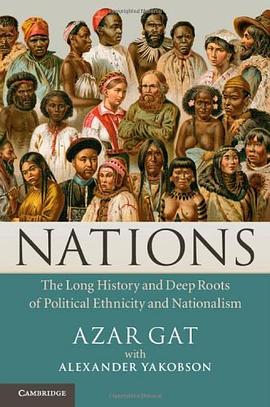

具体描述
What are the origins of nationalism and why is it capable of arousing such intense emotions? In this major study, Azar Gat counters the prevailing fashionable theories according to which nations and nationalism are modern and contrived or 'invented'. He sweeps across history and around the globe to reveal that ethnicity has always been highly political and that nations and national states have existed since the beginning of statehood millennia ago. He traces the deep roots of ethnicity and nationalism in human nature, showing how culture fits into human evolution from as early as our aboriginal condition and, in conjunction with kinship, defines ethnicity and ethnic allegiances. From the rise of states and empires to the present day, this book sheds new light on the explosive nature of ethnicity and nationalism, as well as on their more liberating and altruistic roles in forging identity and solidarity.
作者简介
Azar Gat (born 1959 in Haifa, Israel) is a researcher and author on military history, military strategy and war and peace in general. Along with Steven Pinker and others, Gat argues that war is in decline in today's world.
He is currently Ezer Weizman Professor of National Security and in his second term (first from 1999–2003) as Chair of the Department of Political Science at Tel Aviv University. He is the founder and head of the University's Executive Masters Program in Diplomacy and Security.Gat is also a Major in the Israeli Army.
Gat holds a doctoral degree from the University of Oxford (1984–86), an MA from Tel Aviv University (1979–83), and a BA from the University of Haifa (1975–78).
He has been Alexander von Humboldt Fellow at the University of Freiburg, Germany; Fulbright Fellow at Yale University, USA; British Council Scholar at the University of Oxford, Great Britain; Visiting Fellow at the Mershon Center, Ohio State University, USA; Goldman Visiting Israeli Professor at Georgetown University, USA; and Koret Distinguished Visiting Fellow for Israel Studies at the Hoover Institution, Stanford University, USA.
Gat's War in Human Civilization, published in 2006 by the Oxford University Press, was named one of the best books of the year by The Times Literary Supplement.
目录信息
读后感
评分
评分
评分
评分
用户评价
这本《Nations》真是让我沉浸其中,仿佛亲眼见证了一个个民族的兴衰更迭。作者的笔触细腻入微,无论是宏大的历史叙事,还是对个体命运的刻画,都拿捏得恰到好处。我特别欣赏书中对文化冲突与融合的探讨,那种在历史洪流中挣扎、又不断自我重塑的力量,读起来让人热血沸腾。书中对不同国家政治体制和意识形态演变的分析,鞭辟入里,让我对当今世界的复杂格局有了更深层次的理解。每一次翻开书页,都像是一次跨越时空的对话,与那些塑造了我们今日世界的先驱者们进行思想的碰撞。这本书的深度和广度都超出了我的预期,它不仅仅是一本历史读物,更是一面映照人类文明的镜子。我甚至会时不时地停下来,合上书本,默默思考那些关于身份认同、国家意志的永恒命题。
评分从文学性的角度来看,《Nations》简直是一部史诗。它不仅仅是堆砌事实,更是在进行一场关于“存在”与“意义”的探讨。语言的驾驭能力令人惊叹,时而如磅礴的交响乐,描绘出时代的激昂;时而又像潺潺的溪流,诉说着普通人的悲欢离合。我常常被那些精准而富有画面感的词句所打动,仿佛能闻到历史尘埃的味道,感受到历史人物的呼吸。这种沉浸式的体验,是许多严肃历史著作所难以企及的。这本书让我体会到,真正的历史写作,是艺术与科学的完美结合。它不仅解释了“发生了什么”,更重要的是,探讨了“为什么会这样”,以及“这对我们意味着什么”。这是一次深刻的精神洗礼,让我对人类文明的韧性与脆弱性,都有了更深刻的共鸣和敬畏。
评分说实话,刚开始接触《Nations》时,我还有点担心内容会过于学术化,阅读起来会枯燥乏味。然而,事实证明我的顾虑完全是多余的。叙事节奏的掌控简直是大师级的,高潮迭起,引人入胜。书中穿插的那些生动的小故事和鲜活的人物侧写,极大地增强了文本的可读性。比如,对某个关键历史转折点上决策者内心挣扎的描写,简直是心理学的教科书。我感觉自己不是在阅读一个关于“民族”的宏大主题,而是在跟随一群鲜活的生命,经历他们的荣耀与低谷。我尤其喜欢作者在描述社会变迁时所展现出的那种克制的幽默感,它让原本沉重的历史题材变得平易近人,又丝毫没有流于表面。读完后,我对那些教科书上简单带过的历史事件,都有了全新的、充满血肉的感知。
评分我必须得承认,《Nations》的阅读体验是一场智力上的马拉松。它要求读者全神贯注,因为它提供的论证链条非常复杂且严密。书中对于不同文明在面对现代化冲击时所采取的不同路径的对比分析,尤其精彩,提供了极具启发性的参照系。作者那种严谨的考据和逻辑推演,让人不得不信服。虽然有些段落需要反复阅读才能完全领会其深意,但这正是它价值所在——它不是用来消遣的快餐读物,而是值得反复咀嚼的知识盛宴。我特别欣赏作者在引入跨学科视角时那种游刃有余的感觉,将人类学、社会学乃至经济学的理论无缝地整合到历史分析中,形成了一个多维度的分析框架。这本书,无疑是我书架上最“重”也最“有分量”的一本。
评分这本书的格局之大,真叫人叹为观止。它没有将“民族”简单地定义为地理或血缘的集合,而是深入挖掘了构建集体认同感的深层心理和社会机制。每当读到作者剖析某个民族如何通过共同的叙事和神话来凝聚力量时,我都感到一种莫名的震撼。这种对“想象的共同体”的精妙解析,让我反思了许多关于我们自己群体归属感的来源。与其他同类主题的作品相比,《Nations》的独特之处在于它平衡了对“大叙事”的梳理和对“微观细节”的关注。它不回避历史中的阴暗面,对于那些被压迫和边缘化的声音,也给予了应有的尊重和记录。读完后,我感觉自己的世界观被拓宽了,对“我们”与“他们”之间的界限,有了更具思辨性的认识。
评分感觉其实没啥说服力。
评分对E. J. Hobsbawm和B. Anderson的驳斥反而让我对Invented Tradition以及Imagined Communities更富认同感了
评分感觉其实没啥说服力。
评分感觉其实没啥说服力。
评分感觉其实没啥说服力。
相关图书



















本站所有内容均为互联网搜索引擎提供的公开搜索信息,本站不存储任何数据与内容,任何内容与数据均与本站无关,如有需要请联系相关搜索引擎包括但不限于百度,google,bing,sogou 等
© 2026 book.quotespace.org All Rights Reserved. 小美书屋 版权所有