
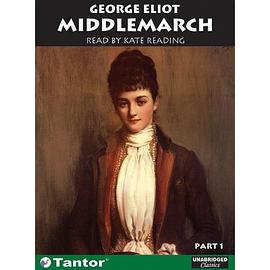

具体描述
Synopsis:
George Eliot's masterpiece, portraying every level of society in a provincial English town, tells the story of the romantic idealist Dorothea Brooke, her misguided marriage to a dessicated scholar incapable of loving her, and the passionate love affair that ultimately brings meaning to her life. A parallel plot involves the plight of Lydgate, the equally idealistic doctor who arrives in Middlemarch hoping to bring advanced medical techniques to the village poor, but becomes ensnared by a spoiled and materialistic young woman. The novel explores the idea that the search for one's true function in life may be warped or frustrated by one's environment--but also that those obstacles may ultimately be overcome or transcended. MIDDLEMARCH, published in 1872 but set 40 years earlier, is a grand Victorian panorama--a fascinating and detailed look at English life, rich in personality types worthy of Dickens. It is also an intensely readable and gripping story, and an unexpectedly witty one, sometimes reminiscent of Jane Austen in its sharp-grained social observations. Like all Eliot's fiction, MIDDLEMARCH has a strong moral center--epitomized in the noble Dorothea--that is unrelated to formal religion and that is closely allied with a healthy skepticism about any belief system that does not include a deep and abiding respect for human frailty.
作者简介
Author Bio:
George Eliot's mother died young, and young Mary Ann Evans (as she was known until she was nearly 40) was raised by her father in a country town. She refused to embrace the fundamentalist religion of her father and, when she was 16, objected to going to church with him; however, she agreed to accompany him as long as she could be free to let her mind wander during the service. Soon after that, she translated THE LIFE OF JESUS by the German theologian David Friedrich Strauss into English--a work that questioned the divinity of Christ. Following the death of her father, George Eliot was free to lead the life of an intellectual and scholar; she moved to London and began to write for, and eventually edit, the Westminster Review. It was there that she met the man with whom she eventually spent most of her life, George Henry Lewes, who was married to another woman--a daring move in Victorian England, which resulted in Eliot's condemnation by her family, including her beloved brother, Isaac. (She explored the complexities of the brother-sister bond in her 1860 novel, THE MILL ON THE FLOSS.) With Lewes's encouragement, Eliot began to write novels and stories, and began publishing them in 1857, taking the pseudonym "George Eliot" largely to avoid the prejudice her public might have toward her unorthodox living arrangements. Upon Lewes's death, Eliot married a much younger man--delighting her family, who finally considered her respectable--but she died six months after the wedding. She became widely celebrated for her fiction, and is considered one of the greatest novelists of all time; D. H. Lawrence called her the first modern novelist. All her life, George Eliot was torn between her reverence for the old ways--religious, political, and social--in which she was raised, and the new, represented by her intellectual agnosticism and bohemian life. Always, she placed the responsibility for a person's life on the moral choices he or she makes, and she believed that the function of the novel is to increase people's sympathy and tolerance for others. As a strictly realist writer, she embraced the doctrine that "all truth and beauty are to be attained by a humble and faithful study of nature, and not by substituting vague forms...in place of definite, substantial reality."
目录信息
读后感
评分
评分
评分
评分
用户评价
读罢掩卷,心中久久不能平静的,是一种对于“理想的幻灭与重建”的深刻共鸣。故事的结构精妙,如同一个复杂的钟表机械,每一个齿轮——每一个角色——都精准地带动着整体的运转。那些关于教育改革、政治偏见、女性地位的议题,在那个特定的历史背景下,显得尖锐而富有远见。我曾一度为书中某些人物的固执和不近人情感到恼火,但随着阅读深入,那种恼火逐渐被一种近乎悲悯的理解所取代。作者似乎并不急于评判谁对谁错,而是将他们置于一个巨大的道德和环境熔炉中,观察他们如何被炼化。特别是那些关于婚姻与爱情的探讨,避开了传统浪漫主义的窠臼,直面了结合的现实意义——那是一种伙伴关系,一种共同面对生活重量的盟约。这使得全书拥有了一种超越时代的现代感,让你思考,在今天的世界,我们是否依然在重复着相似的关于选择与价值的困境。
评分这部作品带给我的,是一种近乎沉静的震撼,它探讨的不是戏剧性的冲突,而是日常生活中道德选择的重量。它像是一部关于“时间如何塑造人”的史诗。那些雄心勃勃的年轻人,带着改变世界的愿景进入社会,最终被现实的磨损雕刻出不同的形状。有的人学会了谦逊,将宏大的理想悄悄地融入到更小的、实际的帮助他人的行动中;而另一些人则在追逐虚荣的道路上越陷越深,最终被自己的傲慢吞噬。这种对“渐变”的捕捉,细腻得令人心惊。书中对于职业伦理、社区责任以及如何定义一个“好人”的探讨,贯穿始终,且从未给出简单的答案。它不是一本教人如何成功的书,而是一本关于如何“存在”的书,如何在巨大的社会惯性面前,保持住内心那一点点微弱但真实的光亮,这才是它真正值得反复品读的价值所在。
评分如果用一个词来形容这次阅读体验,我会选择“浸润”。这本书的语言风格非常独特,它既有维多利亚时代文学的典雅与周全,又暗含着一种犀利的、几乎是解剖学的精准度。你感觉自己不是在读一个虚构的故事,而是在参与一场深入的社会学田野调查。角色的内心独白和外部环境的描写,两者之间保持着一种奇特的张力。比方说,环境的描写——那片沼泽地、那座古老的宅邸——不仅仅是背景板,它们本身就是一种情绪的投射,一种人物命运的隐喻。我尤其欣赏作者对“信息传播”的细致刻画,小镇上流言蜚语如何如同瘟疫般扩散,如何扭曲事实,如何影响到那些最无辜的人的声誉。这种对信息生态的早期描摹,放到今天来看,依然具有强大的警示意义。它提醒我们,真相往往比谎言更难抵达,尤其是在一个封闭而保守的社区里。
评分坦率地说,这本书的阅读门槛不低,初看时,那些冗长的人名和错综复杂的亲属关系确实构成了一道小小的障碍。但一旦你度过了最初的适应期,你会发现,正是这种“复杂性”,构成了其艺术成就的核心。它没有线性叙事中常见的英雄或恶棍,每个人都是善与恶、智慧与愚昧的混合体。最令人印象深刻的是,作者对于“自我欺骗”的描摹,达到了出神入化的地步。书中许多角色,终其一生都在努力说服自己相信一个精心构建的、符合自身利益的叙事。读到关键转折点,当那些精心编织的谎言被现实的铁锤击碎时,那种错愕与清醒带来的冲击感,是任何简单情节都无法比拟的。它迫使我反思自身在面对重大抉择时,是否也曾因为恐惧或虚荣,而选择了那条看似更光明实则更晦暗的道路。
评分这本厚重的作品,初捧在手,便觉沉甸甸的历史感扑面而来。它并非那种快节奏、情节跌宕起伏的小说,更像是一幅细腻到令人窒息的十九世纪英国乡村风俗画卷。作者的笔触极其克制,却又充满了洞察力,将一群看似平凡的人物,置于社会变革的暗流之中。我尤其欣赏他对“小人物”命运的关注,那些柴米油盐的琐碎日常,在作者的描绘下,竟能折射出时代宏大的主题。比如,对当地医生和教区神职人员群像的刻画,他们各自代表了不同的理想与妥协,在个人抱负与社会责任之间挣扎徘徊。读进去后,你会被那种缓慢而坚定的叙事节奏所吸引,仿佛自己也成了这个小镇上的一员,目睹着这些人的爱恋、误解、抱憾与成长。它不给你廉价的情感宣泄,而是要求你投入时间去理解每一个选择背后的复杂动机,这份需要付出的阅读体验,恰恰是它最迷人的地方。这本书需要的不是匆忙的翻阅,而是安静的沉思,让那些细微的情感波澜在你心中慢慢发酵。
评分 评分 评分 评分 评分相关图书









本站所有内容均为互联网搜索引擎提供的公开搜索信息,本站不存储任何数据与内容,任何内容与数据均与本站无关,如有需要请联系相关搜索引擎包括但不限于百度,google,bing,sogou 等
© 2026 book.quotespace.org All Rights Reserved. 小美书屋 版权所有