
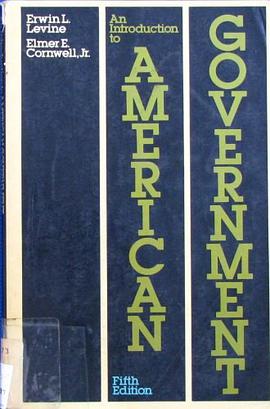

具体描述
more alike than dissimilar in their political behavior. But it is this electoral<br >requirement that is the basis for the loose union in the first place. Anyone<br >seeking the presidency as a candidate of a party must secure such an elec-<br >toral majority. One must put together a combination of states sufficient to win<br >a majority of electoral votes, which means that any third party that has any<br >intention of making a serious attempt to win the presidency must comply<br >with the laws of fifty states in order to get its electors on the ballot in<br >November of a presidential year. This takes an extensive organization and a<br >great amount of money. No wonder then that the United States has generally<br >had the kind of two-party system it has. For any third party to stay in busi-<br >ness, it must successfully contend for a majority of electoral votes, or to put<br >it another way, any third party must in reality replace one of the two other<br >parties.<br > It is commonplace for presidential candidates of the two major political<br >parties, the Republicans and Democrats, to shape their public campaigns so<br >as to assure a majority victory in each state. Having the majority of the<br >votes cast in a state ensures victory for that candidate s slate of pledged<br >electors. If a candidate wins enough large states in this manner, the electoral<br >college majority is all the morn certain. In 1980, Ronald Reagan won the<br > numerical majority of the popular vote in only 25 of the 44 states he carried.<br > In Massachusetts, for example, he won the state s 14 electoral votes by only<br > 41.8 per cent of the vote cast to Carter s 41.7 per cent. Independent candi-<br > date John B. Anderson s slate of electors took 15.2 per cent of the state s<br > total vote cast. (See Table 1.) When a third-party candidate is in the presi-<br > dential race, a plurality of the popular vote is all that is needed to win a<br > state s total electoral vote. Presidential candidates, however, do not publicly<br > state that they are interested in the plurality, but rather they seek the major-<br > ity of the votes cast in a state not only to ensure victory for the slate of<br > electors but also so as not to confuse the electorate. We have had 15 presi-<br > dential elections in which the successful candidate for President did not have<br > a majority of the total popular vote in the country. (See Table 2.) The point<br > is well taken. Although many people think of the electoral college system<br > as archaic, the nation s political parties have adapted the technique of win-<br > ning the presidency to the electoral college requirements in the Constitution.<br > In the fifteen times that we had minority Presidents, and in the elections of<br > Jimmy Carter in 1976, when he won a popular majority of only 50.1 per<br > cent and only 27 extra electoral votes (he won 2971 and Ronald Reagan in<br > 1980 when he won only 50.7 per cent of the total popular vote but 489<br > electoral votes, the electoral college legitimized the national election.<br > A constitutional root for the selection of the Presic[ent was fimlly im-<br > planted in 1789. The political pmlies of the nation, not even mentioned in<br >
作者简介
目录信息
读后感
评分
评分
评分
评分
用户评价
**评价五** 对于寻求一个全面、无偏见的美国政府导论的读者来说,这本书无疑是一个卓越的选择。它的价值不仅在于知识的传授,更在于培养读者一种审慎的、多维度的分析框架。作者在论述过程中,非常注重引入不同的学派观点进行碰撞和对话,而不是仅仅采纳某一家之言。例如,在探讨政府监管的必要性时,书中同时呈现了芝加哥学派的自由放任观点和进步主义学派的强力干预主张,并客观地分析了各自的时代背景和政策后果。这种“平衡的呈现”让读者得以自行权衡,形成自己独立的判断。此外,书中附带的图表和数据可视化做得非常精良,它们不是装饰品,而是真正用来简化复杂信息流的关键工具。我发现那些原本需要反复阅读才能理解的比例变化和趋势对比,在图表的辅助下能一目了然。这本书的严谨性体现在对来源引用的规范和数据的准确性上,体现了扎实的学术规范,这对于想要进一步深入研究的读者而言,提供了极佳的起点和参考价值。总而言之,这是一本既能满足初学者,又能经受住进阶学习者检验的佳作。
评分**评价四** 这本书的语言风格非常具有亲和力,完全不像传统政治学著作那样板着面孔。作者似乎深知,要让一个对政治不太感冒的普通读者感兴趣,必须注入一些人文关怀和时代感。在讨论美国两党政治的极化现象时,作者穿插引用了一些近年的政治脱口秀片段和社交媒体上的热门讨论,这使得原本严肃的理论分析瞬间变得鲜活起来,仿佛就是正在我们身边发生的事情。这种“将高雅理论融入流行文化语境”的做法,极大地提升了阅读的趣味性。另外,书中对美国政治文化的探讨,也摆脱了刻板印象,它细致描绘了美国社会内部各种族群、地域和意识形态的差异如何转化为政治力量,而非简单地将美国描绘成一个同质化的政治体。读完后,我对美国社会中那种看似矛盾的“自由”与“集体主义”之间的拉扯有了更深切的体会。这本书成功地架起了一座桥梁,连接了冷冰冰的制度条文与火热的社会现实,让读者在获得知识的同时,也获得了对这个国家深层次运作逻辑的共鸣感。
评分**评价三** 这本书的结构编排堪称艺术,它的逻辑递进丝丝入扣,让人欲罢不能。从对美国建国理念的宏大叙事开始,作者稳步向下,逐步细化到国会、总统、法院这三大支柱的运作细节,最后落脚到公民社会和公共舆论的影响。这种由宏观到微观的架构,确保了读者在理解具体机构职能时,不会脱离其产生的历史和哲学背景。我尤其欣赏作者在处理不同政府部门职能重叠与制衡时所采用的对比手法。例如,对比行政部门在危机处理中的效率与立法部门在审议过程中的拖沓,这种并置不仅生动,而且直观地展现了“制衡”这一概念在实际操作中的“成本”——即效率的牺牲。此外,本书对于政府官僚体系的描述也相当到位,它揭示了那些在幕后默默运作的非民选官员群体,他们如何在政策执行的“最后一公里”发挥出决定性作用,这部分内容常常被其他入门书籍所忽略。整体而言,这是一部结构严谨、叙事流畅的学术精品,它能引导读者像剥洋葱一样,一层层深入地揭开美国政治复杂的外衣。
评分**评价二** 我必须说,这本书的视角非常具有批判性,这正是它与其他同类入门读物拉开差距的地方。作者并没有将美国政府描绘成一个完美的、自洽的体系,而是毫不避讳地揭示了其内在的矛盾、历史遗留的结构性问题以及当前面临的严峻挑战。书中对选举制度的讨论,远超出了单纯的程序性介绍,而是深入剖析了游说团体、竞选资金以及媒体对选举结果的深层操纵,这让我对“民主”二字有了更现实也更清醒的认识。尤其让我感到震撼的是关于联邦制权力分配的章节,作者通过一系列的州际冲突案例,清晰地展示了中央集权与地方自治之间永恒的张力,以及这种张力如何影响着公共政策在不同地域的实施效果。读完这部分内容,我感觉自己不再是被动接受知识的容器,而是被迫开始主动思考:如果我是政策制定者,在当前这个充满分裂的政治气候下,我将如何平衡效率与公平?这本书成功地激发了读者的政治思辨能力,它不提供标准答案,而是提供了一套分析问题的工具箱。对于渴望超越教科书表面知识,想探究权力运作的深层逻辑的读者来说,这本书无疑是极具价值的。
评分**评价一** 这本书的深度和广度都让人印象深刻,尤其是在阐述美国政治体制的演变过程中,作者展现了扎实的学术功底和清晰的逻辑。我特别欣赏它对于宪法原则和三权分立如何在一个不断变化的社会环境中运作的细腻剖析。书中对关键历史事件的解读,并非简单的罗列事实,而是深入挖掘了这些事件对当代政治文化产生的深远影响。例如,对于民权运动的论述,作者不仅关注了立法层面的变革,更着重探讨了司法和行政部门在推动或阻碍这些变革中所扮演的角色,这使得理解美国政治的复杂性有了一个更全面的视角。阅读过程中,我发现作者在平衡理论框架与实际案例应用方面做得非常出色。面对一些复杂的政治理论,他总能迅速通过具体的、大家耳熟能详的政治人物或标志性法案来加以佐证,这极大地降低了阅读门槛,让即便是初次接触美国政治学的读者也能迅速把握核心概念。全书的行文流畅,术语的解释精准到位,没有那种晦涩难懂的学院腔调,更像是一位经验丰富的大学教授在面对面授课,充满了启发性。这种叙事方式,使得原本可能枯燥的政治学阅读变成了一次引人入胜的探索之旅。
评分 评分 评分 评分 评分相关图书












本站所有内容均为互联网搜索引擎提供的公开搜索信息,本站不存储任何数据与内容,任何内容与数据均与本站无关,如有需要请联系相关搜索引擎包括但不限于百度,google,bing,sogou 等
© 2026 book.quotespace.org All Rights Reserved. 小美书屋 版权所有