

具体描述
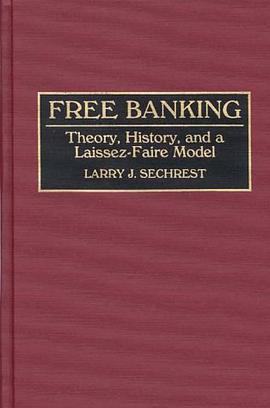
Free Banking: Theory, History and a Laissez-Faire Model by Larry Sechrest is a magnificent work, now rescued from undeserved obscurity with this new edition. Published in 1993, it is a formalization and extension of literature in the free banking area, with important correctives and clarifications.
He argues that the debate over central banking and free banking is the most important economic issue of the day. Central banking accepts all the methodological precepts of socialist central planning. It is constructivist. The planners pretend to know more than they can know. They presume that their knowledge is better than the market. They use their power to override market signals of prices and interest. And the results are about as successful as socialism, and he proves this point with the first formal model of central vs. free banking, one that combines Hayek, Selgin, and Garrison to show that a competitive system would be self correcting where a centralized one is not.
He goes further to analyze banking institutions in light of Say's Law which argues for the stability of macroeconomic phenomena in the absence of intervention. He further distinguishes the Austrian position from the monetarist one.
Sechrest's attack on countercyclical policy is especially poignant today. He argues that even the most well-executed plan has no hope for success. Such policies fail because they are swimming against a market tide, and, moreover, monetary officials have no incentive to pursue socially optimal results; rather, their every institutional bias tends toward protecting the banking industry and the government before anything else.
Sechrest contrasts this centralized model with looking at the detailed history, however, he finds serious problems in the case of free banking in Scotland, as described by Larry White. Sechrest goes beyond Rothbard and Sechrest's own journal articles on this topic to provide a full overview of the Scottish case. In contrast, he believes there is more to learn about the American case than has been previously known. Here he accumulates and presents vast data to show that free banking performed better than central banking by every standard that matters.
The author then turns to the varieties of free banking theories, and contrast his own views with those of White/Selgin, Yeager, and Rothbard. He concludes with a wonderful theoretical round up of criticism of free banking. He shows that money is not a public good, that banking is not a natural monopoly, that central banking does not constitute a case of spontaneous evolution, and that we do not need a lender of last resort.
He concludes "As long as money remains a tool of the state, that tool will continue to serve the state as a well-spring of income redistribution, social engineering, and military adventurism. A laissez-faire approach to money and banking is more than merely conductive to efficiency and stability. It is likely to prove to be the necessary precondition for prosperity, justice, and peace."
This edition contains a new foreword by the author.
作者简介
目录信息
读后感
评分
评分
评分
评分
用户评价
这部作品的魅力在于它成功地将宏大的社会结构分析,缩小到了微观个体选择的层面。作者在描绘制度变迁时,并非仅仅关注于抽象的法律条文或宏观的经济数据,而是深入到那些具体从事金融活动的人们的日常决策中去。我常常被书中对早期金融家那种既胆大妄为又极度谨慎的复杂心态的刻画所吸引。他笔下的人物,他们的成功或失败,往往取决于对市场情绪的微妙把握,而不是简单的资本积累。这种对人性在制度框架下如何扭曲和升华的细致入微的观察,为这部作品增添了浓厚的小说色彩,尽管它本质上是一部严肃的论著。阅读时,我仿佛能感受到那种在不确定性中摸索前行的紧张感。这种融合了社会心理学、历史学和经济学的交叉视角,使得全书的视角异常开阔,避免了传统经济学分析的僵硬和单一。它像一把精密的解剖刀,精准地切开了现象的表层,让我们看到了其下流淌的复杂人性和制度合力。
评分阅读体验上,这部作品带给我的是一种深入骨髓的震撼,但这种震撼并非来自情节的跌宕起伏,而是源自于其结构上的完美无瑕和论证上的滴水不漏。作者对材料的组织能力达到了出神入化的地步。你会清晰地感受到,每一个章节、甚至每一个段落,都不是随意堆砌的砖块,而是按照一种精密设计的几何学原理精确安装的构件。特别是关于不同地区、不同制度下金融实验的横向比较部分,作者展现了令人惊叹的跨学科知识储备。他能熟练地在经济史、法律制度演变、甚至早期社会心理学之间穿梭,搭建起一座座坚实的分析桥梁。阅读过程中,我经常需要停下来,回顾前文的铺垫,然后才能完全领会当前章节的深意,这是一种需要投入精力的阅读,但回报是极其丰厚的。它要求读者保持高度的专注,因为它不容忍任何心不在焉的滑读。对于那些真正渴望理解事物运作底层逻辑的人来说,这本书无异于一张精细的蓝图,它不仅告诉你“发生了什么”,更重要的是解释了“为什么只能是这样”。
评分这本书带给我的最直接感受是其强烈的现实穿透力。尽管它讲述的是遥远的历史或抽象的理论,但作者总能找到巧妙的方式将它们与当下的议题连接起来,仿佛历史的回响从未停止。我发现自己开始用一种全新的、带有批判性眼光去看待当前的新闻报道和政策声明。书中对特定范式转变的描述,那种如同地质板块移动般的缓慢而不可逆转的力量感,描绘得淋漓尽致。作者在论述过程中,很少使用那种居高临下的说教口吻,反而更像是一位经验丰富、略带沧桑感的引路人,带着你穿过迷雾,指出那些被时间掩盖的决策点。他对细节的把握达到了近乎偏执的程度,每一个引用的数据、每一处历史引述,都经过了严格的筛选和校验,让人对其学术诚信度深感信服。读完之后,那种满足感,就好比完成了一次极其复杂的拼图,所有零散的碎片最终归位,形成了一个宏大而清晰的画面。
评分坦白说,我最初接触这类题材是带着一丝敬畏和抵触的,总觉得会是一部晦涩难懂的“天书”。然而,这部书的语言风格,却出乎意料地充满了活力和一种近乎辩论赛的锐气。作者的句子结构变化多端,时而长句如潮水般层层推进,逻辑链条环环相扣,将一个复杂的论点论证得无懈可击;时而又用极其简洁、甚至带有一丝讽刺意味的短句,精准地击中要害,让人拍案叫绝。这种节奏的拿捏,使得阅读过程充满了动态感。我尤其喜欢作者在构建案例时所采用的那种多重视角。他似乎总能在最关键的地方切换观察点,让读者从不同利益相关方的立场去看待同一个事件,极大地丰富了我们对“真相”的理解。这与其说是在阅读一本历史或经济分析,不如说是在参与一场高水平的智力交锋。书中对特定历史时期社会思潮的捕捉极其敏锐,仿佛能闻到那个时代特有的尘土和墨水味。这本书迫使我不断地思考,挑战我既有的认知框架,这正是我心目中优秀学术著作的终极体现——它不喂养你,而是锻炼你思考的肌肉。
评分这部作品的叙事手法实在是太引人入胜了,作者似乎拥有将枯燥的社会经济学理论编织成扣人心弦故事的魔力。我常常觉得,阅读这本书就像是置身于一个宏大的历史剧场之中,亲眼目睹那些影响了无数人命运的决策是如何诞生的。尤其欣赏作者在处理复杂概念时的那种游刃有余,他没有采取生硬的定义堆砌,而是通过一系列精心设计的场景和人物的内心挣扎来展现理论的实际运作。比如,书中对早期金融基础设施演变过程的描绘,那种细致入微的程度,让人不禁为之叹服。我记得有一次读到某个关键转折点,我几乎是屏住呼吸,生怕错过了任何一个细微的线索。更难能可贵的是,尽管涉及的议题宏大且专业,作者却始终保持着一种近乎人性的视角,他没有将历史人物工具化,而是展现了他们在巨大压力下所做出的、充满矛盾的选择。这种深层次的人文关怀,使得整部作品的基调既有学术的严谨,又不失文学的温度。它让我对理解现代经济体系的根源性问题有了一种全新的、更具血肉感知的认识,绝非一般的教科书所能比拟。
评分A laissez-faire approach to money and banking is more than merely conducive to efficiency and stability. It is likely to prove to be the necessary precondition for prosperity, justice, and peace.
评分A laissez-faire approach to money and banking is more than merely conducive to efficiency and stability. It is likely to prove to be the necessary precondition for prosperity, justice, and peace.
评分A laissez-faire approach to money and banking is more than merely conducive to efficiency and stability. It is likely to prove to be the necessary precondition for prosperity, justice, and peace.
评分A laissez-faire approach to money and banking is more than merely conducive to efficiency and stability. It is likely to prove to be the necessary precondition for prosperity, justice, and peace.
评分A laissez-faire approach to money and banking is more than merely conducive to efficiency and stability. It is likely to prove to be the necessary precondition for prosperity, justice, and peace.
相关图书

















本站所有内容均为互联网搜索引擎提供的公开搜索信息,本站不存储任何数据与内容,任何内容与数据均与本站无关,如有需要请联系相关搜索引擎包括但不限于百度,google,bing,sogou 等
© 2026 book.quotespace.org All Rights Reserved. 小美书屋 版权所有