
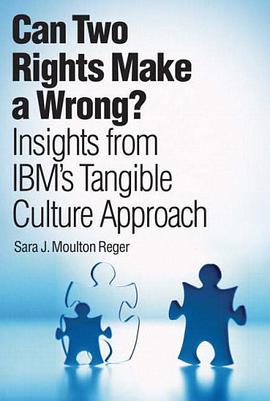

具体描述
"This is the book for people who never get past page two of a management book-it is as close as the genre comes to being a compulsive page turner. Its main thesis is built on at least three big ideas that are individually persuasive and cumulatively compelling. They naturally fit into an alignment tool that is applied to the range of day-to-day and exceptional challenges all enterprises face, including the Holy Grail of transformational change." -Donald Macrae, general counsel and chief knowledge officer, Department for Environment, Food and Rural Affairs, England "Having been in the business of cultural transformation and alignment for many years, I've carefully looked for a thoughtful strategy and an intentional approach to bringing about healthy and thriving cultures. Can Two Rights Make a Wrong? is simply the best-it is the most thoughtful and practical work I've seen in this growing and critical area. This is a must buy!" -Dr. Ron Jenson, Future Achievement International, international author, speaker, and consulting and executive coach "Can Two Rights Make a Wrong? is a superb account of how to manage the 'soft side' of mergers and acquisitions, but it has great value for managing many other new business practices as well, such as Open Innovation. It provides a powerful, practical method to identify conflicts, develop alignment, and achieve effective coordination between two parties that would be tremendously helpful in a variety of collaborative contexts, such as alliances, research partnerships, or joint ventures. Moulton Reger and her colleagues at IBM should be congratulated for a thoughtful, insightful book." -Henry Chesbrough, professor at University of California Berkeley's Haas School of Business, author of Open Innovation "Numbers are neat and clean. Human beings are often messy and complex. If everyone in your organization knew what to do and when, how, where, and-most importantly-why to do it, how would your organizational culture be defined? The authors of Can Two Rights Make a Wrong? have introduced new ways to proactively address culture and, most importantly, tie it to bottom-line benefits." -James H. Amos, Jr., chairman emeritus, MBE/The UPS Store "This book is a must read for leaders hoping to change their organization's culture as well as those attempting to merge firms with uniquely different cultures. Moulton Reger's insights are grounded in theory and real-world experience. In this unique book, culture change is a complex concept broken down into bite-sized pieces and presented in a way that any leadership team can embrace at its own pace." -Merrill J. Oster, author of Vision Driven Leadership, founder Oster Communications, Inc. "Here at last is a business book that takes culture seriously and isn't intimidated by it. The method described can be used with practically any type of business problem in any industry, and the book does an excellent job of drawing on research and theory while keeping the focus practical. The three elements of Outcome Narratives, Right vs. Right, and Business Practices are significant ideas in their own right-each is a unique insight. All three ideas have been around in various guises for several years, but have not been as well crystallized or as focused on complex business problems as they are in this book. The authors' achievement is extraordinary and goes a long way toward making the juicy idea of culture something to be built on and worked with." -Peter Vaill, professor, Antioch University "The Achilles heel for any major organizational change is that organization's culture. In every change, consultants talk about culture, but few provide specific sequential steps designed to actually do anything about it. This book provides such steps, and provides them in ways that makes sense. 'Makes sense' is the key because the steps provided can be easily adapted to virtually any organization, large or small." -George Falldine, Air Force civil servant, Air Force Materiel Command "Sara Moulton Reger is one of the premier organizational design consultants in the country, and this book reflects her in-depth knowledge of and experience with the subject matter. This book is essential reading for those striving to achieve greater results from ongoing change initiatives. Can Two Rights Make a Wrong? contains a broad range of concepts, examples, and specific steps culled from Moulton Reger's direct experience. Such a complete presentation of strategic and tactical advice makes Can Two Rights Make a Wrong? a mandatory addition to every manager's bookshelf." -Steven Bragg, CPA, author of twenty-eight business books, CFO of Premier Data Services "This is a serious book that gives intelligent guidance to anyone who leads an organization and takes creating and managing culture seriously. The section on Outcome Narratives is the best 'how to' on casting a unifying vision that I have seen. If you're a leader and take your role in creating and managing corporate culture seriously, then you should read this book." -Regi Campbell, principal, Seedsower Investments, author of About my Father's Business "I don't read most 'culture change' books-waste of time. This book is different. Can Two Rights Make a Wrong? combines both soft and hard approaches, with a continuous focus on how-to and results. Buy it. But, more importantly, read it." -Jack Grayson, founder and chairman, American Productivity and Quality Center (APQC) "We used Right vs. Right to help integrate an important acquisition-one that brought many differences we needed to carefully leverage to achieve IBM's business objectives. I found it to be a powerful technique for quickly reconciling strategic views of the business model and different operating preferences. Now, a few months later, we have the business results-and employee satisfaction-to prove Right vs. Right works." -Jim Corgel, general manager, Small and Medium Business Services, IBM "Leaders wouldn't think about doing a major project without a plan and a project manager, but how many consider the cultural implications? This book fills a key void because it clarifies the topic of culture so that it is easier to understand, and includes examples for applying the framework to many types of situations, including business-to-business alliances and crossgeography teams." -Cindy Berger, vice president, American Express "There is no question that the biggest hurdle to achieving a successful merger is culture. Market opportunities may be staggering and synergies may seem perfect, but, without a cultural match, odds are the merged company will struggle. Can Two Rights Make a Wrong? can help you avoid the problems. Even if you are not contemplating a merger, Moulton Reger's deep insight provides an excellent management primer and interesting historical perspective. A worthwhile read." -John R. Patrick, author of Net Attitude, president of Attitude LLC "This is an excellent book that provides a pragmatic approach to identifying and alleviating cultural issues created when two groups of people must work together. Effectively blending business cultures is a key requirement for successful outsourcing, and most companies lack the tools necessary to do this. Companies looking to reduce outsourcing risk should follow IBM's Tangible Culture approach." -Lance Travis, vice president, Outsourcing Strategies, AMR Research "This book will help leaders and cultural-change practitioners take a practical, well-architected approach to creating the culture they need to support their strategies. Thanks, IBM, for sharing what you have learned from your own transformation." -Valerie Norton, vice president, Talent Management and Organizational Effectiveness, Merck & Co., Inc. "Based on IBM's own experience with organizational transformation and mergers, this book belongs on the reading list of any executive contemplating major changes to their business." - Peter Richerson, professor, University of California Davis - "Finally, a book that goes beyond just declaring 'it's the culture change' and gets to a real recount of why and how to move on that need. This is a practical approach for senior leaders in large corporations and government to address the most pressing issues in modern business life!" -Kenneth I. Percell, executive director, Warner Robins Air Logistic Center "I like the way the authors move the idea of organization culture from intangible (values) to tangible and practical. They offer that culture can be viewed and changed by examining and discussing what people do. Using the techniques described in Can Two Rights Make a Wrong? will demystify culture clash." -Lynda Aiman-Smith, Ph.D., North Carolina State University "A must read for leaders charged with planning and executing major change initiatives involving a single organization or multiple organizations. The book is original, thoughtful, thorough, and pragmatic. The elements of Can Two Rights Make a Wrong? and their interrelationships that work to drive successful change are particularly beneficial. The authors demonstrate a hands-on grasp of this important subject and the related literature. The material is presented in a concise, easy-to-understand format, with lots of tables, charts, and illustrations to help guide the reader." -Stephen W. Brown, Edward M. Carson chair in services marketing, professor and executive director, Center for Services Leadership, W. P. Carey School of Business, Arizona State University "Many have observed that mergers and acquisitions will fail to achieve their goals without proper attention to human and cultural factors, but few have shown us the way to manage these factors in any meaningful way. This book takes up that challenge and delivers a real solution by identifying business practices as the crucial element of 'culture' that can make or break a merger or acquisition, and by providing a hands-on methodology for managing and aligning differences across cultures." -Marietta Baba, dean of the College of Social Science, professor of Anthropology, Michigan State University "Sara Moulton Reger's application of Business Practices, Right-vs. Right, and Outcome Narratives to business transformation spoke directly to my...
作者简介
目录信息
读后感
评分
评分
评分
评分
用户评价
《Can Two Rights Make a Wrong?》这本书,简直就是一场关于道德的“思想风暴”。它没有提供任何简单化的道德准则,反而将我们置于一个充满不确定性和两难选择的伦理丛林中。作者的笔触细腻而犀利,他/她能够精准地捕捉到人物在做出艰难抉择时的内心挣扎,将那些无法用简单“是”或“否”来衡量的复杂情感,描绘得入木三分。我尤其被其中关于“承诺与义务”的探讨所吸引,书中展示了当一个人出于善意做出的承诺,最终可能与其他重要的义务产生冲突时,所面临的巨大痛苦。这种痛苦,源于对承诺的珍视,也源于对无法履行其他义务的无奈。这本书并非提供解药,而是提出了一系列令人深思的问题。它迫使我不断地反思,我们所秉持的道德原则,在现实的洪流中,是否真的能够一成不变?当我读到那个关于“信息不对称”引发的道德困境时,我才意识到,很多时候,我们做出看似“正确”的判断,可能仅仅是因为我们掌握的信息不够全面。这本书挑战了我一直以来对“正义”和“公平”的简单理解,让我看到了道德判断中,存在的诸多陷阱和盲点。这是一次令人不安,但又无比有益的智力冒险。
评分这本书给我带来了意想不到的震撼。初拿到它时,我以为会是一本轻松的读物,探讨一些普遍的道德困境,但深入阅读后,我才发现作者挖掘的深度远超我的想象。他/她笔下的案例,并非那些早已耳熟能详的哲学谜题,而是生活中那些看似微不足道,却能牵扯出巨大道德张力的细节。我反复咀嚼的,是那些被描绘得淋漓尽致的人物内心挣扎。书中并非简单地抛出一个问题,然后给出唯一正确的答案,而是带领读者走进角色的思维迷宫,感受他们面对两难选择时,那种撕心裂肺的痛苦和无可奈何。我尤其被那个关于“善意的谎言”的章节所打动,作者通过细腻的笔触,描绘了一个原本出于好意而产生的谎言,如何像滚雪球一样,最终滚出了无法收拾的局面。读者在阅读过程中,会不自觉地将自己代入其中,扪心自问,如果是自己,又会如何选择?这种沉浸式的体验,让我对“对错”的理解,产生了前所未有的动摇。它挑战了我一直以来秉持的黑白分明的道德观,迫使我去思考,在很多时候,所谓的“正确”和“错误”之间,存在着一片广阔而模糊的灰色地带。这本书真的让我重新审视了许多我习以为常的价值观,是一次令人不安却又极其宝贵的精神洗礼。
评分我必须承认,在开始阅读这本书之前,我对于“对错”的理解,可以说是固若金汤,坚信事情要么是对的,要么是错的,没有模糊的空间。然而,这本书彻底颠覆了我固有的认知。它就像一把锋利的解剖刀,精准地剖析了人类道德判断的复杂性和矛盾性。我尤其欣赏作者对于现实案例的选取,每一个故事都仿佛在我们身边发生过,具有极强的代入感。书中所描绘的那些“两难”情境,并非遥不可及的哲学设问,而是我们生活中可能遇到的真实困境。我沉迷于对书中人物命运的揣摩,也更加深入地理解了“情有可原”和“罪无可恕”之间的界限,有时是多么的模糊不清。例如,那个为了挽救一个垂死之人而偷窃药物的案例,我既能理解那个行为的善意,又无法完全忽视其违法的本质。作者并没有给出明确的评判,而是将这种道德上的两难,原原本本地呈现在读者面前,让读者自己去体会和衡量。这本书让我明白了,很多时候,我们所谓的“正确”行为,可能会导致意想不到的负面后果,而“错误”的行为,有时却可能出于最崇高的动机。这种认知上的颠覆,让我对人性和道德有了更深刻、更 nuanced 的理解。
评分不得不说,这本《Can Two Rights Make a Wrong?》是一次令人耳目一新的阅读体验。它不像市面上许多探讨道德的著作那样,堆砌大量枯燥的理论,而是通过一个个生动的故事,将复杂的伦理问题娓娓道来。作者的叙事风格非常独特,他/她总能捕捉到人物最细微的情感波动,将那些隐藏在表面之下的心理暗流,展现得淋漓尽致。我印象最深刻的是其中关于“牺牲少数以成就多数”的讨论,作者没有简单地支持或反对,而是深入剖析了不同立场背后的逻辑和情感纠葛。读到那些主人公在极端压力下,不得不做出牺牲的决定时,我感到心头沉甸甸的,仿佛自己也背负了同样的重量。书中的许多情节,都让我陷入了长久的思考。例如,那个为了保护家人而不得不违背法律的主人公,他的行为究竟是对还是错?这个问题没有简单的答案,书中也没有给出最终的裁决。这种模糊性,恰恰是这本书最引人入胜的地方。它不给你现成的答案,而是鼓励你独立思考,去寻找属于自己的理解。这本书的语言也十分考究,虽然探讨的是严肃的道德议题,但读起来却一点也不枯燥,反而充满了文学的美感。总而言之,这是一本值得反复品读,并且能在每一次阅读中都有新发现的书。
评分这本书让我对“对错”这两个字产生了前所未有的敬畏。它并非一本轻松愉快的读物,而是一次深入灵魂的拷问。作者以一种冷静而又不失温度的笔触,展现了人类道德选择的复杂性。我被书中描绘的那些看似合理的行为,却带来了灾难性后果的故事所深深吸引。它让我明白,很多时候,我们所追求的“好”,并不一定会带来“好”的结果。例如,书中关于“公平分配”的讨论,作者通过生动的案例,展示了当不同群体对于“公平”的定义产生冲突时,所引发的巨大矛盾。这种矛盾,并非源于恶意,而是源于不同视角下的价值判断。我惊叹于作者对人物内心世界的洞察力,他/她能够将那些隐藏在理性决策背后的情感驱动,以及那些在道德困境中摇摆不定的内心活动,描绘得如此真实。这本书并没有试图给你一个明确的道德地图,而是鼓励你去探索,去质疑,去理解。它让我意识到,很多时候,所谓的“正确”和“错误”只是我们基于有限认知所做出的判断,而真正的智慧,在于能够理解和接纳那些模糊不清的灰色地带,并且在其中寻找最符合人性的选择。这本书,无疑是一次深刻的自我审视。
评分 评分 评分 评分 评分相关图书












本站所有内容均为互联网搜索引擎提供的公开搜索信息,本站不存储任何数据与内容,任何内容与数据均与本站无关,如有需要请联系相关搜索引擎包括但不限于百度,google,bing,sogou 等
© 2026 book.quotespace.org All Rights Reserved. 小美书屋 版权所有