

具体描述
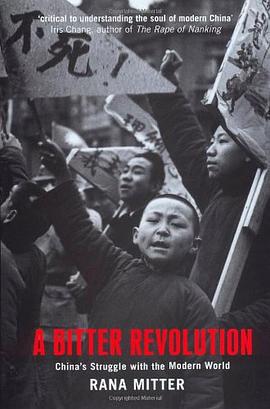
China today is poised to play a key role on the world stage, but in the early twentieth century the situation was very different. In this powerful new look at modern China, Rana Mitter goes back to a pivotal moment in Chinese history to uncover the origins of the painful transition frompre-modern to modern world. Mitter identifies May 4, 1919, as the defining moment of China's twentieth-century history. On that day, outrage over the Paris peace conference triggered a vast student protest that led in turn to "the May Fourth Movement." Just seven years before, the 2,000-year-old imperial system hadcollapsed. Now a new group of urban, modernizing thinkers began to reject Confucianism and traditional culture in general as hindrances in the fight against imperialism, warlordism, and the oppression of women and the poor. Forward-looking, individualistic, embracing youth, this "New Culturemovement" made a lasting impact on the critical decades that followed: the 1940s, with the war against Japan and the civil war between the Nationalist Party and the Communists; the 1960s, with the bizarre, seemingly anarchic world of Mao Zedong's Cultural Revolution; and the 1980s, with the rise ofa semi-market economy against the backdrop of continued single-party rule and growing inequality.
Throughout each of these dramatically different eras, the May 4 themes persisted, from the insanity of the Cultural Revolution to the recent romance with space-age technology. China, Mitter concludes, still seems to be in search of a new narrative about what the country is, and what it should become. And May 4 remains a touchstone in that search.
作者简介
目录信息
读后感
This is a fascinating look at a pivotal time in the formation of the culture of modern China. The “Bitter Revolution” of the title is not the Communist Revolution of 1949 or the Cultural Revolution of the 1960s, but the revolution of ideas that climaxed i...
评分一直不明白为什么会把五四运动和“德先生”与“赛先生”联系起来。《苦涩的革命》(A Bitter Revolution)里面是这样描述90年前那天的情形的:大约3000个学生在天安门会合,聆听了抗议巴黎和会的演说。下午两点学生们听完了演说,举着标语向使馆区行进。当气氛变得更热...
评分一直不明白为什么会把五四运动和“德先生”与“赛先生”联系起来。《苦涩的革命》(A Bitter Revolution)里面是这样描述90年前那天的情形的:大约3000个学生在天安门会合,聆听了抗议巴黎和会的演说。下午两点学生们听完了演说,举着标语向使馆区行进。当气氛变得更热...
评分一直不明白为什么会把五四运动和“德先生”与“赛先生”联系起来。《苦涩的革命》(A Bitter Revolution)里面是这样描述90年前那天的情形的:大约3000个学生在天安门会合,聆听了抗议巴黎和会的演说。下午两点学生们听完了演说,举着标语向使馆区行进。当气氛变得更热...
评分一直不明白为什么会把五四运动和“德先生”与“赛先生”联系起来。《苦涩的革命》(A Bitter Revolution)里面是这样描述90年前那天的情形的:大约3000个学生在天安门会合,聆听了抗议巴黎和会的演说。下午两点学生们听完了演说,举着标语向使馆区行进。当气氛变得更热...
用户评价
这本书的叙事节奏拿捏得炉火纯青,那种如同慢镜头回放般的细节描摹,着实让人印象深刻。我很少看到一部作品能将宏大的历史背景与微观的人类情感编织得如此天衣无缝。它没有急于给出答案,而是将读者置于一个充满灰色地带的环境中,迫使我们自行去辨析对错。书中的场景构建极具画面感,无论是阴郁的街道,还是堆满文件的办公室,空气中仿佛都弥漫着一种特有的、令人窒息的张力。读到一半时,我甚至需要停下来,去喝杯水,平复一下那种被情节裹挟着向前冲的焦虑感。作者对于社会阶层流动性的观察入木三分,不同背景的人物之间的对话充满了试探与算计,每一句话后面似乎都藏着一把未出鞘的刀。这种对人性复杂性的揭示,远超出了简单的善恶二元论,它展示了在极端环境下,人是如何为了生存而不断修正自己的道德底线的。
评分这本书,初看书名,还以为是那种激昂澎湃的革命史诗,结果读完后,发现它描绘的“苦涩革命”远比想象中要复杂和细腻得多。作者的笔触像手术刀一样精准,剖开了社会变革中最不为人知的那一面——那些光环背后,是无数个体的挣扎、妥协与最终的幻灭。我特别欣赏作者在处理人物心理上的深度挖掘,那些为了理想披荆斩棘的人,最终被现实的泥泞所裹挟,那种无力感透过纸页扑面而来,让人呼吸都为之一窒。它不是那种高唱胜利的赞歌,而更像是一面镜子,映照出每一次社会转型期中,那些被牺牲掉的、被遗忘的“代价”。这种冷静的叙事,反而比任何热烈的控诉都更有力量。故事的脉络设置得极其巧妙,从一个看似微不足道的事件开始,层层递进,最终揭示出结构性的困境,让人不得不反思,我们所追求的“进步”究竟是以何种面貌呈现的。
评分这本书的语言风格呈现出一种罕见的、近乎于诗意的克制。它的句子结构多变,时而短促有力,如同机关枪扫射后的硝烟;时而又绵长婉转,如同黄昏时分拉长的影子。读起来非常有韵律感,即便是在描述最残酷的场景时,作者也依然保持着一种高贵的美学距离,这种疏离感反而让情感的冲击力更加深远。我个人对书中那几段关于“记忆的腐蚀性”的描写尤为触动。随着时间的推移,那些曾经无比清晰、坚定的信念是如何被日常生活的琐碎和自我保护的本能所一点点磨平、扭曲的,作者捕捉到了这种微妙的变化。这让我反思,我们今天所坚守的“正确”,在未来又会被如何重新解读和消解。这本书的后劲很大,合上书本后,那种挥之不去的回味,是其他很多畅销书无法给予的。
评分与其说这是一本小说,不如说它是一份极其详尽的社会病理学报告,只是披着文学的外衣。作者的知识储备令人惊叹,无论是对某个特定历史时期经济政策的剖析,还是对群体心理学的引用,都显得如此自然流畅,丝毫没有教条主义的生硬感。它不像某些作品那样,为了塑造英雄形象而刻意美化过程,相反,它毫不留情地展示了“革命”——无论大小——其本质往往是充满妥协、背叛和无奈的混合物。我特别喜欢作者在描述体制内部运作时的那种冷峻的、近乎冰冷的客观性,这使得整个故事的论证更加有力。它不是在指责谁,而是在陈述一种结构性的必然,让你在阅读的过程中,不由自主地产生一种强烈的代入感,仿佛自己也参与了这场艰难的博弈。
评分坦白说,这本书的阅读体验是极具挑战性的,它需要读者投入相当的专注度和同理心。这不是那种能让人轻松消遣的作品,它更像是一场智力上的攀登。作者在设置悬念时,非常高明地利用了“已知信息的不完整性”,你总觉得好像抓住了什么,但下一秒,新的信息又将你推翻。最让我佩服的是,书中几乎没有一个角色是全然的好人或坏人,每个人物都在自身的局限性和外部压力下做出了“最不坏”的选择,这种高度的现实主义让人感到既真实又心寒。它成功地营造了一种氛围:你知道前方有光,但通往那里的路,布满了荆棘,而且这些荆棘很可能来自于你曾经最信任的人。整本书读下来,像经历了一场漫长而艰苦的马拉松,筋疲力尽,但精神上却得到了极大的洗礼和拓展。
评分红色封面版本。
评分作者對五四運動的描寫還算值得一讀,但是對21世紀中國的“開放”太樂觀了。不過也和作者寫書的年份有關。他要是今天來寫這書,必定會是另外一番論點。
评分常常一章看到底忘记老哥要说啥
评分Violence in language can be a means of promoting physical violence.
评分毕竟自己明确说是搞revisionist history的。对邹韬奋和杜重远的关注还算新颖。| 写了将近一千字的英文书评,最终还是停笔。这书的问题太多了。关键的概念含糊,论述无力。
相关图书





本站所有内容均为互联网搜索引擎提供的公开搜索信息,本站不存储任何数据与内容,任何内容与数据均与本站无关,如有需要请联系相关搜索引擎包括但不限于百度,google,bing,sogou 等
© 2026 book.quotespace.org All Rights Reserved. 小美书屋 版权所有