

具体描述
在线阅读本书
Book Description
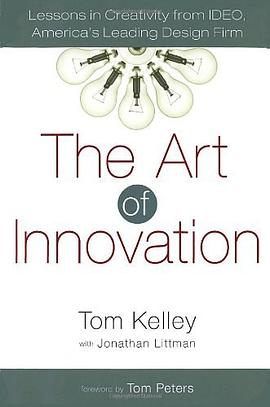
IDEO, the widely admired, award-winning design and development firm that brought the world the Apple mouse, Polaroid's I-Zone instant camera, the Palm V, and hundreds of other cutting-edge products and services, reveals its secrets for fostering a culture and process of continuous innovation.
There isn't a business in America that doesn't want to be more creative in its thinking, products, and processes. At many companies, being first with a concept and first to market are critical just to survive. In The Art of Innovation, Tom Kelley, general manager of the Silicon Valley based design firm IDEO, takes readers behind the scenes of this wildly imaginative and energized company to reveal the strategies and secrets it uses to turn out hit after hit.
IDEO doesn't buy into the myth of the lone genius working away in isolation, waiting for great ideas to strike. Kelley believes everyone can be creative, and the goal at his firm is to tap into that wellspring of creativity in order to make innovation a way of life. How does it do that? IDEO fosters an atmosphere conducive to freely expressing ideas, breaking the rules, and freeing people to design their own work environments. IDEO's focus on teamwork generates countless breakthroughs, fueled by the constant give-and-take among people ready to share ideas and reap the benefits of the group process. IDEO has created an intense, quick-turnaround, brainstorm-and-build process dubbed "the Deep Dive."
In entertaining anecdotes, Kelley illustrates some of his firm's own successes (and joyful failures), as well as pioneering efforts at other leading companies. The book reveals how teams research and immerse themselves in every possible aspect of a new product or service, examining it from the perspective of clients, consumers, and other critical audiences.
Kelley takes the reader through the IDEO problem-solving method:
> Carefully observing the behavior or "anthropology" of the people who will be using a product or service
> Brainstorming with high-energy sessions focused on tangible results
> Quickly prototyping ideas and designs at every step of the way
> Cross-pollinating to find solutions from other fields
> Taking risks, and failing your way to success
> Building a "Greenhouse" for innovation
IDEO has won more awards in the last ten years than any other firm of its kind, and a full half-hour Nightline presentation of its creative process received one of the show's highest ratings. The Art of Innovation will provide business leaders with the insights and tools they need to make their companies the leading-edge, top-rated stars of their industries.
Amazon.com
IDEO, the world's leading design firm, is the brain trust that's behind some of the more brilliant innovations of the past 20 years--from the Apple mouse, the Polaroid i-Zone instant camera, and the Palm V to the "fat" toothbrush for kids and a self-sealing water bottle for dirt bikers. Not surprisingly, companies all over the world have long wondered what they could learn from IDEO, to come up with better ideas for their own products, services, and operations. In this terrific book from IDEO general manager Tom Kelley (brother of founder David Kelley), IDEO finally delivers--but thankfully not in the step-by-step, flow-chart-filled "process speak" of most how-you-can-do-what-we-do business books. Sure, there are some good bulleted lists to be found here--such as the secrets of successful brainstorming, the qualities of "hot teams," and, toward the end, 10 key ingredients for "How to Create Great Products and Services," including "One Click Is Better Than Two" (the simpler, the better) and "Goof Proof" (no bugs).
But The Art of Innovation really teaches indirectly (not to mention enlightens and entertains) by telling great stories--mainly, of how the best ideas for creating or improving products or processes come not from laboriously organized focus groups, but from keen observations of how regular people work and play on a daily basis. On nearly every page, we learn the backstories of some now-well-established consumer goods, from recent inventions like the Palm Pilot and the in-car beverage holder to things we nearly take for granted--like Ivory soap (created when a P&G worker went to lunch without turning off his soap mixer, and returned to discover his batch overwhipped into 99.44 percent buoyancy) and Kleenex, which transcended its original purpose as a cosmetics remover when people started using the soft paper to wipe and blow their noses. Best of all, Kelley opens wide the doors to IDEO's vibrant, sometimes wacky office environment, and takes us on a vivid tour of how staffers tackle a design challenge: they start not with their ideas of what a new product should offer, but with the existing gaps of need, convenience, and pleasure with which people live on a daily basis, and that IDEO should fill. (Hence, a one-piece children's fishing rod that spares fathers the embarrassment of not knowing how to teach their kids to fish, or Crest toothpaste tubes that don't "gunk up" at the mouth.)
Granted, some of their ideas--like the crucial process of "prototyping," or incorporating dummy drafts of the actual product into the planning, to work out bugs as you go--lend themselves more easily to the making of actual things than to the more common organizational challenge of streamlining services or operations. But, if this big book of bright ideas doesn't get you thinking of how to build a better mousetrap for everything from your whole business process to your personal filing system, you probably deserve to be stuck with the mousetrap you already have.
--Timothy Murphy
From Publishers Weekly
"Routine is the enemy of innovation," declares Kelley, general manager of IDEO, in this lively and practical guide to nurturing that elusive quality in all organizations. Dubbed "Innovation U." by Fortune and lauded as "the world's most celebrated design firm" by Fast Company, IDEO, through its work on over 3,000 new product programs, has developed a system for staying on the creative cutting edge while keeping clients happy. Kelley handily parses the components of this system--understanding the market, observing real-life users, brainstorming new concepts and developing and refining prototypes on a tight schedule to come up with a commercial product--with examples from the development of such pathbreaking products as the original Apple mouse and the Palm Pilot V. Kelley vividly conveys how "hot teams," assembled for specific projects with concrete goals and deadlines, are the foundation of IDEO's performance-based reputation. While he recognizes that not every organization is a hip design firm, Kelley believes that all organizations can gain an edge by innovating; among the successes he cites are Amazon, Igloo, Shoebox Greetings and Sephora. IDEO has learned and profited from maxims like "Fail often to succeed sooner." Many who previously feared change may answer his unpretentious call to "Start by following your customer journey, breaking it down into component elements, and asking yourself how you can deliver a better experience." Illustrations. (Feb.)Forecast: Featured in a half-hour segment of Nightline last year that ranked among the most popular aired on the show, IDEO's culture of innovation has received broad exposure. This well-written, well-organized and energizing guide will be a magnet for more attention, and could have a shot at business bestseller lists.
Book Dimension
length: (cm)24.3 width:(cm)16.1
作者简介
目录信息
读后感
现在越来越多的创业者们希望能成为像雷军那样的站在风口上的猪,但做猪容易,想站在风口则不易。 表面上看这是产品的问题,你能不能拿出一款让人尖叫的产品?能不能拿出一款击中消费者痛点的产品?很多人认为这是自己de设计人员水平问题,但即使你把iPhone的设计团队全部打包过...
评分虽然还没看完,但总体感觉非常不错,IDEO的经验值得很多设计公司或者公司的设计部门借鉴。 另,宏观的来看中西公司运作上的差异,IDEO更接近中国公司,专家讨论+不断实践 =》 创新
评分辗转反侧,今天去中信出版社拿到了。 经理告诉我可能是是最后一本了。 书籍设计和纸张比较次,还好内容让我有足够的兴趣读下去。 tom kelly, Haas的83MBA,ideo总经理 01年写的书了,不过相信会有很多启发。
评分IDEO的设计你也许没听过,但苹果公司,Palm 等等, 你总算知道吧? 在我眼里,苹果公司的创新是世界一流的. 可是为什么她还找IDEO来设计产品能? IDEO的老板将在这本书里告诉你IDEO独特的一切细节. 不只是为产品设计人员写的, 如果你想改变, 此书应能给你一双翅膀.
评分用户评价
从阅读的愉悦度来看,这本书的叙事风格简直是教科书级别的“引人入胜”。作者似乎具备一种魔力,能将原本可能枯燥的理论分析,编织成一幕幕引人入胜的故事场景。书中穿插的那些关于早期创业者如何在资源极度匮乏的情况下,通过“非线性思考”找到突破口的轶闻,读起来简直就像在看一部精心剪辑的纪录片。我甚至能想象出当时的情景:那些紧张的会议室、突然爆发的灵光一闪、以及最终柳暗花明又一村的喜悦。作者高超的语言驾驭能力体现在他能够自如地在高度专业的术语和极其生活化的比喻之间切换,使得读者在感到被专业内容滋养的同时,又不会感到被冗长解释所累。尤其是对“最小可行性产品(MVP)”概念的阐释,作者用了一个非常贴切的古代工匠打磨兵器的比喻,一下子就将这个现代词汇的精髓传达了出来,让我立刻对这个概念有了更深层次的理解和更感性的把握。这种文学性和实用性的完美结合,是很多技术类书籍难以企及的高度。
评分这本书最让我佩服的,是其对“人”在整个创造过程中的地位的强调,这一点在很多侧重于流程和技术的“创新”书籍中往往被边缘化了。作者笔下的“创新者”绝非冰冷的机器或完美的逻辑集合体,而是一群充满矛盾、拥有独特偏见、但又愿意持续学习的鲜活个体。书中花了大量篇幅探讨了“心智模型”的松动与重塑,这对我个人职业生涯的冲击是巨大的。例如,关于“接受认知不适”的论述,作者用一种近乎哲学的口吻,探讨了当我们坚持的旧有信念受到挑战时,大脑会产生的生理和心理抗拒。这促使我反思,许多所谓的“创新阻力”,其实源于我们对自己认知舒适区的过度保护。更值得称道的是,作者提供的并非抽象的“要保持开放”这类口号,而是给出了一套切实可行的日常练习,用以训练我们识别和挑战自身预设的前提假设。这种对“内在工作”的关注,使得整本书的价值超越了单纯的商业指导,上升到了个人心智成长的层面,让人读完后,不仅想改变做事情的方式,更想审视自己是如何看待这个世界的。
评分这本书的内容推进节奏把握得极为精准,它不像有些同类书籍那样,在开篇就抛出大量基础概念,让人在不耐烦中失去兴趣。相反,作者似乎深谙读者的求知曲线,它从一个极具共鸣性的现代商业困境切入,立刻抓住了读者的注意力。随后,它没有急于给出万能解药,而是带领我们深入剖析了历史长河中那些被忽略的、但却至关重要的决策节点。我特别喜欢作者处理“失败案例”的方式,他没有把它们仅仅当作反面教材简单罗列,而是像一个经验丰富的外科医生,细致入微地解剖了每一个失败背后的系统性失误和认知偏差。这种深度挖掘,使得阅读体验充满了“顿悟”的瞬间。当读到关于“跨界整合障碍”那一章时,我甚至忍不住在笔记本上画出了作者描述的那个“信息孤岛效应”的结构图,因为它精准地解释了我过去工作中遇到的瓶颈。整本书的逻辑链条环环相扣,从宏观的战略视野,逐步收敛到微观的操作层面的工具箱,这种由浅入深、层层递进的叙事结构,保证了即便是初涉此领域的读者也能平稳过渡,而资深人士也能从中找到新的参照系。
评分这本书的装帧设计着实令人眼前一亮,拿到手时,那种沉甸甸的质感和封面那低调却又充满力量感的烫金字体,立刻就营造出一种专业且值得信赖的氛围。内页的纸张选择也十分考究,触感细腻,即便是长时间阅读也不会感到疲劳。我尤其欣赏作者在排版上的用心,大量的留白不仅使得文字呼吸顺畅,更巧妙地穿插了许多极具启发性的案例插图和流程图,这些视觉元素并非简单的装饰,而是真正帮助理解复杂概念的辅助工具。比如,书中关于“破坏性思维模型”的章节,作者没有堆砌晦涩的理论,而是用一系列清晰的图示,将一个抽象的概念具象化,让人一目了然。阅读过程中,我感觉不像是在啃一本教科书,更像是在进行一场精心策划的思维漫游。作者的语言风格在保持学术严谨性的同时,又充满了对读者保持好奇心的引导,时不时出现的精辟总结,常常让我停下来,合上书本,在脑海中反复咀嚼。这本书的物理形态本身,就已经传递出一种“值得珍藏”的信号,这对于一本着重于思维和实践的书籍来说,无疑是一个极佳的开端,它成功地在“内容”与“载体”之间搭建起一座坚实的桥梁。
评分这本书提供了一个令人信服的“系统性”而非“点状”的创新框架。它没有宣扬那种“灵光一现”的浪漫主义,而是脚踏实地地构建了一个可以被反复应用的、包含输入、处理、输出和反馈修正的完整闭环。我尤其欣赏作者对“反馈回路设计”的深度剖析,这部分内容细致到令人惊叹。他不仅说明了收集反馈的重要性,更重要的是,他详细区分了不同类型的反馈(比如“确认性反馈”与“挑战性反馈”)对创新过程的潜在影响,并建议了在不同阶段应侧重于哪种反馈。这种对细节的执着,使得这本书的指导价值极高,因为它允许读者根据自身环境和资源状况,定制化地应用其中的原则。读完后,我不再仅仅将创新视为一个“点子发生器”,而是将其视为一个需要精心维护和优化的“持续运转的工厂”。这本书给予读者的不是一次性的灵感冲击,而是一套可以陪伴职业生涯成长的、稳固可靠的思维工具箱,其价值在于其持久的、可操作性的指导力。
评分结尾有很经典的一段 大体是说,你觉得golf容易吧,的确每个细节的诀窍看起来都容易单独做到也都容易,但是你能否把16个(好像是16)细节都同时做到完美并且杆杆都做到完美呢? 成功,创新,都是这样一系列诀窍组成的。每个拆开看起来都平淡无奇,但是为什么做到的人那么少?
评分干货不多
评分A cook book for design innovation
评分精神的多样性同样重要...多样性、多样性
评分我怎么都不记得读过了
相关图书















本站所有内容均为互联网搜索引擎提供的公开搜索信息,本站不存储任何数据与内容,任何内容与数据均与本站无关,如有需要请联系相关搜索引擎包括但不限于百度,google,bing,sogou 等
© 2026 book.quotespace.org All Rights Reserved. 小美书屋 版权所有