
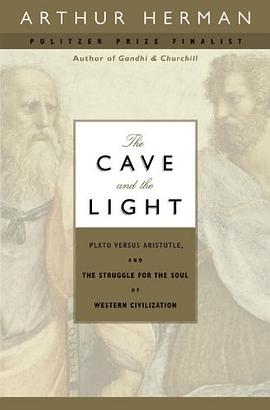

具体描述
A magisterial account of how the two greatest thinkers of the ancient world, Plato and Aristotle, laid the foundations of Western culture—and how their rivalry shaped the essential features of our culture down to the present day
Plato came from a wealthy, connected Athenian family and lived a comfortable upper-class lifestyle until he met an odd little man named Socrates, who showed him a new world of ideas and ideals. Socrates taught Plato that a man must use reason to attain wisdom, and that the life of a lover of wisdom, a philosopher, was the pinnacle of achievement. Plato dedicated himself to living that ideal and went on to create a school, his famed Academy, to teach others the path to enlightenment through contemplation.
However, the same Academy that spread Plato’s teachings also fostered his greatest rival. Born to a family of Greek physicians, Aristotle had learned early on the value of observation and hands-on experience. Rather than rely on pure contemplation, he insisted that the truest path to knowledge is through empirical discovery and exploration of the world around us. Aristotle, Plato’s most brilliant pupil, thus settled on a philosophy very different from his instructor’s and launched a rivalry with profound effects on Western culture.
The two men disagreed on the fundamental purpose of the philosophy. For Plato, the image of the cave summed up man’s destined path, emerging from the darkness of material existence to the light of a higher and more spiritual truth. Aristotle thought otherwise. Instead of rising above mundane reality, he insisted, the philosopher’s job is to explain how the real world works, and how we can find our place in it. Aristotle set up a school in Athens to rival Plato’s Academy: the Lyceum. The competition that ensued between the two schools, and between Plato and Aristotle, set the world on an intellectual adventure that lasted through the Middle Ages and Renaissance and that still continues today.
From Martin Luther (who named Aristotle the third great enemy of true religion, after the devil and the Pope) to Karl Marx (whose utopian views rival Plato’s), heroes and villains of history have been inspired and incensed by these two master philosophers—but never outside their influence.
Accessible, riveting, and eloquently written, The Cave and the Light provides a stunning new perspective on the Western world, certain to open eyes and stir debate.
Praise for Arthur Herman’s Gandhi & Churchill, finalist for the Pulitzer Prize
“Herman has researched Gandhi & Churchill meticulously and written it fluently.” —The Wall Street Journal
“You finish the book knowing that you can evaluate the world today, particularly modern India, with more knowledge and insight.” —USA Today
“Scrupulous, compelling, and unfailingly instructive . . . a detailed and richly filigreed account that introduces the Anglo-American reader to many facts and vivid if little-known personalities, both English and Indian.”— Commentary
“An ambitious, reasoned joint biography . . . Herman’s measured portrait of each man conveys his entire worldview, shaped by class, history and education. . . . A well-wrought historical narrative that adds significantly to our understanding of both figures.” —Kirkus Reviews
“Highly recommended . . . The complex task of drawing comparison and contrast between two of the most chronicled lives of the twentieth century is easily and compellingly handled.”— Library Journal (starred review)
作者简介
目录信息
读后感
评分
评分
评分
评分
用户评价
从纯粹的娱乐性角度来看,这本书无疑是近年来最扣人心弦的作品之一。它成功地捕捉并放大了人类在面对巨大未知或无法抗拒的力量时的那种原始的恐惧和求生欲望。高潮部分的动作场景设计得极为出色,不仅是单纯的打斗或追逐,每一次物理层面的冲突都与角色的心理创伤紧密相连,使得“战斗”不再是情节的填充物,而是人物成长的催化剂。特别是最后那个惊心动魄的反转,它推翻了读者之前建立的所有安全感,将故事推向了一个既残酷又带着一丝希望的边缘。它毫不留情地撕碎了传统叙事中“好人一定有好报”的温情幻想,提供了一种更加复杂、更接近真实人生的结局形态。读完最后一页时,我甚至需要几分钟的时间才能从那种紧张的情绪中抽离出来,那种久久不能平息的心悸感,证明了作者在调动读者情绪方面的娴熟技巧。它成功地将一个史诗般的故事,用最私人、最激烈的方式,强行塞进了读者的脑海里,让人久久不能释怀。
评分语言风格的蜕变,是这本书给我带来的又一个惊喜。开篇部分,作者的文字是内敛、克制且充满古典韵味的,仿佛蒙着一层薄雾的历史画卷,用词考究,句式工整,营造出一种庄严的历史氛围。然而,随着故事深入到更具冲突性的现代或未来场景时,文字的处理方式陡然一变,变得更加碎片化、节奏感更强,甚至带有强烈的感官冲击力,句子结构被打散重组,仿佛在模拟信息过载或精神崩溃的状态。这种对不同叙事语境采用截然不同语言模式的驾驭能力,展现了作者极高的文学素养和对读者的尊重——你知道作者在有意识地引导你的情绪,但引导的方式却如此巧妙,让你完全心甘情愿地被牵引。这种语言上的“变色龙”特质,使得阅读体验始终保持新鲜感,避免了长篇小说常有的语言疲劳。它像一首交响乐,时而使用低沉的大提琴铺陈背景,时而又爆发为尖锐的小提琴独奏,层次感极其丰富。
评分这部作品在世界观的构建上,展现出一种令人惊叹的宏大与细节并重的能力。它所描绘的那个社会背景,无论是其政治架构、宗教信仰体系,还是日常生活的科技侧写,都拥有惊人的自洽性。作者没有采用那种大而无当的描述,而是巧妙地将世界的运行法则融入到角色解决日常问题的过程中。比如,处理一桩小小的财产纠纷,就足以让你领略到这个社会森严的等级制度和法律盲区。这种“见微知著”的叙事手法,使得庞大的世界观不再是冰冷的设定堆砌,而是有血有肉地渗透在生活的每一个角落。更难得的是,作者似乎在探讨一些极其深奥的哲学命题——关于自由意志的边界、集体记忆的构建与篡改——但所有这些探讨,都恰到好处地被包裹在引人入胜的情节之中,从不显得说教或晦涩。你读完后,不仅记住了故事,更会开始质疑自己所处世界的某些基本假设,这种“后劲”才是真正优秀作品的标志。
评分这本书的叙事节奏简直让人拍案叫绝,作者对时间线的掌控炉火纯青,时而快速推进,如同疾风骤雨般将你卷入核心冲突,时而又慢下来,细腻地描摹人物的内心挣扎和环境的微妙变化。我尤其欣赏它在两条看似平行的故事线之间切换时所展现出的那种精准的平衡感,它们在不同的章节里相互映射、彼此呼应,直到最后汇合成一股不可阻挡的洪流。这种结构上的精妙设计,使得每一次转折都显得既出乎意料又合乎情理。读到一半时,我曾试图预测接下来的情节走向,但很快就放弃了,因为作者总能以一种极其自然、却又让人意想不到的方式打破读者的预期。这种叙事上的狡黠,让阅读过程充满了发现的乐趣,每一次翻页都带着一种对未知的好奇和期待。它不是那种平铺直叙的故事,而是像一个精心编织的迷宫,你得全神贯注才能跟上它的脚步,但一旦沉浸其中,便会发现路径本身就是一种极致的享受。那种随着情节的推进,逐渐拼凑出完整画面的满足感,是许多同类作品难以企及的高度。
评分这本书在人物刻画上达到了近乎病态的真实感,每一个主要角色都不是扁平的符号,而是充满了矛盾和人性的幽微之处。他们的动机复杂而多层次,你常常会发现自己既同情他们的选择,又对其后果感到不安。特别是主角群体中,那位看似冷酷的智者,其内心的脆弱和对过去的执念,被刻画得入木三分。作者没有选择用大段的独白来解释人物的“为什么”,而是通过他们细微的肢体语言、不经意的对话失误,以及在极端压力下的本能反应,将人物的灵魂一层层剥开。我尤其欣赏作者对“沉默”的运用,很多时候,角色间那些未说出口的话语,比任何激烈的争吵都更有力量。读到后期,我甚至感觉自己不是在阅读一个虚构的故事,而是在偷窥一群真实的人在面对命运时的挣扎。这种深度的代入感,使得当故事走向高潮时,我感到的不仅是情节的紧张,更是为这些“认识”了许久的人物的命运而揪心。这种文学上的功力,是需要时间沉淀和敏锐观察才能达到的境界,绝非一蹴而就。
评分 评分 评分 评分 评分相关图书












本站所有内容均为互联网搜索引擎提供的公开搜索信息,本站不存储任何数据与内容,任何内容与数据均与本站无关,如有需要请联系相关搜索引擎包括但不限于百度,google,bing,sogou 等
© 2026 book.quotespace.org All Rights Reserved. 小美书屋 版权所有