具体描述
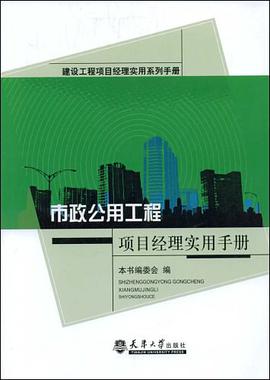
《市政公用工程项目经理实用手册》系统而全面地介绍了市政公用工程项目经理应知、应会的相关基础知识。全书共分十二章,主要内容包括市政公用工程项目经理基础知识、市政公用工程项目经理部与项目经理责任制、市政公用工程项目招标投标管理、市政公用工程项目施工组织设计与进度管理、市政公用工程项目合同管理、市政公用工程项目质量管理、市政公用工程项目资源管理、市政公用工程项目成本管理、市政公用工程项目采购管理、市政公用工程项目安全管理、市政公用工程项目环境管理、市政公用工程项目竣工管理。《市政公用工程项目经理实用手册》从实用角度出发,内容翔实,理论联系实际,具有很强的实用性。
《市政公用工程项目经理实用手册》可供市政公用工程项目经理参考学习,也可供市政公用工程其他管理人员、技术人员参考使用。
Municipal Public Works Project Manager's Practical Handbook: A Comprehensive Guide to Successful Project Delivery This handbook serves as an indispensable resource for municipal public works project managers, offering a detailed and practical approach to navigating the complexities of infrastructure development and management. It delves into the critical phases of a project, from initial conceptualization and feasibility studies through to detailed design, procurement, construction, and ultimate project closeout. The aim is to equip project managers with the knowledge, tools, and strategies necessary to deliver projects on time, within budget, and to the highest quality standards, while adhering to all relevant regulations and stakeholder expectations. I. Project Initiation and Planning: Laying the Foundation for Success The initial stages of any municipal public works project are crucial for establishing a clear vision and a robust framework for execution. This section will guide project managers through the essential steps of project initiation and planning, ensuring that all foundational elements are meticulously addressed. Understanding Project Objectives and Scope Definition: A critical first step is to thoroughly understand the project's purpose, goals, and desired outcomes. This involves engaging with stakeholders, including government officials, community representatives, and technical experts, to clearly define the project's scope. The handbook will provide methodologies for conducting needs assessments, analyzing existing infrastructure, and identifying potential solutions. Detailed scope definition involves clearly outlining what is included and, equally important, what is excluded from the project to prevent scope creep. This includes defining the physical boundaries, functional requirements, and performance criteria of the project. Techniques such as Work Breakdown Structures (WBS) will be explored to decompose the project into manageable components, facilitating detailed planning and control. Feasibility Studies and Option Analysis: Before committing significant resources, a comprehensive feasibility study is essential. This involves evaluating the technical, economic, environmental, and social viability of the proposed project. The handbook will outline the key components of a feasibility study, including site investigations, geotechnical assessments, hydrological studies, and preliminary cost estimations. It will also guide project managers in analyzing various project alternatives, comparing their benefits and drawbacks, and selecting the most appropriate option based on a multi-criteria decision-making framework. This may involve techniques like cost-benefit analysis, risk assessment, and stakeholder impact analysis. Developing the Project Charter and Stakeholder Engagement: The project charter serves as the official authorization for the project, outlining its objectives, scope, key stakeholders, and high-level budget and schedule. This section will provide templates and guidance on developing a comprehensive project charter. Equally important is proactive stakeholder engagement. The handbook will emphasize the importance of identifying all relevant stakeholders, understanding their interests and concerns, and developing a communication plan to ensure their consistent involvement and buy-in throughout the project lifecycle. This includes strategies for conflict resolution and managing stakeholder expectations. Establishing the Project Management Plan: The project management plan is the cornerstone of project execution, serving as a comprehensive roadmap for managing all aspects of the project. This section will detail the various subsidiary plans that constitute a robust project management plan, including: Scope Management Plan: How the project scope will be defined, validated, and controlled. Schedule Management Plan: How the project schedule will be developed, monitored, and controlled, including techniques like critical path method (CPM) and program evaluation and review technique (PERT). Cost Management Plan: How project costs will be estimated, budgeted, and controlled, including concepts of earned value management (EVM). Quality Management Plan: How quality standards will be identified, assured, and controlled to meet project requirements. Resource Management Plan: How human resources, equipment, and materials will be acquired, managed, and deployed. Communications Management Plan: How project information will be communicated to stakeholders. Risk Management Plan: How potential risks will be identified, analyzed, and responded to. Procurement Management Plan: How goods and services will be acquired from external sources. Stakeholder Engagement Plan: How stakeholders will be engaged and managed throughout the project. Change Management Plan: How changes to the project scope, schedule, or budget will be managed and controlled. II. Procurement and Contracting: Securing the Right Resources The successful execution of municipal public works projects relies heavily on effective procurement and contracting. This section will provide project managers with a deep understanding of the processes involved in acquiring goods, services, and construction work. Procurement Planning and Strategy: This involves defining what needs to be procured, when, and how. The handbook will cover different procurement methods, such as competitive bidding, sole-source procurement, and negotiated procurements, and discuss the criteria for selecting the most appropriate method for various project needs. It will also address the importance of defining procurement packages and developing detailed statements of work (SOW) or scopes of service. Contract Types and Selection: Understanding the various contract types is crucial for mitigating risks and ensuring fair outcomes. This section will explore common contract types used in public works, including lump-sum contracts, cost-plus contracts, unit-price contracts, and guaranteed maximum price (GMP) contracts. It will discuss the advantages and disadvantages of each type and provide guidance on selecting the most suitable contract based on project characteristics and risk allocation. Developing Bid Documents and Specifications: The quality of bid documents directly impacts the quality of bids received. This section will guide project managers in developing comprehensive and clear bid packages, including detailed technical specifications, drawings, contract terms and conditions, and evaluation criteria. Emphasis will be placed on ensuring that specifications are performance-based where appropriate, allowing for innovation while maintaining essential functional requirements. Bid Evaluation and Contract Award: This involves establishing a fair and transparent process for evaluating bids received. The handbook will outline methodologies for assessing technical compliance, price reasonableness, and contractor qualifications. It will also cover the legal and administrative processes involved in awarding contracts, including debriefing unsuccessful bidders and managing protests. Contract Administration and Management: Once a contract is awarded, effective administration is paramount. This section will delve into managing contract performance, including monitoring progress, processing payments, managing changes, resolving disputes, and ensuring compliance with contractual obligations. Techniques for effective communication with contractors and managing contract closeout will also be covered. III. Project Execution and Monitoring: Bringing the Vision to Life This section focuses on the core activities of project execution, emphasizing the importance of diligent monitoring and control to keep the project on track. Construction Management and Oversight: For projects involving physical construction, effective construction management is vital. This includes site supervision, quality control inspections, safety management, and coordination of various trades and subcontractors. The handbook will provide practical guidance on developing construction schedules, managing site logistics, and addressing common construction challenges. Quality Assurance and Quality Control (QA/QC): Maintaining high quality throughout the project is non-negotiable. This section will detail the principles of QA/QC, including establishing quality standards, developing inspection and testing protocols, and implementing corrective actions when deviations occur. It will also emphasize the role of independent third-party inspections and material testing. Schedule Management and Progress Tracking: Regularly monitoring and controlling the project schedule is essential for timely delivery. This section will cover techniques for tracking progress against the baseline schedule, identifying potential delays, and implementing corrective actions. It will explore the use of project management software and reporting tools to provide visibility into project progress. Cost Control and Financial Management: Effective cost management involves monitoring expenditures against the budget, forecasting future costs, and implementing measures to control costs. This section will delve into earned value management (EVM) as a powerful tool for measuring project performance and forecasting cost overruns or underruns. It will also cover invoicing, payment processing, and financial reporting. Risk Management and Issue Resolution: Proactive risk management is crucial for anticipating and mitigating potential problems. This section will revisit risk identification and analysis, focusing on developing and implementing risk response plans. It will also provide strategies for effectively identifying, analyzing, and resolving issues that arise during project execution, including escalation procedures. Health, Safety, and Environmental (HSE) Management: Municipal public works projects often involve significant HSE risks. This section will highlight the importance of developing and implementing comprehensive HSE plans, including site-specific safety protocols, hazard identification, risk assessments, and emergency response procedures. Compliance with all relevant environmental regulations will also be emphasized. Communication and Reporting: Maintaining clear and consistent communication with all stakeholders is vital for project success. This section will outline best practices for project reporting, including regular progress reports, meeting minutes, and issue logs. It will also emphasize the importance of fostering open and transparent communication channels. IV. Project Closeout and Evaluation: Ensuring a Successful Transition The final stages of a project are as critical as the initial planning. This section will guide project managers through the process of formally closing out a project and evaluating its success. Completion and Handover: This involves ensuring that all project deliverables have been met and are in accordance with contractual requirements. The handbook will detail the process of conducting final inspections, obtaining all necessary certifications and approvals, and formally handing over the completed project to the client or operating entity. Contract Closeout: This includes ensuring that all contractual obligations have been fulfilled by both parties, processing final payments, releasing retainage, and resolving any outstanding claims or disputes. Project Documentation and Archiving: Proper documentation is essential for future reference, operational maintenance, and potential audits. This section will outline the types of documents that need to be compiled and archived, including as-built drawings, operation and maintenance manuals, warranties, and project performance data. Post-Project Evaluation and Lessons Learned: A critical component of project closeout is conducting a thorough post-project evaluation. This involves assessing the project's success against its original objectives, identifying what went well, what could have been improved, and documenting lessons learned. These lessons learned are invaluable for improving future project planning and execution. Performance Measurement and Benchmarking: This section will discuss methods for measuring project performance beyond just schedule and budget, including evaluating the quality of the final product, stakeholder satisfaction, and the project's overall impact on the community. Benchmarking against similar projects will also be explored. This comprehensive handbook aims to be a practical, hands-on guide for municipal public works project managers. By covering each stage of the project lifecycle in detail, and by providing actionable advice, templates, and best practices, it empowers project managers to navigate the challenges and complexities of their work, ultimately contributing to the successful delivery of vital public infrastructure.