

具体描述
From Library Journal
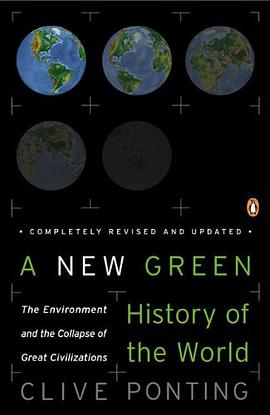
British historian Ponting provides a fascinating and comprehensive environmental perspective on the rise and fall of civilizations, including the Sumerians, the Egyptians, and the Mayans. Beginning with hunting-and-gathering societies, settled societies, and the industrialized societies of today, he describes how each has had greater effects on the environment than the last. Settled societies use more resources to support larger populations, often overextending the resources available. "Since the rise of settled societies . . . the majority of the world's population have lived in conditions of grinding poverty." Ponting's forecast for the future based on current population trends and available resources is equally bleak. "To feed the whole world on the diet enjoyed by the average American, using the same level of inputs into agriculture, would require all the world's current oil production and exhaust known reserves within not much more than a decade." A significant contribution that needs to be available and promoted in every public library.
- Mary J. Nickum, Fish and Wildlife Reference Svce., Bethesda, Md.
Copyright 1992 Reed Business Information, Inc. --This text refers to an out of print or unavailable edition of this title.
From Kirkus Reviews
A comprehensive assessment of humanity's assault on the environment across the centuries, by British historian Ponting (University College, Swansea). Examining the interaction between societies and their surroundings from the earliest hunter-gatherer groups on, Ponting describes the first great leap of civilization--the development of crops and agriculture--as the start of a systematic environmental transformation. As groups settled near their fields and as populations grew, the burden on the land increased, and at times the ecological pressure grew too great. Crop irrigation, the author says, led to increased salination and diminished yields, while a loss of forest cover brought erosion and the destruction of precious arable land. The Sumerian civilization in the Middle East and the Mayans of Central America, among others, fell victim to these limits to growth, with the collapse in some cases being precipitous. Other societies survived, however, to participate in the more recent great transition involving the use of fossil fuels for energy. With this step, Ponting says, environmental degradation increased exponentially through pollution at all stages of the industrialization process--and, in addition, the industrialized societies, by their exploitation of others less advanced, created the Third World, with its Pandora's Box of poverty, overpopulation, and other social ills that continue to worsen today. Ponting suggests no solutions, marking instead the devastating course of human progress and the ruins that serve as its milestones. Few colorful anecdotes, but an impressive accumulation of evidence culled from the annals of recorded history: a sobering view of a planet deeply in peril. (Maps and charts.) -- Copyright ©1992, Kirkus Associates, LP. All rights reserved. --This text refers to an out of print or unavailable edition of this title.
作者简介
目录信息
读后感
评分
评分
评分
评分
用户评价
这本新近出版的生态史著作,它以一种近乎诗意的笔触,勾勒出了人类与自然界之间复杂纠缠的千年叙事。作者的叙事视角非常宏大,从地球形成的早期地质事件开始,逐步过渡到生命如何在气候的起伏中演化、分化,直至人类文明的崛起。特别值得称道的是,它并非简单罗列科学事实,而是巧妙地将地质时间尺度上的变迁,与人类历史中的关键节点——比如农业革命、工业革命——进行深层次的对话。读完全书,我感觉自己仿佛站在了时间的洪流之上,清晰地看到了哪些人类的决定,是如何在无意中重塑了生态系统的结构,而生态系统的反馈又是如何反过来限制或推动了我们的社会形态。这种双向互动的叙事方式,使得原本枯燥的历史时间线变得鲜活而充满张力,迫使读者重新思考我们自诩为“征服者”的身份,也许更恰当地说,我们不过是这场宏大自然戏剧中的一个特殊演员罢了。对于任何渴望超越传统历史叙事框架,寻求更深层次理解人类处境的读者来说,这本书无疑提供了一个极佳的思考起点。
评分老实说,初翻这本书时,我有点被它那种近乎学术论文的严谨性所震慑,但很快,作者独特的文风就开始展现出其魅力。它不满足于仅仅描绘一个线性的发展图景,而是热衷于挖掘那些常常被主流历史叙事忽略的“边缘”故事——那些被气候变化无情抹去的早期人类群体,或是那些在工业化浪潮中悄然消失的物种群落。这种对“失声者”的关注,为整个生态历史增添了一种沉郁而深刻的底色。我尤其喜欢其中关于水文循环和土壤形成的章节,作者用生动的比喻,将那些抽象的物理和化学过程具象化,让我对赖以生存的土壤,产生了全新的敬畏感。这本书的结构安排也极具匠心,它不是按时间顺序平铺直叙,而是围绕几个核心的生态“转折点”展开论述,每个章节都像是一次对现有认知框架的彻底拆解和重建。读完后,我发现自己看待日常事物的方式都变了,比如,我不会再把一次洪水视为单纯的自然灾害,而是将其置于更长久的气候动态中去审视其必然性。
评分这本书在结构上呈现出一种螺旋上升的复杂性,每一次回归到人类历史的主线时,背景都已被前一章节对地球系统的深刻剖析所改变。我尤其关注作者对“物种流动性”和“地理隔离”的讨论,这部分内容颠覆了我以往对生物多样性稳定性的线性认知。作者非常细致地追踪了某些关键生物群落,如何在气候带的微小偏移中,悄然重塑了人类的食物来源和疾病载体。与其说这是一部历史书,不如说它是一部关于“限制条件”的哲学探讨。它清晰地展示了,人类文明的发展从来都不是在真空中进行的,而是时刻受到地质、水文、生物等一系列不可协商的自然法则的制约。这种对限制性的坦诚面对,是当代社会尤为需要的清醒剂。这本书的行文流畅而富有启发性,即便是涉及到复杂的生物地球化学循环,作者也能找到恰当的比喻,确保非专业读者也能跟上其深刻的思维脉络,真正做到将深奥的科学洞察转化为普世的智慧。
评分这本书的笔法如同一个经验丰富的田野工作者,带着泥土和风霜的气息,向我们讲述了一个我们自以为熟悉却又全然陌生的地球家园。它的叙事节奏非常舒缓,仿佛在模拟自然界自身的演进速度,不急不躁,却蕴含着巨大的力量。我特别欣赏作者在描述关键的生态阈值被突破时所使用的语言,那种冷静的、近乎客观的描述,反而比任何激烈的控诉都更令人感到震撼。它没有进行直接的说教,而是通过展示事实的链条——从某个特定区域的过度放牧如何引发长期的荒漠化,进而影响到相邻文明的迁徙路径——来让读者自己得出结论。这本书的价值在于,它将宏大的“全球性”叙事,有效地锚定在了具体的地理空间和时间切片上,使得那些遥远的历史事件具有了可触摸的质感。它就像一张精心绘制的生态地图,上面的每一条河流、每一片森林,都记录着过去无数次生存斗争的无声回响,读完后,我对脚下的土地多了一份小心翼翼的尊重。
评分坦率地说,这本书的阅读体验是充满挑战性的,但绝对是值得的。它要求读者暂时放下对人定胜天的传统信念,去接受一个更谦卑的、与地球系统共存的视角。作者在论述中穿插了大量来自不同学科领域的交叉知识,从古气候学到人类学,再到生物地理学,信息密度极高,初读时可能需要频繁停下来查阅资料或反复咀嚼某些论断。然而,正是这种跨学科的深度整合,使得它具备了传统单一学科历史书籍所无法比拟的洞察力。我特别欣赏作者对“技术”在生态互动中角色的辩证分析——技术既是解救我们于困境的工具,也常常是加剧不平衡的催化剂。这种不偏不倚的审视,避免了陷入盲目的技术乌托邦或末日悲观主义的陷阱。对于那些寻求一份既有理论深度又充满实践反思的读物的人来说,这本书无疑是近些年来生态思想领域的一座里程碑,它成功地将“历史”这个概念从人类专属的领域中解放了出来,纳入了更广阔的生命共同体的范畴。
评分 评分 评分 评分 评分相关图书


本站所有内容均为互联网搜索引擎提供的公开搜索信息,本站不存储任何数据与内容,任何内容与数据均与本站无关,如有需要请联系相关搜索引擎包括但不限于百度,google,bing,sogou 等
© 2026 book.quotespace.org All Rights Reserved. 小美书屋 版权所有