
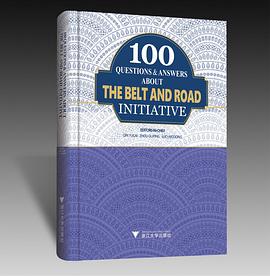

具体描述
本书为 “一带一路”知识普及读本,采用一问一答的形式,从百姓关心话题、时事政经热点出发,介绍“一带一路”国内外相关合作组织、相关行业信息等背景知识,分析“一带一路”带给相关行业的机遇和对百姓日常生活的影响,解答普通读者最关心的现实问题。
作者简介
秦玉才 国家发改委西部开发司原司长
周谷平 浙江大学党委副书记
罗卫东 浙江大学副校长
目录信息
Q1 What is the concept of the Belt and Road?
Q2 When was the concept of the Silk Road first proposed, and by whom?
Q3 What is the spirit of the Silk Road?
Q4 What are the epochal meanings of the Silk Road Spirit?
Q5 How shall we understand the spirit of “peace and cooperation, openness and inclusiveness, mutual learning and mutual benefit”?
Q6 Why is it important to accelerate the Belt and Road’s development?
Q7 What principles should be followed in building the Belt and Road, since it is a systematic project?
1 Strategic Conception
Q8 When was the Silk Road Economic Belt proposed?
Q9 When was the 21st-Century Maritime Silk Road proposed?
Q10 When was the Belt and Road Initiative elevated to a major state strategy?
Q11 Against what background was the Belt and Road Initiative proposed?
Q12 When was the Vision and Actions on Jointly Building Silk Road Economic Belt and 21st-Century Maritime Silk Road published?
Q13 How many stages are there in formulating the Vision and Actions?
Q14 How many parts does the Vision and Actions cover?
2 Silk Road: A Brief History
Q15 What is the Silk Road?
Q16 When did China’s silk come into being?
Q17 When was China’s silk brought to the West?
Q18 Why did Zhang Qian go on diplomatic missions to the Western Regions?
Q19 What are the connotations and scope of the Western Regions?
Q20 What contributions did Pei Ju make to the Silk Road?
Q21 What contributions did Faxian, Xuanzang and Yijing, among other Buddhist pilgrims, make to the Silk Road?
Q22 What is the relationship between the Battle of Talas and the Silk Road?
Q23 How did the Three Foreign Religions spread to China?
Q24 What influence did the Mongolian western expeditions have on the Silk Road?
Q25 Against what background did Richthofen propose the idea of the “Silk Road”?
3 Competition Between Great Powers
Q26 What are the strategies or initiatives of other countries that are similar to the Belt and Road Initiative?
Q27 What is the New Silk Road Initiative?
Q28 What is the Eurasian Economic Union?
Q29 What is the European Union’s Partnership with Central Asia?
Q30 What is the motivation for Japan to launch the “Silk Road Diplomacy”?
Q31 What is the development progress of India’s “Look West”Strategy?
Q32 Why did Turkey change its strategy of “Departure from Asia for Europe” to “Departure from Europe for Asia”?
Q33 What are the differences and similarities between the UN’s Silk Road Initiative and the Belt and Road Initiative?
Q34 How does the Belt and Road Initiative differ from the existing cooperation mechanisms of the regions along the Belt and Road?
4 Background
Q35 What are the major challenges that China’s open economy faces in economic globalization?
Q36 What impact will the new trade protectionism cause to China’s export trade? How should China cope with it?
Q37 How can emerging economies strive for a stronger voice in formulating international rules?
Q38 How can China’s economy in the “new normal” add impetus to the recovery of the world economy?
Q39 What effects have TTIP and TPP caused to the global economy?
Q40 What impact and effects do TPP rules have on China?
Q41 What challenges does the change in global energy structure impose on China’s energy security?
5 Framework
Q42 What is the basic connotation of the Belt and Road Initiative?
Q43 What is the basic concept of the Belt and Road Initiative?
Q44 How shall we understand the Belt and Road Initiative’s three levels of community?
Q45 How are the “five goals” elaborated in the Vision and Actions?
Q46 What are the principles for jointly building the Belt and Road?
Q47 What is the overall layout of the Belt and Road Initiative?
Q48 What are the basic routes of the Silk Road Economic Belt?
Q49 What are the basic routes of the 21st-Century Maritime Silk Road?
Q50 How shall we understand the relationship between the Silk Road Economic Belt and international transport routes, core cities, and economic industrial parks?
Q51 What are the six economic corridors along the Belt and Road?
Q52 How shall we understand the special strategic position of the China-Pakistan and Bangladesh-China-India-Myanmar economic corridors?
Q53 How shall we understand the relationship between the 21st-Century Maritime Silk Road and the construction of key port cities?
6 Cooperation Areas
Q54 What are the connections between the “five goals” of cooperation areas?
Q55 What is the focus for carrying out policy coordination?
Q56 What are the priorities for “facilities connectivity”?
Q57 How shall we understand the connotation of “unimpeded trade”?
Q58 How shall we promote “unimpeded trade” through trade liberalization?
Q59 How shall we promote “unimpeded trade” through investment facilitation?
Q60 How shall we understand the connotation of “financial integration”?
Q61 How shall we establish a sound investment and financing system?
Q62 Why is it necessary to establish a currency stability system in Asia?
Q63 How can we let the countries along the Belt and Road have a deeper understanding of Chinese culture, and let the Chinese people have a deeper understanding of the cultures of the countries along the Belt and Road?
Q64 How can we realize cultural communication between Chinese people and the people from countries along the Belt and Road?
Q65 What can the government do to build people-to-people bonds?
7 Mechanisms and Platforms
Q66 Should we focus more on the role of major powers in the process of advancing the Belt and Road Initiative?
Q67 What influence and new thinking does the Belt and Road Initiative bring to the international order?
Q68 How should China deal with the relations with the United States and Russia in promoting the Belt and Road Initiative?
Q69 In the process of advancing the Belt and Road Initiative, what can the media of the countries along the Belt and Road do? What can nongovernmental organizations do? And how?
Q70 In the process of advancing the Belt and Road Initiative, what can universities and think tanks do? And how?
Q71 The Belt and Road Initiative was proposed on the basis of historical memories of the ancient Silk Road. What can the cultural heritage circle and the tourist circle do in building the Belt and Road? And how?
Q72 The Belt and Road covers many countries in Asia, Europe and Africa. How can those countries form cooperation?
Q73 What are the existing multilateral cooperation mechanisms? What are their functions?
Q74 In the process of developing the Belt and Road, what principles and concepts should the mechanisms for cooperation between China and neighboring countries and regions be based on? What are the sensitive core issues? How can we bring about innovation in them?
Q75 Why should we build platforms for advancing the Belt and Road Initiative? What are the platforms at present?
8 Advantages of Various Regions in China
Q76 How should the central and northwestern regions position themselves in the Belt and Road Initiative?
Q77 How will inland regions participate in the development of the Belt and Road?
Q78 How will the northeastern region participate in the development of the Belt and Road?
Q79 How will the southwestern region participate in the development of the Belt and Road?
Q80 How will the coastal regions participate in the development of the Belt and Road?
Q81 What opportunities will Hong Kong, Macao and Taiwan have in the development of the Belt and Road?
Q82 How can we leverage the unique functions of overseas Chinese in the development of the Belt and Road?
9 Cooperation Results
Q83 It is mentioned in the Vision and Actions that President Xi Jinping, Premier Li Keqiang and other state leaders have visited over 20 countries. Which countries did they visit?
Q84 What is the profound significance of President Xi Jinping’s speech delivered at the Dialogue on Strengthening Connectivity Partnership to jointly building the Belt and Road Initiative?
Q85 What consensus was reached at the sixth ministerial conference of the China-Arab States Cooperation Forum in regard to jointly building the Belt and Road?
Q86 It is mentioned in the Vision and Actions that China has signed MOUs of cooperation on the joint development of the Belt and Road with some countries, and on regional cooperation and border cooperation with some neighboring countries. What is the nature of these MOUs?
Q87 It is mentioned in the Vision and Actions that we should strengthen communication and consultation with the countries along the Belt and Road in eight key fields. What are these eight key fields?
Q88 What are the concerns for China in proposing the establishment of the Asian Infrastructure Investment Bank?
Q89 What challenges is the Asian Infrastructure Investment Bank faced with?
Q90 What is the relationship between the Asian Infrastructure Investment Bank and other international economic organizations?
Q91 Why was the first project supported by the Silk Road Fund initiated in Pakistan?
Q92 How can we make good use of the 40-billion-US-dollar Silk Road Fund?
Q93 What effect does Renminbi internationalization bring to the implementation of the Belt and Road Initiative?
10 Vision and Outlook
Q94 Why is the Belt and Road Initiative a common wish of China and the countries along the Belt and Road?
Q95 Can other countries and international organizations participate in the Belt and Road Initiative?
Q96 Why is the Belt and Road Initiative a pluralistic and open process of cooperation?
Q97 How will China coordinate with the countries along the Belt and Road in planning development and regional cooperation?
Q98 How can the Initiative gain more recognition from the countries along the Belt and Road?
Q99 How can we obtain substantive results out of the Belt and Road Initiative?
Q100 Why does the Belt and Road Initiative promote mutual respect and trust, win-win cooperation and mutual learning between different civilizations?
References
Appendix: Vision and Actions on Jointly Building Silk Road Economic Belt and 21st-Century Maritime Silk Road
Postscript
· · · · · · (收起)
读后感
评分
评分
评分
评分
用户评价
这本书的整体气质,透露着一种罕见的冷静和远见。在当前信息嘈杂、观点极化的环境中,它能够抽离出喧嚣的表象,专注于挖掘事物发展深层的、不易察觉的动力机制。我能感受到作者在处理敏感或复杂问题时所展现出的极度审慎和平衡的立场,没有明显的倾向性,而是致力于呈现一个多维度的图景,让读者自行去辨别和判断。这种追求真相而非迎合潮流的态度,使得这本书具备了超越时效性的价值,它不只是一部记录当下热点的工具书,更像是一份可以留存、值得反复研读的案头参考。它像一座沉静的灯塔,在信息的迷雾中,为求知者指引方向,提供了一片难得的、可以进行深度思考的净土。
评分这本书的封面设计着实引人注目,那种厚重的质感和典雅的色彩搭配,一下子就给人一种庄重而权威的感觉,让人忍不住想要翻开看看里面究竟蕴含着怎样的真知灼见。我尤其欣赏它在排版上的用心,字体选择既清晰易读,又带有一丝古典韵味,即便是面对这样可能涉及复杂国际议题的著作,阅读起来也丝毫不会感到晦涩难懂。从这本书的体量和装帧来看,显然是经过了深思熟虑和大量资料锤炼的成果,而非一时兴起的文字堆砌。它散发出的那种沉甸甸的专业气息,让我立刻意识到这并非是街边随处可见的泛泛之谈,而是试图深入剖析某个宏大议题的严肃之作。这种外观上的成功,无疑为后续的阅读体验打下了坚实的基础,它成功地在信息爆炸的时代,用一种“值得被认真对待”的姿态,抓住了读者的眼球,让人对其内容的深度和广度充满了期待和敬畏。
评分作为一名追求知识的普通读者,我最看重的是一本书是否能提供“可操作性”的洞察,或者至少能提供一个强有力的思考支点,来审视我们身处的世界。这本书在阐述理论的同时,明显注重了对现实世界中具体实践的映照。它没有停留在纸面上的推演,而是通过大量的实例和数据支撑,让读者能够将书中的理念与报纸上、电视上看到的最新动态进行对接和比较。这种“理论与实践的对接”,极大地增强了阅读的现实意义和紧迫感。它促使我们不再满足于做一个被动的信息接收者,而是鼓励我们成为一个积极的、批判性的思考者,去审视这些宏大叙事背后的真实运作机制和潜在影响,这对于提升一个人的全球视野是至关重要的。
评分我一直觉得,一本好的书籍,其价值不仅在于它提供了多少信息,更在于它如何引导读者构建起一套完整的认知框架。这本书在章节设置上,似乎就体现了这种高屋建瓴的布局思维。它没有急于抛出结论,而是像一位耐心的老师,一步步带领我们走进一个全新的领域。从宏观的背景梳理,到微观的案例分析,再到可能的未来趋势展望,逻辑链条衔接得天衣无缝,仿佛一幅精心绘制的思维导图,清晰地勾勒出整个知识体系的骨架。这种结构上的严谨性,极大地降低了理解复杂概念的门槛,让初涉此道的读者也能感到游刃有余,而对于资深人士来说,又能从中找到可以深入挖掘的细节和交叉验证的线索。这种“兼顾新手与专家”的平衡把握,在学术类或政策性书籍中是相当难能可贵的成就。
评分阅读体验的流畅性,往往决定了一本书的生命力。这本书在语言风格上,展现出一种独特的魅力——既保持了学术探讨所需的精准与客观,又融入了引人入胜的叙事节奏。它不像某些官方文件那样干巴巴的术语堆砌,而是懂得如何用生动的笔触勾勒出事件的脉络和人物的动机,让那些抽象的、宏大的概念变得触手可及,仿佛读者正亲临现场,见证历史的转折点。这种叙事和分析的完美融合,使得阅读过程本身成为一种享受,而非负担。我发现自己经常会因为一个巧妙的比喻或是对某个历史细节的精准捕捉而停下来,反复回味,这种“会心一笑”的瞬间,正是好书的标志,它在不经意间提升了我们对所读内容的记忆深度和理解广度。
评分 评分 评分 评分 评分相关图书





本站所有内容均为互联网搜索引擎提供的公开搜索信息,本站不存储任何数据与内容,任何内容与数据均与本站无关,如有需要请联系相关搜索引擎包括但不限于百度,google,bing,sogou 等
© 2026 book.quotespace.org All Rights Reserved. 小美书屋 版权所有