具体描述
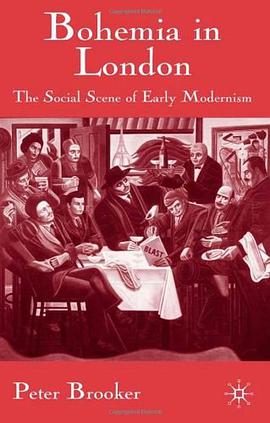
This original and imaginative study, now available in paperback, discovers the bourgeois in the modernist and the dissenting style of Bohemia in the cafe society and 'at homes' of the new artistic movements of the 1910s. Brooker sees the bohemian as a conspicuous example of the modern artist; at odds with but defined by the commercial, moral and sexual codes of bourgeois society. Bohemia in London brings new life and depth to the legendary anecdotes of the usual history, situating the canonical names of Ezra Pound, Wyndham Lewis, Eliot and Woolf alongside subordinated figures such as Iris Barry, Frida Strindberg, William Roberts, Vivienne Eliot and Vanessa Bell. Thus it aims to reconstruct the social world of companionship and rivalry at venues such as South Lodge, the Eiffel Tower Restaurant, the Cabaret Club and Gordon Square which shaped the allied experiments in art and life. It presents us anew with the radical potential of modernism in the modern metropolis.
Bohemia in London: A Portrait of a City in Flux This volume delves into the vibrant tapestry of London during a period of profound societal and artistic metamorphosis. Far from being a mere historical chronicle, it offers an immersive exploration of the city's soul, as reflected through its burgeoning bohemian quarters, the restless spirit of its creative denizens, and the intoxicating atmosphere that fueled both groundbreaking innovation and existential introspection. It is an invitation to wander through fog-laden streets, to inhale the scent of ink and absinthe, and to witness the birth pangs of modern culture unfold against the backdrop of a sprawling, ever-changing metropolis. The narrative begins by charting the geographical and social contours of London's emergent bohemian enclaves. These were not the genteel salons of the aristocracy, nor the grimy workshops of industry, but rather liminal spaces where artists, writers, musicians, and free thinkers converged, drawn by a shared dissatisfaction with convention and a burning desire for authentic expression. From the dimly lit backrooms of Bloomsbury to the raucous pubs of Fitzrovia, the book meticulously maps these evolving centers of cultural ferment. It examines the unique architecture of these neighborhoods, often characterized by repurposed warehouses, affordable lodgings, and intimate gathering spots that fostered intense intellectual and creative exchange. The very fabric of these districts, the cobbled lanes, the gaslight illuminating shadowed corners, and the constant thrum of urban life, becomes a character in itself, shaping and being shaped by the lives lived within them. Central to this exploration are the individuals who breathed life into these spaces. The book eschews a dry recounting of biographical details, instead opting for vivid portraits that capture the essence of these bohemian pioneers. We encounter the poets whose verses challenged societal norms, their words echoing the disillusionment and idealism of their era. We meet the painters whose canvases exploded with new forms and vibrant palettes, rejecting academic traditions in favor of raw emotion and subjective experience. The musicians, too, play a crucial role, their melodies weaving through the urban soundscape, capturing the pulse of a generation seeking new rhythms and harmonies. The book brings these figures to life through their writings, their correspondence, their artistic manifestos, and the anecdotal accounts of their contemporaries, allowing their passions, their struggles, and their triumphs to resonate across time. It explores their often unconventional lifestyles, their embrace of intellectual curiosity, their disdain for bourgeois values, and their relentless pursuit of artistic truth, even in the face of hardship and societal disapproval. The book also meticulously examines the intellectual currents that swept through London, providing fertile ground for bohemian thought. It delves into the philosophical debates that raged in smoky cafes and lecture halls, the ideas that challenged established power structures and traditional morality. Readers will gain insight into the influence of thinkers who championed individualism, questioned religious dogma, and explored the depths of the human psyche. The interplay between these philosophical underpinnings and artistic output is a key focus, demonstrating how abstract theories translated into tangible works of art that aimed to provoke, to question, and to inspire. The rise of new literary movements, the evolution of theatrical forms, and the burgeoning of experimental art practices are all placed within this broader intellectual context. Furthermore, Bohemia in London investigates the symbiotic relationship between the bohemian subculture and the wider societal changes occurring in the city. London was a crucible of industrial advancement, imperial expansion, and social unrest. The book explores how these macro-level transformations impacted the lives and work of bohemian artists. The stark contrasts between wealth and poverty, the anxieties of a rapidly modernizing world, and the questioning of national identity all found expression in their art. The book illustrates how bohemian artists were not isolated from the societal upheavals, but rather intimately connected to them, often serving as both observers and critics of their time. The very energy and chaos of the city, its relentless pace and its intoxicating allure, provided both inspiration and challenge for those who sought to push the boundaries of convention. The role of specific institutions and venues is also critically assessed. The book highlights the importance of art galleries, publishing houses, literary journals, and performance spaces in nurturing and disseminating bohemian creativity. It examines how these organizations, often established by patrons or collectives with a shared vision, provided essential platforms for artists to showcase their work, connect with audiences, and forge new artistic communities. The rise of independent presses, avant-garde theaters, and influential exhibitions are all explored in detail, revealing the infrastructure that supported this cultural flourishing. Moreover, the book does not shy away from the complexities and contradictions inherent in the bohemian experience. It acknowledges the romanticized notions often associated with this lifestyle, while also confronting the realities of precarious living, financial instability, and the occasional descent into self-destruction. The book explores the darker facets of bohemian existence, including the struggles with addiction, the tensions between personal freedom and societal expectations, and the ephemeral nature of artistic fame. By presenting a nuanced and multifaceted portrayal, the volume offers a more authentic understanding of these individuals and their contributions. The influence of foreign cultures and artistic trends on London's bohemian scene is another significant thread woven throughout the narrative. The book details how encounters with art and ideas from continental Europe, and indeed from further afield, enriched and diversified the London artistic landscape. The influx of artists and intellectuals fleeing political turmoil in other countries, the circulation of foreign publications, and the increasing ease of travel all contributed to a cross-pollination of ideas and aesthetics. In its conclusion, Bohemia in London reflects on the lasting legacy of this period. It argues that the spirit of experimentation, the embrace of individuality, and the persistent questioning of artistic and societal norms that characterized bohemian London laid the groundwork for many of the artistic movements and cultural sensibilities that continue to shape our world. The book leaves the reader with a profound appreciation for the courage, the passion, and the enduring vision of those who dared to live and create outside the confines of convention, forever imprinting their mark on the vibrant and ever-evolving spirit of London. It is a testament to the power of art and ideas to not only reflect but also to actively shape the world around us.