

具体描述
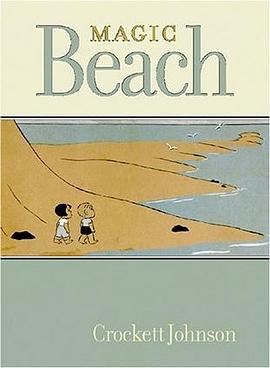
The publication of Johnson's (Harold and the Purple Crayon) deceptively simple story marks the debut appearance of this work in precisely the way Johnson conceived of it. (A version was published in 1965 as Castles in the Sand with illustrations by Betty Fraser.) Nel discovered the original dummy while researching a biography of the author. The ingenious book design plays up the feel of an artist's sketchbook, and the spare pencil sketches (with even the artist's erasures in evidence) on a beige background give readers the feeling of peering over the artist's shoulder. The drawings introduce young Ann and Ben, outlined in the expressive line that Harold fans will recognize immediately. The children have only to write a word in the sand and the item appears before them, making an intriguing play on the notion of spelling and spells. Musing that such things only happen in "stories about magical kingdoms," the pair proceeds to create just that, conjuring up a king, farms, castles and a horse, on which the monarch rides off to his kingdom, just as the tide rushes in. Maurice Sendak, a close friend of Johnson and his wife, Ruth Krauss, contributes an insightful "appreciation," and the afterword quotes a letter from Johnson describing the tale's debt to the Fisher King. Like all great stories, this one stretches well beyond the pages. All ages. (Nov.)
PreSchool-Grade 2–First published in 1965 as Castles in the Sand with illustrations by Betty Fraser, Johnson's manuscript resurfaces here, accompanied by his original sketches. Two children, bored on a summer day, wander down to the beach and begin to write in the sand, only to find that the waves wash away their words and replace them with the objects they describe. They continue writing until they have created a magical kingdom complete with forest, castles, and a sad king. With strong allusions to the Fisher King myth, this is a sly reflection on the power of words and the line between real and imaginary worlds. Though the story was enthusiastically turned down by many publishers in Johnson's day as too oblique for young audiences, the characters' realizations (e.g., The king is still there, in the story….Hoping to get to his throne) are presented in a child-friendly way. The sketchy dummy illustrations, complete with erasure marks, lend a deep realism of their own. Though this package, complete with a foreword by Maurice Sendak and an afterword by Philip Nel, will mostly appeal to children's book aficionados, the deceptively simple story has undeniable child appeal as well.
–Kathleen Kelly MacMillan, Carroll County Public Library, MD
While speaking about the nature of stories and the merits of being in one rather than reading one, a boy and his sister find a magical beach. They write a word in the damp sand and a breaking wave washes away jam and leaves a dish of jam in its wake. Soon they create a kingdom, beginning with king and adding forests, farms, cities, and, at the king's urging, castles. At first they follow the king into his story, but at his command, they return to the beach, where they watch as the tide comes in and covers the magic kingdom with water. The children debate whether the story has ended or whether it simply stopped when they left. This is illustrated with the unfinished sketches that Johnson submitted in 1959 to Ursula Nordstom, who (like several other publishers) rejected the book, saying "we're afraid that it just isn't a children's book." In 1965, it was published as Castles in the Sand, with illustrations by Betty Fraser.Bracketed by two insightful, informative gems for Johnson fans, a two-page "appreciation" by Maurice Sendak and a four-page afterword on the book's history by Phillip Nel, this handsome book is clearly aimed at adults as much as children. But whoever the audience, there is magic to be found in the words and sketches of Crockett Johnson.
Carolyn Phelan
Height (mm) 239 Width (mm) 188
作者简介
目录信息
读后感
评分
评分
评分
评分
用户评价
这本书的语言风格简直像一位精通炼金术的大师,将日常的词汇提炼成了闪闪发光的黄金。我尤其注意到了作者在选择动词和形容词上的那种近乎偏执的精准度。举个例子,书中描述一个场景时,用的不是常见的“走了”,而是“踱步”、“踅摸”或者“踉跄”,每一个词都精准地传达了人物当时的心境和动作的细微差别。这种对文字精确性的追求,使得整个阅读体验变得极为愉悦和丰富。你仿佛能听到每一个音节在舌尖上滚动,感受到文字背后的力量。而且,作者在构建对话时,那种自然流畅又不失个性的处理方式,让人完全信服于书中所描绘的世界。角色的口吻、用词习惯,都根据他们的背景和社会地位被刻画得入木三分,几乎不需要旁白去解释,单凭对话就能推断出很多信息。这本书的文笔功底,绝对是教科书级别的,值得那些想提升自己写作技巧的人仔细研读。
评分哇,这本书简直是本人的阅读体验大翻新啊!我得说,作者在人物塑造上真是下了苦功,每一个角色都鲜活得仿佛能从纸上走下来。那个叫莉亚的女孩,她的内心挣扎和成长,那种在迷茫中寻找方向的痛苦与坚定,看得我真是揪心又感动。我甚至能想象出她站在海边,任由海风吹拂着头发,眼神里充满了对未来的不确定,但脚下却又无比坚实的那种画面感。更别提那些配角,即便是出场不多的几个,他们的性格侧面也描绘得极其到位,让人忍不住去揣测他们背后的故事。作者对环境的描写更是绝了,那种雨后泥土的清新味道,阳光穿过树叶洒下的斑驳光影,甚至连空气中湿润的颗粒感都能通过文字清晰地捕捉到。这本书的节奏把握得也相当巧妙,该紧凑的地方让人屏息凝神,需要沉思的地方又给予了足够的留白,读起来一点都不觉得拖沓,反而像是在经历一场精心编排的旅程,充满了惊喜和回味。我强烈推荐给所有喜欢深度挖掘人性复杂面的朋友们,保证你读完后会忍不住想找人好好聊聊这些角色的命运。
评分这本书的叙事结构非常大胆和创新,我得承认,一开始有点没跟上作者的思路,好几次我都需要停下来回翻前面的章节,才能完全理解现在发生的事情。它不是那种传统的线性叙事,而是像一幅多重曝光的照片,将过去、现在甚至是一些模糊的未来片段巧妙地交织在一起。这种处理方式虽然对读者的专注度要求很高,但一旦你适应了这种节奏,你会发现它带来的阅读震撼力是无与伦比的。它迫使你主动去构建故事的脉络,去填补那些看似跳跃的逻辑空隙,这种“主动参与”的感觉,让整个阅读过程变得极其投入和富有智力上的挑战性。我尤其欣赏作者在处理时间线切换时的那种毫不费力的优雅感,就像一位技艺精湛的音乐家在演奏复杂的复调音乐,所有看似不相关的旋律最终都能汇集成一个和谐的整体。这本书绝对是为那些厌倦了平铺直叙故事的读者准备的一份饕餮盛宴,它考验你的耐心,但回报给你的绝对是远超预期的阅读收获。
评分我得承认,这本书的开头稍微有点慢热,可能前三章需要读者耐心一点点过渡。但是,一旦故事真正“启动”起来,那种阅读的惯性就会牢牢抓住你,让你根本停不下来。我记得有那么一个晚上,我本来打算只看两章就休息,结果一抬头,天已经微微泛白了,我竟然一口气读到了高潮部分的转折点才肯罢休。这种让人沉浸其中的能力,在当今快节奏的阅读环境中是非常难得的。作者成功地在保持文学性的同时,营造出了一种极强的“可读性”,这是一种非常微妙的平衡,很多人要么故事性太强而文学性不足,要么文字优美但情节索然无味。而这本书,两者兼顾得近乎完美。它有着引人入胜的悬念设计,总是在你以为快要解开谜团时,又抛出一个更复杂的线索,让你迫切地想知道下一页会发生什么。这是一次酣畅淋漓的阅读体验,强烈推荐给那些需要一本能彻底“拉走”你注意力的小说的人。
评分说实话,我读完这本书后,最大的感受就是一种深沉的哲学意味。它没有直接给出任何人生的大道理,也没有刻意去说教什么,但字里行间渗透出的那种对“存在”和“意义”的探讨,却像一股暖流缓缓注入心底。很多段落都需要我反复默读几遍,不是因为文字晦涩,而是因为它们触及到了我们日常生活中常常忽略却又至关重要的议题,比如记忆的不可靠性,或者个体在宏大历史背景下的渺小与挣扎。作者似乎在用一种近乎诗意的语言,解剖着人类共同的困境。这本书的语感非常独特,它不像一些畅销书那样追求快速的感官刺激,而是更倾向于一种缓慢发酵的美感。当你合上书本,那种宁静又略带沉思的状态会持续很久,让你不自觉地反思自己的一些既定观念。对于那些喜欢在阅读中寻找精神共鸣和思想启发的读者来说,这本书无疑是今年文学界的亮点之一,它提供的不仅仅是一个故事,更是一次深入自我审视的机会。
评分 评分 评分 评分 评分相关图书








本站所有内容均为互联网搜索引擎提供的公开搜索信息,本站不存储任何数据与内容,任何内容与数据均与本站无关,如有需要请联系相关搜索引擎包括但不限于百度,google,bing,sogou 等
© 2026 book.quotespace.org All Rights Reserved. 小美书屋 版权所有