具体描述
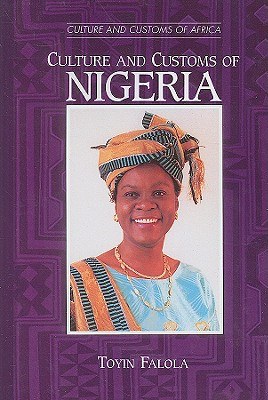
Nigeria, one of the largest and most important countries in Africa, is rich in traditions and customs, both indigenous and modern. "Culture and Customs of Nigeria" is the only concise, authoritative, and up-to-date discussion of Nigerian culture that introduces to a Western audience the complexity of its society and the emerging lifestyles among its various peoples. Students and other interested readers will learn about all major aspects of Nigerian culture and customs, including the land, peoples, and brief historical overview; religion and worldview; literature and media; art and architecture/housing; cuisine and traditional dress; gender, marriage, and family; social customs and lifestyles; and music and dance. Nigerians are proud of their diverse culture comprising more than 250 ethnic groups. Important changes in their economy and political system are helping them cope with challenges in the modern world. "Culture and Customs of Nigeria" illuminates a dynamic society--how Nigerians today live, work, worship, interact, relax, and express themselves. Numerous photos, a chronology, and a glossary complement the text.
A Tapestry of Tradition: Exploring West African Heritage Beyond the Niger Delta A Comprehensive Examination of Pre-Colonial Social Structures, Artistic Expression, and Philosophical Underpinnings in Select West African Societies This volume embarks on an intensive investigation into the intricate social, political, and spiritual landscapes of several key West African civilizations existing prior to significant European colonial influence. Moving beyond the geographically specific focus of Nigerian studies, this work aims to provide a broad, comparative analysis of cultural mechanisms that allowed these societies to thrive, maintain order, and express complex worldviews through material culture and oral tradition. Part I: Architectures of Governance and Kinship The initial section dissects the diverse models of political organization that characterized West Africa before the imposition of centralized colonial administration. We move systematically through distinct anthropological typologies, contrasting the highly stratified, centralized kingdoms—such as the Asante Confederacy and the ancient Kingdom of Benin (though acknowledging its eventual proximity to modern Nigerian boundaries, the analysis focuses strictly on its pre-colonial structures and external interactions)—with the decentralized, segmentary lineage systems prevalent among groups like the Tiv or the Igbo in their foundational structures. A detailed chapter is dedicated to the role of royalty and aristocracy in hierarchical polities. This exploration examines the divine justification for rulership, the mechanisms of succession (including matrilineal, patrilineal, and elective processes), and the intricate checks and balances imposed by councils of elders, titled men’s societies, and specialized lineage representatives. We analyze the concept of sacred kingship, where the ruler serves not merely as a political head but as the living embodiment of the collective spiritual integrity of the state. Evidence is drawn extensively from oral histories preserved by court griots and archival records pertaining to diplomacy and trade agreements between competing states. Contrasting this, another chapter focuses on acephalous or 'headless' societies. Here, the focus shifts to kinship as the primary organizational principle. We trace the functional specialization of lineage segments in conflict resolution, land tenure distribution, and the management of communal resources. The analysis emphasizes how social cohesion is maintained in the absence of a single, overarching executive authority, relying instead on overlapping ritual obligations and the authority vested in age-grade systems to enforce societal norms and integrate disparate family units into a functioning whole. Part II: The Material Language of Belief This section pivots toward the tangible expressions of cosmology and social stratification—the art, architecture, and symbolic systems that articulate communal identity. We undertake a rigorous study of West African sculptural traditions, focusing particularly on the stylistic innovations and iconographic vocabulary of the Senufo, Dogon, and Bamana peoples. Rather than viewing these objects simply as artifacts, the study treats them as active components of ritual life. Detailed analysis is provided for the function of masks in initiations, agricultural rites, and ancestor veneration. Specific attention is paid to the principles of abstraction and idealization in carving, exploring how artistic choices intentionally obscure literal representation to convey deeper metaphysical truths understood only by initiates. We detail the specific woodworking techniques employed, the types of wood favored for their spiritual resonance, and the role of the artist (often a specialized caste) within the wider social structure. The study extends to textile arts, particularly the complex dyeing and weaving patterns of Ghanaian kente cloth and Malian mudcloth (bogolanfini). These textiles are decoded not merely as decoration but as mnemonic devices and codified historical documents. We illustrate how color symbolism and geometric motifs serve as status markers, historical commentaries, and moral guides, effectively creating a visual language accessible to the literate-in-symbols. Part III: Cosmology, Ritual, and the Path to the Ancestors The core philosophical underpinnings of several distinct belief systems are explored in depth. This investigation deliberately avoids syncretism, instead maintaining rigorous distinctions between the worldviews of distinct cultural groups inhabiting the regions stretching from the Volta River basin westward into the Guinea Highlands. A central theme is the West African conception of time and causality. The work challenges linear interpretations of history, examining cyclical models where past events are perpetually re-enacted and influencing the present moment. This concept is explored through the lens of divination practices, where specialists act as intermediaries between the temporal world and the timeless realm of foundational spirits and ancestors. The role of ancestors commands a significant portion of this analysis. We examine the transition of individuals into 'living-dead' status, the crucial obligations maintaining this bond (through offerings, shrine upkeep, and correct funerary rites), and the mechanisms by which the ancestral chorus guides the decisions of the living lineage heads. Ritual sacrifice, analyzed not as violence but as a critical exchange necessary for maintaining cosmological equilibrium, is discussed within its specific socio-religious context. Furthermore, the structure and purpose of secret societies and initiation schools are scrutinized. These institutions are presented as essential pedagogical frameworks designed to transmit specialized religious and practical knowledge necessary for maintaining social equilibrium and preparing individuals for adult roles. The trials, secrecy, and symbolic rebirth inherent in these processes are analyzed as foundational rites of passage that solidify group identity across generational divides. Conclusion: Resilience and External Encounters The final chapter assesses the inherent cultural resilience demonstrated by these societies when confronted with external pressures, including early trans-Saharan trade networks and the initial incursions of European coastal interaction. The focus remains squarely on indigenous adaptive strategies—how core values regarding kinship, spirituality, and authority were subtly modified or fiercely defended in the face of new economic and ideological challenges, setting the stage for the complex cultural formations that would evolve in the succeeding centuries. This volume serves as a detailed map of the deep structures that underpinned vibrant, complex societies long before the modern era redefined the geography of the continent.