

具体描述
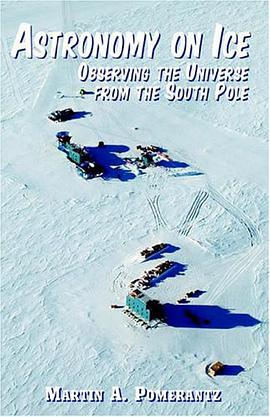
The story begins in 1930 with a Tenderfoot Boy Scout's first contact within hailing distance of Commander Richard Byrd and Eagle Scout Paul Siple, both seated in the back of an open limousine, in a ticker-tape parade through Brooklyn honoring their return from their first trip to Antarctica. The story ends with the author's final observing campaign at South Pole Station in 1994, and the dedication of the Martin A. Pomerantz Observatory by the Directors of the National Science Foundation and its Office of Polar Programs. The narrative is not strictly autobiographical, but it does unfold through events and personal choices of the author, along with the history of the science, the evolution of the cutting-edge astrophysical enterprise that is the centerpiece of the research program at the U.S. Amundsen-Scott South Pole Station. From his first taste of physics to his last trip to the South Pole, Astronomy on Ice presents, at a level aimed at an educated public, the scientific research the author carried out over 50 years, concentrating on his efforts to arouse interest within the astronomical community in the unique scientific resource offered by the South Pole. In the face of the initially cool reception of his idea, he conducted a number of experiments, first bootlegged and later sanctioned, with outstanding U.S. and foreign collaborators in multiple fields: solar astronomy, submillimeter astronomy, ultra high energy cosmic-ray and gamma-ray astronomy, and millimeter measurements of the microwave cosmic background radiation. These experiments proved the singular advantages of working at the South Pole for each of these astrophysical subfields . With instruments on the ground, on ships, aircraft, aboard balloons, and even on an early satellite, the author's cosmic ray research carried him to the sub-polar and north polar regions, as well as to many other sites around the earth. These experiences led to his initial Antarctic research in 1960, when he established the first year-round cosmic ray detector at McMurdo Station. In his initial visit to South Pole, during the first of 26 austral summers in Antarctica, the author recognized a number of potential advantages of this unique site for certain types of astronomical observations. Although preliminary tests, published in Polar Research: A Survey in 1970 by the National Academy of Sciences Polar Research Board, supported the idea, it was not until 1979, after numerous rebuffs, that the first authorized solar astronomy experiment proved that South Pole was the best site in the world for the new field of solar seismology: probing the sun's heretofore invisible interior by "listening to its ringing." Collaborating with both domestic and foreign experts, Pomerantz then conducted first-time campaigns in other subfields of astronomy, each revealing that South Pole was better than anyplace else on earth for conducting their specific types of astrophysical research. Paradoxically, manifold advantages stem from working at the earth's remote rotational axis, atop the extremely cold and forbidding 9300 feet deep polar ice cap, at a pressure altitude of about 12,000 feet. The scope of fundamental problems studied at South Pole ranges from the nature of earth's electromagnetic environment, to conditions throughout the sun's atmosphere and interior, to stellar evolution, to exotic physical processes in and beyond our galaxy, to thebeginning of structure in the Universe after its birth in the Big Bang.
作者简介
目录信息
读后感
评分
评分
评分
评分
用户评价
我通常更倾向于选择那些聚焦于具体观测技术或历史事件的非虚构作品,因为它们通常脉络清晰、目标明确。然而,这本书在内容组织上采取了一种相对自由、跳跃的结构,这起初让我有些许不适应,但很快就被它所带来的“探索感”所折服。作者似乎故意打破了传统的章节界限,从对黑洞信息悖论的探讨,可能突然无缝衔接到对南极天文台选址的地理学考量,接着又跳跃到某个古代文明对月相的记录。这种看似松散的编排,实则构建了一个巨大的知识网络,读者在阅读过程中,仿佛跟随一位经验丰富、知识渊博的向导,在不同的知识岛屿间乘坐一艘小船穿梭,每一站都有意想不到的风景。这种叙事上的自由度,极大地激发了我主动去关联不同知识点的欲望,而不是被动地接受信息流。更妙的是,它巧妙地穿插了一些非常详尽的附录,为那些想要深入钻研特定理论的读者提供了坚实的后盾,保证了阅读的深度和广度可以根据读者的兴趣自由调节,兼顾了入门者和资深爱好者的需求。
评分这本书的封面设计简直是视觉盛宴,那种深邃的蓝色调与点缀其间的璀璨星光,让人一拿到手就仿佛被拉入了一个浩瀚无垠的宇宙剧场。装帧的质感也出乎意料地精良,纸张的厚度拿在手里沉甸甸的,透露出一种对内容尊重的态度。我原本是抱着随便翻阅的心态开始阅读的,毕竟“冰与天文学”这个组合听起来就颇为小众,但很快就被作者那富有画面感的文字所吸引。他描绘极地观测站的场景,那份孤独与壮丽交织的氛围,简直让人身临其境,仿佛能感受到零下几十度的寒风刮过耳畔。尤其是关于那些罕见极光现象的描述,作者并非简单地堆砌科学术语,而是巧妙地融入了个人在极端环境下的哲学思考,探讨了人类在面对宇宙尺度时的渺小与执着。我特别喜欢其中一个章节,详细记录了一次漫长极夜中的设备故障排除过程,那种在黑暗、寒冷与时间赛跑的紧张感,比任何科幻小说都要引人入胜。这本书的排版也很讲究,留白恰到好处,使得那些精美的天文摄影图片能够更好地呼吸,而不是被文字淹没。总而言之,这本书在物理呈现上就已经达到了收藏级的标准,让人忍不住想一遍又一遍地摩挲。
评分说实话,我对那些动辄数千页的硬核科普著作总是敬而远之,总觉得里面充斥着让人头疼的数学公式和拗口的专业名词。然而,这本书却成功地颠覆了我的这种偏见。它的叙事节奏拿捏得极为高明,像一条蜿蜒流淌的冰河,时而平静舒缓,讲述一些鲜为人知的天文历史轶事,比如早年间探险家们如何用极其简陋的设备进行星空定位;时而又突然加速,深入探讨现代天体物理学的最新突破,比如对系外行星大气成分的分析,但即便是最尖深的部分,作者也用了大量贴切的比喻和生活化的例子来解释,读起来毫无压力。我记得有一段解释了引力透镜效应,作者竟然将其比喻成一个巨大的、看不见的酒瓶底部扭曲了背景的光线,这个比喻瞬间打通了我多年的困惑。这种“化繁为简”的能力,体现了作者深厚的知识功底和出色的沟通技巧。对于我这种并非科班出身的爱好者来说,这本书简直是一座及时雨,它不仅提供了知识,更重要的是,它培养了我们探索未知的热情,让人感觉宇宙并非遥不可及的神殿,而是触手可及的巨大博物馆。
评分如果要用一个词来概括这本书给我的整体感受,那就是“沉浸式体验”。这绝不是那种你能在咖啡店里快速翻完的读物,它需要你真正地沉下心来,最好是在一个安静、光线柔和的环境中,才能完全领会其中的精髓。作者对细节的把控达到了近乎偏执的程度。比如,在描述某个望远镜的校准过程时,他会细致到连螺丝刀的型号、环境温度对镜片膨胀系数的影响都考虑在内,这种对“真实工作状态”的还原,极大地增强了文本的可信度和现场感。我体验到了一种强烈的代入感,仿佛自己就是那个身处高山之巅、与冰冷设备为伴的观测者。这本书的叙事视角非常独特,它不是高高在上的“专家教导”,更像是两位老朋友在深夜围着篝火,分享他们对宇宙最深沉的秘密和最真挚的感悟。它的力量在于,它成功地将冰冷的物理定律与人类探索未知的那种炽热的激情联系了起来,读完之后,我感觉自己对头顶的星空,乃至我们赖以生存的地球,都有了一种全新的、更为谦卑的认识。
评分阅读体验的流畅性,很大程度上取决于作者的“声音”是否具有辨识度。在这本书中,我感受到了一种非常独特、近乎散文诗般的语调。它不像传统科普那样追求绝对的客观和中立,而是带着一种深深的个人情怀和对科学探索的敬畏。作者的笔触时而冷峻如冰川的裂缝,精准地剖析星体的演化模型;时而又变得温暖而富有诗意,描写星光穿过大气层时带给人类的心理慰藉。我尤其欣赏其中关于“时间”在宇宙尺度下的意义的讨论。在地球上,时间是线性的、紧迫的;但在恒星的生命周期面前,人类的百年光阴不过是转瞬即逝的刹那。这种对比带来的震撼感,让我对日常的烦恼产生了抽离感,仿佛被提升到了一个更高的维度进行审视。这种哲学性的反思贯穿始终,使得这本书的厚度远超出了单纯的天文学介绍,更像是一部关于“我们是谁,我们在哪里”的深沉叩问。它促使我停下来,思考我们与那些遥远星体之间,那份跨越了亿万光年的奇妙联系。
评分 评分 评分 评分 评分相关图书















本站所有内容均为互联网搜索引擎提供的公开搜索信息,本站不存储任何数据与内容,任何内容与数据均与本站无关,如有需要请联系相关搜索引擎包括但不限于百度,google,bing,sogou 等
© 2026 book.quotespace.org All Rights Reserved. 小美书屋 版权所有