

具体描述
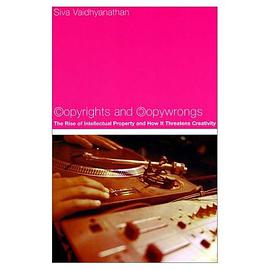
Copyright reflects far more than economic interests. Embedded within conflicts over royalties and infringement are cultural values--about race, class, access, ownership, free speech, and democracy--which influence how rights are determined and enforced. Questions of legitimacy--of what constitutes "intellectual property" or "fair use," and of how to locate a precise moment of cultural creation--have become enormously complicated in recent years, as advances in technology have exponentially increased the speed of cultural reproduction and dissemination. In Copyrights and Copywrongs, Siva Vaidhyanathan tracks the history of American copyright law through the 20th century, from Mark Twain's vehement exhortations for "thick" copyright protection, to recent lawsuits regarding sampling in rap music and the "digital moment," exemplified by the rise of Napster and MP3 technology. He argues persuasively that in its current punitive, highly restrictive form, American copyright law hinders cultural production, thereby contributing to the poverty of civic culture. In addition to choking cultural expression, recent copyright law, Vaidhyanathan argues, effectively sanctions biases against cultural traditions which differ from the Anglo-European model. In African-based cultures, borrowing from and building upon earlier cultural expressions is not considered a legal trespass, but a tribute. Rap and hip hop artists who practice such "borrowing" by sampling and mixing, however, have been sued for copyright violation and forced to pay substantial monetary damages. Similarly, the oral transmission of culture, which has a centuries-old tradition within African American culture, is complicated by current copyright laws. How, for example, can ownership of music, lyrics, or stories which have been passed down through generations be determined? Upon close examination, strict legal guidelines prove insensitive to the diverse forms of cultural expression prevalent in the United States, and reveal much about the racialized cultural values which permeate our system of laws. Ultimately, copyright is a necessary policy that should balance public and private interests but the recent rise of "intellectual property" as a concept have overthrown that balance. Copyright, Vaidhyanathan asserts, is policy, not property. Bringing to light the republican principles behind original copyright laws as well as present-day imbalances and future possibilities for freer expression and artistic equity, this volume takes important strides towards unraveling the complex web of culture, law, race, and technology in today's global marketplace.
作者简介
目录信息
读后感
评分
评分
评分
评分
用户评价
**第四篇书评:对未来趋势的预见性评估** 这本书的深度远不止于对既有法律体系的梳理,更在于其对未来技术浪潮下知识产权格局的敏锐洞察。作者对新兴技术,如区块链、生成式AI等领域对现有版权概念的颠覆性影响的分析,展现了卓越的预见性。他并没有简单地用现有框架去套用未来场景,而是深入探讨了这些新技术如何从根本上挑战“原创性”、“归属权”等核心概念的定义。在阅读这些章节时,我产生了一种强烈的“时代前沿感”,感觉自己正在和一位顶尖的战略思想家共同规划未来的蓝图。他不仅指出了潜在的法律真空,还提出了极具建设性的、富有前瞻性的政策建议,这些建议的逻辑自洽性和可行性令人印象深刻。这本书读完后,我不再仅仅将当前的法律视为终点,而是视其为一个动态发展的过程,并对未来十年可能出现的法律冲突有了清晰的预判。
评分**第二篇书评:思想的碰撞与伦理的拷问** 这本书的真正价值,在于它敢于触碰那些光鲜法律条文背后的灰色地带和伦理困境。这不是一本仅仅罗列法律条文的工具书,它更像是一场关于“创造者权利”与“公共利益”之间永恒拉锯战的深度辩论会。作者的笔触犀利而富有批判性,他毫不留情地揭示了某些大型机构如何利用现有法律框架来扼杀创新和竞争的现实。我记得有一章专门讨论了数字时代的内容分发,那段文字读起来令人心头一震,它迫使我反思自己日常的消费习惯,以及我们作为一个社会,是如何在便利与公平之间摇摆的。作者提出的那些尖锐问题,比如“知识的私有化是否最终会阻碍人类整体的进步”,至今仍在我的脑海中回响。这本书让你无法安于现状地接受既定规则,它鼓励读者去质疑、去探究,去寻找一个更符合时代精神的平衡点。这是一次思想上的洗礼,而非简单的知识灌输。
评分**第三篇书评:行文风格的流畅与可读性分析** 说实话,当我看到“法律”二字时,我的第一反应是准备好迎接一场枯燥的阅读体验。然而,这本书完全颠覆了我的预期。作者的叙事节奏掌握得炉火纯青,他懂得如何在严谨的论述中穿插一些恰到好处的案例轶事,使得整本书的阅读体验极其流畅。他似乎天生就知道如何与非专业人士对话,语言精准而不晦涩,既保持了学术的深度,又避免了学院派的傲慢。在描述那些复杂的法律程序时,他巧妙地运用了叙事技巧,将冰冷的法律条文赋予了人性化的温度。例如,在探讨早期音乐版权官司的那一节,读起来就像在看一部精彩的法庭纪录片,充满了戏剧张力和人物冲突。这种高度的“可读性”,使得这本书能够真正跨越专业门槛,触达到更广泛的受众。我甚至在通勤的地铁上,也忍不住被里面的情节吸引,常常需要强迫自己停下来,消化一下刚刚读到的观点。
评分**第五篇书评:案例选择的代表性与说服力** 评价一本法律类书籍,案例的选择至关重要,而本书在这方面做得近乎完美。作者挑选的每一个案例都不是为了凑数,而是精心挑选出来的,它们完美地代表了特定法律原则的关键转折点或最具争议性的实践。无论是涉及文学作品的经典诉讼,还是关乎软件源代码保护的现代争端,每一个案例都被剥离得井井有条,其背景、争议点、判决理由和潜在影响都被阐述得淋漓尽致。这种“以小见大”的手法,让读者能通过具体的冲突场景,理解抽象法律条文的实际效力。更令人称道的是,作者在分析这些案例时,始终保持着一种微妙的平衡感,既肯定了判决的必要性,也毫不回避其带来的负面连锁反应。这种全面而公正的视角,极大地增强了全书论点的说服力,让我对书中阐述的每一个法律观点都深信不疑,因为它是有坚实的实践基础支撑的。
评分**第一篇书评:深入浅出的法律脉络** 这本书的结构安排得极为精巧,仿佛一位经验老到的建筑师,精心搭建起一个庞大而复杂的法律框架。作者没有一开始就抛出那些令人望而生畏的法律术语,而是循序渐进地引导读者进入知识的殿堂。读完第一部分,我感觉自己仿佛走过了一条铺满碎石的小径,每一步都充满了挑战,但每一步的回报都是清晰的洞察力。他对早期版权法的演变过程的梳理,简直是一部生动的历史教科书,将那些枯燥的判例法变成了引人入胜的故事。特别值得称赞的是,他对于不同国家间法律体系差异性的比较分析,使得原本孤立的法律概念焕发出了活力。我尤其欣赏他使用类比进行解释的手法,比如将“合理使用”比作一个不断伸缩的橡皮筋,这个生动的画面让我瞬间抓住了这个核心概念的精髓,远比死记硬背那些官方定义有效得多。整本书读下来,我不仅获得了知识,更重要的是,建立起了一套分析和理解知识产权问题的思维模型。
评分a cultural history of a legal phenomenon - 主要是艺术创作中的产权概念变迁。
评分a cultural history of a legal phenomenon - 主要是艺术创作中的产权概念变迁。
评分a cultural history of a legal phenomenon - 主要是艺术创作中的产权概念变迁。
评分a cultural history of a legal phenomenon - 主要是艺术创作中的产权概念变迁。
评分a cultural history of a legal phenomenon - 主要是艺术创作中的产权概念变迁。
相关图书















本站所有内容均为互联网搜索引擎提供的公开搜索信息,本站不存储任何数据与内容,任何内容与数据均与本站无关,如有需要请联系相关搜索引擎包括但不限于百度,google,bing,sogou 等
© 2026 book.quotespace.org All Rights Reserved. 小美书屋 版权所有