
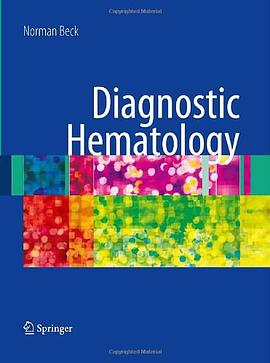

具体描述
Hematology is difficult to teach at the medical school level. The curriculum is necessarily fragmented across different years of study, and often separated considerably in time. Understanding hematology requires insight into several distinct aspects: applied physiology (generally taught early), an understanding of the essential pathological processes involving the blood are taught somewhat later (if at all), and the (necessarily) strong laboratory aspect is generally taught more or less concurrently with other clinical pathology topics, such as clinical chemistry and immunology. By the time the student is faced with blood diseases in the wards, the laboratory/pathological bias is well entrenched. It is thus difficult for the student to get an integrated view of the subject. The unspoken assumption, often reinforced by clinical tutors trained in the traditional perspective, is that blood tests are all that are required for a diagnosis in blood diseases. The result has been that clinical expertise in blood diseases is generally poor. This is reflected in the importance given to the examination of the hematological system in most student primers. The hematological system, by and large, is almost completely neglected. Such relevant features such as pallor, jaundice, bleeding, splenomegaly and so on are dealt with either in passing or in relation first to another system or the a general examinationa (TM). It is almost as though it is taken for granted that the haematological system cannot be assessed clinically a " and yet, as demonstrated later in the book, it is in very many cases impossible to reach a complete haematological diagnosis without clinical assessment. Effective, patient-centred care of hematological patients requires, as with all other patients, a comprehensive clinical insight into these disease processes, i.e. an integrated clinical and pathological approach. Added to these problems is the fact that the number of laboratory tests has increased explosively, and the laboratory simply does not have the time to attempt more than a brief, generalized, and increasingly, an automated interpretation of the results. Thus the onus of clinical interpretation necessarily falls more and more on the attending clinician, whose grounding in clinical haematology is too often inadequate, for the reasons mentioned. Hematology is emerging as a clinical specialty in its own right. The training of hematology physicians today includes extensive clinical exposure (indeed they are expected to handle the clinical aspects themselves), while training of medical registrars requires considerable knowledge of haematology and its reports. Achieving an integrated approach would be made immeasurably easier by a book presenting the subject in a fully integrated, clinical way. This then has been the motivation for this book. There is no shortage of hematological texts, some of them very good, and it would be presumptuous and self-indulgent to add to them without clear justification. However, practically all of the student-orientated texts tend still to teach hematology from a formal and largely static laboratory perspective, and the reports emanating from the laboratory tend to reinforce this. Many of the a Crash Coursea (TM) types of hematology book on the market have (at least) two major weaknesses: they considerably oversimplify the subject, contributing to the very mechanistic and almost anti-intellectual approach to blood diseases and especially to the FBC and Hemostatic Screen; and they tend to concentrate on primary blood diseases, whereas in practice most abnormalities of the blood and in the FBC are secondary to disease outside the system a " that is to say, they work primarily from a pathological and not from a clinical viewpoint. The FBC is one of the most common and valuable tests in use; it is a relatively expensive test and generally speaking is poorly interpreted, and the potential wealth of information that can be gleaned is missed. The approach described in this book is different from that in most student texts, and has been very successful in practice, starting almost from scratch, but omitting many of the a basicsa (TM) such as the details of hematopoiesis, laboratory technology, and so on, which are hardly relevant to the practising clinician and student in the wards, and are primarily of interest to the hematologist and sometimes to the clinical specialist. Considerable emphasis is given to the clinical history and examination, and the interpretation of the clinical patterns thus exposed. Hopefully it will overcome many of the traditional problems experienced in practical diagnostic haematology. All the practical essentials are covered, and effectively this book contains all the information the student will ever need, apart from details of therapy (until and unless they enter certain specialties). The book is restricted to adult haematology, for practical reasons. While there are considerable areas of similarity between adult and paediatric haematology, there are also very significant differences. Thus, the only congenital diseases discussed in this book are those that can present after childhood and occasionally those that pose a significant problem in adult practice. Generally these are discussed only briefly. Often with these the assistance of a haematologist would have to be sought anyway. Sometimes even the haematologist may have to further consult someone sub-specializing in paediatric haematology.
作者简介
目录信息
读后感
评分
评分
评分
评分
用户评价
这本书的语言风格透露着一种既不失学术的严谨,又不乏人文关怀的独特魅力。虽然其内容是高度专业化的,但作者在行文遣词上避免了过度的晦涩和不必要的术语堆砌,力求在准确性与可读性之间找到一个完美的平衡点。在讲解那些涉及细胞凋亡、免疫逃逸等复杂机制时,作者善于使用贴切的比喻和形象的描述,成功地将抽象的生物学过程具象化,极大地降低了理解门槛,让即便是背景知识相对薄弱的学习者也能鼓起勇气深入钻研。更重要的是,字里行间流露出对患者的尊重和对诊断准确性的执着追求,这种深层次的职业精神通过文字潜移默化地传递给了读者。它不仅仅是一本技术手册,更像是一本关于如何以专业、负责任的态度对待血液学诊断工作的职业道德指南,读完后,除了知识的充盈,更有一种沉甸甸的责任感油然而生。
评分这本书的装帧设计相当考究,封面的设计简约而不失专业感,色彩搭配沉稳大气,予人一种严谨治学的印象。内页的纸张质量上乘,触感细腻,即便是长时间阅读也不会感到眼睛疲劳,这一点对于需要频繁查阅参考书的专业人士来说,无疑是一个巨大的加分项。排版布局清晰合理,章节标题和正文之间的层级划分明确,图表和文字的结合恰到好处,使得复杂的概念和流程图更容易被理解和记忆。尤其值得称赞的是,书中大量的插图和显微镜图像都经过了精心的选择和处理,分辨率高,细节丰富,这对于学习血液学诊断这样高度依赖视觉信息的学科至关重要。例如,在描述各种血细胞形态异常时,配图的典型性和代表性都非常出色,让人在脑海中迅速建立起清晰的图像记忆。这种对细节的极致追求,体现了编者对目标读者的深刻理解和高度的职业素养,让人在翻阅的过程中,不仅是在获取知识,更是一种视觉上的享受和对专业精神的致敬。整体而言,从书籍的物理形态到内部的视觉呈现,都达到了医学专业教材中的一流水平,为知识的有效传递奠定了坚实的基础。
评分这本书在知识的更新速度和与时俱进方面表现得尤为出色,这在快速发展的医学领域中是极其重要的品质。我注意到,作者们显然非常关注近几年分子生物学和基因检测技术对血液学诊断带来的革命性影响。书中关于白血病和淋巴瘤分子分型、微小残留病灶(MRD)检测的章节,内容详实且紧跟国际最新的诊断标准和治疗指南,这对于确保我们所学知识的前沿性至关重要。他们对新技术的介绍并非蜻蜓点水,而是详细阐述了其原理、优势以及在临床工作流中的实际应用挑战,显示出极高的专业敏感度。相较于一些滞后于时代的老旧教材,这本书能让人确信,自己正在学习并掌握的是当前最有效、最先进的诊断方法。这种对“新知”的积极吸纳和转化,使得这本书的阅读体验充满了活力和前瞻性,确保了读者不会因为知识的过时而在实际工作中处于不利地位。
评分阅读这本书的过程,更像是一场精心设计的思维导图构建之旅。它的结构逻辑严密,从宏观的血液系统总览开始,逐步细化到各个细胞系、各个疾病谱,并且在各个章节之间设置了非常清晰的交叉引用和知识点回顾。这使得知识点的串联和整合变得异常顺畅,而不是孤立地存在于各个章节之中。作者运用了大量的流程图和决策树来描绘复杂的诊断路径,这些工具非常直观有效地帮助我理清了面对一个未知血涂片或异常生化指标时,应该如何系统地排除或确认诊断。我尤其欣赏作者处理复杂疾病时的那种“庖丁解牛”般的清晰度,他们总能用最精炼的语言,将那些看似盘根错节的临床线索梳理得井井有条。这种对结构化思考的强调,无疑是在培养我们作为诊断医生的核心能力——而非仅仅是知识的搬运工。
评分我初次接触这本关于血液学诊断的书籍时,最大的感受是其内容的广度和深度达到了一个令人惊叹的平衡点。它并未仅仅停留在对教科书式定义的简单罗列,而是深入剖析了从基础的血液生成机制到复杂的病理生理过程的每一个环节,展现了血液系统疾病诊断的完整逻辑链条。特别是关于一些罕见或疑难血液病的讨论部分,作者似乎倾注了大量心血,不仅引用了最新的研究成果,还结合了大量的临床病例分析来佐证观点。这种由浅入深的叙述方式,让初学者能够逐步建立起系统的知识框架,而对于经验丰富的临床医生来说,其中穿插的“陷阱”提示和鉴别诊断的细微差别,更是提供了宝贵的实战经验。书中对于各种实验室检测指标的解读,也摆脱了刻板的数值范围说明,而是深入探讨了指标背后的生物学意义及其在疾病进展中的动态变化,极大地提升了读者的批判性思维能力。这种兼顾理论深度与临床实用的编撰手法,使得这本书超越了一般的参考书范畴,更像是一位资深专家的悉心指导。
评分 评分 评分 评分 评分相关图书







本站所有内容均为互联网搜索引擎提供的公开搜索信息,本站不存储任何数据与内容,任何内容与数据均与本站无关,如有需要请联系相关搜索引擎包括但不限于百度,google,bing,sogou 等
© 2026 book.quotespace.org All Rights Reserved. 小美书屋 版权所有