
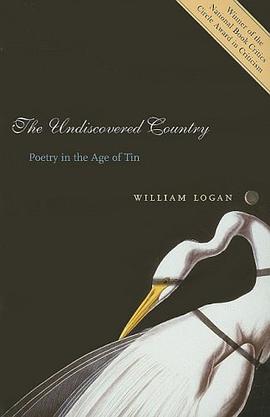

具体描述
William Logan has been called both the "preeminent poet-critic of his generation" and the "most hated man in American poetry." For more than a quarter century, in the keen-witted and bare-knuckled reviews that have graced the New York Times Book Review, the Times Literary Supplement (London), and other journals, William Logan has delivered razor-sharp assessments of poets present and past. Logan, whom James Wolcott of Vanity Fair has praised as being "the best poetry critic in America," vividly assays the most memorable and most damning features of a poet's work. While his occasionally harsh judgments have raised some eyebrows and caused their share of controversy (a number of poets have offered to do him bodily harm), his readings offer the fresh and provocative perspectives of a passionate and uncompromising critic, unafraid to separate the tin from the gold. The longer essays in The Undiscovered Country explore a variety of poets who have shaped and shadowed contemporary verse, measuring the critical and textual traditions of Shakespeare's sonnets, Whitman's use of the American vernacular, the mystery of Marianne Moore, and Milton's invention of personality, as well as offering a thorough reconsideration of Robert Lowell and a groundbreaking analysis of Sylvia Plath's relationship to her father. Logan's unsparing "verse chronicles" present a survey of the successes and failures of contemporary verse. Neither a poet's tepid use of language nor lackadaisical ideas nor indulgence in grotesque sentimentality escapes this critic's eye. While railing against the blandness of much of today's poetry (and the critics who trumpet mediocre work), Logan also celebrates Paul Muldoon's high comedy, Anne Carson's quirky originality, Seamus Heaney's backward glances, Czeslaw Milosz's indictment of Polish poetry, and much more. Praise for Logan's previous works: Desperate Measures (2002)"When it comes to separating the serious from the fraudulent, the ambitious from the complacent, Logan has consistently shown us what is wheat and what is chaff...The criticism we remember is neither savage nor mandarin. ..There is no one in his generation more likely to write it than William Logan." -- Adam Kirsch, Oxford American Reputations of the Tongue (1999)"Is there today a more stringent, caring reader of American poetry than William Logan? Reputations of the Tongue may, at moments, read harshly. But this edge is one of deeply considered and concerned authority. A poet-critic engages closely with his masters, with his peers, with those whom he regards as falling short. This collection is an adventure of sensibility." -- George Steiner "William Logan's critical bedevilments-as well as his celebrations-are indispensable." -- Bill Marx, Boston Globe All the Rage (1998)"William Logan's reviews are malpractice suits." -- Dennis O'Driscoll, Verse "William Logan is the best practical critic around." -- Christian Wiman, Poetry
作者简介
目录信息
读后感
评分
评分
评分
评分
用户评价
这部小说的世界构建达到了令人惊叹的细致程度。它所描绘的那个社会背景,不仅仅是一个宏大的设定,而是由无数个微小、可信的细节编织而成的实体。从那个时代特有的社会阶级划分带来的无形隔阂,到街头巷尾的特定气味和声音,再到不同阶层对同一事件的不同解读,无一不体现出作者在田野调查和历史研究上的深厚功力。这种沉浸感是如此强烈,以至于我读完后仿佛需要时间来“重新适应”我们现实世界的光线和节奏。作者没有采用冗长的背景介绍,而是将世界的规则和历史的暗流,巧妙地融入到日常对话和环境描写之中,让读者在不知不觉中被这个世界完全同化。它成功地创造了一个既陌生又似曾相识的维度,让读者得以在其中探索人类社会永恒的主题,但又披上了一层独一无二的文化外衣。
评分这部作品的语言风格如同陈年的威士忌,醇厚、复杂,且回味悠长。作者的用词极其讲究,即便是描写最日常的场景,也总能找到一个意想不到的形容词或动词,让画面瞬间立体起来。我尤其欣赏它如何巧妙地在高度书面化的精炼表达和偶尔冒出的、极富生活气息的口语化表达之间切换,这种对比使得人物的性格更加丰满和真实。文字里渗透着一股古典的忧郁感,仿佛每一句话的背后都藏着一段未被言说的历史。阅读过程中,我常常需要停下来,不是因为不理解情节,而是因为那些排比句和隐喻的精准度高得惊人,让人忍不住要将句子在脑海中反复咀嚼。它没有刻意追求华丽,但其文字本身就是一种艺术,那种沉静而有力的美学,让那些关于人性深处的探讨,更显厚重与不容置疑。这绝不是一本可以“快速浏览”的书,它要求读者投入心神,去品味墨水在纸页上留下的每一丝痕迹。
评分这本书的叙事节奏简直是教科书级别的范例,作者对情节的把控力令人叹为观止。从开篇那种细微的、几乎难以察觉的悬念设置开始,就牢牢抓住了我的注意力。进入中段后,冲突的层层升级处理得张弛有度,既没有让人感到应接不暇的混乱,也没有陷入那种平铺直叙的沉闷。特别是当主要角色陷入一个看似无解的困境时,作者似乎故意放慢了时间的流逝感,通过大量的内心独白和环境描摹,将那种窒息的压迫感实体化了。我几乎能感受到主人公每一次呼吸的挣扎。更妙的是,每一次看似柳暗花明的转折,背后都埋藏着更深一层的反转,使得读者总是在“哦,原来是这样”和“等等,这不对劲”之间反复拉扯。这种对读者预期管理的精准拿捏,展现了作者高超的文学技巧。读到最后,那种豁然开朗却又带着一丝宿命感的结局,让人在合上书页后,依然久久地回味那精巧的结构布局。这不仅仅是一个故事,更像是一次经过精密计算的智力探险。
评分如果要用一个词来概括这次阅读体验,那一定是“震撼”。这本书挑战了我对于叙事边界的固有认知,它大胆地采用了多重叙事视角,但并非简单地拼凑碎片,而是在不同声音的交织中,构建出一个更加立体、更具哲学意味的真相。随着故事的深入,我越来越意识到,所谓的“客观事实”根本不存在,只有被不同个体的主观经验所扭曲和塑造的“故事”。这种对认知的解构和重塑,尤其在探讨记忆与历史的关系时,达到了一个高峰。它迫使我停下来反思自己日常生活中对信息的接收和判断方式。这种文学上的冒险精神,再加上其深刻的内涵,使得它远远超越了一般的娱乐消遣范畴,更像是一次对思维本身的洗礼。它带来的知识冲击和情感共鸣是持久而复杂的,绝对值得反复品味。
评分角色塑造是这本书最令人称道的部分,几乎每一个次要人物都拥有自己完整的生命轨迹和动机,而非仅仅是推动主角前进的工具。主角的成长弧线尤其令人信服,他不是那种突然觉醒的英雄,而是在一系列错误的决策和痛苦的领悟中,缓慢而痛苦地完成了蜕变。他的矛盾性被刻画得入木三分——既有常人的怯懦与自私,又有在关键时刻闪现的非凡勇气。我特别喜欢作者处理人物关系的方式,那种紧张而微妙的张力,没有过多直白的对话,而是通过眼神的交汇、肢体的疏离或靠近来暗示一切。那些看似微不足道的互动,实则蕴含着巨大的情感信息量,需要读者自己去解读和填补空白。这种尊重读者的创作态度,使得人物形象在我的心中拥有了极强的生命力,让我感觉自己仿佛真的参与了他们的人生,感同身受他们的挣扎与抉择。
评分 评分 评分 评分 评分相关图书










本站所有内容均为互联网搜索引擎提供的公开搜索信息,本站不存储任何数据与内容,任何内容与数据均与本站无关,如有需要请联系相关搜索引擎包括但不限于百度,google,bing,sogou 等
© 2026 book.quotespace.org All Rights Reserved. 小美书屋 版权所有