

具体描述
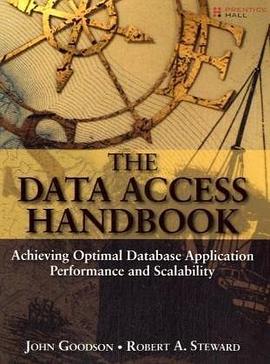
The Data Access Handbook Achieving Optimal Database Application Performance and Scalability John Goodson * Robert A. Steward Drive breakthrough database application performance by optimizing middleware and connectivity Performance and scalability are more critical than ever in today's enterprise database applications, and traditional database tuning isn't nearly enough to solve the performance problems you are likely to see in those applications. Nowadays, 75-95% of the time it takes to process a data request is typically spent in the database middleware. Today's worst performance and scalability problems are generally caused by issues with networking, database drivers, the broader software/hardware environment, and inefficient coding of data requests. In The Data Access Handbook, two of the world's leading experts on database access systematically address these issues, showing how to achieve remarkable improvements in performance of real-world database applications. Drawing on their unsurpassed experience with every leading database system and database connectivity API, John Goodson and Rob Steward reveal the powerful ways middleware affects application performance and guide developers with designing and writing API code that will deliver superior performance in each leading environment. In addition to covering essential concepts and techniques that apply across database systems and APIs, they present many API examples for ODBC, JDBC, and ADO.NET as well as database system examples for DB2, Microsoft SQL Server, MySQL, Oracle, and Sybase. Coverage includes * Clearly understanding how each component of database middleware can impact performance and scalability * Writing database applications to reduce network traffic, limit disk I/O, optimize application-to-driver interaction, and simplify queries-including examples for ODBC, JDBC, and ADO.N ET * Managing connections, transactions, and SQL statement execution more efficiently * Making the most of connection and statement pooling * Writing good benchmarks to predict your application's performance * Systematically resolving performance problems-including eight start-to-finish case-study examples If you're a software architect, system designer, or database application developer, The Data Access Handbook will be your most indispensable database application performance resource. It's the one book that focuses on the areas where you can achieve the greatest improvements-whether you're designing new database applications or troubleshooting existing ones. John Goodson is vice president and general manager of the DataDirect division of Progress Software, a leader in data connectivity and mainframe integration. For 20 years, he has worked with Sun, Microsoft, and others to develop database connectivity standards such as J2EE, JDBC, ODBC, and ADO. He served on the ANSI H2 committee that built the SQL standard and now participates in the JDBC Expert Group and Java Rowsets standards committees. Rob Steward, vice president of R&D at the DataDirect division of Progress Software, is responsible for the development, strategy, and oversight of the company's data connectivity products. Rob has spent the past 15 years developing high-performing database driver and data providers, including ODBC, JDBC, and ADO.NET. Both authors have spoken on database application performance at many industry events. Visit www.dataaccesshandbook.com to get the code examples presented in this book and other supplemental information for DB2, MicrosoftSQL Server, MySQL, Oracle, and Sybase.
作者简介
目录信息
读后感
评分
评分
评分
评分
用户评价
这本书的内容组织逻辑性简直是教科书级别的范本,它没有像许多技术指南那样一股脑地将所有概念堆砌在一起,而是构建了一个清晰的、由浅入深的学习路径。初学者可以从第一章开始,系统地建立起对核心概念的宏观理解,作者在介绍基础架构时,会非常巧妙地穿插一些现实世界的案例作为引子,使得抽象的概念立刻变得生动起来。随着阅读深入,章节之间的递进关系显得尤为自然,前一个知识点为后一个更复杂的主题铺垫了坚实的基础,读者几乎不需要在不同章节间跳跃查找,因为作者已经帮你规划好了最佳的“认知迁移”路线。特别值得称赞的是,每当引入一个新的技术模块时,作者总会用一段简短的“为什么我们需要这个?”的讨论来引入,这种“需求驱动”的讲解方式,极大地增强了阅读的代入感和目的性。这种结构安排,不仅服务于新手入门,对于有经验的专业人士回顾或查漏补缺时,也能提供一个高效的框架索引,让人可以精准地定位到自己感兴趣的特定子系统,而不必被不相关的内容干扰。总而言之,它的章节结构如同一个精心设计的迷宫,每条路径都有明确的指引,让你在探索复杂信息系统的过程中,始终保持清晰的方向感。
评分这本书的价值并不仅仅体现在理论的阐述上,它在“实操性”和“工具箱”的构建方面,也达到了令人惊叹的高度。大量的代码示例并非是孤立的、为了展示语法而存在的样板代码,而是紧密围绕着真实世界中可能遇到的性能瓶颈或安全漏洞展开的“情景模拟”。每一个示例都附带了详细的上下文说明——“你在什么场景下会用到这段代码?”以及“这段代码的潜在风险点在哪里?”。更让我感到惊喜的是,作者似乎为读者准备了一套完整的诊断工具集。在讨论到故障排除时,书中详细列举了哪些命令行工具、监控指标或日志分析方法可以用来快速定位问题,甚至连一些调试技巧和快捷键都被收入其中,这感觉就像是买了一本厚厚的说明书,同时还附赠了一套顶级工程师的“工作秘籍”。这种将理论与实战紧密捆绑的编辑策略,使得这本书的实用价值呈几何级数增长。它不再仅仅是一本“告诉你要做什么”的书,而更像是一本“告诉你如何一步步解决实际问题”的行动指南,对于需要立即投入生产环境的读者来说,这种即时反馈和应用能力,是无价的。
评分我发现作者在解释那些极其晦涩难懂的技术细节时,所采用的类比和比喻简直是神来之笔,完全突破了传统技术文档的僵硬窠臼。很多时候,我们面对复杂的底层协议或数据流操作时,会陷入术语的泥潭,但这本书的作者似乎有着一种将复杂性“翻译”成日常经验的天赋。比如,在阐述数据同步机制时,他没有直接堆砌原子操作和锁粒度的理论,而是将其比作一个繁忙的中央厨房中,不同厨师如何协调配料和出菜的流程,生动地描绘了并发控制中的资源竞争与协调,使得原本需要反复研读才能理解的概念,在脑海中瞬间形成了具象化的画面。这种叙事手法,极大地降低了技术理解的门槛,让即便是初次接触该领域的人也能迅速抓住重点。更妙的是,即便是最深入的部分,作者也保持了这种叙事上的灵活性,他不会强迫读者接受某一种解释,而是提供多种视角进行剖析,比如从宏观的系统设计角度看,再从微观的内存操作角度看,多维度的解读确保了读者能够从自己最舒适的角度去吸收信息,这种对读者学习习惯的深刻洞察,是这本书最大的亮点之一。
评分这本书的装帧和印刷质量着实令人眼前一亮,厚实的封面搭配哑光处理,拿在手里沉甸甸的,很有分量感,光是看着就觉得这是一本用心制作的工具书。纸张的选择也非常考究,不是那种廉价的反光纸,而是带着一丝温暖的米白色,即便是长时间阅读也不会感到眼睛疲劳。我尤其欣赏它在细节处的用心,比如书脊的线装工艺,翻开时可以完全平铺在桌面上,这对于需要对照参考的读者来说简直是福音。内页的字体排版也处理得非常得体,行距和字号的比例拿捏得恰到好处,使得大段文字阅读起来也毫无压力。装帧设计上似乎融入了一种低调的专业感,没有花哨的图文分散注意力,而是专注于提供一个稳定、可靠的阅读媒介。它给人的第一印象,就是“这是一本可以陪伴我很久,并且经得起反复翻阅的专业书籍”。从实体感上来说,它完全超越了我对一般技术手册的预期,更像是一件精美的案头工艺品,让人愿意把它陈列在书架的最显眼位置,随时准备取用。整体而言,无论是从纸张的触感、油墨的清晰度,还是书籍的结构耐用性来看,这本手册在物理层面上的制作水准,无疑是行业内的顶尖水平,为接下来的内容阅读奠定了极佳的心理预期。
评分最后,我要强调的是这本书所展现出的那种对技术演进的深刻洞察力和前瞻性。在面对一个快速迭代的技术领域时,一本厚重的书籍很容易在出版后不久就显得过时。然而,这本书在阐述核心原理的同时,总能巧妙地预留出对未来趋势的讨论空间。它不会将重点放在某个特定版本或框架的细枝末节上,而是专注于提炼出那些具有长期生命力的设计哲学和权衡取舍的原则。例如,在讨论数据持久化策略时,作者不仅详细对比了现有主流技术的优缺点,还花篇幅探讨了“在后量子计算时代,哪些加密范式可能需要被重新评估”这样的未来议题。这种超越当下的视角,极大地提升了这本书的“保质期”,它教给读者的不是固定的答案,而是一套应对未来不确定性的思维框架。它培养了一种批判性的视角,鼓励读者不断质疑当前被奉为圭臬的最佳实践,并思考下一代技术可能的样子。因此,这本书不只是一份关于“现状”的记录,更是一份关于“未来可能性”的蓝图,是引导专业人员保持技术敏感度和持续学习动力的绝佳读物。
评分 评分 评分 评分 评分相关图书

















本站所有内容均为互联网搜索引擎提供的公开搜索信息,本站不存储任何数据与内容,任何内容与数据均与本站无关,如有需要请联系相关搜索引擎包括但不限于百度,google,bing,sogou 等
© 2026 book.quotespace.org All Rights Reserved. 小美书屋 版权所有