

具体描述
Today's investor is faced with a myriad of investment options and strategies. Whether you are seeking someone to manage your money or are a self-directed investor deciding to tackle the market on your own, the options can be overwhelming.
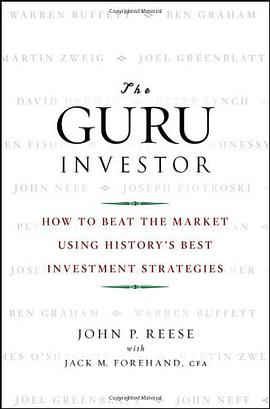
In an easy-to-read and simple format, this book will dissect the strategies of some of Wall Street's most successful investment gurus and teach readers how to weed through the all of the choices to find a strategy that works for them. The model portfolio system that author John Reese developed turns each strategy into an actionable system, addressing many of the common mistakes that doom individual investors to market underperformance. This book will focus on the principles behind the author's multi-guru approach, showing how investors can combine the proven strategies of these legendary "gurus" into a disciplined investing system that has significantly outperformed the market.
Gurus covered in the book are: Benjamin Graham; John Neff; David Dreman; Warren Buffett; Peter Lynch; Ken Fisher; Martin Zweig; James O'Shaughnessy; Joel Greenblatt; and Joseph Piotroski.
From the Inside Flap
Over the past six decades, the U.S. stock market has averaged an annual return of about eleven percent per year. Yet, except for a few renowned Wall Street gurus, the vast majority of investors, both amateur and professional, fail to come anywhere close to those eleven percent average annual gains. Why do most investors fail—and what do those very successful investment gurus have in common? The Guru Investor identifies the stock picking methodologies developed by some of history's best and most successful stock market gurus—including Peter Lynch, Warren Buffett, Benjamin Graham, Martin Zweig, John Neff, and others—and shows how you can combine these proven strategies into a disciplined investing system that has been proven to outperform the market. John Reese breaks down the very different approaches of each of the gurus—encompassing value, growth, and quantitative investing—and lays out their philosophy and achievements, detailing step-by-step the secret formulas they used to beat the market, while explaining why these legendary investors consider certain factors to be so important when analyzing individual stocks. Reese not only discusses the individual gurus, their strategies, and why they are important, but he also explains how to best use these strategies in the real world, showing how to sift through all of the choices to find a strategy that works for you. The model portfolio system that the author has developed turns each strategy into an actionable system, addressing many of the common mistakes that doom investors to failure. In addition to offering these individual guru-based models, Reese also explains how to combine and implement these approaches into a multi-guru system that will provide you with a comprehensive, practical stock investing strategy with a proven track record. He reveals when you should buy, when you should sell, how many stocks you should own, and much more. All investors can learn from the thinking, writing, and experience of Wall Street's greatest investors. The Guru Investor, and its free companion Web site—www.guruinvestorbook.com—will teach you the lessons of these greats and give you all the tools needed to put those lessons to work in your investment strategy.
作者简介
目录信息
读后感
评分
评分
评分
评分
用户评价
这本书的排版和结构设计也值得称赞,它显然是经过深思熟虑的。每一章的过渡都非常自然流畅,就像一条精心铺设的轨道,将读者的思绪从宏观经济的脉络,引导至微观企业的分析,再聚焦到个体投资者的心理建设。我特别喜欢它在介绍不同投资流派时所采用的“对比分析”法。比如,它会并列呈现两种看似对立的投资哲学,然后通过具体的历史事件来剖析,这两种方法在特定市场环境下各自的优势和局限性。这种非黑即白的辩证思维,极大地提升了我的批判性分析能力。我不再满足于只接受一种“绝对真理”,而是开始理解,投资的艺术往往在于根据环境的变化,灵活调配不同的思维工具。书中的图表和数据支撑也非常到位,但它们的使用非常克制,绝不喧宾夺主,而是恰到好处地佐证作者的论点,让人感觉数据是为观点服务的,而不是为了炫耀复杂的模型。对于追求深度思考的读者来说,这本著作无疑是一次酣畅淋漓的智力挑战。
评分这本《The Guru Investor》真是一本让人大开眼界的书。我记得第一次翻开它的时候,就被作者那种深入骨髓的洞察力给震撼了。他不是那种空泛地谈论“价值投资”或者“成长股”的理论家,而是像一个经验丰富的老船长,带着我们穿越市场的风暴。书中对历史上那些真正成功的投资者——那些被称作“大师”的人物——的案例分析简直是教科书级别的。作者没有满足于罗列他们买了什么股票,而是深入剖析了他们做出决策时的思维模式、面对恐慌时的情绪控制,以及如何将看似复杂的宏观经济信号转化为具体的投资行动。特别是关于“护城河”的探讨,作者提出的新颖视角,让我立刻反思了自己过去对企业竞争优势的理解深度。他强调的不是静态的护城河,而是动态的、不断加深的“护城河工程”,这种动态的视角极大地拓宽了我的视野。阅读过程中,我感觉自己不再是站在岸边看别人游泳,而是真正走进了水里,感受水流的冷热和暗流的涌动。这本书的价值在于,它提供了一套可以被内化、可以付诸实践的思考框架,而不是一堆随时可能过时的股票代码。对于任何想在投资这条路上走得更远、更稳健的人来说,这本书提供的精神食粮是极其珍贵的。
评分说实话,我抱着一种半信半疑的态度开始阅读的,毕竟市面上关于投资的书汗牛充栋,大多都是炒冷饭或者故作高深。《The Guru Investor》给我的第一印象是,它的语言风格非常平实,没有那些华丽的辞藻和故作神秘的语气,反而有一种直击人心的力量。作者似乎有一种天赋,能把那些在华尔街被渲染得无比复杂的概念,用最朴素的日常语言解释清楚。我尤其欣赏其中关于“认知偏差”的章节。他没有仅仅停留在亚里士多德式的哲学思辨,而是列举了大量我们普通人在投资决策中常常掉入的陷阱,比如“锚定效应”在估值中的误导,或者“从众心理”如何让我们在市场狂热时失去理性。他甚至分享了一些自己早期犯下的、令人啼笑皆非的错误,这让整本书显得格外真诚可信。这种坦诚感是很多严肃投资书籍所缺乏的。读完后,我最大的收获是学会了如何“慢下来”,在做每一个投资决定之前,强迫自己进行一次彻底的自我审视——问问自己,我是真的了解这个投资标的,还是仅仅被表面的光鲜所迷惑?这种内省的价值,远超任何具体的投资技巧。
评分我通常对那些声称能预测未来的书保持高度警惕,但《The Guru Investor》的魅力恰恰在于它完全不试图做这种徒劳的尝试。相反,它聚焦于“确定性”——如何在一个充满不确定性的世界里,找到那些我们能真正把握的东西。作者花了大量篇幅讨论“能力圈”的界定和拓展。这对我一个在职场上摸爬滚打多年的专业人士来说,具有极强的现实指导意义。他没有鼓励我们去学习一切,而是强调聚焦核心优势,将有限的精力和注意力投入到自己最擅长的领域。这种“专注即力量”的理念,不仅适用于股票投资,更渗透到职业发展和人生规划的方方面面。读完这本书,我感觉自己对“风险”的理解也上升了一个层次。风险不再仅仅是股价下跌的可能性,而是认知不足和判断失误的综合体现。这种由内而外的重塑,让我对未来市场波动多了一份从容,少了一份焦虑。这本书的实用性是无庸置疑的,但它带来的更深层次的影响,在于对个人心性的修炼。
评分这本书给我的感觉,更像是一份由前辈投资者精心准备的“武功秘籍”,它详细拆解了从基础内功到高级招式的每一个细节,但最终能否成为一代高手,还得靠读者自身的勤奋练习和悟性领悟。我最欣赏它的地方在于,它成功地将投资行为从一种“赌博”或“投机”的心态,提升为一种基于严谨研究和深刻哲学的“事业”。书中对估值方法的阐述,没有陷入当前市场追逐的各种时髦指标的泥潭,而是回归到商业的本质——企业在未来能产生多少可自由支配的现金流。这种对“本源”的回归,是许多新近出版的投资书籍所缺失的定力。我建议所有对金融市场抱有敬畏之心的读者,无论您是初入市场的新手还是经验丰富的资深人士,都应该将此书列入案头必备。它不仅仅是一本传授技巧的书,更是一部关于如何理性思考、如何保持独立精神的指南。合上书页的那一刻,我有一种强烈的冲动,想要立刻重新审视我所有的投资组合,并以一种更成熟、更谦逊的态度去面对接下来的市场挑战。
评分Guru is always slow and patient. Historical one can predict the future?
评分Guru is always slow and patient. Historical one can predict the future?
评分Guru is always slow and patient. Historical one can predict the future?
评分Guru is always slow and patient. Historical one can predict the future?
评分Guru is always slow and patient. Historical one can predict the future?
相关图书













本站所有内容均为互联网搜索引擎提供的公开搜索信息,本站不存储任何数据与内容,任何内容与数据均与本站无关,如有需要请联系相关搜索引擎包括但不限于百度,google,bing,sogou 等
© 2026 book.quotespace.org All Rights Reserved. 小美书屋 版权所有