
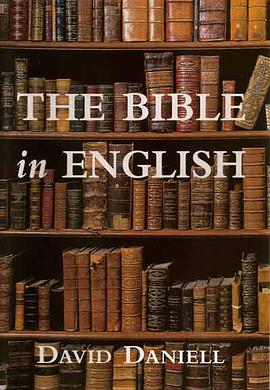

具体描述
The greatest of the earlier translators of the Bible into English, William Tyndale, was martyred in 1536 for his work. Immediately after him, however, translations proliferated: the whole Bible, or significant parts, has now been translated into English from its original Greek and Hebrew more than three thousand times. This major new book tells the extraordinary story of the Bible in England from approximately the fourth century, and its later translation into English in Britain and America to the present day. Eminent scholar David Daniell charts the profound impact successive versions of the Bible have had on the people and communities that read them. He explains the work of major translators, the history of influential translations following Tyndale, including Coverdale's, the Geneva Bibles and the King James Bible, and how greatly Americans have contributed in the late twentieth century, especially after the American Revised Standard Verson. Encompassing centuries of change-from a time when no one except priests had knowledge of the Bible beyond a few traditional stories mixed with saints' lives, through later years when ordinary people were steeped in Biblical doctrine and language, to the present, when popular knowledge of the Bible, we are told, has disappeared-this eloquent book reveals how the endeavor of translating the Bible into English has changed religious practice, the arts, society, and the English language itself.
作者简介
The Bible in English tells a unique story. From earliest times until today there have been over three thousand translations of the Bible into English. This gripping book ('to own and treasure', Churchman) charts the profound impact of successive major versions, explaining the work of the chief translators following Tyndale, especially in making the Geneva and 'King James' volumes, and the great American versions. The book is 'an enormous and exhilarating work of scholarship that sweeps through the centuries', wrote The Sunday Times. David Daniell's definitive biography of Tyndale was, among many other outstanding reviews, described in the Times Higher Education Supplement as 'a massive contribution to the history of the Reformation in England'. The Sixteenth Century Journal said it is 'stunning both in presentation and content': and the Journal of Religion as 'a long-awaited masterpiece'. He prepared and introduced for Yale UP the modern-spelling editions of Tyndale's 1534 New Testament and 1530 Old Testament, both of them seminal and previously hard to find, and both now in standard use world-wide. Tyndale's 1528 landmark Obedience broke new ground in revealing the true power of living a Christian life: edited by Daniell with introduction and notes, it is a distinguished Penguin Classic. Also edited and introduced by him, Carcanet's William Tyndale:Selected Writings, is a good shorter overview of Tyndale. The new Oxford Dictionary of National Biography (2004) contains his major individual biographies of William Tyndale, Miles Coverdale, John Frith, John Rogers and William Roy. In 1996, he founded the annual academic journal Reformation, and edited the first volumes: it has now reached volume 11. For the Folio Society in 2006 he introduced their edition of The Apocrypha. [For Yale books, click on www.yalebooks.co.uk For Penguin, www.penguinclassics.com For Carcanet, www.carcanet.co.uk]
In January 1995, at a distinguished gathering in the British Library, the Tyndale Society was founded, with David Daniell as first Chairman - a position now ably filled by Mary Clow. The Society today has hundreds of members world-wide. He gave the Second Lambeth Palace Tyndale Lecture (occasions always chaired by the Archbishop of Canterbury) in September 1995, and the 2003 Annual Lecture to the Friends of Lambeth Library, also chaired by the Archbishop. Among other lectures, he has given the Beatrice Ward Memorial Lecture, London (1994); the A.G.Dickens Lecture (U. of Cambridge, 1994); the Hertford Tyndale Lecture (U. of Oxford, 1994); the Waynflete Lectures (U. of Oxford, 1996); and the Staley Lectures (Michigan, USA, 1998). From 1994-7, he was Curator of the British Library's 'Let There Be Light' Exhibition, in London, California, New York and Washington DC, seen by a quarter of a million people. (A few copies of his illustrated 32-page booklet, Let There Be Light, accompanying the exhibition, are still available from the author.)
Leverhulme Emeritus Fellow, 1997-9, he has also been Mayers Fellow in the Henry E.Huntington Library, California in 1998; Visiting Fellow at King's College London, 1995, and Visiting Fellow at Magdalen College, Oxford, 1996. He gave the St Andrews University Sermon in November 1994, and the Oxford University Sermon, May 2000. He gave the first St Paul's Cathedral Tyndale Lecture in May 2003..
Professor Daniell has also been a Shakespearean all his life, publishing several books and many journal articles. His edition of Julius Caesar in the acclaimed best-selling Arden 3 series has been widely admired. English Studies noted that it is 'a stimulating new look at a play which is often exhibited in a critical museum'. Invited to give a major paper at the 2000 biennial International Shakespeare Conference at the Shakespeare Institute, Stratford-upon-Avon, his resulting 'Shakespeare and the Protestant Mind' opens the 2001 Shakespeare Survey 54. [For Julius Caesar, click on www.ardenshakespeare.com]
In 1979, he accompanied the Royal Shakespeare Company on their six-week tour of European cities with Terry Hands' celebrated production of Coriolanus, led by Alan Howard. The resulting fully-illustrated book, Coriolanus in Europe, with many insights into that Roman tragedy, sold out quickly, is did his The Tempest in the 'Critics' Debate' series, an account not only of older critical positions on that play as 'Shakespeare's Farewell', but of Daniell's view of what there is new and looking forward.
David Daniell's work has appeared in many Shakespeare journals. For fifteen years (1973-88) he contributed to, and then wrote alone, the Shakespeare chapter in The Year's Work in English Studies, a labour latterly involving the evaluation of some six hundred items a year. From 1976 to 1984 he was also an assistant editor of that publication. His bibliographical study of Hamlet in OUP's Shakespeare: Select Bibliographical Guides, edited by Stanley Wells (1990) was followed in 1995 by the University of London Hilda Hulme Memorial Lecture, The Language of Hamlet. His 1979 study, 'Opening up the text: Shakespeare's Henry VI plays in performance' in Themes in Drama 1 has been seminal, as has his 'The good marriage of Katherine and Petruchio' in Shakespeare Survey 37 (1984), reprinted a number of times. His 'Shakespeare and the Traditions of Comedy' in the 1986 Cambridge Companion to Shakespeare Studies, ed. Stanley Wells, was widely noticed, as were his chapters on 'Shakespeare's Life' and 'The Romances' in Levi Fox's 1987 Shakespeare Handbook. His Gresham College lecture in the 'Literary Londoners' series, 'Shakespeare, The Tempest and its City Connections was published by that College in 1995, and a wider essay, 'Shakespeare and the City', in The Shakespeare International Yearbook (ed. Elton and Mucciolo, 2002). He was a member of the Academic Advisory Committee to Shakespeare's Globe Theatre (1981-1991).
David Daniell has also been, all his life, an advocate of the hundred or so books, and countless other writings, by the Scottish writer John Buchan. His book The Interpreter's House: a critical assessment of the work of John Buchan (1975) began the proper understanding of Buchan as an outstanding biographer and historian as well as a significant maker of fiction: that book did much to begin to rescue him from ignorant and unwarranted denigration. (A few copies are still available from the author.) Daniell edited, introduced and annotated two volumes of The Best Short Stories of John Buchan for Michael Joseph (1980, 1982) and did the same for Memory Hold-the-Door for Dent. He was General Editor of OUP's World's Classics editions of Buchan novels, and edited, annotated and introduced for the series Buchan's Prester John, John Macnab and Sick Heart River. For B & W, Edinburgh, he did the same for The Free Fishers, The Blanket of the Dark and A Prince of the Captivity. He has lectured regularly for the John Buchan Society.
In 1992, Dr Daniell was made Professor of English at University College London, (since 1994 Emeritus). He is Honorary Fellow of two Oxford Colleges, Hertford and St Catherine's, and an honorary member of the Senior Common Room at Magdalen. Educated at Queen Elizabeth Grammar School, Darlington; St Catherine's College, Oxford (BA, 1952, English Language and Literature, MA, 1956: BA Theology 1954); and the University of Tübingen, 1954-5, his Ph.D., on Shakespeare, is from the University of London (1972). He has made over 50 tv and radio broadcasts, including his BBC Radio 3 feature, Tyndale's Testament, with Denis Nowlan, twice repeated. He had a significant part in the making of Pioneer Productions' prime-time Channel 4 The Bible Revolution. For some years he was a second tenor with the London Synphony Chorus. He has a long-standing and supportive marriage with Dorothy, and two sons, Christopher and Andrew. Christopher and his wife Alison have two sons Matt and Jamie.
目录信息
读后感
评分
评分
评分
评分
用户评价
我拿起《圣经 in English》这本书,并不是为了探究任何宗教教义,而是出于对语言本身的纯粹好奇。在我看来,这本书更像是一部英语语言的演变史,它以一种独特的方式,记录了这门语言在历史进程中的发展和变化。我热切地希望从中看到,不同时代的翻译者们,是如何运用当时的语言资源,去诠释和传播这部重要的文本。从那些古朴而充满韵律的表达,到现代清晰而易于理解的描述,每一种语言风格都反映了当时的社会文化和思想潮流。我特别想探究的是,在翻译过程中,那些在原文中具有特殊文化和宗教内涵的词汇,是如何在英语中找到最恰当的对应,又是如何影响着英语语言本身的发展。这本书,在我看来,是一本关于语言生命力的生动教材,它用一种最深刻、最持久的方式,展示了英语如何适应、如何创新,并最终成为一种具有全球影响力的语言。它让我深刻地认识到,语言不仅仅是交流的工具,更是历史的见证,文化的载体,以及思想的塑造者。
评分当我翻开《圣经 in English》这本书时,我并没有期待它会提供任何关于圣经内容的直接阐述,也从未有过这样的念头。我的兴趣点在于,在这本厚重的卷帙中,英语这门语言如何被运用,如何随着时代的变迁而演变,以及这本被无数人尊为神圣经典的文本,是如何在英语世界中被翻译、解读和传承的。我渴望看到的是语言学的精妙之处,是翻译者们在力求忠实于原文的同时,如何赋予文本以英语的生命力。我想了解不同历史时期,例如国王詹姆斯译本(King James Version)的优雅与庄重,和更现代译本的清晰与直白,它们在语法、词汇和句子结构上是如何体现出时代烙印的。这本书,在我看来,更像是一扇窗口,透过它,我可以看到英语语言的进化史,看到不同文化背景下的信徒如何通过这门语言与他们的信仰进行对话。我特别关注那些在翻译过程中出现的挑战和创新,比如一些在原文中具有深刻宗教含义的词汇,在英语中如何找到最贴切的表达,又或者某些诗歌式的段落,如何保持其韵律和意境。这本书所承载的,不仅仅是一部宗教典籍的语言呈现,更是英语语言本身发展演变的一个重要载体,其历史价值和文化意义不言而喻。它让我思考,语言不仅仅是沟通的工具,更是思想和情感的载体,是文化传承的纽带。
评分当我拿起《圣经 in English》这本书时,我并没有抱着去理解任何宗教信仰或教义的目的。我纯粹是被它所代表的语言力量所吸引。在我看来,这本书是英语语言发展历程中一个极其重要的里程碑,它记录了这门语言如何被用来承载最深奥的思辨和最普世的情感。我希望通过阅读这本书,能够细致地观察到英语在不同历史时期是如何演变的。想象一下,从早期翻译的质朴,到中世纪的华丽,再到近现代的简洁明了,每一种语言风格的背后,都隐藏着一个时代的文化背景、思想潮流和社会价值观。我特别想探究的是,那些在宗教文本中至关重要的词汇和概念,是如何在英语中被找到最贴切的表达方式的。这不仅仅是一个简单的词汇替换,而是一个文化与语言的深度碰撞与融合。这本书,在我看来,是一份关于英语语言演变的珍贵文献,它用一种最深刻、最持久的方式,展示了语言如何适应、如何发展、以及如何影响着人们的思想和表达。它让我深刻地认识到,语言不仅仅是交流的工具,更是历史的记录者,文化的传承者,以及思想的塑造者。
评分坦白说,我对《圣经 in English》这本书的兴趣,与它是否包含任何宗教教义毫无关联。我的关注点全然在于其语言风格的多样性和历史演变。我始终认为,语言是文化最直接的载体,而一部跨越数个世纪、被广泛翻译和阅读的经典,无疑是观察语言变迁的最佳样本。我期待在这本书中,能看到英语在不同历史时期是如何被使用的,它的词汇、语法、乃至句子结构,又是如何在岁月的洗礼下发生微妙而深刻的变化。从早期古朴的翻译,到中世纪的严谨,再到近现代的流畅,每一种风格都蕴含着一个时代的精神气质和文化烙印。我尤其对那些在翻译过程中,如何处理那些在原文中具有特殊宗教含义的词汇和概念感到好奇。这些词汇,在不同的文化语境下,如何被赋予新的生命,又如何影响着英语语言本身的发展?这本书,在我看来,就像是一本隐藏在宗教外衣下的语言学百科全书,它用一种最引人入胜的方式,展示了英语语言的丰富性和生命力。它让我思考,语言的魅力,不仅在于其沟通的功能,更在于其记录历史、承载文化、以及塑造思想的能力。
评分我的阅读体验,《圣经 in English》这本书,并没有涉及任何关于圣经内容本身的探讨,而是将我的注意力完全引向了语言的魅力。我将这本书视为一本关于英语语言演变史的生动案例,它以一种独特的方式,展现了英语在不同历史时期所呈现出的多样性和生命力。我渴望从书中看到,不同时代的翻译者们,如何运用他们那个时代的语言,去捕捉并传达文本的精髓。从那些古朴而富有韵律的表达,到现代清晰而精确的描述,每一种语言风格都承载着一个时代的印记。我特别好奇的是,在翻译过程中,那些在原文中具有深厚文化和宗教内涵的词汇,是如何在英语中找到最恰当的对应。这种语言上的转换,不仅仅是词汇的堆砌,更是文化观念的传递和融合。这本书,在我看来,是一部关于语言生命力的史诗,它通过一种最深刻、最持久的方式,展示了英语如何在历史的长河中不断发展、创新,并最终成为一种影响深远的全球性语言。它让我认识到,语言的力量,远不止于沟通,它更是一种历史的见证,文化的载体,以及思想的塑造者。
评分在我阅读《圣经 in English》的过程中,我并没有去关注其宗教教义的深浅,而是将目光完全聚焦于其语言的变迁和风格的多样性。在我看来,这本书是一部活生生的英语语言史,它通过翻译一部影响深远的经典,展现了英语在不同历史时期的发展轨迹。我渴望看到,不同时代的译者们,是如何运用当时最先进的语言工具,去诠释和传达文本的意义。从那些古朴而富有韵律的表达,到现代清晰而易于理解的描述,每一种语言风格都承载着一个时代的文化底蕴和思想潮流。我特别好奇的是,在翻译过程中,那些在原文中具有特殊文化和宗教内涵的词汇,是如何在英语中找到最恰当的对应,又是如何影响着英语语言本身的发展。这本书,在我眼中,就是一本关于语言生命力的百科全书,它用一种最深刻、最持久的方式,展示了英语如何适应、如何创新,并最终成为一种具有全球影响力的语言。它让我思考,语言的力量,远不止于沟通,它更是一种历史的见证,文化的载体,以及思想的塑造者。
评分我购买《圣经 in English》的初衷,并非为了深入探究其宗教教义,而是出于一种纯粹的语言学好奇。我一直对语言的演变及其在不同历史时期所扮演的角色深感着迷。这本书,在我眼中,更像是英语语言发展史的一个缩影,它记录了从古英语向现代英语过渡的漫长过程中,语言是如何被塑造、被影响、并最终以一种清晰、有力的形式呈现出来的。我尤其对不同译本的风格差异感兴趣。想象一下,那些在各个时代努力将神圣文本转化为母语的译者们,他们面对的挑战是何其巨大。他们不仅要理解原文的深刻含义,还要找到最能传达这份神圣感和智慧的英语词汇和句式。这其中必然涉及到对古英语词汇的熟悉,对中世纪英语语法结构的掌握,以及对近代英语表达方式的理解。我希望这本书能够展示出这种语言上的传承与创新,例如,詹姆斯国王译本那充满韵律和诗意的措辞,是如何在当时的社会背景下被接受和推崇的;而更现代的译本,又如何在追求清晰易懂的同时,不失其庄重和神圣感。这本书,在我看来,就是一部活生生的语言进化论,它用一种最深刻、最普遍的方式,展现了英语语言是如何在历史的长河中不断打磨、精炼,最终成为如今我们所熟知的模样。它让我思考,语言的力量,不仅仅在于其表达能力,更在于其承载历史、文化和信仰的能力。
评分我对《圣经 in English》这本书的兴趣,纯粹源于对语言演变的好奇,而非其宗教内容。我将这本书视为一个极佳的窗口,透过它,我可以观察到英语这门语言在历史长河中是如何被塑造、被丰富、并最终以多种面貌呈现出来的。我尤其关注不同译本的语言风格差异。想象一下,那些在不同时代致力于翻译这部经典的人们,他们如何运用当时的词汇、语法和表达方式,去捕捉原文的神韵。从早期译本的庄重典雅,到近现代译本的清晰流畅,每一种风格都蕴含着一个时代的语言特色和社会文化。我迫切地想了解,在翻译过程中,那些在原文中具有特殊宗教含义的词汇,是如何在英语中找到最贴切的表达,又是如何影响着英语语言本身的发展。这本书,在我看来,就是一部关于英语语言生命力的生动记录,它用一种最深刻、最持久的方式,展示了语言的适应性、创新性和影响力。它让我深刻地认识到,语言不仅仅是交流的工具,更是历史的见证,文化的载体,以及思想的塑造者。
评分当我翻开《圣经 in English》这本书时,我并没有以一个信徒的视角去审视它,而是以一个语言学者的严谨态度去探索。我的兴趣点在于,英语这门语言是如何随着历史的演进,在处理一部如此重要和深远的文本时,展现出它的多样性和生命力的。我渴望看到不同译本之间在语言运用上的细微差异,它们在词汇选择、语法结构、句式安排上是如何体现出时代特色和文化烙印的。我想了解,那些在原文中承载着丰富历史和宗教内涵的词汇,是如何在英语世界中被翻译、被理解、并被赋予新的生命力的。这本书,在我眼中,更像是一面镜子,它折射出英语语言在漫长岁月中不断革新和发展的轨迹。它让我思考,语言不仅仅是沟通的媒介,更是思想的载体,文化的传承者,以及历史的记录者。每一次的翻译,都是一次语言的再创造,一次文化的对话,一次思想的传承。
评分拿起《圣经 in English》这本书,我脑海中萦绕的是对语言本身的好奇,而非其中蕴含的宗教思想。对我而言,这本书更像是一个语言学的宝库,它记录了英语在漫长的历史进程中是如何被塑造和演变的。我尤其着迷于不同历史时期的翻译风格。想象一下,那些在不同时代致力于将文本转化为母语的译者们,他们所面临的语言挑战和选择。从古英语的质朴,到中世纪的繁复,再到近现代的简洁,每一种风格都反映了当时社会的语言习惯和文化风貌。我迫切地想了解,在翻译过程中,那些在原文中具有特殊宗教含义的词汇和概念,是如何被英语所吸收和转化的。这其中必然涉及到对古老词汇的挖掘,对新词汇的创造,以及对句子结构的调整。这本书,在我看来,就是一部关于英语语言进化过程的生动教材,它用一种最深刻、最持久的方式,展示了语言的生命力和适应性。它让我反思,语言不仅仅是表达思想的工具,更是历史的见证,文化的载体,以及人类智慧的结晶。
评分 评分 评分 评分 评分相关图书










本站所有内容均为互联网搜索引擎提供的公开搜索信息,本站不存储任何数据与内容,任何内容与数据均与本站无关,如有需要请联系相关搜索引擎包括但不限于百度,google,bing,sogou 等
© 2026 book.quotespace.org All Rights Reserved. 小美书屋 版权所有