
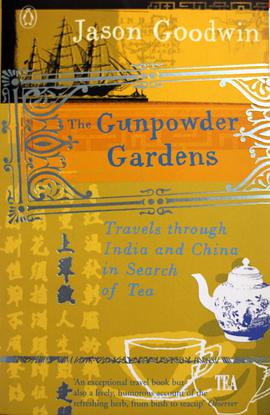

具体描述
Inspired by his two tea-loving grandmothers, one of whom lived in China and the other in India, Jason Goodwin set out to trace the history of this popular beverage from its earliest use in the courts and kitchens of ancient Szechwan to its cultivation in colonial India for the English market. The result is a hugely entertaining travel diary packed with humorous anecdotes, historical curiosities and hilarious accounts of meetings with an array of characters so extraordinary as to make the Mad Hatter's tea party seem a calm and rational affair. Goodwin's combination of lively, contemporary travel writing and historical detail and insight make this book a joy to read as well as providing an education in all things tea-related (and there are many more than you might think). Even the humble herb itself takes on a variety of forms that we drinkers of leaf tea are unfamiliar with - cake tea, powdered tea, whipped tea, tablet tea and dust tea.... Every detail of production and consumption, from the various types of tea inspectors (chillingly called 'expectorators' by the Chinese) to the finer points of Indian tea ceremonies and the origins of the English tea, is explored with a genuine love of the subject and a great sense of fun. Goodwin has a talent for wry observations, and this book is full of them: he relates that, 'A linguist comes down from Canton, a functionary so named... because he speaks no language but his own', and informs us that 'continental Europeans, it is well known, cannot make a proper cup of tea at all, but float a bag in tepid water, and serve it up in a tall glass'. It is this talent for turning a phrase, combined with a broad knowledge and inexhaustible curiosity, that makes this such a refreshing account of an otherwise familiar subject.
The author's grandmothers spent their lives in China and India, daily observing the imperial custom of afternoon tea. Inspired by their memories he set off to explore the fast-disappearing relics of their world - an exploration which reached back into the history of the tea trade. In a journey through the lost European cities of the China coast, the crumbling tea city of Calcutta, and the legendary gardens of Bohea and Darjeeling, the author evokes past and present with a sense of the ironies of history, following the tea trade from its origins in the Canton factories through the Opium Wars and the settlement of British India, to its influence in the present day.
作者简介
Jason Goodwin was born in 1964 and studied history at Trinity College, Cambridge. He was the joint winner of the Spectator/Sunday Telegraph Young Writer of the Year Award in 1987 and has travelled extensively in the Far East and India. He has written four books:The Gunpowder Gardens: Travels through India and China in Search of Tea, which was shortlisted for the Thomas Cook Travel Book Award in 1991;On Foot to the Golden Horn: A Walk to Istanbul, which was winner of the Mail on Sunday/John Llewellyn Rhys Prize in 1993;the highly acclaimed Lords of the Horizon: A History of the Ottoman Empire; and Greenback: The Story of the Almight Dollar.He divides his time between West Sussex and the south of France.
目录信息
读后感
评分
评分
评分
评分
用户评价
如果用一个词来形容阅读这本书的感受,那大概是“抽丝剥茧”的耐心考验。故事情节的展开极其克制,作者似乎有意设置了多重迷雾,每当你以为找到了真相的边缘时,它又悄无声息地后退了一步。这种叙事上的“留白”处理,无疑是高明的,它成功地将“侦探”的角色交给了读者,迫使我们去主动参与到对文本意义的构建之中。然而,也正因为如此,对于期待即时满足感的读者来说,可能会感到一丝焦躁。我个人更享受这种被挑战和被引导的感觉,它让我不断地在脑海中建立、推翻自己的假设,整个过程充满了智力上的博弈。这本书对人物动机的挖掘也极为深入,很多角色的行为逻辑看似突兀,但回溯前文,却能找到其深植于性格和环境的根源。它不是在讲述一个故事,而是在呈现一个复杂的、由无数细小决策编织而成的现实切面,其复杂程度足以让人在合上书本后,依然久久地沉浸其中,思考人性的多面性。
评分这本书的叙事节奏如同夏日午后缓慢流淌的溪水,带着一种令人安心的沉静感,但在这宁静的表象之下,却潜藏着令人不安的暗流。作者对细节的描摹,尤其是对人物内心活动的捕捉,细腻得如同工笔画。我发现自己时常会停下来,回味那些看似不经意的对话,因为它们往往是解开人物复杂性的关键。故事的主线索——关于家族秘密的揭示,推进得不疾不徐,反而让每一次转折都显得格外有力。这不是那种追求感官刺激的读物,它更像是一场漫长的心理漫步,引导着读者去探索人性深处的幽微之处,去审视那些我们试图遗忘却又无法摆脱的过往。阅读体验是内敛且深刻的,它要求读者投入足够的心神去体会字里行间的情绪波动,而非仅仅追逐情节的高潮。那些关于时间和记忆的探讨,尤其触动了我,让我想起自己生命中那些被时间磨平棱角的片段。整本书读完后,留下的不是一个轰轰烈烈的结局,而是一种悠长、带着微苦回甘的余韵,让人愿意反复咀嚼其中的哲思。
评分这本书最吸引我的一点,是它对“边缘地带”的关注。故事中的人物,无论是地理位置还是精神状态,似乎都游走在主流社会的边缘。他们不是典型的英雄或恶棍,而是生活在灰色地带的、充满矛盾和不确定性的个体。作者没有对他们进行道德上的简单裁决,而是以一种近乎冷峻的客观视角,去记录和呈现他们的挣扎与抗争。这种对“局外人”群像的细致刻画,赋予了作品一种强烈的社会现实主义的底色,尽管故事本身可能带有一定的虚构色彩。我从中看到了对社会结构性问题的隐晦批判,那些无声的压迫和难以言喻的疏离感,都被巧妙地融入到日常生活的细节之中。这种处理方式比直白的控诉更有力量,因为它要求读者自己去体会那种难以言喻的沉重感,去感受到那些被制度和偏见所困的灵魂的重量。它不是一本让人读完后感到轻松愉快的书,但它绝对是一本能让你在精神上感到被充实和被触动的作品。
评分从结构上看,这本书采取了一种非常规的非线性叙事手法,时间轴仿佛被随意打散重组,碎片化的信息如同散落的珍珠,需要读者自己去串联起它们之间的内在逻辑。这种跳跃式的叙事,初读时可能会让人感到有些迷失方向,仿佛置身于一座迷宫之中,需要不断地回头寻找线索。但一旦适应了作者构建的这种独特的时空结构,你会发现其中隐藏着一种精妙的对称和呼应。过去与现在,A人物的视角与B人物的记忆,在不同的章节中相互渗透、相互印证,最终汇集成一个完整而立体的图景。这种结构上的复杂性,恰好服务于主题的深度,它暗示了生活和记忆本身就是如此支离破碎、充满误解和重构的集合体。对于喜欢解谜式阅读,热衷于分析文本结构和作者意图的读者来说,这本书无疑提供了一个极具挑战性也极富回报的智力游戏场所。我花了相当长的时间来厘清不同时间线索的交织点,但最终的豁然开朗感,绝对值回票价。
评分这本书的语言风格简直是文字的盛宴,充满了强烈的画面感和一种近乎古典的韵律美。每一个句子都经过了精心的打磨,仿佛是古老的雕塑家手中的杰作,每一个词语都恰到好处地嵌入其应有的位置,既不显得堆砌,也不失于单薄。我尤其欣赏作者在环境描写上展现出的那种近乎偏执的精确性,无论是对光线角度的捕捉,还是对某种特定气味的重现,都极其到位,瞬间就能将我拽入那个虚构的世界之中。但这种极度的形式美有时也会带来阅读上的小小的挑战,因为你必须放慢脚步,才能完全领会其中蕴含的深意。它不像那些快节奏的流行小说,让你一口气读完,它更像是需要你用茶道般的心态去品鉴的佳酿。那种缓慢渗透的魅力,在于它让你意识到文字本身也可以成为一种体验,一种不仅仅是传达信息的媒介,更是一种艺术形式的极致展现。这种对文字纯粹性的追求,在这个信息爆炸的时代,显得尤为珍贵和难能可贵。
评分 评分 评分 评分 评分相关图书













本站所有内容均为互联网搜索引擎提供的公开搜索信息,本站不存储任何数据与内容,任何内容与数据均与本站无关,如有需要请联系相关搜索引擎包括但不限于百度,google,bing,sogou 等
© 2026 book.quotespace.org All Rights Reserved. 小美书屋 版权所有