
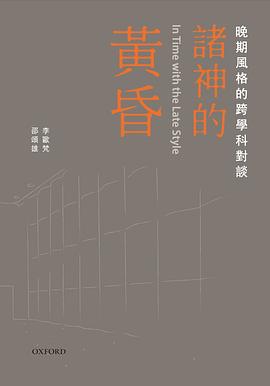

具体描述
本書為李歐梵和邵頌雄兩位音樂發燒友通過文字對話的形式,為讀者呈獻一札引領他們親自體會音樂融通境界的導賞。為香港大學MUSE「繆思文集」之一。
馬勒曾言:「我知道若我能以文字表達一種經驗,我不會嘗試代之以音樂」,偉大音樂作品所能表達的,往往是文字以外的深刻情感。其實不獨音樂,出色的電影、舞蹈、畫作,甚至文學作品,都能帶領觀者體悟人生。意言以外的境界、超脫自我的體驗,乃各種形式的藝術與文學融通之處。
本書題為《諸神的黃昏》,以當中論述和剖析的,皆為「神級」作曲和演藝家的晚期作品故,而此源自北歐神話的題名也與希臘神話中的女神繆思遙相呼應。書內分為作曲家與演藝家兩主章,共十四節,每一節由李歐梵和邵頌雄各寫一篇。內容雖多,卻都環繞「晚期風格」而言。
作者简介
李歐梵,河南太康人,台灣大學外文系畢業,美國哈佛大學博士、香港科技大學人文榮譽博士,中央研究員院士。現為香港中文大學講座教授。曾任美國哈佛大學中國文學教授。曾任教普林斯頓大學、印地安那大學、芝加哥大學、加州大學洛杉磯校區、香港科技大學、香港大學。著述包括:《鐵屋中的吶喊:魯迅研究》、《中國現代作家中浪漫的一代》、《中西文學的徊想》、《西湖的彼岸》、《上海摩登》、《狐狸洞話語》、《世紀末囈語》、《尋回香港文化》、《都市漫遊者》、《清水灣畔的臆語》、《我的哈佛歲月》、《蒼涼與世故》、《又一城狂想曲》、《交響》、《睇色戒》、《人文文本》等。
邵頌雄,祖籍廣東番禺,出生於香港。自高主教書院完成中學課程後,即負笈加拿大,其後獲多倫多大學哲學博士學位。現任教於多倫多大學新學院,並為多份學術期刊及叢書的編輯委員。研究範圍,主要為漢藏佛學思想、東方哲學與宗教文化。至於古典音樂,雖非作者學術工作上的研究科目,卻為他醉心的藝術之一,於課餘不斷學習與研究,著有《黑白溢彩:荷洛維茲的藝術》及《樂樂之樂:巴赫〈郭德堡變奏曲〉的藝術》。
目录信息
读后感
评分
评分
评分
评分
用户评价
这本《諸神的黃昏:晚期風格的跨學科對談》的书名本身就充满了神秘感和引人入胜的张力。“諸神的黃昏” evokes a sense of epic culmination, a grand finale to an era, perhaps a profound shift in understanding or perspective. The subtitle, "晚期風格的跨學科對談," immediately suggests a mature, perhaps even a final or definitive stage of intellectual exploration, where diverse fields of knowledge converge and engage in deep conversation. I imagine the book delves into the twilight of certain paradigms, examining how established disciplines are being challenged, reinterpreted, or giving way to new ways of thinking. The "對談" aspect implies a dynamic exchange, a dialogue between thinkers from different backgrounds – perhaps philosophy, art history, sociology, psychology, or even scientific fields. I anticipate the discussions within will be rich and complex, weaving together seemingly disparate threads to illuminate commonalities and divergences in human understanding as we navigate the "late style" of current intellectual landscapes. The title alone sparks curiosity about the nature of these "gods" and what their "twilight" might signify – is it the decline of old certainties, the emergence of new philosophical or societal structures, or a broader cultural transformation? The promise of a multi-disciplinary approach is particularly appealing, as it hints at a holistic perspective that transcends narrow academic silos, offering a panoramic view of contemporary intellectual currents.
评分From the moment I saw the title, 《諸神的黃昏:晚期風格的跨學科對談》, I felt an immediate intellectual pull. It suggests a rigorous, sophisticated examination of how established modes of thought and cultural expressions are reaching a point of profound maturity, perhaps even exhaustion, and how this "late style" is being understood and articulated across different intellectual domains. The "諸神的黃昏" motif, borrowed from Wagner's operatic masterpiece, evokes a sense of monumental change, a dramatic conclusion that simultaneously heralds a new beginning. I envision the book exploring the intellectual and cultural phenomena that signify such a turning point. The "跨學科對談" aspect is crucial here; it promises a rich tapestry of perspectives, where experts from various disciplines converge to dissect these profound shifts. I'm eager to see how insights from art criticism might intersect with sociological analyses of societal transformations, or how philosophical inquiries into the nature of meaning might be illuminated by psychological understandings of human perception and cognition. The very phrase "晚期風格" suggests a deep, nuanced understanding of the accumulated complexities and eventualities within any given field or era. This isn't just about new ideas; it's about how the *essence* of old ideas evolves, is re-evaluated, and ultimately transformed in their final, mature manifestations.
评分Intrigued by the evocative title, 《諸神的黃昏:晚期風格的跨學科對談》, I'm drawn to the idea of exploring intellectual and cultural landscapes in their more mature, perhaps even conclusive, phases. "諸神的黃昏" suggests a grand, sweeping narrative of decline and transformation, a sense of epic finales playing out across various domains of human endeavor. The term "晚期風格" immediately brings to mind the accumulated experience, the refined sensibilities, and the critical insights that often accompany the later stages of an artist's or a thinker's career, or indeed, of an entire cultural epoch. I anticipate the book will delve into how these "late styles" manifest not just in individual disciplines but also in their interconnectedness. The "跨學科對談" aspect promises a fascinating exploration of how different fields – perhaps literature, history, art, and philosophy – engage with these overarching themes of culmination and change. It suggests a dialogue where boundaries are blurred, and new syntheses emerge from the collision of diverse perspectives. I'm curious to see how concepts and ideas, having run their course in their initial forms, are re-examined, re-contextualized, and perhaps ultimately transcended in this twilight phase of their development.
评分The title, 《諸神的黃昏:晚期風格的跨學科對談》, immediately conjured images of profound philosophical inquiry and sophisticated cultural critique. The "諸神的黃昏" imagery suggests a grand, almost mythic narrative of endings and transformations, prompting thoughts about the decline of established orders, the fading of old certainties, and the potential for radical reinvention. I imagine the book grappling with the intellectual and artistic expressions that characterize such a "late style" – those moments where maturity breeds a unique blend of wisdom, melancholy, and critical distance. The "跨學科對談" element is particularly exciting, implying a dynamic intellectual arena where diverse voices from disparate fields engage in rigorous debate and cross-pollination of ideas. I'm anticipating discussions that bridge the gap between, say, the artistic interpretations of societal decline and the philosophical underpinnings of existential angst, or perhaps the psychological impact of profound cultural shifts analyzed through the lens of sociological theory. The emphasis on "對談" hints at a less dogmatic, more open-ended exploration, where different viewpoints are presented and considered, fostering a deeper, more nuanced understanding of complex phenomena as they reach their mature, perhaps even final, stages.
评分The title, 《諸神的黃昏:晚期風格的跨學科對談》, struck me with its ambitious scope and profound intellectual promise. "諸神的黃昏" is a powerful metaphor, suggesting a monumental shift, a grand conclusion to an era or a set of dominant ideas. It implies a time of reckoning, where long-held beliefs or established frameworks are undergoing significant transformation. The subtitle, "晚期風格的跨學科對談," is equally compelling. "晚期風格" hints at a mature, perhaps even a final, iteration of certain intellectual or artistic expressions, characterized by a unique depth, complexity, and perhaps a touch of melancholy or resignation. The "跨學科對談" aspect signifies a crucial element: a convergence of diverse intellectual traditions. I anticipate the book will bring together scholars from various fields – perhaps philosophy, aesthetics, sociology, or even the sciences – to engage in a dynamic exchange. This dialogue is likely to explore how these "late style" phenomena are understood and interpreted across disciplinary boundaries, revealing commonalities and divergences in how we grapple with the twilight of established paradigms and the emergence of new intellectual landscapes.
评分畅所欲言,畅快淋漓!
评分畅所欲言,畅快淋漓!
评分畅所欲言,畅快淋漓!
评分畅所欲言,畅快淋漓!
评分畅所欲言,畅快淋漓!
相关图书







本站所有内容均为互联网搜索引擎提供的公开搜索信息,本站不存储任何数据与内容,任何内容与数据均与本站无关,如有需要请联系相关搜索引擎包括但不限于百度,google,bing,sogou 等
© 2026 book.quotespace.org All Rights Reserved. 小美书屋 版权所有