
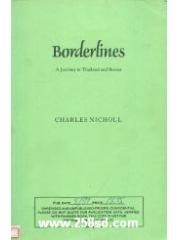

具体描述
From Publishers Weekly Nicholl's ( The Fruit Palace ) new book plays on words in its title as the author slips between the borders of Thailand and Burma and the real and imagined fears encountered in a richly contradictory region--a culture as deeply entrenched in prostitution and the heroin trade as in Buddhism--and explores the frontier between fiction and reportage. Based on three months of travel in Thailand and Burma during 1986, the volume takes us on the road with Harry, a French gem trader who convinced Nicholl to chaperone his Thai girlfriend in exchange for a guided tour of forest temples and other sights ("Patpong is a brief neon hymn to desire, a cacophony of come-ons"). Like sidekick Nicholl, readers never know where--or quite why--they are going until they get there, and the cast of characters is large, from "a twelve-stone Englishman with a ruddy face and a stumpy black beard" to women performing with chopsticks in sex shows. Regardless, Nicholl's journalism is impelled by an unfailing sense of adventure and a reporter's sixth sense for "story." Copyright 1989 Reed Business Information, Inc. From Library Journal Nicholl spent a few months in Thailand in 1986, and he claims that this book is no more than "a record of some of the people I met . . . places I passed through." Like a B-movie adventure, he tells of a gem-and-gun-trading French expatriate named Harry Vincent and his Thai mistress, Katai. In their company he travels to the opium fields of the Golden Triangle, meets antigovernment insurgents in Burma, and throughout, encounters characters and locales right out of a Graham Greene novel. Nicholl finally gets to the Buddhist temple that was his original goal, but finds it as unrewarding as Katai finds her relationship with Harry, and Harry finds his attempt to trade guns for jade. An interesting and unusual addition for most collections.- Kenneth W. Berger, Duke Univ. Lib., Durham, N.C.Copyright 1989 Reed Business Information, Inc.
作者简介
目录信息
读后感
评分
评分
评分
评分
用户评价
这本书的结构安排非常巧妙,它在宏大的地域背景叙述和极其私密的心灵独白之间找到了一个绝佳的平衡点。前一页可能还在描绘某个古老寺庙的宏伟与历史的沧桑,下一页笔锋一转,就深入到作者对自我身份认同的困惑和探索之中。这种交替进行的方式,使得阅读过程充满了张力和活力。它避免了纯粹的地理介绍容易产生的枯燥,也避免了纯粹内省可能带来的封闭感。读者可以跟随作者的脚步,既在广阔的世界中获得了空间上的满足,又在精神的深处进行了一场酣畅淋漓的自我对话。这种双线叙事的高效结合,是本书的一大亮点。
评分令人印象深刻的是,作者似乎拥有对人性复杂性进行深刻剖析的能力。书中呈现的角色绝非扁平化的符号,他们都有着各自的动机、矛盾与未竟的挣扎。即便只是匆匆一瞥的配角,也似乎拥有自己完整而独立的故事线,让人在合上书本后依然会时不时地想起他们。这种对“人”的深度挖掘,超越了简单的记叙,进入了一种哲学层面的探讨。它迫使读者反思自身的处境,以及我们是如何看待那些与自己生活轨迹不同的人们。这种对内在世界的关照,使得这本书的厚重感远超一般游记的范畴,具备了更持久的阅读价值。
评分从文学性的角度来看,作者的文字选择和句式变化展现出一种高超的技巧。它并非一味地追求华丽辞藻的堆砌,而是追求表达的精准和效率,同时又不失韵律感。某些句子读起来仿佛带着一种古典的悠长,而另一些则短促有力,如同突然的顿悟或冲击。这种语言上的“变奏”,有效地捕捉了旅行中那种时而舒缓、时而紧张、时而迷茫的状态。这本书的语言本身,就像是作者精心设计的一套地图,不仅指引方向,也描绘了沿途风土人情和心路历程的复杂地貌。阅读体验流畅且富有节奏感,让人忍不住去细读那些精妙的措辞。
评分这本书的行文节奏简直是教科书级别的。作者似乎对故事的起承转合有着异乎寻常的敏感度,每一个章节的长度、信息的密度,乃至情感的铺陈,都拿捏得恰到好处。读起来感觉就像在经历一场精心编排的音乐会,高潮和低谷的转换自然流畅,绝不拖沓,也不会让人感到喘不过气。你总能清晰地感知到故事核心驱动力的变化,那种引人入胜的魔力,让人忍不住想一口气读到最后,去探寻下一个转折点究竟会带来怎样的风景或挑战。这种对叙事张力的娴熟掌控,让即便是看似平淡的日常场景,也充满了潜在的张力,让人对角色的下一步行动充满了期待。
评分这本书的语言风格极其具有画面感,仿佛每一个词语都被细心地打磨过,以确保它能在读者的脑海中构建出最鲜活的景象。无论是对异域风光的描摹,还是对人物内心活动的刻画,都显得细腻而富有层次。我尤其欣赏作者对于感官细节的捕捉,那种光线的变化、空气中弥漫的气味、甚至是某种特定材质的触感,都被描摹得淋漓尽致。读到某些段落时,我几乎能闻到那种湿热的东南亚气息,感受到皮肤上微微的汗意。这种沉浸式的写作手法,极大地增强了阅读体验,让人感觉自己不是在阅读一个关于旅程的故事,而是亲身参与其中,与书中的人物一同呼吸、一同感受。
评分 评分 评分 评分 评分相关图书

















本站所有内容均为互联网搜索引擎提供的公开搜索信息,本站不存储任何数据与内容,任何内容与数据均与本站无关,如有需要请联系相关搜索引擎包括但不限于百度,google,bing,sogou 等
© 2026 book.quotespace.org All Rights Reserved. 小美书屋 版权所有