

具体描述
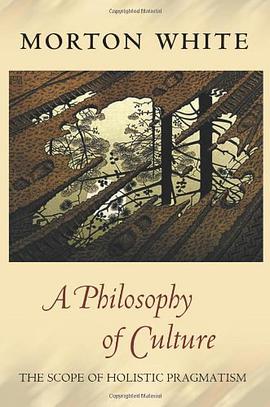
In this book, one of America's leading philosophers offers a sweeping reconsideration of the philosophy of culture in the twentieth cen tury. Morton White argues that the discipline is much more important than is often recognized, and that his version of holistic pragmatism can accommodate its breadth. Going beyond Quine's dictum that philosophy of science is philosophy enough, White suggests that it should contain the word "culture" in place of "science." He defends the holistic view that scientific belief is tested by experience but that such testing is rightly applied to systems or conjunctions of beliefs, not isolated beliefs. He adds, however, that we test ethical systems by appealing to feelings of moral obligation as well as to sensory experiences.
In the course of his lucidly written analysis, White treats central issues in the philosophy of science, of religion, of art, of history, of law, of politics, and of morality. While doing so he examines the views of Quine, Tarski, Goodman, and Rawls, and shows how they are related to the approaches of Peirce, James, Duhem, Russell, Dewey, Carnap, and the later Wittgenstein. He also discusses the ideas of the legal philosophers Holmes and Hart from a holistic standpoint.
White demonstrates how his version of pragmatism bridges the traditional gulf between analytic and synthetic truth as well as that between moral and scientific belief. Indeed, the high point of the book is a brilliant presentation of his view of ethics, based on the idea that our scientific theories face the tribunal of observation whereas our ethical views face the joint tribunal of observation and moral feeling. Scholars and students of the history of ideas and of philosophy will welcome A Philosophy of Culture as the highly finished product of more than sixty years of philosophical reflection by an important thinker.
Endorsements:
"White's picture of pragmatism is distinctive, original, and highly relevant in contemporary philosophy. The new book will be of interest both for systematic philosophers working on philosophy of language, philosophy of science, philosophy of law, or ethics, and for historians of philosophy studying American pragmatism and its influence in twentieth-century thought."--S. Pihlström, Transactions of the Charles S. Peirce Society
"This book has a number of signal virtues. First of all, it is extremely well written with an admirable sense for the telling detail. Second, it covers a wide range of topics and authors, many of them not well known today. Third, it is idea-driven history, a discussion shaped so as to make a free-standing philosophical point rather than a mere narrative."--Raymond Geuss, Cambridge University, author of Public Goods, Private Goods and History and Illusion in Politics
"In this fine work, Morton White documents what he describes as the gradual defeat of classical rationalism at the hands of a doctrine he calls 'holistic pragmatism' in the twentieth century. This doctrine holds that all our beliefs are subject to the test of experience, and that they all face this test not individually but as a corporate body in the way that has become familiar as the Duhem-Quine thesis. What is special about White's account is his extension of this thesis to the moral realm, an extension he here recounts with primary reference to his differences with Quine. The broad sweep of White's treatment is intended to exemplify as well as to promote the philosophical analysis of fundamental beliefs in the several departments of civilization and so to expand the scope of such analysis beyond its recent preoccupation with logic, mathematics, and science. In this laudable enterprise, White succeeds beyond doubt, thereby performing an invaluable service both to philosophy and to the comprehensive study of culture."--Israel Scheffler, Harvard University
作者简介
目录信息
Chapter I: 1 Holistic Pragmatism and the Philosophy of Culture 1
Chapter II: William James:Psychologist and Philosopher of Religion
Chapter III: John Dewey's Philosophy of Ar 24
Chapter IV: The Dualisms of Earlier Pragmatism 44
Chapter V: Early Epistemological Holism and the Dualisms of Logical Empiricism 54
Chapter VI: Holistic Pragmatism and Natural Science: Tarski and Quine 66
Chapter VII: Holistic Pragmatism and the Philosophy of History 77
Chapter VIII: Philosophy of Ar as Philosophy of Language: Nelson Goodman 108
Chapter IX: Rule,Ruling,and Prediction in the Law: Har v. Holmes 126
Chapter X: Holistic Pragmatism,Ethics,and Rawls's Theory of Justice 153
Chapter XI: Philosophy as Philosophy of Culture 178
Index 189
· · · · · · (收起)
读后感
评分
评分
评分
评分
用户评价
《A Philosophy of Culture》这个名字,让我产生了一种想要深入探索人类文明深层逻辑的冲动。我设想这本书会带领我走进一场关于文化本质的哲学辩论,挑战那些我们不假思索接受的文化假设。我期待它能提供一种批判性的工具,帮助我理解不同文化之间的差异,以及这些差异背后的深层原因。或许书中会深入探讨文化相对主义与文化普世主义的争论,或者分析后殖民主义思潮对文化理论的影响。我希望这本书能够引发我对于“什么是好的文化”、“文化的价值何在”等问题的深刻思考。我渴望通过这本书,能够超越表面的观察,去触及文化最核心的价值和意义,从而更好地理解我们作为人类,如何在纷繁复杂的文化环境中生存和发展。
评分这本书的书名《A Philosophy of Culture》刚映入眼帘,我就被它深深吸引了。作为一个长期以来对文化现象及其背后哲学思辨充满好奇的读者,我一直在寻找一本能够系统梳理、深入剖析文化本质的书籍。市面上关于文化的著作不少,但大多集中在某个特定领域,或是流于表面,缺乏宏观的哲学视野。《A Philosophy of Culture》这个书名本身就透露出一种宏大和深刻的野心,它承诺的不仅仅是对文化现象的描述,更是对其哲学根基的探索。我设想这本书会引领我踏上一段智识的旅程,从历史的长河中挖掘文化的演变,从人类的本性中探寻文化的起源,再到不同文化形态的比较分析,最终抵达关于文化意义和价值的深刻反思。我期望它能给我提供一套理解和评价不同文化现象的理论框架,帮助我超越狭隘的个体经验,以更广阔的视角审视我们所处的多元世界。也许它会讨论文化的创造性与传承性之间的张力,或者探讨在全球化浪潮下,文化身份的变迁与重塑。总之,这本书的书名本身就已经点燃了我对知识的渴望,让我迫不及待地想一探究竟。
评分拿到《A Philosophy of Culture》这本书,我脑海里浮现出的是一系列关于人类社会发展历程中那些塑造了我们生活方式、思维模式的“看不见的手”的画面。我猜想,作者很可能不仅仅停留在对现有文化模式的描述,而是试图去追溯这些模式是如何被创造、传播和固化的。我尤其好奇书中会对“何为文化”这一根本性问题做出怎样的界定,是将其视为一种共享的意义系统,一种行为模式的集合,还是某种更深层次的存在。我期待它能深入探讨文化与权力、文化与意识形态之间的复杂关系,揭示在看似自然流动的文化现象背后,可能存在的结构性力量和隐秘的操控。这本书或许会以一种令人耳目一新的方式,解构我们习以为常的文化观念,挑战那些根深蒂固的偏见。我希望它能激发我进行批判性思考,让我能够更敏锐地辨识文化产品中的信息,理解其背后的意图,从而在信息爆炸的时代保持清醒的头脑。
评分《A Philosophy of Culture》这个书名,让我联想到那些宏大的哲学体系,它们往往试图为人类存在的普遍性问题提供一种统一的解释。我相信,这本书的作者会以一种严谨且富有洞察力的方式,将哲学的抽象概念与文化的具体表现相结合。我期待它能够提供关于文化本质的多重视角,比如从存在主义的角度审视文化对个体自由的影响,或者从结构主义的角度分析文化符号的运作机制。或许书中还会探讨不同哲学流派(如唯物主义、唯心主义、现象学等)如何影响我们对文化的理解。我希望这本书能够帮助我理解,文化不仅仅是表面的风俗习惯,更是人类对世界、对自身意义的持续追问和回应。我期望在阅读过程中,能够构建起一个关于文化哲学认识的完整图景,看到不同思想的碰撞和融合,从而加深我对人类文明多样性的敬畏之情。
评分当《A Philosophy of Culture》这个书名进入我的视线,我立刻感受到一种知识的召唤。我一直认为,对文化的理解是理解人类本身的关键。我期待这本书能够提供一种独特的视角,去审视文化在人类社会中的角色和功能。我猜想,作者可能会从人类学的角度出发,探讨不同社会群体如何通过文化来构建身份认同和社群联系,或者从社会学的角度分析文化如何影响社会结构和个体行为。我尤其好奇书中是否会讨论到文化变迁的动力和机制,比如科技发展、经济全球化、政治变革等因素是如何重塑文化的。我希望这本书能让我理解,文化并非静止不变的,而是不断动态发展和演化的过程。我渴望通过这本书,能够更深刻地认识到文化的生命力,以及它在塑造人类未来中所扮演的关键角色。
评分还是更欣赏morton white这样的老辈哲人,文字清晰,分析流畅,没有让人迷惑的奇谈怪论。
评分还是更欣赏morton white这样的老辈哲人,文字清晰,分析流畅,没有让人迷惑的奇谈怪论。
评分还是更欣赏morton white这样的老辈哲人,文字清晰,分析流畅,没有让人迷惑的奇谈怪论。
评分还是更欣赏morton white这样的老辈哲人,文字清晰,分析流畅,没有让人迷惑的奇谈怪论。
评分还是更欣赏morton white这样的老辈哲人,文字清晰,分析流畅,没有让人迷惑的奇谈怪论。
相关图书











本站所有内容均为互联网搜索引擎提供的公开搜索信息,本站不存储任何数据与内容,任何内容与数据均与本站无关,如有需要请联系相关搜索引擎包括但不限于百度,google,bing,sogou 等
© 2026 book.quotespace.org All Rights Reserved. 小美书屋 版权所有