

具体描述
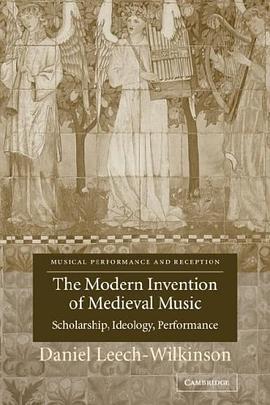
Medieval music has become hugely popular. But it is largely a modern invention. Scholars and performers of the nineteenth and twentieth centuries hoped to bring back to life music that could evoke the Middle Ages. Yet all the time they were inventing new sounds and new ways of understanding how the music worked. The story of the reinvention of medieval music is told here for the first time.--a story of individuals, the societies in which they worked, their tastes and beliefs, all interacting to remake a lost musical world.
作者简介
目录信息
读后感
评分
评分
评分
评分
用户评价
这本书的写作风格和论证方式,都让我感到耳目一新。作者以一种非常“解构”的方式,深入到中世纪音乐的每一个被研究过的领域,然后揭示出这些研究背后所蕴含的“现代性”。我之前从未想过,我们今天所熟悉的许多关于中世纪音乐的“常识”,实际上是近几百年才逐渐形成并被广泛接受的“发明”。书中对不同学派的观点进行了细致的梳理和批判,例如关于格里高利圣歌的起源、早期复调音乐的演变,以及不同地区音乐风格的差异,作者都给出了非常深入的分析。他强调了历史文献的解读、乐器复原的科学性以及表演实践的理论基础,这些都在无形中塑造了我们对中世纪音乐的认知。这种“发明”并不是对历史的歪曲,而是在历史事实的基础上,通过现代的认知框架和技术手段,对古老音乐的重新诠释和赋予新生命的过程。它让我意识到,历史学家和音乐学家的工作,并非仅仅是发现事实,更重要的是在理解和建构事实。
评分这本书让我重新思考了我对“历史”和“音乐”的理解。之前,我总觉得中世纪的音乐就是过去的遗物,是考古学的对象,是需要被小心翼翼地复原的。但作者通过这本书,清晰地阐释了“现代发明”这一概念,它并不是说中世纪音乐是虚假的,而是说我们今天所认识和接触到的中世纪音乐,很大程度上是现代社会为了某种目的而“创造”出来的。这种“创造”体现在很多方面,比如历史表演实践的理论建构,对古老乐器的修复和复原,以及对文献资料的解读方式。我特别被书中关于“意图”的讨论所吸引,也就是说,每一个时代的人们在面对中世纪音乐时,都有其特定的意图和视角,这些意图和视角决定了他们如何去理解、如何去演奏、如何去传播。这种“发明”的过程,实际上是一种文化再生产,是将过去的声音转化为具有现代意义的文化符号。它让我看到了历史研究的动态性和开放性,它并非是一个封闭的盒子,而是可以不断被重新打开和审视的。
评分Honestly, I wasn't entirely sure what to expect when I picked up "The Modern Invention of Medieval Music." The title itself is quite provocative, suggesting a fundamental re-examination of something we often consider immutably fixed in the past. However, the author’s meticulous research and insightful analysis quickly won me over. The book doesn't just present a chronological account; it delves into the very *process* by which medieval music has been understood, performed, and re-imagined throughout the modern period. I found the chapters discussing the impact of technological advancements, such as sound recording and digital manipulation, on the dissemination and perception of medieval musical forms particularly illuminating. It’s fascinating to consider how these modern tools have allowed us to access, analyze, and even reconstruct music from centuries ago in ways that were previously unimaginable. Furthermore, the author’s exploration of the evolving academic and popular understanding of medieval musical notation, instrumentation, and stylistic conventions provides a rich tapestry of intellectual history. It’s a book that encourages critical thinking about how we construct our understanding of the past, and how our present-day assumptions and innovations inevitably shape that process.
评分这本书的出现,在我的书架上占据了一个非常独特的位置。它不仅仅是一本关于音乐的书,更像是一扇窗,透过它,我得以窥见一个我曾以为固若金汤、不可撼动的领域——中世纪音乐——是如何在现代语境下被重新审视、重塑乃至“发明”的。作者并非简单地罗列史实,而是以一种解剖学的细致,深入到每一个历史缝隙,去探究那些被遗忘的旋律,那些被尘封的乐器,以及那些在时间和文化变迁中被赋予了新意义的音乐形态。我尤其被它在梳理不同学派观点时的那种严谨所打动,无论是对格里高利圣歌的源流追溯,还是对早期复调音乐的分析,都显得条理清晰,论证有力。当我读到关于中世纪音乐在现代电影配乐中的应用时,那种跨越时空的共鸣感油然而生,仿佛古老的圣坛回响在现代的银幕之上,赋予了画面以一种深邃的历史厚度。这本书的价值不仅在于它知识的深度,更在于它开启了我对音乐史研究方法论的思考,让我意识到,历史并非静止不动,而是随着我们观察者的视角和时代背景而不断被“再创造”的。它让我开始重新审视那些我熟悉的古典音乐作品,去思考它们在中世纪的根基,以及它们如何一路演变至今,这种追根溯源的体验,无疑是令人着迷的。
评分There are books that inform, and then there are books that fundamentally alter your perspective. "The Modern Invention of Medieval Music" firmly belongs to the latter category. My prior understanding of medieval music was largely confined to its perceived antiquity and its role as a foundational element of Western classical music. However, this work unveils a far more dynamic and intricate reality: the active and ongoing process by which medieval music has been shaped, re-contextualized, and, indeed, "invented" by the modern era. The author meticulously traces the evolution of scholarly approaches, the development of historically informed performance practices, and the impact of technological advancements on our engagement with this ancient repertoire. I was particularly struck by the exploration of how ideological currents and cultural anxieties of different periods have influenced the selective revival and interpretation of medieval musical forms. The book challenges the reader to confront the inherent subjectivity involved in historical reconstruction, arguing that our present-day understanding of medieval music is not a passive reception but an active construction, a product of modern intellectual and artistic endeavors. It’s a profoundly thought-provoking analysis of how the past is constantly being re-negotiated in the crucible of the present.
评分My journey through the pages of this book was nothing short of an intellectual awakening. I’ve always been drawn to the mystique of medieval music, its ethereal beauty and its seeming distance from our contemporary lives. Yet, this work masterfully dismantles the notion of a static, unchangeable past. The author argues, with compelling evidence and nuanced reasoning, that the very *concept* of medieval music as we understand it today is, in many ways, a modern invention. The book expertly navigates the complex terrain of historical reception, exploring how scholars, performers, and even popular culture have actively shaped our perception of this musical heritage. I found the exploration of the ideological underpinnings of early music revival movements particularly insightful, revealing how political and social currents of different eras influenced the ways in which medieval musical traditions were embraced and reinterpreted. The author doesn't shy away from the inherent biases and subjective interpretations that inevitably accompany any attempt to reconstruct the past, offering a sophisticated analysis of the ongoing dialogue between historical evidence and contemporary understanding. It’s a book that demands active engagement, prompting a deep reflection on how our present-day needs and desires color our vision of history.
评分我 must confess, I approached this book with a healthy dose of skepticism. The very title, "The Modern Invention of Medieval Music," struck me as a paradoxical assertion. How could something so ancient, so deeply embedded in the fabric of history, be considered an "invention" in the modern era? Yet, as I delved into its pages, my initial doubts began to dissipate, replaced by a growing sense of intellectual fascination. The author possesses a rare gift for illuminating complex academic discourse with accessible prose, transforming what could have been a dense, impenetrable treatise into a compelling narrative. I was particularly struck by the intricate arguments concerning the reception and reinterpretation of medieval musical practices in the 20th and 21st centuries. The examination of how early music ensembles approached historically informed performance, the debates surrounding ornamentation and improvisation, and the very concept of "authenticity" in recreating sounds from a distant past – all these aspects were explored with remarkable nuance. It wasn't simply about presenting facts; it was about engaging with the ongoing scholarly dialogue, presenting different perspectives, and allowing the reader to grapple with the inherent complexities of historical reconstruction. The book challenges the reader to think critically about how we engage with the past, and how our present-day understanding inevitably shapes our perception of what came before.
评分这本书为我打开了一个全新的研究维度。我一直以为,对中世纪音乐的研究,就是复原和考证,但作者却指出,这其中更包含着一种“现代性的建构”。他通过对一系列关键事件、重要人物以及学术思潮的梳理,生动地展现了中世纪音乐如何在现代社会中,被重新赋予生命和意义。我尤其对书中关于“历史表演实践”的讨论印象深刻。究竟什么是“正确的”演奏方式?这种“正确”又是如何被现代人定义和构建的?作者并没有给出简单的答案,而是引导读者去思考那些隐藏在演奏选择背后的文化和历史语境。他分析了不同时代、不同学派对于中世纪音乐的理解差异,以及这些差异如何影响了音乐的表演和传播。这种对“重构”的深入探讨,让我意识到,我们今天所听到的“中世纪音乐”,很多时候是我们现代人的创造,是我们用现代的视角和技术去“发明”出来的。这种“发明”并非是虚假的,而是一种在尊重历史事实基础上的艺术再创造,是一种对话,是一种连接。
评分作为一名对音乐史怀有深厚兴趣的爱好者,我一直在寻找能够提供全新视角和深刻洞察的读物。这本书,坦白说,超出了我的预期。作者并非仅仅呈现历史的碎片,而是编织了一幅宏大的图景,展示了中世纪音乐如何在现代社会中被重新发现、重新解读,甚至是被“发明”出来。从音乐学理论的演变,到音乐教育的实践,再到大众文化对中世纪音乐元素的挪用,书中都进行了深入的探讨。我特别欣赏作者对于“历史真实性”这一概念的审慎讨论,它并非简单地否定或肯定,而是承认其复杂性和多层次性。当我们今天听到一段被认为是“中世纪音乐”的作品时,我们实际上听到的是经过了数百年历史沉淀、无数次诠释和再创造的产物。这本书让我意识到,我们对过去音乐的认知,并非是直接的接收,而是通过一系列媒介、理论框架和文化语境过滤后的结果。这种“发明”并非是凭空捏造,而是在尊重史料的基础上,运用现代的分析工具和理解方式,赋予古老音乐以新的生命和意义。它让我对“复兴”和“传承”这两个词有了更深刻的理解。
评分This book offered a revelation, challenging deeply ingrained assumptions I held about the nature of historical musical scholarship. "The Modern Invention of Medieval Music" doesn't merely chronicle the evolution of medieval musical practices; rather, it masterfully dissects the very process by which our modern understanding and appreciation of this genre have been constructed. The author meticulously examines how the intellectual currents, technological innovations, and cultural dialogues of the modern era have actively shaped the rediscovery, performance, and dissemination of medieval music. I found the exploration of the “historically informed performance” movement particularly compelling, as it highlights the inherent subjectivity and interpretive choices involved in attempting to recreate music from a distant past. The book delves into the debates surrounding authenticity, the reconstruction of ancient instruments, and the interpretation of often fragmentary or ambiguous musical notation. It’s a profound exploration of how our present-day biases, desires, and analytical tools inevitably influence our perception and “invention” of the past. This is not a book about simply presenting facts; it's a sophisticated discourse on how history itself is a continuously evolving narrative, shaped by the very act of its study.
评分 评分 评分 评分 评分相关图书








本站所有内容均为互联网搜索引擎提供的公开搜索信息,本站不存储任何数据与内容,任何内容与数据均与本站无关,如有需要请联系相关搜索引擎包括但不限于百度,google,bing,sogou 等
© 2026 book.quotespace.org All Rights Reserved. 小美书屋 版权所有