
Archives and Information in the Early Modern World pdf epub mobi txt 电子书 下载 2026
- Archives
- 档案
- 早期现代
- 信息史
- 历史学
- 文化史
- 文献学
- 知识史
- 欧洲历史
- 研究方法
- 数字人文

具体描述
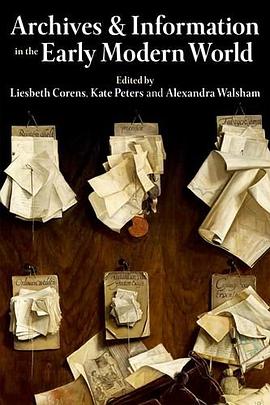
Investigating the relationship between archives and information in the early modern world, this latest collection of essays edited by Kate Peters, Alexandra Walsham, and Liesbeth Corens explores every aspect of record keeping; from the proliferation of physical documentation between the sixteenth and eighteenth centuries to the implication of archives in patterns of statecraft.
Contributors to Archives and Information in the Early Modern World place paper technologies and physical repositories under the microscope, analysing the connections between documentation and geographical distance, probing the part played by record-keeping in administration, governance, and justice, as well as its links with trade, commerce, education, evangelism, and piety.
Extending beyond the framework of formal institutions to the family, household, and sect, Archives and Information in the Early Modern World offers fresh insight into the possibilities and constraints of political participation and the nature of human agency. It deepens our understanding of the role of archives in the construction and preservation of knowledge and the exercise of power in its broadest sense, calling for greater dialogue and creative collaboration to breach the lingering disciplinary divide between historians and archival scientists.
作者简介
Kate Peters trained as an archivist in 1988-89 and completed a PhD in History in 1996. She has lectured in records and archives management at UCL, and in History at Universities of Birmingham and Cambridge. Her first book, Print Culture and the Early Quakers, examined the role of print in the early Quaker movement of the 1650s. She is currently working on the politics of record keeping in the English civil wars.
Alexandra Walsham is a graduate of the Universities of Melbourne and Cambridge. She taught at the University of Exeter for many years before taking up her current appointment at Cambridge. She has published widely on the religious and cultural history of early modern England and her current research, supported by a Leverhulme Major Research Fellowship, explores the intersections between the Reformation and generational change. She is also the Principal Investigator of the AHRC project, 'Remembering the Reformation'. She became a Fellow of the British Academy in 2009 and was made a CBE in 2017.
Liesbeth Corens is Career Development Fellow at Keble College, Oxford. She is currently completing a book manuscript on Confessional Mobility and English Catholics in Counter-Reformation Europe for Oxford University Press. Her other project centres on creating counter-archives among Catholic minorities in early modern England and the Netherlands. With Kate Peters and Alexandra Walsham, she co-edited 'The Social History of the Archives: Record-Keeping in Early Modern Europe', Past and Present, supplement 11 (2016).
目录信息
读后感
评分
评分
评分
评分
用户评价
对于任何希望深入理解欧洲近代早期文化转型的人来说,这本书绝对是案头必备的参考书。它的学术贡献在于将“档案”从静态的“记录堆”提升到了动态的“权力工具”的高度。作者对不同时期和不同机构的档案管理实践进行了详尽的比较研究,揭示了在没有统一行政管理体系的时代,信息如何成为构建国家认同和地方自治的关键要素。我个人最喜欢的是它对“可读性”与“可信度”之间张力的探讨,一份文件只有被恰当地编目、安全地存放,才能在未来的某个时刻被“激活”并赋予意义。这本书的语言风格成熟而富有洞察力,逻辑严密,引用的史料丰富而精准,但又不失阅读的流畅性。它不是那种快餐式的历史读物,而是一部需要沉下心来细细品味的深度之作,读完后,你会感觉自己对那个时代的理解多了一层坚实的、基于物质证据的基石。
评分我是在一个关于早期全球贸易网络的研究中偶然接触到这本书的,它为我提供了一个全新的分析框架。它不仅仅是在讲述“过去发生了什么”,更是在追问“信息是如何被组织、筛选和利用的”。书中对新兴的“学术共同体”如何通过通信网络交换手稿和书信的描述,简直就是早期互联网的雏形,充满了活力和潜在的颠覆性。作者对书商和出版商的商业策略的分析也极其精彩,揭示了知识商品化的早期形态。这本书的叙事节奏把握得非常好,时而聚焦于某个重要事件的档案记录,时而放眼于整个欧洲信息流通的宏观图景。行文中那种对史料的敬畏感和探索欲,非常具有感染力,让我忍不住想要去查阅那些被提及的一手资料。读完后,我对“档案保管员”这个职业的意义有了全新的认识,他们是历史的守门人,也是知识传播链条中不可或缺的一环。
评分这本书的视角非常独特,它没有将焦点仅仅放在“伟大的思想家”身上,而是转向了那些常常被历史忽略的“信息基础设施”——图书馆的建筑布局、邮件系统的效率、以及秘密警察对信件的审查机制。这种“自下而上”的视角,使得对早期现代社会权力的理解更加立体和复杂。我尤其欣赏作者在处理跨文化交流时的谨慎和细腻,比如伊斯兰世界与欧洲在科学文献交换中的角色。书中的图表和插图也使用得非常得当,它们不是简单的装饰,而是论证的延伸,帮助读者直观理解复杂的分类系统或信息流向图。阅读过程中,我常常会停下来,思考我们今天的信息过载问题与彼时的“信息稀缺”之间的悖论。这本书成功地构建了一种对话,将我们带回一个信息尚显珍贵、获取不易的时代,从而反思我们当下的处境。
评分说实话,这本书的学术深度是毋庸置疑的,但真正让我感到震撼的是它对“知识的物质性”的探讨。我们现在习惯了信息的无形和即时性,但这本书让我深刻理解了过去信息是如何被“固化”的。作者花了大量篇幅讨论纸张的来源、墨水的配方,甚至是如何装订一本手稿或印刷品,这些看似枝微末节的细节,实际上决定了信息能否被保存和传播。我尤其对其中关于“错误与修改”的部分印象深刻,在手抄本时代,每一次抄写都是一次再创造,不同的版本之间存在着微妙的权力斗争。这本书成功地将文献学、历史学和物质文化研究融为一炉,构建了一个立体的知识景观。阅读体验是循序渐进的,一开始可能觉得内容略显密集,但一旦进入状态,就会发现作者的论证逻辑严密得令人佩服。它不是一本轻松的读物,需要思考和咀嚼,但这种智力上的挑战正是其价值所在。
评分这本书的封面设计就让人眼前一亮,那种泛黄的纸张质感和古朴的字体,仿佛一下子把我拉回了那个充满神秘色彩的早期现代世界。我一直对那个时代的信息传播方式充满好奇,而这本书的开篇就非常抓人,它没有直接堆砌晦涩的学术术语,而是用一种非常生动的笔触描绘了当时的信使、抄写员和印刷工坊,这些“信息搬运工”在当时社会中的核心地位。我特别喜欢作者对“档案”这个概念的重新定义,它不仅仅是尘封的卷宗,更是权力、记忆和身份的载体。阅读过程中,我仿佛能听到羊皮纸摩擦的声音,感受到油墨在纸张上洇开的痕迹。作者对不同地区(比如威尼斯共和国的商业档案和奥斯曼帝国的宫廷记录)的对比分析,展示了信息在不同政治和文化结构下的不同命运,这极大地拓宽了我的视野。这本书的结构清晰,脉络分明,即使是对历史研究不甚熟悉的读者,也能轻松跟随作者的思路,领略到早期现代信息生态的复杂与迷人之处。它真正做到了将宏大的历史叙事与微观的物件研究完美结合。
评分 评分 评分 评分 评分相关图书









本站所有内容均为互联网搜索引擎提供的公开搜索信息,本站不存储任何数据与内容,任何内容与数据均与本站无关,如有需要请联系相关搜索引擎包括但不限于百度,google,bing,sogou 等
© 2026 book.quotespace.org All Rights Reserved. 小美书屋 版权所有