
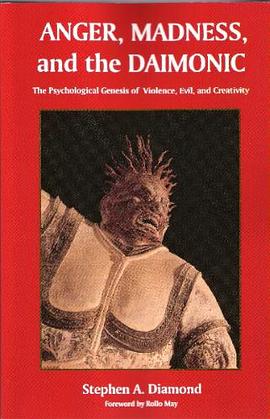

具体描述
Explores the links between anger, rage, violence, evil, and creativity and describes a dynamic therapeutic approach that can help channel anger and violent impulses into constructive and creative activity.
Though the causes of violence in our society are complex, the troublesome human emotions of anger and rage play a central role in the genesis of violent behavior and psychopathology in general. In this provocative book, clinical and forensic psychologist Stephen A. Diamond determines where rage and anger originate and explores whether these powerful passions are—as most people presume—purely negative, pathological, and evil or can be meaningfully redeemed and redirected into constructive activity. Using clinical and biographical case studies, as well as striking visual images, he traces anger, rage, and violence through their most destructive expressions to their creative and transcendent functions in art, psychotherapy, and spirituality.
“An excellent book … I have always felt that Dr. Diamond’s emphasis on the daimonic was extremely timely and important in our day. The myth of the daimonic covers vital, archetypal human experiences, as this work clearly illustrates. I find it very readable, and done like the true scholar.” — from the Foreword by Rollo May
“In this remarkable book, Stephen Diamond follows the work of his mentor, Rollo May (1969), in focusing on the ancient Greek idea of the ‘daimonic’ which he distinguishes from the ‘demonic’ … Diamond stresses the dual nature of the daimonic and the failure of modern society to distinguish it from the wholly evil demonic as a factor in two, for Diamond, linked problems … first, the rampant outbursts of violence … and second, the failures of contemporary cost-effective psychotherapies to address those forces in the human being that evoke antisocial behavior and at the same time have the capacity to free up the same individual’s deepest creative energy.” — Contemporary Psychology
“Drawing on an impressive study of existential and depth psychologists as well as his strong grounding in the practicalities of clinical work, the author analyzes the psychology of evil and the central role of anger and rage in psychotherapy.” — CHOICE
“…revolutionary … The daimonic today is … the pursuing shadow of the human potential movement … Diamond’s book is a key to our understanding of … how to deal constructively with daimonic anger and rage in psychotherapy and most importantly, how to transform them creatively.” — San Francisco Jung Institute Library Journal
“Diamond redeems anger in much the same way that Rollo May redeemed anxiety … few books are a more important read. Anger, Madness, and the Daimonic is an excellent introduction to the breadth and depth of existential theory.” — Louis Hoffman, Saybrook University
“…[a] powerful book … Diamond’s reach is ambitious: to consider the ‘meaning’ of human violence and evil … He asks what produces serial killers, the Oklahoma City bombing, the Bobbitt castration case, the O. J. Simpson murder trial, and explores more generally the male response to the rise of feminist anger … enjoyable, extremely readable and accessible … a sincere, thought-provoking contribution to an important subject.” — Journal of Analytical Psychology
“Evocative, very thorough and succinct, Stephen Diamond’s superb book will remain the seminal work on this shadowy subject for a long time to come.” — Jeremiah Abrams, author of Meeting the Shadow and The Shadow in America
“…a brilliant and indispensable resource for students of human personality.” — Ernest Becker Foundation Newsletter
“An impressive, prodigious work; so comprehensive, so rich, and very creative. This excellent book is unique in making sense of the ‘senseless violence’ that permeates American society today. When we understand the root causes of the human need for violence, we will be able to make an ally of the energy it liberates.” — June Singer, author of Boundaries of the Soul
“Diamond shows how existential depth psychology can help us understand the anger and violence so rampant in American society. He explains how we are both subject to and responsible for powerful psychic forces active within us, forces which, depending on how we respond to them, can press toward either creative or destructive expressions. Diamond’s book is elegantly written, well researched, and clinically well informed. It is an important contribution.” — Michael Washburn, author of The Ego and the Dynamic Ground and Transpersonal Psychology in Psychoanalytic Perspective
“Written with great vigor, clarity, and conviction, this book is fast paced and a pleasure to read.” — George B. Hogenson, author of Jung’s Struggle with Freud
“I hasten to endorse this remarkable book. The author covers every aspect of both evil and its curious connection with the creative daimonic. This study is balanced, objective and exhaustive. In a world that cannot forget Hitler and our modern atrocities, it is very timely. I recommend it without qualification—from one who has written on and studied this subject for fifty years.” — Morton T. Kelsey, University of Notre Dame
“This is as clinically sophisticated a discussion of Rollo May’s conception of the ‘daimonic’ as we are likely to see. Diamond lucidly exposes the passion at the core of our being human, does not flinch from examining the destructive pathologies that arise there, and identifies the telos of this strongly self-assertive energy, so glibly dismissed as narcissism. He discloses the daimonic as the self’s essential capacity to claim and defend its own right to being itself.” — John Beebe, author of Integrity in Depth
“A fine book, well written, succinct, psychologically sound, and socially relevant. Clearly the author has reflected on the subject creatively.” — John A. Sanford, author of Evil: The Shadow Side of Reality
“A valuable work. Diamond’s reach and his relevance are great.” — E. James Lieberman, author of Acts of Will: The Life and Work of Otto Rank
“I like the timeliness of the work and how the author ties his concerns into social and clinical realities we all know boldly exist in our daily lives. I like the comprehensive scan of the cultural field around the phenomena of the daimonic and the author’s practical concerns as a clinician to find more adequate ways of accepting, recognizing, and responding to the daimonic so that it does not become the destructive and demonic.” — David J. Dalrymple, Vice President, National Association for the Advancement of Psychoanalysis
作者简介
Stephen A. Diamond is a licensed clinical and forensic psychologist practicing in Los Angeles, California. He has taught at Pacific Graduate School of Psychology, the Institute of Transpersonal Psychology, John F. Kennedy University, Argosy University, Ryokan College, and the C. G. Jung Institute, Zurich. Dr. Diamond writes regularly for Psychology Today.
目录信息
List of Illustrations
Foreword by Rollo May
Acknowledgments
1. The Angry American: An Epidemic of Rage and Violence
Introduction
Existential Roots of Anger, Rage, and Violence
2. Sex Wars: The Animosity Between Women and Men
Fear, Anger, and Intergender Hostility
Sexual Demonization
Gender, Rage, and Violence
3. The Psychology of Evil: Devils, Demons, and the Daimonic
Demons
The Daimonic
The Devil
Mephistopheles in America
The Demoic vs. the Daimonic
4. Myths of the Unconscious: The Id, the Shadow, and the Daimonic Models, Myths, and Symbols
The Unconscious
The Id
The Shadow
The Daimonic vs. the Shadow
5. The Possession Syndrome: Demoic or Daimonic?
Obsession and Possession
Types of Possession
Genuine Possession, Pseudo-Possession, and Psychosis
Neurosis and Romance as Possession
Voluntary vs. Involuntary Possession
6. Madness, Mental Disorders, and the Daimonic: The Central Role of Anger and Rage in Psychotherapy
The Daimonic and Depth Psychology: Discovering Repressed Rage
Hostility, Anxiety, and the Daimonic
Narcissistic Rage
Depression and Anger
Drugs and the Daimonic
The Biological Basis of the Daimonic
Anger, Rage, and Madness
Psychosomatic Disorders
The Anatomy of Passion
7. Redeeming Our Devils and Demons: Dealing with Anger and Rage in Psychotherapy
Psychotherapy's Current Identity Crisis
Catharsis and the Daimonic
Exorcism and Psychotherapy
Clinical Approaches to Anger and Rage in Psychosis
Exorcism vs. Psychotherapy
Toward an Existential Depth Psychology
Discerning the Daimonic
Consecrating the Daimonic in Psychotherapy
8. Creativity, Genius, and the Daimonic
What Is Creativity?
The Meaning of Genius
Dysdaimonia and Eudaimonia
Herman Melville's Mad Captain Ahab
Jack Henry Abbott: In the Belly of Behemoth
Vincent van Gogh: Dysdaimonic Genius
Jackson Pollock: "Pissed-Off" Expressionist
Richard Wright's Daimonic Wrath
Ludwig van Beethoven: Belligerence and Beauty
Ingmar Bergman: Residing with Demons
9. Conclusion: Some Final Reflections on Anger, Rage, Guilt, and Responsibility
The Paradox of Personal Responsibility
Notes
Bibliography
Index
· · · · · · (收起)
读后感
评分
评分
评分
评分
用户评价
这本书的语言风格极其富有张力和画面感,简直可以用“华丽的残忍”来形容。作者似乎毫不吝啬于使用那些直击人心的意象,构建了一个个既美丽又令人毛骨悚然的场景。我常常需要放慢速度,细细品味那些精妙的比喻和排比,它们不仅是辞藻的堆砌,更是情绪的载体,将人物内心的翻腾毫无保留地倾泻而出。特别是对环境的描摹,那种潮湿、阴冷的氛围,似乎真的可以透过纸张渗透出来,让人联想到某种古老的、挥之不去的诅咒。这种对文学性的极致追求,使得本书超越了一般的叙事作品,更像是一篇精心打磨的艺术品。虽然偶尔会觉得某些段落的密度过高,需要反复阅读才能捕捉其深层含义,但最终的回报是丰厚的——那是对文字力量最直接的感受。
评分说实话,初读时我有些抗拒那种强烈的、近乎原始的情感冲击,但读到中段后,我才明白作者的用意所在。他没有试图美化或净化那些令人不适的情绪,而是选择直面它们,让它们以最本真的面貌呈现在读者面前。这种毫不妥协的真实感,反而带来了一种奇特的宣泄作用。我发现自己对那些在道德边缘游走的角色的理解加深了,不再是用非黑即白的标准去评判,而是开始理解“失控”是如何一步步发生的。这本书更像是一面镜子,映照出我们每个人内心深处那些不愿触碰的角落,那些被理性压抑的冲动。它不提供安慰,只提供一种深刻的、近乎哲学层面的反思:人性的边界究竟在哪里?
评分这部作品简直是一场感官的盛宴,作者的笔触如同雕刻刀般精准有力,将人性深处的阴影毫不留情地剖开。我尤其欣赏他对情节节奏的掌控,那种步步紧逼、令人窒息的悬念设置,让人完全无法放下书卷。故事中的角色塑造立体得令人不安,他们不是简单的善恶标签,而是充满了内在的矛盾和挣扎,仿佛每一个选择都伴随着灵魂的撕裂。阅读的过程更像是一场探索,每一次翻页都是对未知深渊的一次试探,你永远不知道下一个转角会遇见怎样扭曲的真相或是残忍的现实。那种从心底升腾而起的寒意,久久不能散去,即便是合上书本后,脑海中依然会回荡着那些令人不安的低语和画面。叙事结构的高明之处在于,它没有急于给出答案,而是让读者自己去拼凑那些散落的碎片,这种参与感极大地增强了阅读的沉浸体验。
评分我向来对那些探讨权力结构和群体心理的作品抱有极高的期待,而这本小说在这方面做得尤为出色。它不是在讲述一个简单的故事,而是在解构社会运行的底层逻辑,那些隐藏在光鲜外表下的操控与服从、癫狂与理智的微妙界限。作者对于复杂人际关系的洞察力令人惊叹,他如何通过细微的眼神、不经意的动作,勾勒出权力链条上的层层制约和相互倾轧,真是教科书级别的范例。每次主角做出看似冲动的决定时,我都能感受到背后推着他的那股无形的力量,那是社会期望、历史惯性与个人欲望交织出的漩涡。这本书的价值不仅在于其娱乐性,更在于它提供了一个绝佳的视角,去审视我们自身所处的环境,以及那些我们习以为常却又充满问题的制度。
评分这本书的节奏变化处理得炉火纯青,简直像是一部精心编排的交响乐。有的章节短促有力,如同急促的鼓点,将读者的心跳推向高潮;而另一些篇幅则舒缓绵长,充满了哲思的停顿,仿佛大提琴独奏,让人有时间沉淀和消化之前遭遇的冲击。这种张弛有度的叙事安排,保证了即便情节复杂、主题沉重,阅读体验依然保持着极高的流畅度和吸引力。我特别喜欢作者在关键转折点设置的“留白”,那种意犹未尽的感觉,迫使读者主动去脑补和填充细节,极大地激发了想象力。这绝不是一本可以囫囵吞枣的作品,它要求读者全身心投入,用思考去配合作者的铺陈,最终收获的满足感是无可替代的。
评分 评分 评分 评分 评分相关图书














本站所有内容均为互联网搜索引擎提供的公开搜索信息,本站不存储任何数据与内容,任何内容与数据均与本站无关,如有需要请联系相关搜索引擎包括但不限于百度,google,bing,sogou 等
© 2026 book.quotespace.org All Rights Reserved. 小美书屋 版权所有