
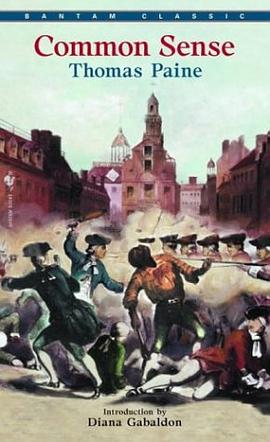

具體描述
When Common Sense was published in January 1776, it sold, by some estimates, a stunning 150,000 copies in the colonies. What exactly made this pamphlet so appealing? This is a question not only about the state of mind of Paine's audience, but also about the role of public opinion and debate, the function of the press, and the shape of political culture in the colonies. This Broadview edition of Paine’s famous pamphlet attempts to reconstruct the context in which it appeared and to recapture the energy and passion of the dispute over the political future of the British colonies in North America. Included along with the text of Common Sense are some of the contemporary arguments for and against the Revolution by John Dickinson, John Adams, and Thomas Jefferson; materials from the debate that followed the pamphlet's publication showing the difficulty of the choices facing the colonists; the Declaration of Independence; and the Pennsylvania Constitution of 1776.
著者簡介
Thomas Paine was born in Norfolk, England, on January 29, 1737. He received a basic education in history, mathematics, and science, but left school at age 13 to apprentice in his father's corsetmaking shop. In 1757, he spent time at sea aboard the privateer ship King of Prussia, and later found employment as a journeyman staymaker in London. All the while, Paine continued to study on his own, influenced by the work of two leading figures of the Enlightenment, Isaac Newton and John Locke. He began writing political pamphlets, and at the urging of Benjamin Franklin, emigrated to Philadelphia in 1774 to work as an editor for The Pennsylvania Magazine. In 1776, he published Common Sense, which called for America's political freedom from England. The pamphlet sold more than 150,000 copies in three months. Paine next published The American Crisis during the Revolutionary War, inspiring George Washington to read it to his troops at Valley Forge. By the end of the Revolution, however, Paine's influence had run its course, and he fell out of political favor. He returned to Europe, where he published his treatise Rights of Man, which led to his arrest on charges of high treason. Disillusioned with life abroad, he returned to the U.S. to find himself vilifed as an agitator and atheist. He died in obscurity in New York City in 1809.
Diana Gabaldon is the New York Times bestselling author of five previous novels -- Outlander, Dragonfly in Amber, Voyager,
圖書目錄
讀後感
读完潘恩的《常识》,我先是感觉到思想的伟大,继而又感觉到一丝迷惑。 我觉得《常识》的伟大,在于它如同先知,看到了现代社会的发展趋势。他对于美国独立的构想,对于现代社会的民主发展理念,几乎预言了美国社会的发展轨迹。因此,从这个角度上来,我觉得潘恩的《常识》是十...
評分因为对美国一直并非太了解,所以不曾对其文化精神方面妄加评论… 毕竟不了解就没有评论权… 我是抱着“看看你们每天耀武扬威到底是以什么为根据的”的态度去看的… 然后发现我这种态度就玷污了这本书… 这本书我个人觉得纯粹是社会学上的…它本身不涉及任何体制之间的孰优孰劣...
評分火,黑暗因它而获得光明和温暖,但是火却总是在光明和温暖中化为一堆灰烬,有时候这堆灰烬还会被风吹散得没有踪迹。 这几天,终于从出版社朝九晚五的日子中结束了,回到了我的随心所欲中,而把自己幸福地扔到了那部厚重的美国新闻史中——这是一本我在书店驻足犹豫多次的书籍...
評分本书写与1776年,独立宣言发表的那年,与独立宣言一起,成为北美人民反抗英国殖民统治的号角与檄文。 本书目的就是割断当时北美人对英国以及英国式政体的迷信、畏惧,以及幻想和依恋,劝说美国人用自己的力量创造一个崭新的共和国。就像劝慰一个18岁的青年,放弃对家庭和父母...
用戶評價
美國必須從英國獨立,君主製國王是邪惡的,這些是常識,結閤時代就是為獨立背書,隱約有點之後美國孤立主義的影子,沒啥意思
评分五星全為催眠效果。Thomas Paine據說自學成纔,雖然說的句句在理,總有一些無法打動人的感覺(不知道有沒有聯係)。講的內容離現在的生活又比較遙遠,實在是催眠聖品
评分翻開任何一頁都在講同樣一件事,無聊透頂
评分A long habit of not thinking a thing wrong gives it a superficial appearance of being right.
评分兩趟飛機讀完,可見燈塔國光輝肇始,但確實絮絮叨叨...
相關圖書






本站所有內容均為互聯網搜索引擎提供的公開搜索信息,本站不存儲任何數據與內容,任何內容與數據均與本站無關,如有需要請聯繫相關搜索引擎包括但不限於百度,google,bing,sogou 等
© 2025 book.quotespace.org All Rights Reserved. 小美書屋 版权所有