

具体描述
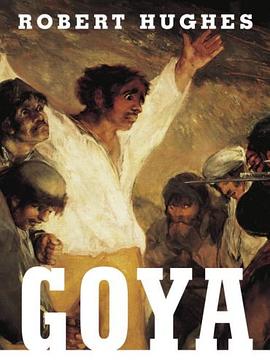
Robert Hughes, who has stunned us with comprehensive works on subjects as sweeping and complex as the history of Australia ( The Fatal Shore ), the modern art movement ( The Shock of the New ), the nature of American art ( American Visions ), and the nature of America itself as seen through its art ( The Culture of Complaint ), now turns his renowned critical eye to one of art history’s most compelling, enigmatic, and important figures, Francisco José de Goya y Lucientes. With characteristic critical fervor and sure-eyed insight, Hughes brings us the story of an artist whose life and work bridged the transition from the eighteenth-century reign of the old masters to the early days of the nineteenth-century moderns.
With his salient passion for the artist and the art, Hughes brings Goya vividly to life through dazzling analysis of a vast breadth of his work. Building upon the historical evidence that exists, Hughes tracks Goya’s development, as man and artist, without missing a beat, from the early works commissioned by the Church, through his long, productive, and tempestuous career at court, to the darkly sinister and cryptic work he did at the end of his life.
In a work that is at once interpretive biography and cultural epic, Hughes grounds Goya firmly in the context of his time, taking us on a wild romp through Spanish history; from the brutality and easy violence of street life to the fiery terrors of the Holy Inquisition to the grave realities of war, Hughes shows us in vibrant detail the cultural forces that shaped Goya’s work.
Underlying the exhaustive, critical analysis and the rich historical background is Hughes’s own intimately personal relationship to his subject. This is a book informed not only by lifelong love and study, but by his own recent experiences of mortality and death. As such this is a uniquely moving and human book; with the same relentless and fearless intelligence he has brought to every subject he has ever tackled, Hughes here transcends biography to bring us a rich and fiercely brave book about art and life, love and rage, impotence and death. This is one genius writing at full capacity about another—and the result is truly spectacular.
From the Hardcover edition.
作者简介
Robert Studley Forrest Hughes, AO was an Australian art critic, writer and television documentary maker who has resided in New York since 1970. He was educated at St Ignatius' College, Riverview before going on to study arts and then architecture at the University of Sydney. At university, Hughes associated with the Sydney "Push" – a group of artists, writers, intellectuals and drinkers. Among the group were Germaine Greer and Clive James. Hughes, an aspiring artist and poet, abandoned his university endeavours to become first a cartoonist and then an art critic for the Sydney periodical The Observer, edited by Donald Horne. Around this time he wrote a history of Australian painting, titled The Art of Australia, which is still considered to be an important work. It was published in 1966. Hughes was also briefly involved in the original Sydney version of Oz magazine, and wrote art criticism for The Nation and The Sunday Mirror.
Hughes left Australia for Europe in 1964, living for a time in Italy before settling in London, England (1965) where he wrote for The Spectator, The Daily Telegraph, The Times and The Observer, among others, and contributed to the London version of Oz. In 1970 he obtained the position of art critic for TIME magazine and he moved to New York. He quickly established himself in the United States as an influential art critic.In 1975, he and Don Brady provided the narration for the film Protected, a documentary showing what life was like for Indigenous Australians on Palm Island.
In 1980, the BBC broadcast The Shock of the New, Hughes's television series on the development of modern art since the Impressionists. It was accompanied by a book of the same name; its combination of insight, wit and accessibility are still widely praised. In 1987, The Fatal Shore, Hughes's study of the British penal colonies and early European settlement of Australia, became an international best-seller.
Hughes provided commentary on the work of artist Robert Crumb in parts of the 1994 film Crumb, calling Crumb "the American Breughel". His 1997 television series American Visions reviewed the history of American art since the Revolution. He was again dismissive of much recent art; this time, sculptor Jeff Koons was subjected to criticism. Australia: Beyond the Fatal Shore (2000) was a series musing on modern Australia and Hughes's relationship with it. Hughes's 2002 documentary on the painter Francisco Goya, Goya: Crazy Like a Genius, was broadcast on the first night of the BBC's domestic digital service. Hughes created a one hour update to The Shock of the New. Titled The New Shock of the New, the program aired first in 2004. Hughes published the first volume of his memoirs, Things I Didn’t Know, in 2006.
目录信息
读后感
评分
评分
评分
评分
用户评价
这部作品的独到之处在于它对“信仰与怀疑”这一古老命题的当代重塑。它避开了传统意义上的神学辩论,而是将其转化为一场发生在个体精神深处的、关于意义建构的斗争。小说中的几位核心人物,他们各自代表了一种对世界秩序的理解和依附方式——有的坚定不移地相信既定的教条,有的则在怀疑的泥潭中挣扎求生。最让我心潮澎湃的是主角面对“神谕”时所展现出的那种近乎哲学家的审视态度。他不是简单地接受或拒绝,而是用他自己的生命经验去“测试”这些教条的有效性。书中有一段关于“乌托邦的残骸”的描绘,那种曾经辉煌的理想是如何在琐碎的人性和现实的腐蚀下,一点点崩塌瓦解的过程,写得极其令人深思。它迫使我反思自己生活中那些习以为常的信念系统,它们是否也同样经不起推敲?这本书的魅力不在于它给出了任何答案,而在于它提供了一个绝佳的平台,让读者得以审视自己的内心信仰是否足够坚固。读完后,我感觉自己仿佛经历了一次精神上的“重装系统”,那些曾经模糊的概念变得清晰而锋利,是一次对思维边界的有力拓展。
评分如果用一个词来概括阅读这本书的感受,那一定是“沉浸”。这不仅仅是情节的吸引力,更是作者构建了一个具有高度自洽性的、完整的小世界。这个世界有着自己独特的物理法则、社会结构乃至于一套潜规则的伦理体系,作者在介绍这些设定时,没有采用生硬的说明文笔法,而是将它们无缝地融入到角色的日常行为和对话之中,让读者如同初生的婴儿般,在与环境的互动中自然习得这一切。我尤其赞赏作者在处理角色动机时的复杂性。没有绝对的好人或坏蛋,每一个行为的背后都有着多重驱动力交织:有出于本能的求生欲,有社会地位的压力,也有深藏于基因深处的某种古老情感的驱使。这种“人性灰度”的处理,极大地增强了故事的真实感和厚重感。例如,那个表面上冷酷无情的执法者,其每一次残忍的决定背后,似乎都隐藏着一个我们永远无法完全触及的悲剧性过去,这种未被完全揭示的张力,是推动我一口气读完的主要动力。这本书像一个精心设置的陷阱,一旦踏入,便无法逃脱其精巧的逻辑和迷人的氛围,它成功地将一个虚构的世界,转化成了一种令人信服的“第二现实”。
评分翻开这本《沉寂的回响》,我仿佛被卷入了一场跨越时空的迷雾之中。作者的笔触细腻得如同工匠雕琢的玉石,每一个词语都恰到好处地契合着故事的脉络。开篇描绘的那片被遗忘的海岸线,潮湿的空气中弥漫着咸涩与腐朽的气息,瞬间就攫住了我的感官。主人公的内心挣扎,那种在责任与自我渴望之间反复拉扯的痛苦,写得入木三分。我特别欣赏作者对于环境的渲染,那不仅仅是背景,更是角色心境的外化。例如,当主角陷入绝望时,天空总是铅灰色的,而当他找到一线希望时,即便是微弱的阳光,也能穿透云层,洒下温暖的光晕。故事的节奏把握得极好,时而如涓涓细流般缓缓推进,侧重于角色的心理剖析和环境的细致描摹;时而又像火山喷发般,突然爆发出一连串令人窒息的冲突和转折。这种张弛有度的叙事技巧,让读者始终保持着一种期待和紧张感。更令人称道的是,小说中对于“时间”这一概念的探讨,并非停留在表面的时间线索上,而是深入到记忆的不可靠性以及过去对现在无声的塑造作用。每一次重读,我都能从中挖掘出新的层次和意义,这无疑是一部值得反复品味的佳作,它用一种近乎诗意的方式,探讨了存在的本质和人性的幽微之处。
评分坦白讲,这本书的语言风格极其冷峻和克制,与我以往偏爱的热烈奔放的文风大相径庭,却意外地达到了震撼心灵的效果。作者似乎对华丽辞藻有着近乎偏执的排斥,取而代之的是精准、犀利、如同手术刀般锋利的短句和精确的动词。它讲述的故事背景设定在一个充满压抑和禁锢的未来社会,这种语言上的“节制”,完美地映射了人物在那个世界中被压抑的生存状态。人物的对话极少,但每一个字都沉重得仿佛带着千钧之力,言外之意远比字面意思来得深刻。我尤其注意到了作者对“寂静”的描写,那种“寂静不是没有声音,而是所有声音都被调到了最低的频率,只有心跳和恐惧在耳边轰鸣”的描绘,让我几乎能感受到那种令人窒息的压迫感。这种极简主义的写作手法,要求读者必须主动去填补文字之间的空白,去感受那些没有被说出口的情感。这种阅读体验,更像是在寒冬中独自面对一面巨大的冰墙,需要勇气和毅力去触碰,但一旦接受了这种冷峻的美学,它所带来的情感冲击是持久且无法磨灭的。它没有提供安慰,但它提供了真实,而真实,往往比慰藉更具力量。
评分这本书的叙事结构简直是一场精妙的建筑学展示,让人叹为观止。它采用了一种非线性的叙事手法,将不同时间点、不同视角的片段交织在一起,像一幅由无数碎片拼成的、但最终完整无比的马赛克画。初读时,我甚至有些迷茫,信息如潮水般涌来,角色的身份和他们之间的复杂关系如同迷宫般错综复杂。然而,正是这种“故意”的混乱,迫使读者必须全神贯注地去梳理、去推理,去主动参与到故事的构建过程中。作者显然对读者的智力抱有极高的尊重,他没有提供廉价的解释,而是将线索巧妙地隐藏在对话的潜台词、场景的细微变动乃至物品的摆放之中。我特别喜欢其中关于“选择的悖论”这一主题的处理。每一个看似微不足道的决定,都在未来激起了巨大的涟漪。当最后几章,那些散落的碎片猛然间啮合在一起,形成清晰的图景时,那种豁然开朗的震撼感,是其他平铺直叙的小说难以给予的。这不仅仅是一个故事,更像是一个精密的逻辑谜题,解谜的过程充满了智力上的愉悦。读完合上书页时,我忍不住回溯前面的章节,去寻找那些曾经被我忽略的伏笔,发现作者布局之深远,不得不佩服其高超的叙事掌控力。
评分The sleep of reason produces monsters
评分Robert Hughes 的永恒的经典
评分Robert Hughes 的永恒的经典
评分The sleep of reason produces monsters
评分Robert Hughes 的永恒的经典
相关图书



本站所有内容均为互联网搜索引擎提供的公开搜索信息,本站不存储任何数据与内容,任何内容与数据均与本站无关,如有需要请联系相关搜索引擎包括但不限于百度,google,bing,sogou 等
© 2026 book.quotespace.org All Rights Reserved. 小美书屋 版权所有