

具体描述
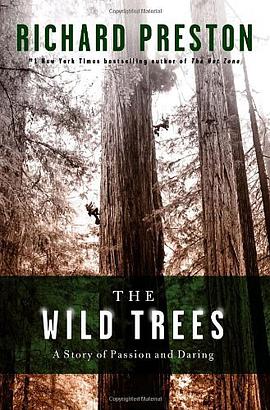
Hidden away in foggy, uncharted rain forest valleys in Northern California are the largest and tallest organisms the world has ever sustained–the coast redwood trees, Sequoia sempervirens. Ninety-six percent of the ancient redwood forests have been destroyed by logging, but the untouched fragments that remain are among the great wonders of nature. The biggest redwoods have trunks up to thirty feet wide and can rise more than thirty-five stories above the ground, forming cathedral-like structures in the air. Until recently, redwoods were thought to be virtually impossible to ascend, and the canopy at the tops of these majestic trees was undiscovered. In The Wild Trees , Richard Preston unfolds the spellbinding story of Steve Sillett, Marie Antoine, and the tiny group of daring botanists and amateur naturalists that found a lost world above California, a world that is dangerous, hauntingly beautiful, and unexplored.
The canopy voyagers are young–just college students when they start their quest–and they share a passion for these trees, persevering in spite of sometimes crushing personal obstacles and failings. They take big risks, they ignore common wisdom (such as the notion that there’s nothing left to discover in North America), and they even make love in hammocks stretched between branches three hundred feet in the air.
The deep redwood canopy is a vertical Eden filled with mosses, lichens, spotted salamanders, hanging gardens of ferns, and thickets of huckleberry bushes, all growing out of massive trunk systems that have fused and formed flying buttresses, sometimes carved into blackened chambers, hollowed out by fire, called “fire caves.” Thick layers of soil sitting on limbs harbor animal and plant life that is unknown to science. Humans move through the deep canopy suspended on ropes, far out of sight of the ground, knowing that the price of a small mistake can be a plunge to one’s death.
Preston’s account of this amazing world, by turns terrifying, moving, and fascinating, is an adventure story told in novelistic detail by a master of nonfiction narrative. The author shares his protagonists’ passion for tall trees, and he mastered the techniques of tall-tree climbing to tell the story in The Wild Trees –the story of the fate of the world’s most splendid forests and of the imperiled biosphere itself.
作者简介
目录信息
读后感
评分
评分
评分
评分
用户评价
我得承认,这本书的阅读体验是相当具有挑战性的,它不像市面上那些追求快速满足感的畅销书。作者似乎对文字有着近乎偏执的追求,大量使用一些在现代语境中已经不太常见的词汇和句式,初读时需要频繁查阅,但这恰恰也构建了一种独特的阅读质感,一种与当代疏离的、古典的美学氛围。它更像是一部精雕细琢的工艺品,而非快消品。情节的推进并非线性,而是充满了回溯、闪现和多重视角的切换,这要求读者必须保持高度的专注力,去拼凑出完整的图景。但一旦你沉浸其中,那种被复杂结构包裹的满足感是无与伦比的。它探讨的主题是关于记忆的不可靠性、家族历史的重负以及个体在面对巨大结构时的渺小与抗争,其深度远超一般的文学作品。
评分我很少看到有哪本书能将地域特色描绘得如此具体而又充满象征意义。这片土地,无论是它的气候、植被还是特有的习俗,都像是书中的第六个主要角色,无声地塑造着每一个出场人物的命运。作者似乎花了大量精力去研究这个特定环境的历史和生态,使得那些关于自然和人力的抗争显得如此真实可信。它没有采取那种歌颂自然的浪漫主义视角,而是展现了自然法则的冷酷和人类在其中寻求立足点的艰难。读起来,我能闻到泥土和湿木头的味道,感受到那种被土地束缚又从中汲取力量的矛盾情感。它让我开始重新审视人与非人世界的关系,明白我们很多看似自由的选择,其实早已被脚下的这片土地所限定和定义。
评分这本小说,简直像一趟迷失在历史深处的漫游,作者的笔触细腻得让人心惊,每一个场景的描绘都仿佛有温度、有气味。它讲述的不是那种宏大叙事的战争或革命,而是一群普通人在时代洪流中的挣扎与坚守。我尤其被那些错综复杂的人物关系所吸引,每个人物都带着深深的时代烙印和难以言说的秘密,他们的选择并非非黑即白,而是充满了人性的灰色地带。读到后半部分,我几乎能感受到那种渗透在空气中的沉重感,那种对逝去时光的追忆与无奈,让人忍不住停下来,去思考自己的人生轨迹与周遭环境的关系。叙事节奏掌握得极好,时而如涓涓细流,娓娓道来那些被遗忘的日常细节,时而又陡然加速,将人推向情感的爆发点,读完后劲十足,那种余韵久久不散,仿佛自己也参与了他们那段漫长而艰辛的旅程。
评分说实话,第一次翻开这本书时,我差点就合上了。开篇的铺陈略显冗长,大量的环境描写和内心独白,让人感觉情节迟迟没有展开。但是,如果能坚持度过最初的“适应期”,你会发现,这些看似冗余的文字,其实是作者精心编织的一张巨大的情绪网。它捕捉到了那种“在无事发生中发生的巨变”的微妙之处。比如,主角们对待一件小事的不经意反应,背后往往隐藏着多年积累的矛盾和未愈合的创伤。这本书的伟大之处在于,它不去直接“告诉”你人物的感受,而是通过精确描摹他们的行为和周围世界的互动,让你自己去“构建”和“感受”那种复杂的情绪张力。它考验的不是耐心,而是感受力的深度。读完后,我会花好几天时间去整理脑海中那些破碎的画面和感觉,试图抓住其核心精神。
评分这本书的语言风格有一种令人不安的宁静感,仿佛暴风雨来临前的海面,表面风平浪静,水面下却暗流汹涌。我特别欣赏作者对于“沉默”的描绘。许多关键的冲突和情感的转折,都不是通过激烈的对话来实现的,而是通过人物之间的眼神交错、突然的沉默,或者某一方刻意的回避来完成的。这种“留白”的艺术,让读者不得不主动填补空白,参与到叙事过程中来。这种互动性极强,使得阅读体验非常个人化。不同的人读到同一个场景,可能会得出截然不同的结论,因为它挖掘的是人性中最深层的、难以言说的部分。它不是一本提供答案的书,而是一本提出深刻问题的书,关于我们如何与我们的过去和解,以及如何定义“家”的真正含义。
评分 评分 评分 评分 评分相关图书










本站所有内容均为互联网搜索引擎提供的公开搜索信息,本站不存储任何数据与内容,任何内容与数据均与本站无关,如有需要请联系相关搜索引擎包括但不限于百度,google,bing,sogou 等
© 2026 book.quotespace.org All Rights Reserved. 小美书屋 版权所有