

具体描述
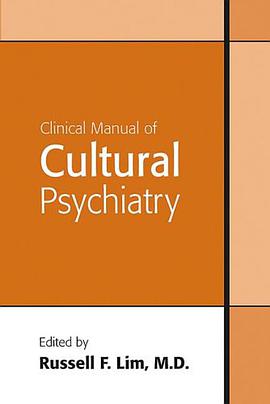
Representing the clinical state of the art in culturally competent assessment and treatment, and providing important information on the four main racial/ethnic minority groups (African Americans, Asian Americans, Latinos/Hispanics, and Native Americans and Alaska Natives), the Clinical Manual of Cultural Psychiatry synthesizes the collected wisdom from the editor's 10 years of teaching cultural psychiatry as a CME course with the professional experience of seven other contributors in using and teaching about DSM-IV's Outline for Cultural Formulation. Following an initial chapter about how the influence of culture affects every level of the mental health system, and how clinicians can gain insight into the complex interplay between culture and mental illness to ultimately improve patient care, six subsequent chapters by 8 authors use numerous illustrations and clinical vignettes as they address -Issues for assessing and treating African Americans?A?A?A?A?A?A?A?A?A?A?A?A?A?A?A?APresents a framework and context for understanding African Americans and their attitudes, beliefs, and behaviors about mental health and mental illness. Raises awareness of racism, underdiagnosis, and misdiagnosis as they affect assessment and treatment. -Issues for assessing and treating Asian Americans?A?A?A?A?A?A?A?A?A?A?A?A?A?A?A?ADetails the need for an empathic, non-confrontational approach in evaluation and therapy to understand the Asian American patient's culture, health beliefs, and life philosophies and therefore improve the potential to engage them in treatment. -Issues for assessing and treating Latinos/Hispanics?A?A?A?A?A?A?A?A?A?A?A?A?A?A?A?ADiscusses the need for direct personal relatedness, perceived clinician warmth, and active family engagement in treatment as key skills in promoting the therapeutic alliance and participation among patients from this diverse and yet culturally cohesive group. -Issues for assessing and treating Native Americans?A?A?A?A?A?A?A?A?A?A?A?A?A?A?A?AProvides social and historical information (e.g., context of past events such as massacres of entire villages, disease epidemics, and forced removal from ancestral lands; present factors such as social stressors and level of involvement in tribal life) for clinicians to build their understanding of this most underserved ethnic group in the US. -Issues in Ethnopsychopharmacology?A?A?A?A?A?A?A?A?A?A?A?A?A?A?A?AReviews clinical reports of ethnic variation with several different classes of psychotropic medications and examines the relationship of pharmacogenetics, ethnicity, and environmental factors (including the use of traditional herbal preparations) to pharmacologic treatment of minorities. -Three Appendices?A?A?A?A?A?A?A?A?A?A?A?A?A?A?A?AIncluding "A Resident's Guide to Cultural Formulation," with assessment tips written by American Psychiatric Association (APA) Minority Fellows; an "Annotated Bibliography of Cultural Psychiatry and Other Topics; and a "Glossary of Culture-Bound Syndromes." Clinicians must now meet accreditation standards involving cultural competence, making this groundbreaking clinical manual, with its three appendixes and index, indispensable for mental health care educators, students, residents, and practitioners. The Clinical Manual of Cultural Psychiatry will also prove invaluable for encouraging much-needed research, as we seek to better understand our increasingly diverse?A?A?A?A?A?A?A?A?A?A?A?A?A?A?A?Aand ever smaller?A?A?A?A?A?A?A?A?A?A?A?A?A?A?A?Aworld.
作者简介
目录信息
读后感
评分
评分
评分
评分
用户评价
作为一个在海外工作多年的国际非政府组织的精神健康项目协调员,我深知在资源匮乏、文化差异巨大的地区开展精神健康工作所面临的挑战。《Clinical Manual of Cultural Psychiatry》这本书,简直就是我们这类工作者的“圣经”。它清晰地指出了我们在实践中常常遇到的误区,并提供了切实可行的解决方案。例如,书中关于“文化特异性综合征”的讨论,帮助我理解了为什么在某些地区会出现我们不熟悉的精神疾病表现,以及如何避免将这些表现简单地视为“异类”或“非理性”。更重要的是,它强调了与当地社区建立信任、与当地医疗专业人员合作的重要性,并提供了具体的策略来克服语言障碍、文化隔阂和资源限制。书中关于“叙事疗法”在跨文化背景下的应用,以及如何利用当地的文化资源来支持精神健康,都给我带来了很多启发。这本书让我意识到,在任何文化环境中提供精神健康服务,都必须以当地社区的需求和视角为中心,而不是简单地将西方模式强加于人。它为我们提供了一个更具包容性、更有效率的框架,来应对全球精神健康领域的复杂挑战。
评分我是一名刚刚进入精神科临床领域的新手医生,在面对各种各样、背景各异的患者时,我常常感到自己的知识和经验远远不够。《Clinical Manual of Cultural Psychiatry》这本书,为我提供了一个非常宝贵且实用的入门指南。它并没有用过于晦涩的理论来劝退初学者,而是用清晰易懂的语言,结合大量的临床案例,向我展示了文化因素在精神疾病中的重要性。书中关于如何与不同文化背景的患者进行有效沟通的技巧,如何理解他们的非语言信号,以及如何避免文化偏见对诊断和治疗的影响,都让我受益匪浅。我尤其喜欢书中关于“文化评估”的章节,它提供了一个结构化的框架,帮助我系统地了解患者的文化背景,并将其融入到整体的评估和治疗计划中。这本书让我意识到,精神疾病的治疗不仅仅是药物和心理治疗,更需要对患者所处的整个文化生态系统有深入的理解。它为我树立了一个正确的临床方向,让我能够更有信心和能力去服务于来自不同文化背景的患者,并为他们提供更全面、更人性化的关怀。
评分作为一名精神科住院医师,我在学习和实践的过程中,越来越清晰地认识到,过去的医学教育在很大程度上忽视了文化因素对精神健康的影响。我曾多次遇到患者,他们的病情在我看来似乎并不符合经典的诊断标准,或者对常规治疗反应不佳。起初,我感到困惑和沮丧,甚至怀疑自己的诊断能力。直到我接触到这本书,我才真正理解到,文化不仅仅是背景信息,而是直接影响着疾病的发生、发展、表达以及对治疗的反应。这本书的系统性让我印象深刻,它从理论到实践,层层递进,详细阐述了文化因素在精神疾病诊断、评估和治疗中的作用。书中提供的案例分析也十分贴切,让我能够将抽象的理论与具体的临床情境联系起来。例如,关于不同文化中“抑郁”的表达方式,书中就列举了许多令人耳目一新的例子,一些在西方文化中被视为典型抑郁症状的表现,在其他文化中可能被解释为身体不适、人际关系问题,甚至是超自然力量的干预。这本书不仅仅是一本教科书,更像是一位经验丰富的导师,引导我如何在复杂的文化环境中提供更有效、更具同情心的医疗服务。它极大地扩展了我的临床视野,让我能够更全面、更深入地理解患者。
评分我是一名正在攻读跨文化心理学博士的学生,在我的研究领域,文化因素与精神健康的关系是我一直关注的核心问题。过去,我阅读了大量的文献,但总感觉缺乏一种能够将零散的知识点串联起来的宏观视角。这本书的出现,为我提供了一个非常理想的理论框架和研究视角。《Clinical Manual of Cultural Psychiatry》的独特之处在于,它不仅仅是罗列了不同文化下的精神疾病表现,更是深入探讨了文化如何构建我们的世界观、价值观、人际关系模式,以及这些如何最终影响到个体的心理健康。书中对于“文化冲击”、“身份认同”以及“文化适应”等概念的深入剖析,为我的研究提供了宝贵的理论支持。我尤其欣赏书中对于研究方法的讨论,它鼓励研究者采用更具文化敏感性和包容性的研究设计,避免简单地将西方现有的理论模型套用到其他文化群体上。这本书让我深刻意识到,真正的跨文化精神医学研究,需要的不仅仅是对不同文化的了解,更重要的是对文化本身动态性、复杂性和主观性的深刻理解。这本书无疑将成为我后续研究的重要参考。
评分这本书简直是为那些在临床实践中,面对日益多元化和复杂化的文化背景患者感到力不从心,却又找不到系统性指导的医者量身定做的。我作为一个在社区精神卫生中心工作的临床心理治疗师,常常会遇到来自不同文化背景的来访者,他们的症状表现、对疾病的理解、求助的意愿,甚至是对治疗师的信任度,都与我过去受到的训练中主要侧重的文化背景大相径庭。这本书的出现,如同及时雨,为我打开了一扇新的大门。它不仅仅是列举不同文化群体可能出现的精神疾病表现差异,更重要的是,它提供了一套完整的框架,教我如何去理解和解读这些差异背后的深层文化含义。比如,它详细阐述了“文化概念化”的重要性,不是简单地将某种症状归结于某个文化,而是深入探究患者自身所处的文化环境如何塑造了他们的经历、信念和行为模式。这本书的语言风格也恰到好处,既有学术的严谨性,又不失临床的实用性,让我能够轻松地将理论知识转化为实际操作。我尤其喜欢其中关于“文化敏感性”和“文化能力”的讨论,这不仅仅是表面的礼貌,而是真正理解和尊重个体差异,并据此调整治疗策略的能力。这本书让我意识到,精神卫生服务必须超越西方中心主义的视角,拥抱全球化的现实。
评分 评分 评分 评分 评分相关图书














本站所有内容均为互联网搜索引擎提供的公开搜索信息,本站不存储任何数据与内容,任何内容与数据均与本站无关,如有需要请联系相关搜索引擎包括但不限于百度,google,bing,sogou 等
© 2026 book.quotespace.org All Rights Reserved. 小美书屋 版权所有