
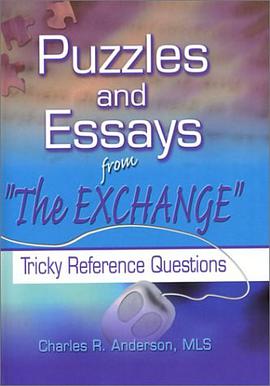

具体描述
Who said that? When did that happen? Where the heck does that thing come from? Was that French, or what? What's that supposed to mean?
For 35 years, librarians in the United States and other countries sent puzzles they could not solve locally to "The Exchange," a column for reference librarians appearing in RQ (and later, RUSQ), the official journal of the Reference and User Services Division of the ALA. Other readers often furnished the answers--sometimes years or even decades later! Puzzles and Essays from "The Exchange" organizes those perplexing questions and answers into a reader-friendly reference format, embellished with essays that appeared in the column over the last fifteen years of its publication.
This unique collection of questions and answers that stumped librarians on four continents over a 35-year period comes complete with authoritative bibliographic citations. It also contains an extensive subject, person, and keyword index, providing easy access to the material.
Packed with fascinating information, little-known trivia, and hard-to-find facts, Puzzles and Essays from "The Exchange" is a wonderful reference source, answering difficult questions about:
the origins of common--and not-so-common-customs, like giving engagement rings, driving on the right or left side of the road, tying yellow ribbons around trees in memory of captives, leg shaving, visits from the "Tooth Fairy," and much, much more!
the origins of words, phrases, and terms that don't, when taken literally, make much sense
the origins of popular sayings--The grass is always greener; The whole nine yards; It ain't over until the fat lady sings; Close but no cigar; Going down the tube; Light at the end of the tunnel; Katy, bar the door; Goodbye, cruel world; etc.
the sources of famous quotations--both spurious and real!
the sources of poetry fragments and bits of verse that have become part of the popular lexicon
hard-to-find biographical information-from George Washington Carver's many uses for the peanut and the sweet potato to the name of Paul Revere's horse to the truth about the "let them eat cake" story attributed to Marie Antoinette
trivia and miscellany--how lullabies began; why a yawn is contagious when a sneeze is not; what the names of the monkeys in The Wizard of Oz were; why pigeons bob their heads when they walk; what the vital statistics of the Venus de Milo are; and much more!
the history of "The Exchange" itself!
Puzzles and Essays from "The Exchange" will also challenge you with a list of so-far unanswered questions, unidentified quotations, and popular sayings whose origins are still generally unknown. Perhaps you'll be the one to answer the riddles that stumped the editors and readers of "The Exchange!"
作者简介
目录信息
读后感
评分
评分
评分
评分
用户评价
阅读体验中,语言的密度和复杂性是一个不容忽视的方面。作者的用词极其考究,很少出现那种平铺直叙、人人都懂的大白话。相反,他倾向于使用一些罕见且精确的词汇,构建出多层次的语义结构。有时候,为了理解一个长句子的完整含义,我不得不停下来,反复琢磨其中核心动词和修饰语的精确指向。这种语言的“硬度”,使得阅读速度自然而然地慢了下来,但这种慢,恰恰是作者所期望的——它提供了一种慢思考的空间。书中的引述和典故也极其丰富,涵盖了从古代经典到现代科学理论的广泛领域,这要求读者具备一定的跨学科背景知识,否则可能会错过很多深层次的幽默或讽刺。这种挑战性的语言风格,无疑会筛选掉一部分读者,但对于那些愿意投入时间去“解码”的读者来说,每一次成功破译,都能收获巨大的智力回报,感觉自己也随之提升了一个档次。
评分这本书在叙事上的手法呈现出一种令人惊喜的跳跃性,阅读过程就像是在一个巨大的迷宫中寻找出口,每翻过一页,你都不知道下一刻会遇到的是逻辑严密的论证,还是一段充满哲思的冥想。它的结构并非线性的,更像是将许多散落的碎片精心排列在一起,要求读者主动去构建彼此之间的联系。我发现,有些章节之间的过渡是极其突然的,从一个高度抽象的哲学讨论,瞬间切入到一个非常具体的历史轶事,这种强烈的对比使得感官体验非常刺激。作者似乎故意在挑战读者的注意力集中度,迫使我们必须全神贯注,否则很容易迷失在那些看似不相关的概念河流之中。这种非传统的编排方式,对于习惯了传统小说叙事的人来说,或许会感到一丝困惑,但对于我这种热衷于解构和重组信息的人来说,每一次“顿悟”都是一种极大的满足。它不是被动地接受信息,而是在主动地参与到文本意义的建构过程中。
评分如果要用一个词来形容这本书带给我的整体感受,那可能是“回味无穷”。它不是那种读完就可以束之高阁的消遣品。相反,合上书本的那一刻,并不是阅读的终结,而是新一轮思考的开始。书中的某些论点,甚至有些看似微不足道的观察点,会像种子一样在我脑海中扎根,并在接下来的日子里,不经意地在处理日常生活问题时冒出新的火花。我发现自己在看电影、听音乐,甚至只是观察街上行人的时候,都会不自觉地将书中的某些概念框架套用进去,试图从新的角度去审视既有的事物。这种持久的影响力,是衡量一本好书的重要标准之一。它不仅仅提供了知识或娱乐,更重要的是,它似乎永久性地微调了我的思维滤镜,让我看待世界的方式有了一种微妙而不可逆转的改变,这才是它真正的价值所在。
评分这本书最让人感到着迷的地方在于它所营造出的一种独特的情感光谱。它并非那种一味地追求高深或晦涩,在那些密集的思辨之间,时不时会流露出一种非常人性化、甚至是略带自嘲的幽默感。这种幽默感往往潜藏在看似严肃的论述的夹缝中,需要一定的敏感度和共情能力才能捕捉到。比如,在讨论某个宏大命题时,作者突然插入的一段对日常琐事的观察,那种反差带来的效果是微妙而有力的,让人会心一笑,同时又深思其背后的关联。它没有传统散文那样温暖的慰藉感,也没有纯粹学术著作的冰冷客观,而是在一种介于两者之间的、略带疏离感的冷静观察中,流露出对人类处境的深刻关切。这种复杂的情感基调,使得阅读过程更像是一场与一位智慧而略带古怪的朋友进行的深度对话,充满了意想不到的起伏和共振。
评分这本书的装帧设计着实引人注目,封面那种略带做旧感的纸张质地,配合着深沉的墨绿色调,立刻营造出一种穿越时空的怀旧氛围。初翻阅时,我被其中排版的精妙所吸引。字体选择上,似乎混搭了多种风格,有那种老式印刷品的衬线体,也有更现代简洁的无衬线字体,这种碰撞并没有显得突兀,反而形成了一种独特的视觉节奏感。页边距的处理也很有讲究,留白恰到好处,让读者的视线得以在文字和空白间自由游走,仿佛在跟随作者的思路进行一次沉浸式的探索。装帧的细节之处,比如书脊上那些不易察觉的纹路,都透露出一种匠心独到的制作态度,让人感受到这不是一本流水线上的快餐读物,而更像是一件精心打磨的工艺品。即便是放在书架上,它也能以其独特的气质,与其他书籍形成鲜明的对比,成为一个视觉焦点。我甚至花了不少时间去研究每章开头的那些小小的装饰性图案,它们与正文内容似乎有着某种隐晦的关联,这种设计上的心思,极大地增强了阅读的仪式感。
评分 评分 评分 评分 评分相关图书









本站所有内容均为互联网搜索引擎提供的公开搜索信息,本站不存储任何数据与内容,任何内容与数据均与本站无关,如有需要请联系相关搜索引擎包括但不限于百度,google,bing,sogou 等
© 2026 book.quotespace.org All Rights Reserved. 小美书屋 版权所有