

具体描述
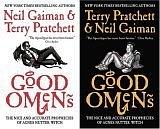
According to The Nice and Accurate Prophecies of Agnes Nutter, Witch (the world's only completely accurate book of prophecies, written in 1655, before she exploded), the world will end on a Saturday. Next Saturday, in fact. Just before dinner. So the armies of Good and Evil are amassing, Atlantis is rising, frogs are falling, tempers are flaring. Everything appears to be going according to Divine Plan. Except a somewhat fussy angel and a fast-living demon—both of whom have lived amongst Earth's mortals since The Beginning and have grown rather fond of the lifestyle—are not actually looking forward to the coming Rapture. And someone seems to have misplaced the Antichrist . . .
It is the coming of the End Times: the Apocalypse is near, and Final Judgment will soon descend upon the human race. This comes as a bit of bad news to the angel Aziraphale (who was the angel of the Garden of Eden) and the demon Crowley (who, when he was originally named Crawly, was the serpent who tempted Eve to eat the apple), respectively the representatives of God and Satan on Earth, as they have become used to living their cozy, comfortable lives and have, in a perverse way, taken a liking to humanity. As such, since they are good friends (despite ostensibly representing the polar opposites of Good and Evil), they decide to work together and keep an eye on the Antichrist, destined to be the son of a prominent American diplomat stationed in Britain, and thus ensure he grows up in a way that means he can never decide between Good and Evil, thereby postponing the end of the world.
Unfortunately, Warlock, the child everyone thinks is the Anti-Christ is, in fact, a perfectly normal eleven-year-old boy. Due to mishandling of several infants in the hospital, the real Anti-Christ is Adam Young, a charismatic and slightly otherworldly eleven-year-old who, despite being the harbinger of the Apocalypse, has lived a perfectly normal life as the son of typical English parents and as a result has no idea of his true powers. As Adam blissfully and naively uses his powers, creating around him the world of Just William (because he thinks that is what an English child's life should be like), the race is on to find him—the Four Horsemen of the Apocalypse assemble and the incredibly accurate (yet so highly specific as to be useless) prophecies of Agnes Nutter, seventeenth-century prophetess, are rapidly coming true.
Agnes Nutter was a witch in the 17th century and the only truly accurate prophet to have ever lived. She wrote a book called The Nice and Accurate Prophecies of Agnes Nutter, Witch, a collection of prophecies that did not sell very well because they were unspectacular, cryptic and, ironically enough, all true. She, in fact, decided to publish it only so that she could receive a free author's copy. There is only one copy of the book left, which belongs to her descendant Anathema Device. Agnes was burned at the stake by a mob (because that is what mobs did at that time); however, because she had foreseen her fiery end ("Ye're tardy; I should have been aflame ten minutes since") and had packed 80 pounds of gunpowder and 40 pounds of roofing nails into her petticoats, everyone who participated in the burning was killed instantly.
Anathema teams up with Newton Pulsifer, the descendant of the man who initiated the burning of Agnes, to use the prophesies and find the Antichrist. Unfortunately, that is exactly what everyone else is trying to do, and time is running out.
作者简介
Sir Terence David John "Terry" Pratchett, OBE (born 28 April 1948) is an English novelist, known for his frequently comical work in the fantasy genre. He is best known for his popular and long-running Discworld series of comic fantasy novels. Pratchett's first novel, The Carpet People, was published in 1971, and since his first Discworld novel (The Colour of Magic) was published in 1983, he has written two books a year on average. His latest Discworld book, Snuff is the third-fastest-selling novel since records began in the United Kingdom selling 55,000 copies in the first three days.
Pratchett was the UK's best-selling author of the 1990s, and as of August 2010 had sold over 65 million books worldwide in thirty-seven languages. He is currently the second most-read writer in the UK, and seventh most-read non-US author in the US.
Pratchett was appointed Officer of the Order of the British Empire (OBE) "for services to literature" in 1998. In addition, he was knighted in the 2009 New Year Honours. In 2001 he won the Carnegie Medal for his young adult novel The Amazing Maurice and his Educated Rodents.
In December 2007, Pratchett publicly announced that he was suffering from early-onset Alzheimer's disease and, subsequently, made a substantial public donation to the Alzheimer's Research Trust, and filmed a programme chronicling his experiences with the disease for the BBC.
Neil Richard Gaiman ( /ˈɡeɪmən/; born 10 November 1960) is an English author of short fiction, novels, comic books, graphic novels, audio theatre and films. His notable works include the comic book series The Sandman and novels Stardust, American Gods, Coraline, and The Graveyard Book. Gaiman's writing has won numerous awards, including Hugo, Nebula, and Bram Stoker, as well as the 2009 Newbery Medal and 2010 Carnegie Medal in Literature. He is the first author to win both the Newbery and the Carnegie medals for the same work.
Gaiman and Pratchett had known each other since 1985 and it was their own idea, not that of their publisher, to collaborate on a novel.
Neil Gaiman has said:
We were both living in England when we wrote it. At an educated guess, although neither of us ever counted, Terry probably wrote around 60,000 "raw" and I wrote 45,000 "raw" words of Good Omens, with, on the whole, Terry taking more of the plot with Adam and the Them in, and me doing more of the stuff that was slightly more tangential to the story, except that broke down pretty quickly and when we got towards the end we swapped characters so that we'd both written everyone by the time it was done, but then we also rewrote and footnoted each others bits as we went along, and rolled up our sleeves to take the first draft to the second (quite a lot of words), and, by the end of it, neither of us was entirely certain who had written what. It was indeed plotted in long daily phone calls, and we would post floppy disks (and this was back in 1988 when floppy disks really were pretty darn floppy) back and forth.
while Terry Pratchett has said:
I think this is an honest account of the process of writing Good Omens. It was fairly easy to keep track of because of the way we sent discs to one another, and because I was Keeper of the Official Master Copy I can say that I wrote a bit over two thirds of Good Omens. However, we were on the phone to each other every day, at least once. If you have an idea during a brainstorming session with another guy, whose idea is it? One guy goes and writes 2,000 words after thirty minutes on the phone, what exactly is the process that's happening? I did most of the physical writing because:
I had to. Neil had to keep Sandman going – I could take time off from the DW;
One person has to be overall editor, and do all the stitching and filling and slicing and, as I've said before, it was me by agreement – if it had been a graphic novel, it would have been Neil taking the chair for exactly the same reasons it was me for a novel;
I'm a selfish bastard and tried to write ahead to get to the good bits before Neil.
Initially, I did most of Adam and the Them and Neil did most of the Four Horsemen, and everything else kind of got done by whoever – by the end, large sections were being done by a composite creature called Terryandneil, whoever was actually hitting the keys. By agreement, I am allowed to say that Agnes Nutter, her life and death, was completely and utterly mine. And Neil proudly claims responsibility for the maggots. Neil's had a major influence on the opening scenes, me on the ending. In the end, it was this book done by two guys, who shared the money equally and did it for fun and wouldn't do it again for a big clock."
目录信息
读后感
典型的口感很爽,没什么营养的读物,唯一的好处就是让你觉得打发时间比较愉快。 中心思想大约是:好死不如赖活着,地球是个滋生恶趣味的好地方。就像每个邋里邋遢但又牛逼的不行的自由世界公民,不喜欢包括基地组织或FBI或维和部队之类正反的双方,只想嬉皮笑脸的又一本正经的...
评分典型的口感很爽,没什么营养的读物,唯一的好处就是让你觉得打发时间比较愉快。 中心思想大约是:好死不如赖活着,地球是个滋生恶趣味的好地方。就像每个邋里邋遢但又牛逼的不行的自由世界公民,不喜欢包括基地组织或FBI或维和部队之类正反的双方,只想嬉皮笑脸的又一本正经的...
评分光明与黑暗的对立统一 ——评尼尔•盖曼《好兆头》 首发《新京报》书评版 幻想小说的一个主题是好人永远战胜坏人,光明永远战胜黑暗,例如J.K.罗琳的《哈利•波特》和C.S.刘易斯的《纳尼亚传奇》。不过近几十年来随着新时代思想在西方的流行,善与恶、光明与...
评分《圣经》故事里,亚当和夏娃受蛇引诱,吃下了“明辨善恶”的果子,被逐出了伊甸园。记得以前看到这里时,非常不理解,上帝造人,又不让他们“明辨善恶”,难道是要他们让永远“蒙昧无知”?那这样的上帝,有什么值得崇敬的?作为一个非基督徒,一个对《圣经》所知不多的现代人...
评分写的确实挺逗的..翻开前几页就会被吸引..可是我一直好奇两个人怎么写一本书?呵呵..书里的天使和魔鬼,和一堆稀奇古怪的人都很可爱,反而是人类相当一般,而且不好玩儿... 不喜欢的是这本书没有前言后记的,怎么着也得介绍一下创作背景什么的...作者介绍也很简单..
用户评价
总而言之,这是一本值得反复阅读的书。每一次翻开,我都能从中发现新的东西,获得新的感悟。它就像一个宝藏,每一次挖掘,都能找到令人惊喜的闪光点。 它所传达的那些关于希望、关于理解、关于接纳的主题,在当今社会尤为珍贵。它鼓励我们保持好奇心,拥抱不完美,并在纷繁的世界中找到属于自己的位置。
评分我最欣赏这本书的,是它其中蕴含的深刻哲理,却又以一种极其轻松幽默的方式表达出来。它并没有直接给你灌输什么大道理,而是通过故事中人物的经历和对话,让你自己去思考,去感悟。关于人性、关于信仰、关于命运,甚至关于我们所处的世界,这本书都提供了全新的视角。 它让我意识到,善与恶并非是绝对的对立面,而是常常交织在一起,模糊了界限。许多时候,我们所谓的“正确”和“错误”,只是站的角度不同而已。这种对复杂性的深刻洞察,让我在阅读过程中,不止一次地停下来,陷入沉思。
评分这本书的语言风格非常特别,既有学院派的严谨,又不失口语化的幽默。作者能够将复杂的概念用简单易懂的方式表达出来,同时又不失其深刻性。他的文字充满了智慧和洞察力,每一次阅读都会有新的发现。 我特别喜欢书中那些精辟的评论和对世事人情的辛辣讽刺,它们总能在恰当的时机出现,为故事增添色彩,也让我在捧腹大笑之余,对一些社会现象有了更深入的思考。
评分当我还只是一个对世界充满好奇,却又常常被它的荒谬弄得无可奈何的学生时,我偶然间翻开了那本封面设计得既朴素又暗藏玄机的书。我记得当时是这样一个下午,阳光透过教室陈旧的玻璃窗,在课桌上投下斑驳的光影,周围充斥着低语和偶尔的纸张翻动声,而我的思绪却早已被书中那奇妙的开篇所牢牢吸引。它以一种旁观者的姿态,冷静地叙述着一个宏大而又充满细节的背景故事,仿佛一位经验丰富的说书人,不疾不徐地展开他即将要讲述的惊世骇俗的传奇。 我被书中人物的塑造深深打动。他们并非是那种非黑即白、脸谱化的善恶两极,而是充满了矛盾、弱点,却又有着各自独特的魅力和执着。那些来自不同阵营、拥有截然不同过往的角色,在命运的巨轮下被卷在一起,他们的互动,他们的争论,他们偶尔闪现的温情,都如同精心雕琢的宝石,在故事的洪流中闪烁着迷人的光芒。我尤其喜欢书中对某些“非人”角色的描绘,他们被赋予了人类的情感,他们的困惑、他们的选择,有时甚至比普通人类更加令人动容,也更加发人深省。
评分当我合上这本书的时候,我并没有感到那种“故事结束了”的空虚,反而是一种意犹未尽的感觉。它所带来的思考,还在我的脑海中回荡,那些关于生命、关于选择、关于人生的道理,还在我心中发酵。 这本书不仅仅是一部文学作品,它更像是一本哲学著作,一本幽默小说,甚至是一次心灵的洗礼。它以一种独特的方式,触及了我内心深处最柔软的地方,也让我对这个世界有了更深刻的理解。
评分这本小说的叙事技巧堪称一绝。作者似乎拥有着一种能够将最复杂的情节梳理得清晰明了,却又不失其幽默感和戏剧张力的魔力。我常常在阅读时,被那种猝不及防的转折弄得会心一笑,又或者在某个精心铺垫的细节中恍然大悟。故事的节奏把握得非常到位,时而紧凑得让人喘不过气,时而又舒缓得让人沉浸在作者描绘的世界中,细细品味每一个字句。 那些看似无关紧要的细节,在故事的后期往往会成为连接关键线索的桥梁,这种精巧的设计让我不得不佩服作者的才华。它不像某些作品那样,为了制造悬念而刻意堆砌,而是将每一个元素的出现都安排得恰到好处,如同棋盘上的每一颗棋子,都在等待着属于它的最佳时机。
评分让我印象深刻的还有书中那些充满想象力的奇幻元素。作者将现实世界与超自然世界巧妙地融合在一起,创造出了一个既熟悉又陌生的世界。那些奇异的生物,那些不遵循物理定律的事件,都为故事增添了无限的魅力。 然而,这些奇幻元素并非是凭空捏造,它们往往服务于故事的主题,烘托出人物的情感,或者深化作者想要表达的观点。这种将奇幻与现实的完美结合,使得整个故事充满了层次感和吸引力。
评分阅读这本书的过程,就像是一场身临其境的冒险。我跟随主角们的脚步,穿梭于不同的场景,经历着各种各样的事情。那些生动的描写,仿佛将我带到了那个世界,让我能够清晰地感受到空气中的气息,听到周遭的声音。 尤其是一些充满象征意义的场景,作者的文字具有一种魔力,能够将抽象的概念具象化,让我对某些难以理解的哲学思想产生了直观的认识。这种沉浸式的阅读体验,是许多其他书籍难以比拟的。
评分这本书的结构设计也非常精巧。故事的主线虽然清晰,但其中穿插了大量的支线情节和人物故事,这些支线情节并非是可有可无的,而是与主线紧密相连,共同构建了一个完整而丰富的叙事网络。 作者对细节的把控力极强,每一个看似微不足道的细节,都可能在后续的情节中发挥重要的作用。这种精巧的结构设计,使得故事充满了惊喜和回味。
评分这本书带给我的另一个深刻体验,是它对于“人类”这个概念的探讨。作者以一种非常独特的视角,描绘了人类的渺小与伟大,愚蠢与智慧,以及他们身上那种不可思议的韧性。在宏大的宇宙背景下,人类的存在似乎微不足道,但他们所表现出的爱、勇气、希望,却又充满了震撼人心的力量。 我喜欢书中对于平凡人在关键时刻所做出的选择的描绘,这些选择,往往比那些声名显赫的英雄事迹更加真实,也更加触动人心。它让我相信,即使是普通人,也能在自己的人生中书写不平凡的篇章。
评分(2017-08-15想读另一版本)在佛罗里达观鸟旅程中读完了,好喜欢这种银河系漫游指南风格。有些无法影视化的梗确实好笑,但有些改编,主要是结尾处天堂地狱对于整个事件完美结束的reaction,确实让故事更加完整(这就是编剧是作者本人的好处惹)。【Shadwell会梦见Madam Tracy并把这种affection,毫无保留地只留在梦里这个设定有些触动了我,我最喜欢一篇cp同人文也是这种设定????
评分这你马我真是被基瞎了双眼
评分这你马我真是被基瞎了双眼
评分这书就很真实了 就跟我一打开电脑准备查个资料 中途不时要开个微博 上个livejournal 去AO3给我女神点个kudos 然后忘了我本来要干啥 又聊了两句微信突然想起来了 一样真实(。
评分上帝用六天创造世界,然后又用六天布置一个不可言说的,他的人类小人儿项目。本来计划读中文版,然后发现了删减==英文的读起来还有些不能完全消化,但全程笑劈叉了,可以自己在家里、在公交车上,笑出声的那种。遗憾是有一些梗,我能明白它们是包袱,但不能全get它们作为笑话的内涵,比如电影的音乐的旁征博引,比如十四世纪到底发生了什么(让Crowley肾上腺素飙升的十四世纪,如果他需要那个的话)。全书充满了精彩的珍珠一般的小故事,包括特别逗比的注释,简直每句话都不能错过。完整故事线又像ouroboros一样把那些珍珠穿在了一起,让每颗珠子,不定时地在某个点引爆。书后附赠了Neil&Terry的访谈和两个人为对方写的文章,和这本故事一样爆笑,完全不可错过。两个美好的人的合作让智慧爆炸,被波及的我好开心。
相关图书




本站所有内容均为互联网搜索引擎提供的公开搜索信息,本站不存储任何数据与内容,任何内容与数据均与本站无关,如有需要请联系相关搜索引擎包括但不限于百度,google,bing,sogou 等
© 2026 book.quotespace.org All Rights Reserved. 小美书屋 版权所有