具体描述
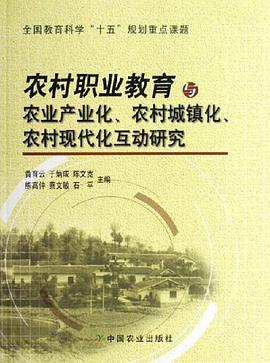
本书是全国教育科学规划“十五”重点课题的终结性成果,是二百多学者、专家、教育行政部门职教管理者、职教科研人员、职教第一线的教师共同劳动的结晶。本书以建立职业教育与农业产业化、农村城镇化、农村现代化良性互动为目标,以发达地区、发展中地区、欠发达地区的调查研究为基础,从多维角度探讨适应农村“三化”的职业教育办学模式,并提出了具有现实针对性、可操作性和富有特色及创见的发展战略。
rural vocational education and the interactive study of agricultural industrialization, rural urbanization, and rural modernization This book delves into the intricate and symbiotic relationship between rural vocational education and the multifaceted processes of agricultural industrialization, rural urbanization, and rural modernization. It proposes that a dynamic interplay exists among these elements, where advancements in one area can significantly influence and catalyze progress in others, thereby shaping the future trajectory of rural development. The research presented herein is grounded in the premise that effective rural vocational education is not merely an isolated pedagogical endeavor but a pivotal engine driving the successful integration and acceleration of broader rural transformation. It moves beyond a simplistic view of education as a passive recipient of societal changes, instead advocating for its role as an active agent of strategic development. The book meticulously explores how a well-designed and responsive vocational education system can equip individuals with the skills, knowledge, and innovative capacities essential for navigating and contributing to the evolving demands of modern agriculture and rural economies. Part I: Theoretical Framework and the Evolving Landscape of Rural Development The initial sections of the book lay a robust theoretical foundation, examining the conceptual underpinnings of each key element. It begins by dissecting the concept of agricultural industrialization, moving beyond a narrow focus on mechanization and large-scale production. Instead, it emphasizes the shift towards a knowledge-intensive, market-oriented, and sustainable agricultural sector. This includes an exploration of value chain development, precision agriculture, organic farming, and the integration of digital technologies. The book argues that agricultural industrialization, when implemented thoughtfully, can enhance productivity, improve quality, and create new avenues for economic growth within rural communities. Simultaneously, the study provides a comprehensive analysis of rural urbanization. It acknowledges that this is not simply about population migration to cities but also encompasses the development of rural centers into more vibrant, service-oriented, and economically diverse locales. This includes the enhancement of infrastructure, the provision of social amenities, and the creation of non-agricultural employment opportunities. The book posits that effective rural urbanization can lead to a more balanced regional development, reduce the strain on urban areas, and improve the quality of life for rural residents. The concept of rural modernization is then explored in its broadest sense, encompassing not just economic and infrastructural development but also social, cultural, and institutional transformation. This includes advancements in governance, the empowerment of local communities, the preservation of cultural heritage, and the adoption of environmentally sound practices. The book views rural modernization as a holistic process aimed at creating self-sustaining, resilient, and prosperous rural areas that are integrated into the wider national and global economy. Part II: The Crucial Role of Rural Vocational Education Central to the book's argument is the indispensable role of rural vocational education in facilitating the interactions among these development pillars. It critically examines the traditional models of rural vocational education and identifies their limitations in addressing the dynamic needs of a rapidly changing rural landscape. The research then advocates for a paradigm shift towards a more responsive, adaptive, and forward-looking educational approach. Chapter 1: Bridging the Skills Gap in Agricultural Industrialization. This chapter meticulously details how vocational education can directly contribute to agricultural industrialization. It explores the development of specialized training programs in areas such as agri-tech, sustainable farming practices, farm management, agricultural marketing, food processing, and the operation and maintenance of advanced agricultural machinery. The book emphasizes the need for curricula that are not only technically oriented but also incorporate business acumen, entrepreneurial skills, and an understanding of market dynamics. Case studies illustrate how targeted vocational training has led to increased farm efficiency, improved product quality, and the successful diversification of agricultural enterprises. The impact on creating skilled labor for the entire agricultural value chain, from production to processing and distribution, is thoroughly investigated. Chapter 2: Cultivating Human Capital for Rural Urbanization. This section explores the crucial role of vocational education in supporting the multifaceted aspects of rural urbanization. It highlights the necessity of training individuals for roles in infrastructure development and maintenance, such as construction, engineering, and skilled trades. Furthermore, it delves into the development of vocational programs that cater to the burgeoning service sector in rural towns, including hospitality, tourism, healthcare support, retail, and various community services. The book argues that by equipping rural residents with diverse skills, vocational education can create local employment opportunities, thereby stemming out-migration and fostering vibrant rural communities that can effectively absorb and contribute to urbanization processes. The importance of entrepreneurial training for individuals seeking to establish small and medium-sized enterprises within these developing rural centers is also a key focus. Chapter 3: Fostering Innovation and Adaptability for Rural Modernization. This chapter examines how rural vocational education serves as a catalyst for rural modernization by nurturing innovation and adaptability. It emphasizes the development of programs that promote critical thinking, problem-solving, and a spirit of entrepreneurship. The book explores how vocational education can equip individuals with the skills to embrace and implement new technologies, adapt to changing environmental conditions, and develop innovative solutions to local challenges. This includes training in areas such as renewable energy technologies, waste management, environmental conservation, and digital literacy. The research highlights how vocational institutions can become hubs for innovation, collaborating with local businesses and communities to pilot and implement new approaches that drive sustainable rural modernization. The integration of soft skills, leadership development, and community engagement modules within vocational curricula is also discussed as crucial for fostering empowered and proactive rural citizens. Part III: Interactive Dynamics and Synergistic Outcomes The core of the book lies in its detailed exploration of the interactive dynamics between rural vocational education and the three pillars of rural development. It moves beyond linear causality to illustrate how these elements mutually reinforce and influence each other. Chapter 4: The Feedback Loop: How Industrialization Informs Vocational Education. This chapter investigates how the demands of agricultural industrialization directly shape the curriculum and delivery of rural vocational education. As agricultural practices become more sophisticated and market demands evolve, vocational institutions must adapt their programs to provide the necessary skills. The research presents evidence of how feedback mechanisms from agricultural businesses and industry associations are crucial for ensuring that vocational training remains relevant and effective. This includes the co-creation of training modules, the establishment of internships and apprenticeships, and the continuous updating of course content to reflect emerging technologies and market trends. The discussion extends to the need for educators to stay abreast of industry developments through professional development and collaborations. Chapter 5: Urbanization as a Driver for Educational Diversification. This chapter examines how the process of rural urbanization creates new demands and opportunities for vocational education. As rural towns grow and their economies diversify, there is an increased need for a wider range of vocational skills beyond traditional agricultural trades. The book illustrates how vocational institutions can respond to these evolving needs by expanding their offerings to include programs in areas such as skilled trades, healthcare, education support, technology, and entrepreneurship. Furthermore, it explores how urbanization can provide the infrastructure and resources necessary for vocational institutions to upgrade their facilities, expand their reach, and offer more diverse learning experiences, including collaborations with urban educational institutions. Chapter 6: Modernization as the Guiding Principle for Educational Reform. This chapter positions rural modernization as the overarching goal that should guide the reform of rural vocational education. It argues that all vocational education initiatives should be aligned with the broader objectives of creating more prosperous, equitable, and sustainable rural communities. The book explores how vocational education can contribute to rural modernization by empowering individuals to become active participants in their communities, promoting civic engagement, and fostering a sense of responsibility towards environmental stewardship. It emphasizes the importance of incorporating principles of lifelong learning, critical pedagogy, and participatory approaches in vocational education to ensure that individuals are equipped to adapt to future challenges and contribute to ongoing modernization efforts. The book also highlights the role of vocational education in preserving and promoting local culture and heritage while embracing modern advancements. Part IV: Challenges, Opportunities, and Policy Implications The final sections of the book address the practical challenges, emerging opportunities, and crucial policy implications arising from the interplay of rural vocational education and rural development. Chapter 7: Overcoming Barriers to Effective Rural Vocational Education. This chapter identifies and analyzes the common challenges faced by rural vocational education institutions, including issues of funding, faculty recruitment and retention, access to technology and resources, curriculum relevance, and outreach to marginalized communities. It proposes pragmatic strategies for overcoming these barriers, such as fostering public-private partnerships, leveraging digital learning platforms, developing innovative funding models, and implementing robust teacher training and professional development programs. The book also stresses the importance of contextualizing vocational education to local needs and realities. Chapter 8: Harnessing Opportunities for Synergistic Growth. This chapter explores the emerging opportunities for enhancing the synergy between rural vocational education and rural development. It highlights the potential of digital technologies in expanding access to quality vocational training, the growing demand for skilled labor in emerging rural industries, and the increasing recognition of the importance of vocational education in national development strategies. The book advocates for the strategic use of data analytics to identify skill gaps and tailor educational offerings, and for the establishment of strong networks among educational institutions, government agencies, and industry stakeholders. The potential for vocational education to drive innovation and entrepreneurship in rural areas is also a key theme. Chapter 9: Policy Recommendations for Sustainable Rural Futures. The concluding chapter presents a set of concrete policy recommendations aimed at strengthening the role of rural vocational education in driving agricultural industrialization, rural urbanization, and rural modernization. These recommendations encompass areas such as increased and sustained investment in rural vocational education infrastructure and faculty, the development of flexible and responsive curricula, the promotion of lifelong learning opportunities, the establishment of robust accreditation and quality assurance mechanisms, and the creation of supportive policies for graduates to establish businesses and careers in rural areas. The book emphasizes the need for a coordinated, long-term policy vision that recognizes the interconnectedness of these development spheres and prioritizes the cultivation of human capital as the cornerstone of successful and sustainable rural transformation. The imperative of aligning national and regional development plans with targeted vocational education strategies is also a central tenet of the policy discourse. In essence, this book presents a compelling case for viewing rural vocational education not as an ancillary support system but as a fundamental pillar and proactive driver of comprehensive rural development. It offers a nuanced understanding of the complex interactions at play and provides actionable insights for educators, policymakers, and stakeholders committed to fostering prosperous, resilient, and modern rural communities.