

具体描述
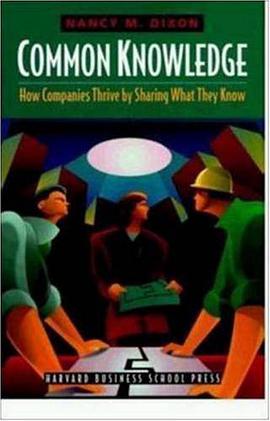
Breakthrough research on knowledge transfer reveals five proven methods for making knowledge sharing a reality - which are right for your company? While external knowledge - about customers, about competitors - is critical, it rarely provides a competitive edge for companies because such information is equally available to everyone. But internal 'know-how' that is unique to a specific company - how to introduce a new drug into the diabetes market, how to decrease assembly time in an automobile plant - is the stuff of which sustained competitive advantage is made. Nancy Dixon, an expert in the field of organizational learning, calls this knowledge borne of experience 'common knowledge', and argues that in order to get beyond talking about knowledge management to actually doing it, companies must first recognize that all knowledge is not created - and therefore can't be shared - equally. Creating successful knowledge transfer systems, Dixon argues, requires matching the type of knowledge to be shared to the method best suited for transferring it effectively. Based on an in-depth study of several organizations - including Ernst & Young, Bechtel, Ford, Chevron, British Petroleum, Texas Instruments, and the U.S. Army - that are leading the field in successful knowledge transfer, "Common Knowledge" reveals groundbreaking insights into how organizational knowledge is created, how it can be effectively shared - and why transfer systems work when they do. Until now, most organizations have had to rely on costly 'trial and error' to find a knowledge transfer system that works for them. Dixon helps managers take the guesswork out of this process by outlining three criteria that must be considered in order to determine how a transfer method will work in a specific situation: the type of knowledge to be transferred, the nature of the task, and who the receiver of that knowledge will be. Drawing from the successful - but very different - practices of the companies in her study and providing compelling illustrative stories based on the experiences of real managers, Dixon distills five distinct categories of knowledge transfer, explains the principles that make each of them work, and helps managers determine which of these systems would be most effective in their own organizations. "Common Knowledge" gets to the heart of one of the most difficult questions in knowledge transfer today: what makes a system work effectively in one organization but fail miserably in another? Going beyond 'one-size-fits-all' approaches and simple generalities like upper management involvement and cultural issues, this important book will help organizations of every kind construct knowledge transfer systems tailored to their unique forms of 'common knowledge' - and in the process create the best kind of competitive advantage there is: the kind that can't be copied.
作者简介
目录信息
读后感
评分
评分
评分
评分
用户评价
这本书,说实话,刚拿到手的时候,我带着一种相当的好奇心。毕竟,书名《Common Knowledge》听起来就充满了诱惑力,仿佛它能揭示那些我们习以为常却又从未深究的底层逻辑。然而,当我沉浸其中后,我发现这更像是一次对“常识”的解构之旅,而非一份简单的知识汇编。作者似乎有意避开那些教科书式的定义,转而探讨知识是如何在社会结构中流动、被建构,最终成为我们不假思索的“常识”的过程。尤其让我印象深刻的是其中关于媒体叙事如何塑造公众认知的章节,那种细腻的笔触,将信息传播中的权力关系描绘得淋漓尽致。我记得有一个案例分析,讲述了一个看似微不足道的社会事件,是如何在特定的话语框架下,被塑造成一个具有普遍意义的“共识”的。这种对“我们知道什么”的质疑,让人在阅读过程中不得不时常停下来,反思自己日常生活中那些不假思索的判断。这本书的行文节奏把握得很好,不至于让人感到过于学究气,反而更像是在跟一位见多识广的朋友进行一场深刻的对话,那种抽丝剥茧的论证方式,极具说服力,让人在不知不觉中被带入作者的思维轨迹。
评分坦率地说,初读此书时我有些失望,因为它并没有如书名所暗示的那样,直接罗列出“世界公认的事实清单”。相反,它更像是一部关于“我们是如何达成一致的心理学史”。这本书的魅力在于它的“去中心化”倾向。它不推崇任何权威,而是不断地质疑那些被奉为圭臬的“标准答案”。作者在处理历史事件时,总是小心翼翼地拆解当时社会主流的认知结构,然后展示出那些被边缘化或被遗忘的声音。这种颠覆性的视角,对于习惯于接受既有框架的读者来说,无疑是一次小小的冲击。文笔上,它非常细腻且富有画面感,尤其是在描绘某些集体记忆的形成瞬间时,那些场景仿佛就发生在眼前。然而,这种宏大叙事也带来了一定的阅读门槛,因为它要求读者对社会学的基础概念有一定的预先了解,否则某些深层次的讽刺和批判可能会被错过。总而言之,它是一部需要耐心和反思才能完全领会的作品。
评分这本书给我的感觉非常独特,它不是那种典型的“知识输出”型读物,更像是一次深入人脑的探险。作者的叙事视角非常个体化,仿佛他自己也是一个在探寻“什么是真理”的旅人。书中大量运用了第一人称的叙述和大量的个人观察,这使得原本可能枯燥的理论讨论变得鲜活而富有烟火气。我特别喜欢它对“无知之知”的探讨,即承认我们知识的局限性本身就是一种高级的智慧。书中关于技术发展如何加速了“信息茧房”的形成,以及这种茧房如何固化了某些偏见,提供了许多发人深省的见解。它的语言充满了韵律感,句式长短错落有致,读起来有一种古典文学的韵味,但其讨论的议题却是极其现代和尖锐的。虽然有些地方的论证略显跳跃,需要读者自己去弥合中间的逻辑链条,但这反而激发了我主动思考的欲望,使得阅读过程成了一种积极的构建行为,而不是被动的接受。
评分读完这本大部头,我只有一个感觉:信息量爆炸,但收获更多的是思维框架的重塑。这本书的结构非常庞大,涉及了人类学、社会心理学乃至一些古典哲学的交叉领域,它并没有试图去“教”你新的事实,而是努力让你明白“你以为你知道的那些东西”是如何形成的。我尤其欣赏作者在处理复杂概念时所展现出的那种游刃有余的表达能力。举例来说,关于“群体极化”的讨论,书中并没有简单地引用现有的社会学模型,而是通过一系列跨文化对比的案例,展示了“共识”在不同社会背景下的脆弱性和可塑性。文字风格上,它兼具学术的严谨和散文的流畅,偶尔出现的精妙比喻,如同在迷雾中点亮的路标,瞬间照亮了原本晦涩的理论。我花了好几周才啃完,不是因为它难懂,而是因为每一页都值得反复咀嚼。看完之后,我发现自己看新闻、听他人观点时的批判性思维被极大地激活了,那种“等等,这个‘常识’的立足点在哪里?”的念头,已经成了我阅读和思考的默认模式。它不是一本让你轻松消遣的书,而是一面镜子,映照出我们集体心智的底色。
评分我必须承认,这本书的写作风格极其罕见,它融合了哲学思辨的深度和新闻调查的锐度。它不是一本让你读完后感觉“学到了”多少新知识的书,而是让你感觉“世界观被微调了”的书。作者在全书中都保持着一种冷静的、近乎科学家的客观姿态来审视人类行为,但在讨论到道德和伦理困境时,又能展现出深沉的人文关怀。我特别欣赏其中关于“集体失忆”现象的分析,通过对几个世纪以来不同文化中对同一事件的不同记忆方式的对比,揭示了历史本身就是一场不断被重写的“常识”竞赛。这本书的段落组织极为严谨,逻辑链条绵密而富有弹性,让你在跟随作者思路前进时,能清晰地感受到每一步论证的必要性。它需要读者全神贯注地投入,因为作者不会重复自己,每一个新的章节都会建立在对前文复杂论点的进一步深化之上。对于那些渴望超越表面现象,深入探究认知本质的读者来说,这本书无疑是一次宝贵的思想旅程。
评分 评分 评分 评分 评分相关图书














本站所有内容均为互联网搜索引擎提供的公开搜索信息,本站不存储任何数据与内容,任何内容与数据均与本站无关,如有需要请联系相关搜索引擎包括但不限于百度,google,bing,sogou 等
© 2026 book.quotespace.org All Rights Reserved. 小美书屋 版权所有