
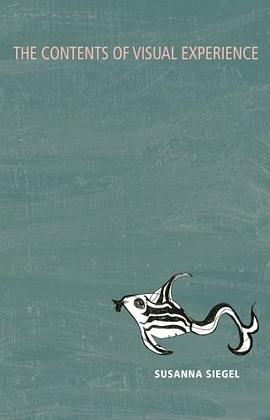

具体描述
What do we see? We are visually conscious of colors and shapes, but are we also visually conscious of complex properties such as being John Malkovich? In this book, Susanna Siegel develops a framework for understanding the contents of visual experience, and argues that these contents involve all sorts of complex properties. Siegel starts by analyzing the notion of the contents of experience, and by arguing that theorists of all stripes should accept that experiences have contents. She then introduces a method for discovering the contents of experience: the method of phenomenal contrast. This method relies only minimally on introspection, and allows rigorous support for claims about experience. She then applies the method to make the case that we are conscious of many kinds of properties, of all sorts of causal properties, and of many other complex properties. She goes on to use the method to help analyze difficult questions about our consciousness of objects and their role in the contents of experience, and to reconceptualize the distinction between perception and sensation. Siegel's results are important for many areas of philosophy, including the philosophy of mind, epistemology, and the philosophy of science. They are also important for the psychology and cognitive neuroscience of vision.
Features
Provides a new framework for understanding the contents of visual experience and investigating what we see
The author develops a new method of discovering the contents of visual experience
Explores the role of high-level properties in visual consciousness
Defends a controversial thesis: high-level contents of consciousness
Interprets and defends the idea that conscious experiences have contents
Lays out a new theory of the difference between sensation and perception
Reviews
"Siegel's book is an important contribution to the contemporary literature on the nature and structure of perception, particularly on the topic of what is sometimes called 'the admissible contents of experience' (the question of which properties we experience in perception)."--James Genone, Notre Dame Philosophical Reviews
"This is one of the most significant books in philosophy of mind for many years. There are three big ideas in it. One is a novel argument for the conclusion that perceptual experiences have representational content. Siegel makes a persuasive case that this argument applies even to all but the most radical of those who take themselves to be opposed to representational views of perception. The second is a set of arguments that these contents of perception are 'rich' in that they go beyond color, shape, illumination, motion, and space. Perceptual experiences represent such properties as being a dog, being a pine tree and even being John Malkovich. The third big idea is a method for adjudicating the contents of perception, the method of phenomenal contrast. This method is of considerable value whether or not one accepts Siegel's conclusions. This book is illuminating, convincing and also wonderfully clear and fun to read."--Ned Block, New York University
作者简介
Susanna Siegel is Edgar Pierce Professor of Philosophy at Harvard University. She has been named 2012 Walter Channing Cabot Fellow.
目录信息
The Content View
Why does it matter whether the Rich Content View is true?
How can we decide whether the Rich Content View is true?
Part I: Contents
Chapter 1: Experiences
1.1 States of seeing and phenomenal states
1.2 Visual perceptual experiences
Chapter 2: The Content View
2.1 Contents as accuracy conditions
2.2 The Argument from Accuracy
2.3 A flaw in the Argument from Accuracy
2.4 The Argument from Appearing
2.5 Two objections from 'looks', 'appears' and their cognates
2.6 The significance of the Content View
Chapter 3: How Can We Discover the Contents of Experience?
3.1 Introspection
3.2 Naturalistic theories of content
3.3 The method of phenomenal contrast
Part II: Properties
Chapter 4: Kinds
4.1 The examples
4.2 The premises
4.3 Content externalism
Chapter 5: Causation
5.1 The Causal Thesis
5.2 Michotte's results
5.3 Unity in experience
5.4 Non-causal contents
5.5 Raw feels
5.6 Non-sensory experiences
Part III: Objects
Chapter 6: The Role of Objects in the Contents of Experience
6.1 Strong and Weak Veridicality
6.2 The contents of states of seeing
6.3 The contents of phenomenal states
6.4 Phenomenal states: Internalism vs. Pure Disjunctivism
6.5 Why Internalism?
Chapter 7: Subject and Object in the Contents of Experience
7.1 Subject-independence and Perspectival Connectedness
7.2 The Good and the Odd
7.3 Complex contents
7.4 Objections and replies
Chapter 8: The Strong Content View revisited
· · · · · · (收起)
读后感
评分
评分
评分
评分
用户评价
这本书的行文风格非常具有个人魅力,它不是那种冷冰冰的教科书,更像是作者燃烧着激情向你倾诉他的毕生所学。它那种带有强烈个人印记的叙述方式,让阅读过程充满了温度和生命力。作者在讨论早期视觉理论家时,那种带着尊敬又不失批判的笔触,让人感觉他不仅仅是在复述历史,更是在与先驱者进行跨越时空的对话。尤其是结尾部分,作者收束了所有复杂的论证,提出了一种近乎于冥想的总结——视觉的终极意义在于连接内在与外在世界。合上书本,窗外的世界似乎被镀上了一层新的光芒,不再是日常的背景板,而是一个充满待解之谜的剧场。这本书,无疑是我近年来阅读过最具启发性和审美愉悦感的著作之一,它值得被反复阅读和珍藏。
评分坦白说,我一开始是被它的副标题吸引的,关于“经验的构建与解构”听起来非常现代和前沿。这本书在处理现代媒介,特别是电影和摄影对我们感知影响的部分,展现出了惊人的洞察力。作者没有落入批判媒介的窠臼,而是深入探讨了技术如何悄无声息地重塑了我们的大脑处理视觉信息的方式。书中对于“凝视的权力”的论述尤为深刻,它将社会学、心理学和现象学完美地结合起来,揭示了图像背后的权力结构。我读到关于广告视觉语言的部分时,感到一阵寒意,因为它让我意识到了自己每天在不知不觉中被多少精心设计的陷阱所包围。这本书提供了一种必要的“反视觉素养”,帮助读者从被动的接收者,转变为一个有批判精神的审视者。
评分我对哲学类书籍通常抱有一种谨慎的态度,总担心会陷入晦涩难懂的泥沼。然而,这本书的叙事节奏把握得极其精准,它不像某些经典那样将你生生地推入深水区,而是循序渐进地引导你探索。作者巧妙地运用了大量的历史案例和艺术史的切片作为论证的基石,使得理论不再是空中楼阁,而是建立在坚实的经验基础之上。我尤其欣赏其中关于“感知的主动性”那几章,它颠覆了我过去那种认为视觉是被动接收信息的传统观念。读完之后,我走路时都会不自觉地审视周围的环境,试图去捕捉那些被我长期忽略的微妙光影和空间关系。这种阅读带来的即时反馈和行为改变,是很多理论书籍无法企及的。它不仅仅是提供信息,它是在重塑你观察世界的方式。那种豁然开朗的感觉,就像是眼镜度数突然调准了,整个世界突然清晰锐利起来。
评分从一个纯粹的艺术评论者的角度来看,这本书的野心无疑是巨大的,它试图跨越学科的壁垒,构建一个宏大的视觉认知体系。但更令人称赞的是,作者在保持这种宏大叙事的同时,对于细节的把握也达到了令人发指的程度。书中引用的那些早期光学实验的描述,生动得让人仿佛能听到当时仪器运作的咔哒声。更别提那些对文艺复兴时期画家处理透视手法的精细剖析,那种对笔触和色彩心理学的细致入微的分析,简直让人拍案叫绝。我发现自己常常需要放慢速度,不是因为不理解,而是因为每一个段落都蕴含着可以进行深入研究的线索。对于希望提升自己鉴赏水平的爱好者来说,这本书提供了一个无价的工具箱,它教你的不是“看什么”,而是“如何去看”,其价值难以估量。
评分这本书的封面设计简直是一场视觉的盛宴,那种浓郁的色彩和富有层次感的排版,让人在书店里一眼就被吸引住了。拿到手里,纸张的质感也相当上乘,那种略带粗糙却又细腻的触感,仿佛在暗示着里面内容的深度和厚重。我原本以为这会是一本枯燥的学术著作,但翻开扉页后,那种流畅而富有韵律的文字风格,立刻将我的注意力牢牢锁住。作者似乎有一种魔力,能将复杂的概念用最直白却又充满诗意的方式表达出来,读起来一点也不费劲,反而像是跟随一位智者进行一场深度对话。尤其是在探讨美学理论的部分,那些抽象的词汇在作者的笔下变得鲜活起来,仿佛每一个句子都在空气中构建起了一座精美的雕塑。我不得不停下来,仔细回味那些精妙的比喻,每一次回味都能带来新的感悟。这种阅读体验,已经超越了单纯的知识获取,更像是一次精神上的洗礼,让人对“观看”这件事本身产生了全新的敬畏感。
评分Boring...
评分Boring...
评分虽然不完全赞同(特别对知觉作为命题态度的部分处理方案),但是清晰易懂,值得好评。
评分虽然不完全赞同(特别对知觉作为命题态度的部分处理方案),但是清晰易懂,值得好评。
评分Boring...
相关图书








本站所有内容均为互联网搜索引擎提供的公开搜索信息,本站不存储任何数据与内容,任何内容与数据均与本站无关,如有需要请联系相关搜索引擎包括但不限于百度,google,bing,sogou 等
© 2026 book.quotespace.org All Rights Reserved. 小美书屋 版权所有