

具体描述
“Every something is an echo of nothing.” —JOHN CAGE
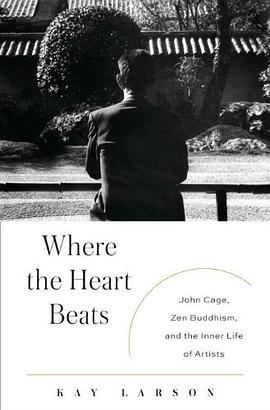
Where the Heart Beats is the story of the tremendous changes sweeping through American culture following the Second World War, a time when the arts in America broke away from centuries of tradition and reinvented themselves. Painters converted their canvases into arenas for action and gesture, dancers embraced pure movement over narrative, performance artists staged “happenings” in which anything could happen, poets wrote words determined by chance.
In this tumultuous period, a composer of experimental music began a spiritual quest to know himself better. His earnest inquiry touched thousands of lives and created controversies that are ongoing. He devised unique concerts—consisting of notes chosen by chance, randomly tuned radios, and silence—in the service of his absolute conviction that art and life are one inseparable truth, a seamless web of creation divided only by illusory thoughts.
What empowered John Cage to compose his incredible music—and what allowed him to inspire tremendous transformations in the lives of his fellow artists—was Cage’s improbable conversion to Zen Buddhism. This is the story of how Zen saved Cage from himself.
Where the Heart Beats is the first book to address the phenomenal importance of Zen Buddhism to John Cage’s life and to the artistic avant-garde of the 1950s and 1960s. Zen’s power to transform Cage’s troubled mind—by showing him his own enlightened nature—liberated Cage from an acute personal crisis that threatened everything he most deeply cared abouthis life, his music, and his relationship with his life partner, Merce Cunningham. Caught in a society that rejected his art, his politics, and his sexual orientation, Cage was transformed by Zen from an overlooked and marginal musician into the absolute epicenter of the avant-garde.
Using Cage’s life as a starting point, Where the Heart Beats looks beyond to the individuals Cage influenced and the art he inspired. His creative genius touched Robert Rauschenberg, Jasper Johns, Andy Warhol, Yoko Ono, Alan Kaprow, Morton Feldman, and Leo Castelli, who all went on to revolutionize their respective disciplines. As Cage’s story progresses, as his collaborators’ trajectories unfurl, Where the Heart Beats shows the blossoming of Zen in the very heart of American culture.
作者简介
An acclaimed art critic, columnist, and editor, KAY LARSON began her career in journalism in Cambridge, Massachusetts, at The Real Paper, then served as an associate editor at ARTnews and an art critic for the Village Voice. She was the art critic for New York magazine for fourteen years, and has been a frequent contributor to the New York Times. In 1994, she entered Zen practice at a Buddhist monastery in upstate New York. Though Larson has written for many types of publications, Where the Heart Beats is her first book.
目录信息
读后感
评分
评分
评分
评分
用户评价
从文学技法的角度来看,这本书无疑是一次大胆的尝试。作者似乎并不满足于传统的叙事框架,而是不断地在挑战读者的认知边界。书中的象征意义运用得非常高明,例如某种反复出现的物件或者一个特定的天气现象,它们的功能远超背景装饰,更像是串联起不同人物命运的关键符码。阅读初期,我对此感到有些困惑,仿佛在解开一个多层的谜团,但随着情节的层层剥开,那些看似随机的元素突然汇合成一个宏大且统一的意象,那一刻的豁然开朗是无与伦比的震撼。这种结构上的复杂性,使得本书具有极高的重读价值——我相信即便是第二次阅读,也会发现之前因为关注主线而忽略掉的那些精妙的伏笔和旁枝末节。它并非那种读完就忘的通俗小说,而是那种会要求你拿起笔,在页边空白处写下自己的思考和推测的文本。
评分对于追求沉浸式阅读体验的读者来说,这本书提供了一次近乎迷幻的旅程。作者的语言风格变化多端,从极其精炼、充满哲理的短句,到如诗歌般华丽、充满感官冲击力的长段落,转换之间流畅自然,毫不突兀。这种语言上的多样性,完美地契合了故事情绪的起伏。我尤其欣赏那些带有强烈地域色彩的词汇和表达,它们不仅丰富了文本的肌理,更赋予了故事一种独有的、无法复制的氛围感,仿佛我真的站在了故事发生的那个特定的角落,呼吸着那里的空气。整本书读下来,我感觉自己的词汇量和对语言表达的敏感度都有了显著的提升。它不仅仅是一个故事,它更像是一次对语言潜能的极限探索,让人在为情节揪心之余,也为文字本身的美感而深深折服。
评分这本书最引人入胜之处,或许在于它对人性灰色地带的坦诚和毫不留情的剖析。它没有塑造任何绝对的英雄或纯粹的恶棍,每一个角色都带着自己难以磨灭的瑕疵和根深蒂固的弱点。作者笔下的人物,他们的善良往往与自私交织在一起,他们的勇敢常常以鲁莽为代价。这种对“不完美人性”的深度挖掘,使得故事摆脱了廉价的道德说教,转而提供了一种更贴近现实的、充满矛盾的美感。我特别关注到,作者如何处理“记忆的不可靠性”,书中多重视角之间的叙述差异,清晰地展示了同一事件在不同人脑海中是如何被重塑和扭曲的,这让人不禁反思我们自己对往事的认知是否也只是基于某种自我美化的滤镜。这种内省的驱动力,是让这本书从众多作品中脱颖而出的核心原因。
评分这部作品的叙事节奏掌握得炉火纯青,它深谙“张弛有度”的艺术。在某些关键的转折点上,情节的推进快如闪电,每一次翻页都伴随着心跳的加速,仿佛下一秒就要发生爆炸性的揭露。然而,作者随后会立刻切换到一种近乎冥想式的慢镜头,用大段的文字细致描摹人物的感官体验——光线的角度、空气中的气味、指尖触碰到的冰凉,这种细腻到极致的笔触,有效地将那种高强度的情感冲击转化为了可以被细细品味的苦涩。这种节奏上的巨大反差,让读者始终保持着一种高度的警觉和投入。我特别喜欢作者在对话中使用的留白艺术,很多时候,真正重要的信息和情感并不是被说出来的,而是被巧妙地隐藏在了未尽之言和潜台词里。这要求读者必须全神贯注,去解读字里行间那些微妙的停顿和重音,这是一种非常“主动”的阅读体验,也极大地增强了读者的参与感和智力上的满足感。
评分这本书的开篇就如同被拉入了一张由复杂的情感和错综的人际关系编织而成的巨大网中。作者对细节的捕捉简直令人惊叹,每一个角色的内心独白都像是对我灵魂的直接对话。我尤其欣赏作者如何处理时间线,它并非简单的线性叙事,而是巧妙地在过去的回忆和当下的困境之间跳跃,每一次跳跃都带着强烈的目的性,揭示出潜藏在平静表面下的巨大暗流。比如,主角在处理一场家庭危机时的犹豫和挣扎,那种刻入骨髓的无力感,让我几乎能感受到他手中文件纸张的粗糙质地。书中对环境的描绘也极具画面感,无论是都市的喧嚣霓虹,还是乡村的寂静苔藓,都仿佛成为了角色情绪的延伸和注脚。这种环境与心境的完美融合,使得阅读体验超越了单纯的故事欣赏,更像是一次深度的心理探险。书中关于“选择的代价”的探讨尤为深刻,它没有提供简单的对错答案,而是呈现了每一个决定背后沉重的、甚至相互矛盾的后果,让人在合上书本后,依然要花上好一阵子才能真正抽离出来,思考自己的人生道路。
评分very pretty writing, somewhat repetitive.
评分very pretty writing, somewhat repetitive.
评分very pretty writing, somewhat repetitive.
评分very pretty writing, somewhat repetitive.
评分very pretty writing, somewhat repetitive.
相关图书






本站所有内容均为互联网搜索引擎提供的公开搜索信息,本站不存储任何数据与内容,任何内容与数据均与本站无关,如有需要请联系相关搜索引擎包括但不限于百度,google,bing,sogou 等
© 2026 book.quotespace.org All Rights Reserved. 小美书屋 版权所有