
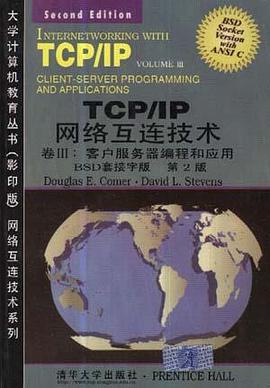

具体描述
内容简介
TCP/IP网络互连技术系列的第Ⅲ卷讨论客户/服
务器编程和应用.讲述了构筑所有分布式计算系统的客
户/服务器计算模型的基本概念,内容包括各种不同的
服务器设计方法,以及用来构造客户/服务器的各种工具
和技术,包括远程调用RPC。书中包括了用来说明每种
设计和工具的运行程序示例的源代码。
第Ⅲ卷有三个版本:分别对应于广为应用的BSD
套接字,AT&TTLI接口和WindowsSockets。本书
是BSD套接字版,在所有编程实例中使用BSDUNIX
套接字机制。
作者简介
目录信息
Foreword xxiii
Preface xxv
Chapter 1 Introduction And Overview
1.1 UseOfTCP/IP
1.2 Designing Applications For A Distributed Environment
1.3 Standard And Nonstandard Application Protocols
1.4 An Example Of Standard Application Protocol Use
1.5 An Example Connection
1.6 Using TELNET To Access An Altemative Service
1.7 Application Protocols And Software Flexibility
1.8 Viewing Services From The Provider's Perspective
1.9 The Remainder OfThis Texl
1.10 Summary
Chapter 2 The Client Server Model And Software Design
2.1 Introduction
2.2 Motivation
2.3 Terminology And Concepts
2.3.1 Clients And Servers
2.3.2 Privilege And Complexity
2.3.3 Standard Vs. Nonstandard Client Software
2.3.4 Parameteriz.ation Of Clients
2.3.5 Connectionless Vs. Connection-Oriented Servers
2.3.6 Stateless Vs. Stateful Servers
2.3.7 A Stateful File Server Example
2.3.8 Statelessness Is A Prolocol Issue
2.3.9 Servers As Clients
2.4 Summary
Chapter 3 Concurrent Processing In Cllent-Server Software
3.1 Inlroduction
3.2 Concurrency In Networks
3.3 Concurrency In Servers
3.4 Terminology And Concepts
3.4.1 The Process Concept
3.4.2 Programs vs. Processes
3.4.3 Procedure Calls
3.5 An Example OfConcurrent Process Creation
3.5.1 A Sequential C Example
3.5.2 A Concurrent Version
3.5.3 Timeslicing
3.5.4 Making Processes Diverge
3.6 Executing New Code
3.7 ContextSwitching And Protowl Software Design
3.8 Concurrency And Asynchronous 1/0
3.9 Summary
Chapter 4 Program Interface To Protocols
4.1 Introduction
4.2 Loosely Specified Protocol Software Interface
4.2.1 Advantages And Disadvantages
4.3 Interface Functionality
4.4 Conceptual Interface Specification
4.5 System Calls
4.6 Two Basic Approaches To Network Communication
4.7 The Basic 1/0 Functions Available In UNIX
4.8 Using UNIX 1/0 With TCP/IP
4.9 Summary
Chapter 5 The Socket Interface
5.1 Introduction
5.2 Berkeley Sockets
5.3 Specifying A Protocol Interface
5.4 The Socket Abstraction
5.4.1 Socket Descriptors And File Descriptors
5.4.2 System Data Structures For Sockets
5.4.3 Using Sockets
5.5 Specifying An Endpoint Address
5.6 A Generic Address Structure
5.7 Major System Calis Used With Sockets
5.7.1 The Socket Call
5.7.2 The Connect Call
5.7.3 TheWriteCall
5.7.4 TheReadCall
5.7.5 TheCloseCall
5.7.6 TheBindCall
5.7.7 The Listen Call
5.7.8 The Accept Call
5.7.9 Summary OfSockel Calls Used With TCP
5.8 Utilily Routines For Integer Conversion
5.9 Vsing Socket Calls In A Program
5.10 Symbolic Constants For Socket Call Parameters
5.11 Summarv
Chapter 6 Algorithms And Issues In Client Software Deslgn
6.1 Introduction
6.2 Leaming Algorithms Instead Of Details
6.3 Client Architecture .
6.4 Idenlifying The Localion OfA Server
6.5 Parsing An Address Argument
6.6 Looking Up A Domain Name
6.7 Looking Up A Well-Known Port By Name
6.8 Port Numbers And Network Byle Order
6.9 Looking Up A Protocol By Name
6.10 The TCP Clienl Algorithm
6.11 Allocating A Socket
6.12 Choosing A Local Protocol Port Number
6.13 A Fundamental Problem In Choosing A Local IP Address
6.14 Connecling A TCP Socket To A Server
6.15 Communicating With The Server Using TCP
6.16 Reading A Response From A TCP Connection
6.17 Closing A TCP Connection
6.17.1 The Need For Partial Close
6.17.2 A Partial Close Operation
6.18 Programming A UDP Client
Chapter 7 Example Client Software
7.1 Introduction
7.2 The Importance OfSmall Examples
7.3 Hiding Details
7.4 An Example Procedure Library For Client Programs
7.5 Implementation Of ConnectTCP
7.6 Implementation OfConnectUDP
7.7 A Procedure That Forms Connections
7.8 Using The Example Library
7.9 The DA YTIME Service
7.10 Implemenlation OfA TCP Client For DAYTIME
7.11 Reading From A TCP Connection
7.12 The TIME Service
7.13 Accessing The TIME Service
7.14 Accurate Times And Network Delays
7.15 A UDP Clienl For The TIME Service
7.16 The ECHO Service
7.17 A TCP Client For The ECHO Service
7.18 A UDP Client For The ECHO Service
7.19 Summary
Chapter 8 Algorithms And Issues In Server Software Design
8.l Introduction
8.2 The Conceptual Server Algorithm
8.3 Concurrent Vs. Iterative Servers
8.4 Connection-Oriented Vs. Connectionless Access
8.5 Connection-Oriented Servers
8.6 Connectionless Servers
8.7 Failure, Reliability, And Statelessness
8.8 Optimizing Stateless Servers
8.9 Four Basic Types Of Servers
8.10 Request Processing Time
8.11 llerative Server Algorithms 102
8.12 An Iteralive, Connecfion-Oriented Server Algorithm
8.13 Binding To A Well-Known Address Using INADDR.ANY
8.14 Placing The Socket In Passive Mode
8.15 Accepting Connections And Using Them
8.16 An Iterative, Connectionless Server Algorithm
8.17 Fonning A Reply Address In A Connectionless Server
8.18 Concurrent Server Algorithms
8.19 Masler And Slave Processes
8.20 A Concurrent, Connectionless Server Algorithm
8.21 A Concurrent, Connection-Oriented Server Algorithm
8.22 Using Separate Programs As Slaves
8.23 Apparent Concurrency Using A Single Process
8.24 When To Use Each Server Type
8.25 A Summary ofServer Types
8.26 The Important Problem Qf Server Deadlock
8.27 Alternative Implementations
8.28 Summary
Chapter 9 Iterative, Connectionless Servers (UDP)
9.1 lntroduction
9.2 Creating A Passive Socket
9.3 Process Structure
9.4 An Example TIME Server
9.5 Summary
Chapter 10 Iterative, Connection-Orlented Servers (TCP)
10.1 Inlroduction
10.2 Allocating A Passive TCP Socket
10.3 A Server For The DA YTIME Service
10.4 Process Structure
10.5 An Example DA YTIME Server
10.6 Closing Connections
10.7 Conneclion Termination And Server Vulnerability
10.8 Summary
Chapter 11 Concurrent, Connection-Oriented Servers (TCP)
11.1 Introduction
11.2 Concurrent ECHO
11.3 Iterative Vs. Concurrent Implementations
11.4 Process Structure
11.5 An Example Concurrent ECHO Server
11.6 Cleaning Up Errant Processes
11.7 Summary
Chapter 12 Single-Process, Concurrent Servers (TCP)
12.1 Inlroduction
12.2 Data-driven Processing In A Server
12.3 Data-Driven Processing With A Single Process
12.4 Process Structure OfA Single-Process Server
12.5 An Example Single-Process ECHO Server
12.6 Summary
Chapter 13 Multiprotocol Servers (TCP, UOP)
13.1 Introduction
13.2 The Motivation For Reducing The Number Of Servers
13.3 Multiprotocol Server Design
13.4 Process Structure
13.5 An Example Multiprotocol DA YTIME Server
13.6 The Concept OfShared Code
13.7 Concurrent Multiprotocol Servers
13.8 Summary
Chapter 14 Multiservice Servers (TCP, UDP)
14.1 Introduction
14.2 Consolidating Servers
14.3 A Connectionless, Multiservice Server Design
14.4 A Connection-Oriented, Multiservice Server Design
14.5 A Concurrent, Connection-Oriented, Multiservice Server
14.6 A Single-Process, Multiservice Server Implementation
14.7 Invoking Separate Programs From A Multiservice Server
14.8 Multiservice, Multiprotocol Designs
14.9 An Example Multiservice Server
14.10 Static and Dynamic Server Configuration
14.11 The UNIX Super Server. Inetd
14.12 An Example Inetd Server
14.13 Summary
Chapter 15 Uniform, Efficient Management Of Server Concurrency
15.1 Introduction
15.2 Choosing Between An Iterative And A Concurrent Design
15.3 Level Of Concurrency
15.4 Demand-Driven Concurrency
15.5 The Cost Of Concurrency
15.6 Overhead And Delay
15.7 Small Delays Can Matter
15.8 Process Preallocation
15.8.1 Preallocation In UNIX
15.8.2 Preallocation In A Connection-Oriented Server
15.8.3 Preallocation In A Connectionless Server
15.8.4 Preallocation, Bursty Trqfflc, And NFS
15.8.5 Process Preallocation On A Multiprocessor
15.9 Delayed Process Allocation
15.10 The Uniform Basis For Both Techniques
15.11 Combining Techniques
15.12 Summary
Chapter 16 Concurrency In Clients
16.1 Introduction
16.2 The Advantages Of Concurrency
16.3 The Motivation For Exercising Control
16.4 Concurrent Contact With Multiple Servers
16.5 Implementing Concurrent Clients
16.6 Single-Process Implementations
16.7 An Example Concurrent Client That Uses ECHO
16.8 Execution OfThe Concurrent Client
16.9 Concurrency In The Example Code
16.10 Summary
Chapter 17 Tunnellng At The Transport And Appllcation Levels
17.1 Introduction
17.2 Multiprotocol Environments
17.3 Mixing Network Technologies
17.4 Dynamic Circuit Allocation
17.5 Encapsulalion And Tunneling
17.6 Tunneling Through An IP Inlemet
17.7 Application-Level Tunneling Between Clients And Servers
17.8 Tunneling, Encapsulation, And Dialup Phone Lines
17.9 Summary
Chapter 18 Appllcation Level Gateways
18.1 Introduction
18.2 Clients And Servers In Constrained Environments
18.2.1 The Reality OfMultiple Technologies
18.2.2 Computers With Limited Functionality
18.2.3 Connectivity Constraints That Arise From Security
18.3 Using Applicatim Gateways
18.4 lnteroperability Through A Mail Gateway
18.5 Implementation OfA Mail Gateway
18.6 A Comparison Of Application Gateways And Tunneling
18.7 Application Gateways And Limited Functionality Systems
18.8 Application Gateways Used For Security
18.9 Application Gateways And The Extra Hop Problem
18.10 An Example Application Gateway
18.11 Implementation OfAn Application Gateway
18.12 Code For The Application Gateway
18.13 An Example Gateway Exchange
18.14 Using Rfcd With UMX's .forward
18.15 A General-Purpose Application Gateway
18.16 Operation OfSURP
18.17 How SURP Handles Connections
18.18 IP Addressing And SLIRP
18.19 Summary
Chapter 19 External Data Representation (XDR)
19.1 Introduction
19.2 Representations For Data In Computers
19.3 The N-Squared Conversion Problem
19.4 Network Standard Byte Order
19.5 A De Facto Standard External Data Representation
19.6 XDR Data Types
19.7 Implicit Types
19.8 Software Support For Using XDR
19.9 XDR Library Routines
19.10 Building A Message One Piece At A Time
19.11 Conversion Routines In The XDR Library
19.12 XDR Streams, 1/0, and TCP
19.13 Records, Record Boundaries, And Datagram 1/0
19.14 Summary
Chapter 20 Remote Procedure Call Concept (RPC)
20.1 lntroduction
20.2 Remote Procedure Call Model
20.3 Two Paradigms For Building Distributed Programs
20.4 A Conceptual Model For Conventional Procedure Calls
20.5 An Extension Of the Procedural Model
20.6 Execulion Of Conventional Procedure Call And Retum
20.7 The Procedural Model In Distributed Systems
20.8 Analogy Between Client-Server And RPC
20.9 Distributed Computation As A Program
20.10 Sun Microsystems' Remote Procedure Cail Definition
20.11 Remote Programs And Procedures
20.12 Reducing The Number Of Arguments
20.13 Identifying Remote Programs And Procedures
20.14 Accommodating Multiple Versions OfA Remote Program
20.15 Mutual Exclusion For Procedures In A Remote Program
20.16 Communicatwn Semantics
20.17 At Least Once Semantics
20.18 RPC Retransmission
20.19 Mapping A Remote Program To A Protocol Port
20.20 Dynamic Port Mapping
20.21 RPC Port Mapper A Igorithm
20.22 ONC RPC Message Format
20.23 Marshaling Arguments For A Remote Procedure
20.24 Authenlication
20.25 An Example Of RPC Message Representation
20.26 An Example OfThe UNIX Authentication Field
20.27 Summary
Chapter 21 Dlstributed Program Generation (Rpcgen Concept)
21.1 Introduction
21.2 Using Remote Procedure Calls
21.3 Programming Mechanisms To Support RPC
21.4 Dividing A Program Into Local And Remote Procedures
21.5 Adding Code For RPC
21.6 Stub Procedures
21.7 Multiple Remote Procedures And Dispatching
21.8 Name Of The Client-Side Stub Procedure
21.9 Using Rpcgen To Generate Dislribuled Programs
21.10 Rpcgen Output And Interface Procedures
21.11 Rpcgen Input And Output
21.12 Using Rpcgen To Build A Client And Server
21.13 Summary
Chapter 22 Distrlbuted Program Generation (Rpcgen Example)
22.1 Introduclion
22.2 An Example To lllustrate Rpcgen
22.3 Dictionary Look Up
22.4 Eight Steps To A Distributed Application
22.5 Step 1: Build A Conventional Application Program
22.6 Step 2: Divide The Program Into Two Parts
22.7 Step 3: Create An Rpcgen Specification
22.8 Step 4: Run Rpcgen
22.9 The h File Produced By Rpcgen
22.10 The XDR Conversion File Produced By Rpcgen
22.11 The Client Code Produced By Rpcgen
22.12 The Server Code Produced By Rpcgen
22.13 Step 5: Wrile Stub Interface Procedures
22.13.1 Client-Side Interface Routines
22.13.2 Server-Side Interface Roulines
22.14 Step 6: Compile And Link The Client Program
22.15 Step 7: Compile And Link The Server Program
22.16 Step 8: Starl The Server And Execute The Client
22.17 Using The UNIX Make Utility
22.18 Summary
Chapter 23 Network File System Concepts (NFS)
23.1 Introduction
23.2 Remote File Access Vs. Transfer
23.3 Operations On Remole Files
23.4 Fite Access Among Heterogeneous Computers
23.5 Stateless Servers
23.6 NFS And UNIX File Semantics
23.7 Review Of The UNIX File System
23.7.1 Basic Definitions
23.7.2 A Byte Sequence Withoul Record Boundaries
23.7.3 A File 's Owner And Group Identiflers
23.7.4 Protection And Access
23.7.5 The Open-Read- Write-Close Paradigm
23.7.6 Data Transfer
23.7.7 Permission To Search A Directory
23.7.8 Random Access
23.7.9 Seeking Beyond The End Of File
23.7.10 File Position And Concurrent Access
23.7.11 Semantics Of Write During Concurrent Access
23.7.12 File Names And Paths
23.7.13 Inode: Information Stored Wilh A File
23.7.14 Stat Operation
23.7.15 The File Naming Mechanism
23.7.16 File System Mounts
23.7.17 UNIX File Name Resoluuon
23.7.18 Symbolic Unks
23.8 Files Under NFS
23.9 NFS File Types
23.10 NFSFileModes
23.11 NFS File Attributes
23.12 NFS Client And Server
23.13 NFS Client Operation
23.14 NFS Client And UNIX
23.15 NFSMounts
23.16 FileHandle
23.17 Handles Replace Path Names
23.18 An NFS Client In UNIX
23.19 File Position'mg Wilh A Stateless Server
23.20 Operations On Directories
23.21 Reading A Directory Statelessly
23.22 Multiple Hierarchies In An NFS Server
23.23 The Mount Protocol
23.24 Summary
Chapter 24 Network File System Protocol (NFS, Mount)
24.l Introduction
24.2 Using RPC To Define A Protocol
24.3 Defining A Protocol With Data Structures And Procedures
24.4 NFS Constant, Type, And Data Declarations
24.4.1 NFS Constants
24.4.2 NFS Typedef Declarations
24.4.3 NFS Data Structures
24.5 NFS Procedures
24.6 Semantics OfNFS Operations
24.6.1 NFSPROC_NULL (Procedure 0)
24.6.2 NFSPROC_GETATTR (Procedure 1)
24.6.3 NFSPROC_SETATTR (Procedure 2)
24.6.4 NFSPROC_ROOT (Procedure 3) [Obsolete in NFS3]
24.6.5 NFSPROC_LOOKUP (Procedure 4)
24.6.6 NFSPROC_READLlNK (Procedure 5)
24.6.7 NFSPROC_READ (Procedure 6)
24.6.8 NFSPROC_WRITECACHE (Procedure 7) [Obsolete in NF83]
24.6.9 NFSPROC_WRITE (Procedure 8)
24.6.10 NFSPROC_CREATE (Procedure 9)
24.6.11 NFSPROC_REMOVE _(Procedure 10)
24.6.12 NFSPROCRENAME _ RENAME (Procedure 11)
24.6.13 NFSPROC_LINK (Procedure 12)
24.6.14 NFSPROC_SYMUNK (Procedure 13)
24.6.15 NFSPROC_MKDlR (Procedure 14)
24.6.16 NFSPROC_RMDlR (Procedure 15)
24.6.17 NFSPROC_READDIR (Procedure 16)
24.6.18 NFSPROC_STATFS (Procedure 17)
24.7 The Mount Protocol
24.7.1 Mount Constant Definitions
24.7.2 Mounl Type Definitions
24.7.3 Mount Data Slructures
24.8 Procedures In The Mount Protocol
24.9 Semantics of Mount Operations
24.9.1 MNTPROC_NULL (Procedure 0)
24.9.2 MNTPROC_MNT (Procedure 1)
24.9.3 MNTPROC_DUMP (Procedure 2)
24.9.4 MNTPROC_UMNT (Procedure 3)
24.9.5 MNTPROC_UMNTALL (Procedure 4)
24.9.6 MNTPROC_EXPORT (Procedure 5)
24.10 NFS And Mount Authenlication
24.11 Changes In NFS Version 3
24.12 Summary
Chapter 25 A TELNET Client (Program Structure)
25.1 Introduclion
25.2 Overview
25.2.1 The User's Terminal
25.2.2 Command And Control Information
25.2.3 Terminals, Windows, and Files
25.2.4 The Need For Concurrency
25.2.5 A Process Model For A TEENET Ctient
25.3 A TELNET Client Algorithm
25.4 Terminal 1/0 In UNIX
25.4.1 Conlrolting A Device Oriver
25.5 Establishing Terminal Modes
25.6 Global Variable Used For Slored Stale
25.7 Restoring Terminal Modes Before Exil
25.8 Client Suspension And Resumption
25.9 Finite State Machine Specification
25.10 Embedding Commands In A TELNET Data Stream
25.11 Option Negoliation
25.12 Request/Offer Symmetry
25.13 TELNET Character Definitions
25.14 A Finite State Machine For Data From The Server
25.15 Transitions Among States
25.16 A Finite State Machine Implementalion
25.17 A Compacl FSM Represenlalion
25.18 Keeping The Compact Representation At Run-Time
25.19 Implementation OfA Compact Representation
25.20 Building An FSM Transition Matrix
25.21 The Socket Output Finite Stale Machine
25.22 Definitions For The Socket Output FSM
25.23 The Option Subnegotialion Finite State Machine
25.24 Definilions For The Option Subnegotiation FSM
25.25 FSM Initializatwn 393
25.26 Argumenfs For The TELNET Client
25.27 TheHeartOfTheTELNETClient
25.28 Imptementation Of The Main FSM
25.29 Summar)
Chapter 26 A TELNET Client (Implementation Oetails)
26.1 Introduclion
26.2 The FSM Action Procedures
26.3 Recording The Type OfAn Option Request
26.4 Performing No Operation
26.5 Responding To WILI/WONT For The Echo Option
26.6 Responding To WILL/WONT For Unsupported Options
26.7 Responding To WILL/WONT For The No Go-Ahead Option
26.8 Generating DO/DONT For Binary Transmission
26.9 Responding To DO/DONT For Unsupported Options
26.10 Responding To DO/DONT For Transmit Binary Option
26.11 Responding To DOfDONT For The Terminal Type Option
26.12 Option Subnegotiation
26.13 Sending Terminal Type Information
26.14 Terminatmg Subnegotiation
26.15 Sending A Characler To The Server
26.16 Displaying Incoming Data On The User's Terminal
26.17 Using Termcap To Control The User's Terminal
26.18 Writing A Block OfData To The Server
26.19 Interacting With The Client Process
26.20 Responding To lllegal Commands
26.21 Scripting To A File
26.22 Implementation OfScripting
26.23 Initialization OfScripting
26.24 Collecting Characters Of The Script File Name
26.25 Opening A Script File
26.26 Terminating Scripting
26.27 Printing Slatus Information
26.28 Summary
Chapter 27 Practical Hlnts And Technlques For UNIX Servers
27.1 Introduction
27.2 Operating In Background
27.3 Programming A Server To Operate In Background
27.4 Open Descriptors And Inheritance
27.5 Programming A Server To Close Inherited Descriptors
27.6 Signals From The Conlrolling TTY
27.7 Programming A Server To Change Its Controlling TTY
27.8 Moving To A Safe And Known Directory
27.9 Programming A Server To Change Directories
27.10 TheUNIXUmask
27.11 Programming A Server To Sel Its Umask
27.12 Process Groups
27.13 Programming A Server To Set Its Process Group
27.14 Descriptors For Standard 1/0
27.15 Prcgramming A Server To Open Standard Descriptors
27.16 Mutual Exclusion For The Server
27.17 Programming A Server To Avoid Multiple Copies
27.18 Recording A Server's Process ID
27.19 Programming A Server To Record Its Process ID
27.20 Waiting For A Child Process To Exit
27.21 Programming A Server To Wait For Each Child To Exit
27.22 Extraneous Signals
27.23 Programming A Server To Ignore Exfraneous Signals
27.24 Using A System Log Facility
27.24.1 Generating Log Messages
27.24.2 The Advantage Of Indirection And Standard Error
27.24.3 Limitations Of I/O Redirection
27.24.4 A Client-Server Solution
27.24.5 The Syslog Mechanism
27.24.6 Syslog Message Classes
27.24.7 Syslog Facilities
27.24.8 Syslog Priority Levels
27.24.9 Using Syslog
27.24.lO An Example Syslog Configuration File
Summary
Chapter 28 Deadlock And Starvation In Client-Server Systems
28.1 Introduction
28.2 Definition Of Deadlock
28.3 Difficulty OfDeadlock Detection
28.4 Deadlock Avoidance
28.5 Deadlock Between A Client And Server
28.6 Avoiding Deadlock In A Single Interaction
28.7 Starvation Among A Set Of Clients And A Server
28.8 Busy Connections And Starvation
28.9 Avoiding Blocking Operations
28.10 Processes, Connections. And Other Limits
28.11 Cycles Of Clients And Servers
28.12 Documenting Dependencies
28.13 Summary
Appendix 1 System Calls And Llbrary Routlnes Used With Sockets
Appendlx 2 Manipulation Of UNIX File And Socket Descriptors
· · · · · · (收起)
读后感
评分
评分
评分
评分
用户评价
我购买这套《网络互连技术系列》纯粹是出于职业发展的需要,我是一名刚入行的网络工程师,工作中最常遇到的就是各种网络连接问题,而对底层原理的模糊理解常常让我束手无策。说实话,在接触这本书之前,我对网络互连的理解仅停留在“配置IP地址,然后连上就好了”这个层面,对于为什么有的连接会失败,为什么数据传输有时会中断,以及如何才能优化网络性能,都知之甚少。然而,这本书的出现,彻底改变了我的认知。作者在描述每一个技术概念时,都力求做到深入浅出,他没有回避技术细节,但也没有让这些细节变得枯燥乏味。我特别喜欢其中关于数据包在网络中传输的章节,作者用生动的语言和精美的图示,将数据包从源端到目的端的完整旅程描绘得淋漓尽致。我能清晰地看到数据包如何被封装、如何通过路由器进行转发、如何在交换机上被识别和发送,以及在目标设备上如何被解封装。这让我对网络通信的流程有了前所未有的清晰认识。书中对各种网络设备的配置命令也进行了详细的讲解,并且附带了许多命令行示例,这对我来说尤其宝贵。我尝试着按照书中的步骤,在模拟器中配置了路由器和交换机,实现了不同网段之间的通信,这个过程让我感到无比的成就感,也大大增强了我解决实际网络问题的信心。这本书就像一位耐心的导师,不断地为我解答疑惑,填补我知识上的空白,让我从一个网络新手逐渐成长为一个能够理解和操作复杂网络环境的工程师。
评分坦白说,我一开始对《网络互连技术系列》并没有抱太大的期望,市面上关于网络技术的书籍太多了,很多都只是停留在表面,或者过于陈旧。《网络互连技术系列》的与众不同之处在于,它并没有回避最核心、最底层的技术细节。作者以一种近乎“刨根问底”的精神,深入剖析了各种网络协议的设计理念和实现方式。例如,在讲解IPv6的时候,作者并没有简单地说它是IPv4的升级,而是详细解释了IPv6的地址结构、报文格式以及它所带来的优势,并且还提到了IPv6在实际部署中遇到的挑战。这种严谨的态度让我非常钦佩。我特别喜欢书中关于网络故障排除的章节,作者列举了大量的实际故障场景,并详细分析了故障发生的原因,以及如何利用各种网络诊断工具(如ping, traceroute, wireshark)来定位和解决问题。这些内容对于我这样需要在复杂网络环境中工作的技术人员来说,简直是无价之宝。我曾按照书中的指导,利用Wireshark捕获和分析网络流量,成功地找出并解决了困扰我很久的一个网络性能瓶颈。这本书让我对网络互连的理解,已经从“知其然”提升到了“知其所以然”的境界,也让我更加清晰地认识到,掌握底层的技术原理,对于解决复杂问题是多么的重要。
评分我是一名对新兴技术充满好奇的IT从业者,网络技术作为现代信息社会的基础,我一直认为有必要深入了解。《网络互连技术系列》这本书,给我带来了很多惊喜。它并没有仅仅局限于传统的网络技术,而是对一些前沿领域也进行了探讨,比如软件定义网络(SDN)和网络功能虚拟化(NFV)。作者在介绍SDN时,清晰地阐述了其核心思想——将控制平面与数据平面分离,并详细介绍了OpenFlow等关键协议。这让我对未来网络的发展方向有了更直观的认识。此外,书中对云计算环境下网络互连的讲解,也让我受益匪浅。它让我了解到,在云环境中,网络是如何被抽象化、虚拟化,并且如何通过API进行管理的。我曾经尝试在云平台上部署应用,但对其中的网络配置感到有些迷茫,现在读完这本书,我感觉豁然开朗。这本书不仅为我提供了扎实的网络基础知识,更让我对网络技术的未来发展趋势有了更清晰的把握。它是一本能够帮助我跟上技术步伐,保持竞争力的优秀书籍。
评分说实话,我是一个对技术细节有点“强迫症”的人,尤其是在网络技术这种涉及精密协作的领域,我总希望能够理解得非常透彻。《网络互连技术系列》完全满足了我这一点。作者在讲解每一个技术点时,都力求做到严谨、准确,并且尽可能地解释其背后的设计思想。我最喜欢的部分是关于网络冗余和高可用性的讨论。在实际网络环境中,网络的稳定性至关重要,而如何通过各种技术手段来实现冗余和高可用,这本书给出了非常详尽的解答。例如,书中对STP(生成树协议)的讲解,不仅阐述了其工作原理,还深入分析了不同版本的STP以及它们在避免网络环路方面的作用,这对我理解复杂的交换机网络至关重要。此外,书中对各种路由协议的比较分析,也让我对不同协议的适用场景有了更清晰的认识。我曾经为如何选择适合我们公司分支机构的路由协议而困扰,现在读完这本书,我能够更有依据地做出决策。这本书不仅仅提供了技术知识,更重要的是,它培养了我一种严谨的逻辑思维和解决问题的分析能力,让我能够从更宏观的角度去审视网络互连的方方面面。
评分我购买《网络互连技术系列》的初衷,是想系统地梳理和巩固自己在网络通信领域的知识体系。作为一名软件开发者,虽然我不需要直接进行网络设备的配置,但对网络底层原理的理解,对于我开发高性能、高可靠性的分布式系统至关重要。这本书的结构设计得非常合理,从基础概念到高级应用,层层递进,逻辑清晰。我尤其欣赏作者在讲解TCP协议时,对拥塞控制和流量控制算法的详细阐述。这些算法直接影响着网络的吞吐量和稳定性,而我之前对它们的理解一直比较模糊。通过书中的详细解释和图示,我终于能够清晰地理解这些算法是如何工作的,以及它们在实际应用中的意义。这本书也让我意识到,很多我们在日常开发中遇到的性能问题,其根源可能就隐藏在网络传输的底层。例如,书中关于TCP粘包和拆包问题的讲解,就为我解决了很多在RPC通信中遇到的难题。总而言之,这套书不仅拓宽了我的视野,更让我对网络通信有了更深刻的认识,也为我开发更优化的网络应用提供了重要的理论指导。它是一本能够帮助我提升技术深度和广度的优秀书籍。
评分作为一名在IT行业摸爬滚打多年的老兵,我见识过不少技术书籍,但《网络互连技术系列》无疑是其中最让我印象深刻的一套。我不是那种喜欢死记硬背理论知识的人,我更看重的是知识的实用性和对实际问题的解决能力。这套书恰恰满足了我的这一点需求。作者在讲解网络协议时,总是能够巧妙地将理论与实践相结合,让我能够理解这些协议为什么会这样设计,它们在实际网络环境中是如何工作的,以及在遇到故障时,应该如何从这些协议的层面去排查问题。我尤其对书中关于路由协议的讲解印象深刻,作者不仅详细介绍了RIP、OSPF、BGP等主流路由协议的工作原理,还深入分析了它们在不同场景下的优缺点,以及如何进行有效的路由策略配置。书中提供的各种排错案例,都非常贴近实际工作中的情况,让我能够从中学习到很多宝贵的经验。例如,书中分析了一个因路由环路导致的通信故障,并给出了详细的排查和解决步骤,这个案例让我受益匪浅。我曾遇到过类似的问题,但当时束手无策,现在回想起来,如果当时能有这本书的指导,肯定能更快地解决问题。总而言之,这套书不仅仅是一本教材,更像是一位经验丰富的同行,在我职业生涯的关键时刻,给予了我重要的指导和启发。它让我对网络互连有了更深刻的理解,也让我更有信心去应对未来工作中遇到的各种挑战。
评分我是一名对计算机网络充满好奇的学生,一直想深入了解网络是如何工作的,尤其是那些看不见摸不着的数据是如何在世界各地穿梭的。《网络互连技术系列》是我偶然发现的一套书,当时我被它书名中“互连技术”几个字吸引住了。拿到书后,我立刻被书中清晰的结构和严谨的逻辑所吸引。作者从网络的基本概念讲起,比如IP地址、子网掩码,然后逐步深入到更复杂的协议,如DNS、DHCP、HTTP等等。我特别喜欢书中对TCP/IP协议栈的讲解,它以一种非常系统的方式,将网络通信的各个层次都阐述得非常清楚。让我印象最深刻的是关于数据包在网络中传输的流程,作者用了很多形象的比喻,比如将数据包比作一封信,而路由器和交换机就是邮局和分拣中心。这种类比让我更容易理解那些抽象的概念。书中的插图也非常精美,能够直观地展示网络的拓扑结构和数据流向。我尝试着跟着书中的例子,在虚拟机环境中配置网络,成功地实现了不同虚拟机之间的通信,这个过程让我非常有成就感。这本书不仅让我学到了大量的网络知识,更重要的是培养了我对网络技术的热情。它让我觉得网络技术并不像我想象的那么枯燥,而是充满了智慧和创造力。我迫不及待地想继续深入学习,探索更高级的网络技术。
评分作为一名曾经在学校里学习过计算机网络课程的学生,我一直觉得书本上的知识有些枯燥,而且与实际应用脱节。《网络互连技术系列》的出现,让我对网络技术产生了全新的认识。作者以一种非常生动和实用的方式,将那些抽象的网络概念和协议,与我们日常接触到的互联网应用紧密地联系起来。我尤其喜欢书中关于网络安全和性能优化的章节,这些内容在很多基础教材中都很少涉及,但却是在实际网络环境中至关重要的问题。作者在讲解网络攻击的原理时,并没有止步于理论层面,而是结合了实际的攻击案例,让我们了解这些攻击是如何发生的,以及如何防范。同样,在优化网络性能方面,书中也提供了很多具体的指导和技巧,比如如何选择合适的路由算法,如何进行流量工程等等。我曾经遇到过一个网络延迟问题,当时我尝试了很多方法都未能解决,现在回想起书中的内容,我意识到可能是我在路由策略上存在一些问题。这本书不仅仅是一本知识的集合,更是一本能够指导我们解决实际问题的宝典。我从中获得的不仅仅是知识,更是解决问题的思路和方法,这对于我未来的职业发展有着重要的意义。
评分我是一名网络爱好者,平时喜欢鼓捣各种网络设备,试图搭建自己的小型网络实验室。《网络互连技术系列》是我近期接触到的最让我兴奋的一套书。它不仅仅是知识的堆砌,更像是一本活生生的网络百科全书,将我脑海中那些零散的网络概念串联了起来。我尤其喜欢书中关于网络拓扑设计和规划的章节,作者详细介绍了各种网络拓扑的优缺点,以及如何在不同的场景下选择最合适的拓扑结构。这对我来说是非常实用的。我尝试着按照书中的建议,重新规划了我家庭网络的拓扑,并且进行了相应的设备配置,效果比我之前自己摸索要好得多。书中还详细介绍了各种网络安全防护措施,比如防火墙的配置、VPN的搭建等等,这让我对如何保护自己的网络安全有了更清晰的认识。我曾经尝试过搭建一个安全的远程访问环境,但一直未能成功,现在回想起来,可能是因为我对VPN的某些配置细节理解不够透彻。这本书就像一位经验丰富的网络架构师,手把手地指导我如何构建一个稳定、高效、安全的网络。它极大地提升了我动手实践的能力,也让我对网络互连技术有了更深层次的理解和热爱。
评分拿到这套《网络互连技术系列》的时候,我抱着一种既期待又有些忐忑的心情。期待是因为我一直对网络底层技术有着浓厚的兴趣,希望通过深入学习来理解那些看似神秘的数据流是如何在复杂的网络中穿梭的;忐忑则是因为网络技术本身就相当庞杂,我担心这套书会不会过于理论化,或者难度太大,让我望而却步。然而,当我翻开第一页,随着文字的深入,我的顾虑便烟消云散了。作者以一种非常接地气的方式,将那些晦涩难懂的概念一一剖析,仿佛一位经验丰富的老师,循循善诱地引导着我一步步走进网络互连的世界。从最基础的OSI模型,到TCP/IP协议族的精妙设计,再到各种路由和交换技术的原理,书中都进行了详尽的阐述。我尤其欣赏作者在讲解复杂协议时,并非简单地罗列 RFC 文档中的条条框框,而是通过生动的比喻和实际的案例,让我能够真正理解这些协议存在的意义和解决的问题。例如,在讲解TCP三次握handshake的过程中,作者用了一个非常贴切的比喻,将每一次握手都描绘成一次“确认和回应”,这种方式让我瞬间就抓住了核心要点,而不是死记硬背那些SYN, ACK, FIN之类的标志位。此外,书中还穿插了许多实际的网络配置和故障排除的技巧,这对于我这样想要将理论付诸实践的读者来说,无疑是雪中送炭。我迫不及待地想通过书中的指导,在自己的实验环境中搭建一个简单的局域网,亲身体验一下各种协议的运作过程,验证书中所讲的知识点。这本书不仅仅是一本技术手册,更像是一本指引我探索网络奥秘的地图,让我看到了一个更加广阔和精彩的技术世界。
评分 评分 评分 评分 评分相关图书









本站所有内容均为互联网搜索引擎提供的公开搜索信息,本站不存储任何数据与内容,任何内容与数据均与本站无关,如有需要请联系相关搜索引擎包括但不限于百度,google,bing,sogou 等
© 2026 book.quotespace.org All Rights Reserved. 小美书屋 版权所有